
Wearable Haptic Vest PCB Manufacturing & Assembly for Multi-Zone Haptic OEMs
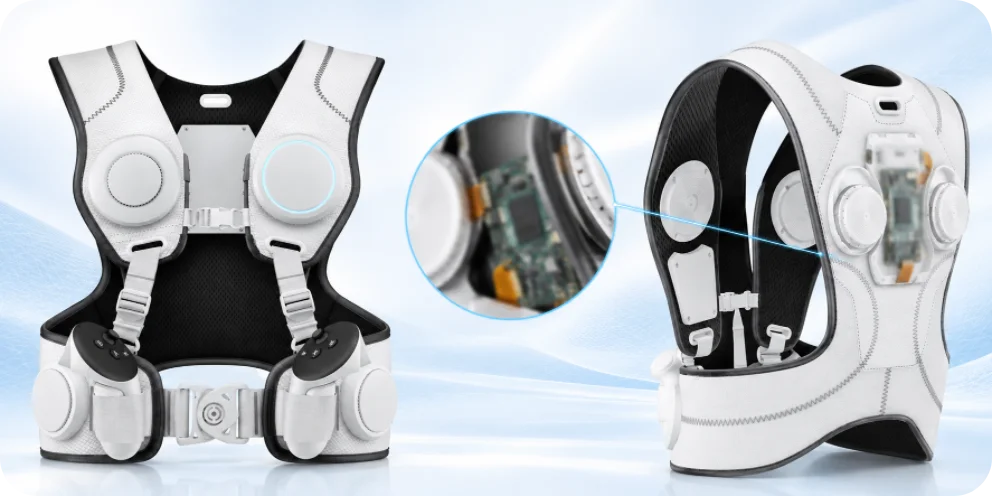
In a wearable haptic vest, the wearer notices the feedback, not the circuit boards behind it. A vibration that arrives late, activates the wrong zone or weakens when several actuators run together can undermine the experience. For the electronics manufacturer, the important question is how the approved design will be built consistently across its controller, driver boards and connections.
A wearable haptic vest PCB may be a main control board, a local actuator-driver board or part of a larger electronic assembly. Highleap Electronics provides PCB fabrication and PCBA assembly for a wide range of customer-designed products, including wearable electronics, industrial equipment and communication devices. Haptic vests are one application of those manufacturing services, not a separate or exclusive product line.
How the Electronics Are Arranged in a Haptic Vest
A controller receives instructions from an onboard program or an external device and directs driver circuits to activate specific tactile zones. Those instructions may arrive through a cable or a wireless connection. The PCB arrangement depends on the number and type of actuators, how they are distributed across the garment and where the battery and connectors can fit.
Some designs place the controller and most actuator drivers on one board, with wires running to each zone. Others use a central controller and smaller driver PCBAs positioned closer to groups of actuators. The first approach can reduce the number of populated boards but increase harness complexity. The second can shorten local actuator wiring while adding board variants, connectors and assembly steps.
Flexible interconnects are another option where the garment’s shape or available space requires them. They are not automatically preferable to cables. A flex circuit that bends repeatedly during use needs different mechanical consideration from one folded only during assembly. The released design should specify the intended bend areas, stiffeners and connector positions.
These differences matter when requesting a quotation. An actuator count alone does not show whether the project needs one controller PCBA, multiple repeated zone boards or several types of interconnect. The board arrangement determines the actual fabrication and assembly work.
What Makes Multi-Zone Haptic Hardware Difficult to Build
A single working actuator does not prove that a vest will operate reliably when several zones activate together. Simultaneous loads can cause supply-voltage dips at the battery, connectors or PCB power traces. Depending on the design, the result may be reduced output, electrical noise or a controller reset. OEMs should define the maximum permitted simultaneous load and provide a representative operating pattern for evaluation.
Actuator choice also affects the electronics. Eccentric rotating mass (ERM) motors and linear resonant actuators (LRAs) operate differently. A driver capable of supporting both still needs the correct configuration and compatible electrical design. Replacing an actuator or driver solely because the package or nominal voltage looks similar can change the response.
The garment introduces mechanical risks that may not appear during bench testing. Cables are pulled as the wearer moves; connectors may sit near seams or pressure points; and modules may need to be removed before cleaning. Connector orientation, strain relief and cable routing should therefore be defined by the product designer rather than improvised during final assembly.
Correct zone mapping is equally important. If two outputs are exchanged, a board may pass a basic power-on test while activating the wrong part of the vest. When specified by the OEM, a useful production test can check driver communication, channel identification and selected multi-zone output patterns.
PCB Fabrication and Assembly for Haptic Wearables
Highleap manufactures circuit boards for many types of electronics, rather than specializing exclusively in haptic vests. Our broader electronic manufacturing services provide context for customers looking beyond bare-board supply. For a wearable haptic project, the specific work is established from the OEM’s design files and agreed production requirements.
PCB fabrication covers the unpopulated boards, while PCB assembly adds component placement and soldering. Depending on the quotation, a project may also involve approved component sourcing, programming, inspection and customer-defined electrical or functional checks. Cable assembly, actuator attachment and garment integration should not be assumed to be part of a standard PCB order.
For a multi-zone controller, attention may fall on haptic driver ICs, supply components, connector footprints and current-carrying paths. For repeated local driver boards, board identification and consistent connector orientation can be particularly important. A substitute component that changes drive characteristics, current rating or mechanical fit should be approved before it is used.
If the product includes flexible sections, flex PCB assembly may call for dedicated handling, support fixtures and clear bend-area instructions. Where the OEM supplies test fixtures and acceptance criteria, functional testing can help confirm the agreed electronic behavior before the boards leave production.
Board-level inspection and testing cannot, by themselves, establish the finished vest’s tactile realism, comfort, washability or compliance with applicable product requirements. Those outcomes depend on the complete garment, software, actuators and final integration.
What an OEM Should Prepare Before Production
A clear manufacturing package makes it easier to distinguish what belongs to a bare-PCB order, a populated control board or a set of zone modules. This is especially useful when different vest sizes share electronics but use different cable lengths, actuator counts or firmware configurations.
For a meaningful manufacturing review, include:
- PCB data: Gerber or ODB++ files, stack-up, fabrication drawings and the quantity for each board revision.
- Assembly data: BOM with approved manufacturer part numbers, placement files and assembly drawings.
- Haptic requirements: actuator part numbers, zone/channel mapping, supply voltage and maximum simultaneous-load conditions.
- Connections: connector pinouts and any cable, flex or size-dependent drawings included in the requested scope.
- Testing: firmware or programming instructions, test patterns and pass/fail limits, where applicable.
When design details are still being revised, identify them before purchasing or tooling decisions are made. Once a version is approved, keeping the PCB revision, BOM and test instructions aligned helps repeat orders match the intended build.
Whether your project involves a wearable haptic vest, another wearable controller or a different electronic product, Highleap can review the supplied files and requirements for a PCB or PCBA manufacturing quotation. The scope should reflect the actual electronics to be built, not a one-size-fits-all product description.

Recommended Posts
TMM4 Filter PCB Manufacturing
TMM4 filter PCB manufacturing is controlled by the...
TMM3 PCB Manufacturing for RF Modules
TMM3 PCB manufacturing is most useful where the RF module...
TMM6 PCB Fabrication
TMM6 fabrication is the process-control page for a mid-Dk...

TMM10 PCB Manufacturing for Compact RF Designs
Table of contentsHow TMM10 Shrinks RF StructuresTMM10 vs...
How to get a quote for PCBs
Let’s run DFM/DFA analysis for you and get back to you with a report. You can upload your files securely through our website. We require the following information in order to give you a quote:
-
- Gerber, ODB++, or .pcb, spec.
- BOM list if you require assembly
- Quantity
- Turn time
For PCBA services, please provide your BOM (Bill of Materials) and any specific assembly instructions. We also offer DFM/DFA analysis to optimize your designs for manufacturability and assembly, ensuring a smooth production process.