
Consigned PCBA Cost and Quote Factors
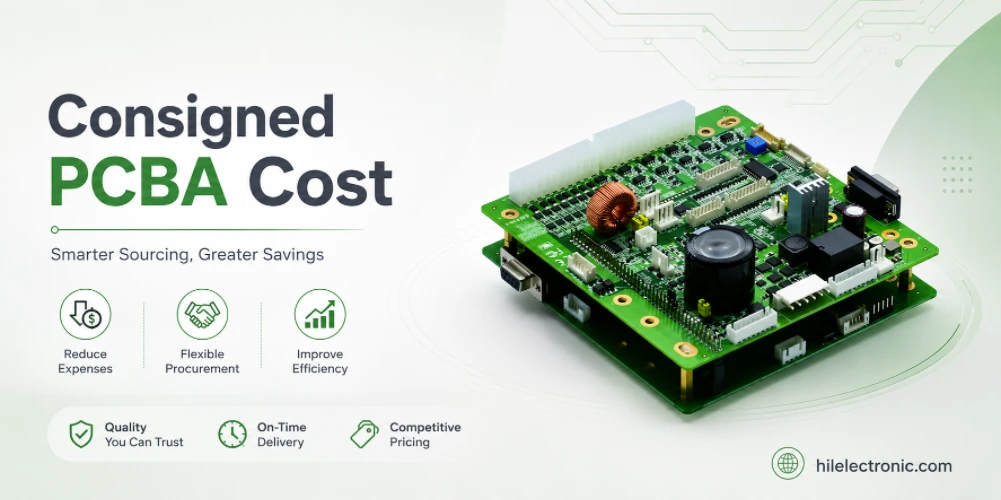
Table of Contents
Consigned PCBA cost depends on more than assembly labor. Since the customer supplies the components, the material purchase price may not appear in the assembly quote, but kit checking, setup, SMT assembly, inspection, shortage handling, rework risk, documentation and schedule requirements still affect the final cost.
Highleap Electronics quotes consigned PCB assembly from the released files, BOM, component kit status, assembly complexity, quantity, inspection requirements and delivery target. A complete RFQ helps avoid price changes after engineering review.
The goal of this guide is to make cost drivers clear before the order is placed. A consigned assembly quote can look simple because material purchasing is not included, but the factory still needs to plan equipment, labor, inspection and handling. The more complete the kit and data are, the easier it is to quote accurately.
Consigned PCBA Cost Scope
A consigned PCBA quote usually covers assembly-related work rather than component purchasing. The quote may include stencil, SMT setup, pick-and-place programming, solder paste printing, reflow, AOI, through-hole assembly, manual soldering, inspection, packaging and documentation. If PCB fabrication, X-ray inspection, functional testing or special cleaning is required, those items should be quoted separately or clearly included.
Consigned cost should therefore be read as a manufacturing-service cost, not a full product cost. The customer still owns component purchasing cost, inventory cost, shipping cost and component shortage risk unless a different arrangement is agreed. If Highleap is asked to purchase missing items later, the project becomes partial turnkey for those line items.
Usually included
Assembly labor, SMT setup, standard inspection and packaging based on agreed scope.
May be added
Stencil, X-ray, functional test, programming, cleaning, first article or documentation.
Not automatic
Component authentication, design validation, custom test fixture development or engineering redesign.
For service scope details, see consigned PCB assembly services.
Main Cost Drivers and Quote Variables
This is the key section for cost planning. A low or high quote often comes from hidden differences in setup, inspection, handling and risk. The same board quantity can cost differently when one order has complete reels and simple SMT, while another has cut tape, fine-pitch ICs, through-hole connectors, X-ray requirements and incomplete kit documentation.
| Cost driver | Price impact | Why it matters | Control method |
|---|---|---|---|
| Number of placements | High | More components increase machine time and inspection work. | Send accurate BOM and placement data. |
| Setup complexity | High for small lots | Stencil, program and feeder setup are spread over fewer boards. | Quote practical batch sizes. |
| Component packaging | Medium to high | Cut tape and loose parts increase handling time. | Use reels, trays or tubes when possible. |
| Inspection scope | Variable | AOI, X-ray, FAI and reports add work. | Specify required inspection before quote. |
| Shortage and rework risk | Variable | Incomplete kits can stop production or require extra handling. | Prepare kit and overage correctly. |
Quote Comparison Rule
Compare quotes by scope, not only final price. A quote that includes X-ray, first article and unused part return is not the same as a quote for basic SMT assembly only. A quote based on complete reels is not the same as a quote based on loose customer-supplied parts.
Quote scope to compare:
- Stencil included or excluded.
- Inspection level and X-ray requirement.
- Incoming kit review detail.
- Through-hole and manual soldering scope.
- Functional test, programming or cleaning requirement.
- Unused component return and documentation.
Customer-Supplied Material Handling Cost
Customer-supplied material reduces factory purchasing responsibility, but it does not remove material handling work. Highleap still needs to receive, review, organize, store and prepare the components for production. The more organized the kit is, the lower the handling uncertainty.
Material handling cost is most visible in small-lot builds. Sorting five thousand parts for ten boards can take more time than expected if the kit is not labeled by BOM line. On the other hand, a clean kit with reels, trays and a packing list can move through review quickly. This is why kit quality directly affects quotation accuracy.
Material Handling Work Items
- Shipment receipt and packing list review.
- BOM line matching and MPN confirmation.
- Quantity check and shortage reporting.
- MSL and ESD condition review.
- Sorting of cut tape, trays, tubes or bags.
- Customer confirmation for mismatch or substitute items.
- Unused component organization after build.
SMT, Through-Hole and Inspection Cost
Assembly cost depends on placement count, component type, board complexity, soldering method and inspection requirement. Fine-pitch ICs, BGAs, QFNs, connectors, shields, heavy parts and manual soldering steps can increase process time. Through-hole assembly may require selective soldering, wave soldering or manual soldering depending on board design and quantity.
Board design also matters. Dense two-sided SMT, small component spacing, parts near board edges, mixed heavy components and manual operations can all change labor planning. If the board requires special fixtures, masking, press-fit insertion or mechanical assembly, that work should be included in the quote request.
- Placement count
- Fine-pitch packages
- BGA/QFN requirements
- Feeder setup
- Stencil need
- Connector count
- Manual soldering
- Selective soldering
- Mechanical fit
- Large component handling
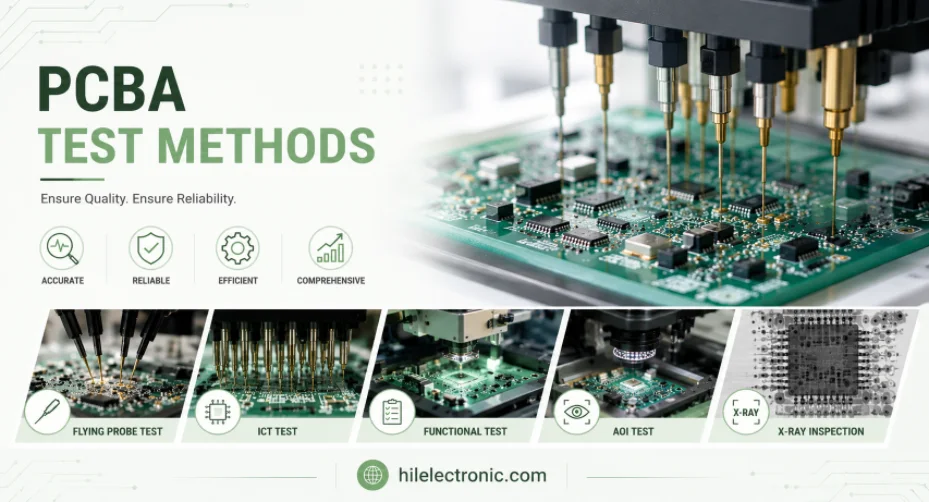
- AOI
- X-ray
- FAI
- Visual inspection
- Customer reports
Testing Cost Boundary
Electrical or functional testing should be defined before quotation. A simple power-on check is different from a full functional test with fixture, firmware, test procedure and pass/fail limits. If the customer provides a test method, fixture and criteria, Highleap can review whether it can be included in the assembly process.
Shortage, Rework and Delay Cost
Shortage and rework are common cost risks in consigned projects. A missing low-cost component can delay shipment as much as a missing expensive IC if it is required for all boards. Rework can also increase cost when parts are difficult to remove, footprints are delicate or replacement components are limited.
The best way to reduce this risk is to identify critical components early. Parts that are unique, expensive, long lead, difficult to rework or required on every board should be checked before the line is scheduled. If the customer allows partial build, that decision should be confirmed before production starts.
Cost Risk Examples
- Missing passive component: SMT line may stop or boards may be held incomplete.
- Wrong package supplied: substitute approval or new parts are needed.
- Insufficient overage: feeder setup or rework may consume all available parts.
- Late test requirement: inspection and delivery plan must be changed after quote.
- Unclear polarity: production may pause for engineering confirmation.
To control these risks, send a complete kit, provide overage, mark substitutes and confirm testing requirements before assembly release.
Quantity, Lead Time and Production Stage
Unit cost changes with quantity because setup time, stencil cost, programming and engineering review are spread across more boards. A prototype may have a higher unit cost because the setup effort is similar to a larger build. A production order can reduce unit cost when files, kit process and inspection requirements are stable.
Lead time can also affect cost. Urgent builds may require faster file review, special scheduling or expedited shipment. If the kit is incomplete, quick-turn assembly may not be possible even if the factory has capacity. For time-sensitive builds, the customer should send digital files first and ship the kit with clear packing documentation.
| Stage | Cost behavior | Planning suggestion |
|---|---|---|
| Prototype | Higher unit cost due to setup. | Use the build to validate design and assembly. |
| Pilot run | More stable cost if files are corrected. | Confirm kit process and inspection scope. |
| Repeat production | Better setup efficiency. | Lock BOM, files and supply process. |
For production transition, see prototype to production PCB assembly.
Cost Control Without Assembly Risk
Cost reduction should not create assembly risk. The best cost control comes from complete data, organized kits, correct overage, stable BOM revision and clear inspection scope.
- Send final BOM and placement data together.
- Use clear component labels by BOM line item.
- Provide practical overage for SMT parts.
- Confirm DNP items before kit preparation.
- State inspection and test requirements before quote.
- Avoid late substitutes after SMT setup.
- Quote prototype, pilot and production quantities separately.
When customer-supplied material creates too much handling work, partial turnkey PCB assembly may reduce total project effort.
Consigned PCBA Quote Checklist
- PCB files or supplied bare board information.
- BOM with MPN, manufacturer, package, quantity and DNP items.
- Pick-and-place file and assembly drawing.
- Customer-supplied kit packing list.
- Component quantity and overage details.
- MSL and ESD handling notes.
- Inspection, X-ray, programming or functional test requirements.
- Cleaning, coating or special packaging requirements.
- Quantity, lead time target and shipment plan.
- Unused component return request.

Recommended Posts
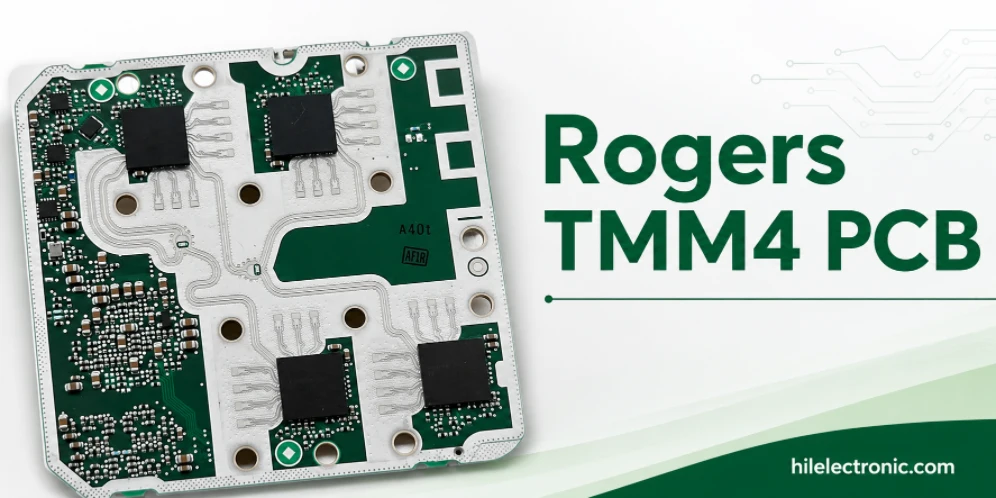
TMM4 Filter PCB Manufacturing
TMM4 filter PCB manufacturing is controlled by the...
TMM3 PCB Manufacturing for RF Modules
TMM3 PCB manufacturing is most useful where the RF module...
TMM6 PCB Fabrication
TMM6 fabrication is the process-control page for a mid-Dk...

TMM10 PCB Manufacturing for Compact RF Designs
Table of contentsHow TMM10 Shrinks RF StructuresTMM10 vs...
How to get a quote for PCBs
Let’s run DFM/DFA analysis for you and get back to you with a report. You can upload your files securely through our website. We require the following information in order to give you a quote:
-
- Gerber, ODB++, or .pcb, spec.
- BOM list if you require assembly
- Quantity
- Turn time
For PCBA services, please provide your BOM (Bill of Materials) and any specific assembly instructions. We also offer DFM/DFA analysis to optimize your designs for manufacturability and assembly, ensuring a smooth production process.