
Connected Safety Helmet PCB Manufacturing & Assembly for Industrial IoT OEMs
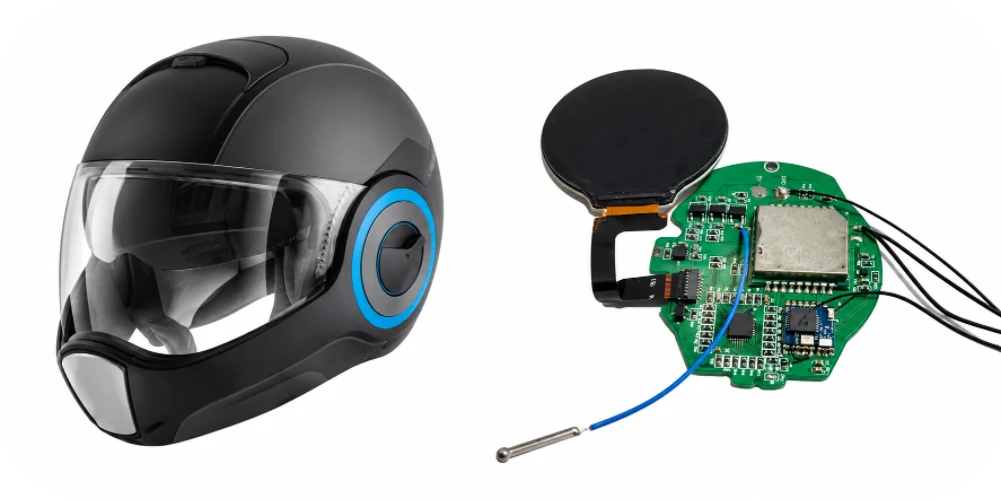
A Connected Safety Helmet PCB is an industrial IoT platform worn on the head. Depending on the deployment, it can combine worker identity, BLE or other wireless, GNSS/location, IMU, environmental sensors, SOS buttons, buzzer/LED/vibration alerts and battery power. For an OEM, production success depends on rugged electronics, device identity and a test flow that matches the actual site architecture.
Highleap Electronics is a PCB manufacturing and PCB assembly factory for customer-designed electronics. We can quote released industrial helmet PCBs, sensor/radio modules and flex interconnects with sourcing, SMT/THT, ruggedization steps when specified, programming, identity provisioning and customer-defined functional test.
This page is written for companies searching for a connected safety helmet PCB manufacturer, industrial smart helmet PCBA supplier, worker tracking helmet PCB assembly factory or construction/industrial IoT electronics partner. It deliberately emphasizes manufacturing and deployment readiness rather than generic workplace-safety education.
Industrial Safety Helmet Deployment and Buyer Intent
Construction, Mining, Utilities, Warehousing and Field-Service Helmet Electronics
The word “connected” does not define one radio architecture. A warehouse may use BLE or UWB infrastructure. Outdoor field workers may use GNSS plus cellular. Construction sites may combine local gateways with environmental sensing. The manufacturing RFQ must state the actual deployment rather than asking the factory to populate every possible radio.
| Deployment type | Likely buyer search | Manufacturing emphasis |
|---|---|---|
| Construction worker helmet | construction helmet electronics manufacturer | BLE/GNSS, alarms, rugged connectors and long-shift battery |
| Industrial plant helmet | industrial helmet sensor PCBA | Environmental sensor access and local gateway connectivity |
| Mining/remote field helmet | worker tracking helmet PCB | Location/radio architecture, high peak current and ruggedization |
| Utility/field-service helmet | IoT safety helmet PCB assembly | Identity, telemetry, charging and serviceability |
What Highleap Can Quote
- Customer-designed main controller and sensor/radio PCBs.
- Flex or peripheral alarm/LED boards according to the released design.
- Controlled sourcing for MCU, radio modules, sensors, GNSS, memory, power and connectors.
- SMT/THT assembly, coating/staking/encapsulation only where customer drawings define the process.
- Programming, fleet identity provisioning and customer-defined functional test.
Wireless, Location and Power Architecture
BLE, GNSS, Cellular and UWB Solve Different Problems
A connected safety helmet may use BLE for local identity/proximity, GNSS for outdoor position, cellular for wide-area telemetry, or UWB for site-based precision location. Those technologies have different antenna, current and test requirements. The PCBA supplier should manufacture the released architecture rather than recommend an arbitrary radio stack.
| Function | PCB/PCBA concern | Deployment dependency |
|---|---|---|
| BLE | Antenna keep-out, identity and low-power operation | Gateway/phone proximity |
| GNSS | Quiet receive path and antenna location | Sky view and shell geometry |
| Cellular | RF front end, SIM/eSIM and transmit current | Bands, network and regional SKU |
| UWB | RF/timing path and module configuration | Anchor infrastructure and site design |
Average battery runtime and peak-load design are separate questions. A helmet may sleep most of the shift but draw a large transient when cellular, buzzer and LEDs operate during an alarm. The production test should include the OEM representative peak event.
Conversion point
A useful RFQ states the actual worker-communication architecture and site assumptions. That lets Highleap quote radio, antenna, battery and test scope instead of pricing a vague “IoT helmet.”
Environmental Sensors and Rugged PCBA Boundaries
A Sensor That Needs Air Cannot Be Treated Like a Sealed Internal IC
Temperature, humidity, gas, particulate or acoustic sensors may need a controlled path to the environment. Vents, membranes, ports and cleaning restrictions are therefore part of assembly. A coated or sealed PCB can accidentally block the sensor it is supposed to protect.
Ruggedization should be released as a process: coating coverage, keep-outs, staking points, potting material and cure. A PCB coating is not a finished helmet IP rating. Final ingress, impact and worker-safety certification depend on the complete mechanical product.
| Rugged feature | What manufacturing can control | What it does not prove |
|---|---|---|
| Conformal coating | Coverage and keep-outs per drawing | Finished IP rating |
| Connector staking | Mechanical support per released process | Helmet impact certification |
| Sensor membrane/port | Correct assembly and cleanliness | Environmental measurement accuracy in all field conditions |
| Battery/large-part retention | Released adhesive/support process | Complete drop/shock qualification |
Highleap Electronics • PCB Manufacturing & PCBA
Connected Safety Helmet PCB Manufacturing Review
Send the PCB files, BOM, radio and sensor requirements, ruggedization notes and test scope for engineering review.
Request a Safety Helmet PCB Quote →
Discuss Safety Helmet PCBA →
✓ DFM and DFA review✓ Prototype to repeat production✓ PCB fabrication and assembly
Industrial Helmet PCB Fabrication and PCBA Assembly
Radio, Sensors, Alerts and Connectors Create a Mixed-Risk Assembly
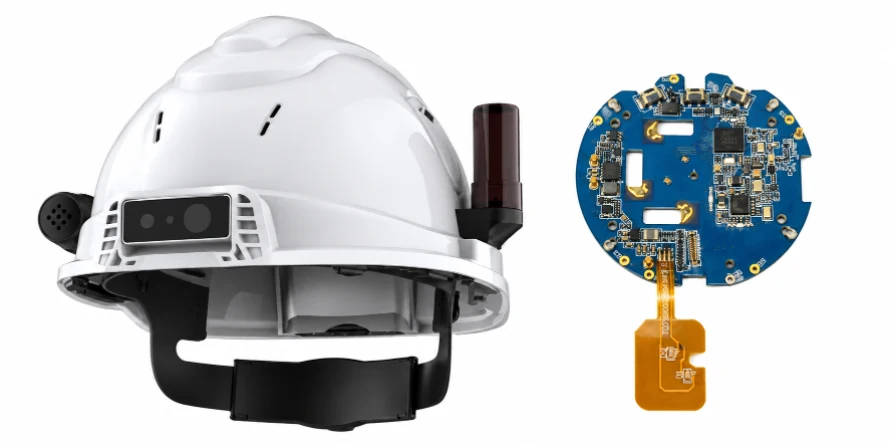
An industrial helmet main board may combine fine-pitch MCU/radio, GNSS, environmental sensors, battery charging, buzzer/vibration driver, LEDs, buttons and several connectors. Sensor ports and microphones need protection from solder paste or cleaning contamination. RF matching parts and antenna feeds should remain under controlled sourcing.
Highleap can combine fabrication with controlled electronic component sourcing and PCB assembly capabilities. Where the OEM requires RF production screening, RF PCB testing can be defined as a measurable test scope; it should not be confused with finished carrier or regulatory certification.
Long-Shift Devices Need Current-Screen Discipline
Standby-current screening can catch solder bridges, wrong regulators or firmware/configuration issues that destroy battery runtime. Alarm-state current can catch a weak power path. These checks can be much more commercially useful than adding generic tests that do not match the product.
Provisioning, Serial Data and Fleet Configuration
A Connected Helmet Can Be Electrically Good but Operationally Assigned to the Wrong Fleet
Industrial deployments may associate the PCBA serial number with BLE address, cellular identifier, asset ID, site profile or firmware configuration. The manufacturing process should define how identities are programmed, recorded and handled after rework.
Regional radio variants, optional sensor packs and customer-specific firmware should be controlled by a configuration matrix. A visually identical board can be wrong if it receives the wrong radio population or software profile.
Identity rule
Do not reuse or duplicate device identities during scrap/rework unless the OEM released process explicitly controls that transfer.
Prototype, Pilot and Production Functional Test
Prototype builds should verify the real communication path available in the lab or factory: BLE pairing, GNSS interface, cellular registration where infrastructure exists, sensor enumeration, alarm outputs, charging and identity programming.
Pilot production should freeze radio modules, antenna/matching parts, sensor MPNs, ruggedization process, firmware/configuration and provisioning database flow. Production test can then focus on detecting assembly defects efficiently rather than repeating full environmental qualification.
- Program firmware and correct customer/region profile.
- Verify device identity and radio identifiers.
- Check required sensors and exposed ports.
- Run alarm outputs and representative peak-load state.
- Verify charging and abnormal standby current.
- Record pass/fail data according to the OEM traceability requirement.
Adjacent Industrial Wearables and Cross-Sell Products
| Adjacent or related product | Why the buyer may also search it | How the PCB/PCBA brief changes |
|---|---|---|
| Lone worker device PCB | Buyer needs personal safety without helmet integration | Similar radio/identity, smaller wearable enclosure |
| Wearable gas detector PCBA | Buyer prioritizes exposed environmental sensing | Calibration, sensor exposure and alarms dominate |
| Industrial worker tracker PCB | Buyer mainly needs identity/location | Less helmet-specific mechanics, more fleet provisioning |
| Body worn camera PCB | Buyer adds imaging and storage | High-speed imaging, memory and data security expand |
| Smart badge PCB | Buyer needs BLE/UWB identity at lower power | Simpler mechanics and smaller battery |
These surrounding products share procurement contacts in industrial IoT companies. Cross-linking them can increase commercial reach while each page remains specific enough to match a distinct RFQ.
Regional Radio Variants and Customer Fleet Variants Should Be Quoted Separately
Industrial IoT helmets can share one PCB while changing cellular module, SIM/eSIM approach, antenna population, environmental sensors or customer firmware. A buyer should provide a SKU matrix before volume pricing. Without it, a supplier may price the most expensive population across all units or miss the labor needed to keep variants separated.
| Variant dimension | Possible change | Manufacturing control |
|---|---|---|
| Region | Cellular band/module or radio population | Separate BOM/firmware/test profile |
| Customer fleet | Firmware, asset-ID format or server credentials | Provisioning package and label rule |
| Sensor tier | Gas/environmental sensor fitted or not | BOM population and sensor test |
| Battery/runtime tier | Cell pack or charging profile | Connector/current/test configuration |
Highleap can quote a common bare PCB plus variant-specific assembly if the data is clear. That approach usually gives procurement a better view of common material versus option cost and makes later repeat orders less error-prone.
RFQ Inputs for Connected Safety Helmet PCB Production
Send Gerber/ODB++, fabrication drawing, stack-up, BOM, pick-and-place, sensor list/exposure requirements, radio/location architecture, antenna notes, battery/charging details, alarm loads, ruggedization drawing, firmware/configuration matrix, provisioning procedure, functional-test limits and quantities by customer or region.
State whether Highleap is quoting individual PCBAs or the full electronic module set. If the project needs coating, potting, shield installation or cable attachment, define the process and inspection requirement.
The high-conversion message is simple: Highleap is most useful when the OEM already has a released industrial IoT architecture and needs a factory that can preserve sensor, radio, identity and ruggedization controls across repeat orders.

Recommended Posts
TMM4 Filter PCB Manufacturing
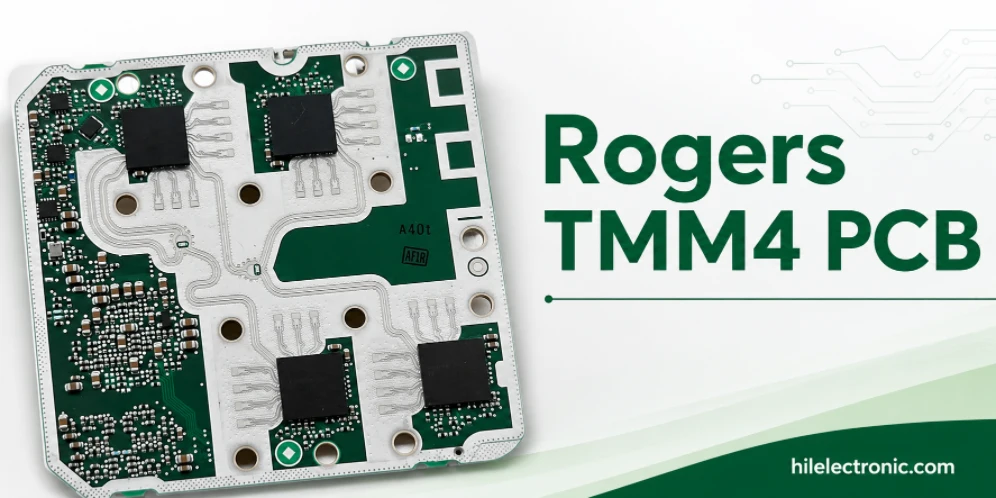
TMM4 filter PCB manufacturing is controlled by the...
TMM3 PCB Manufacturing for RF Modules
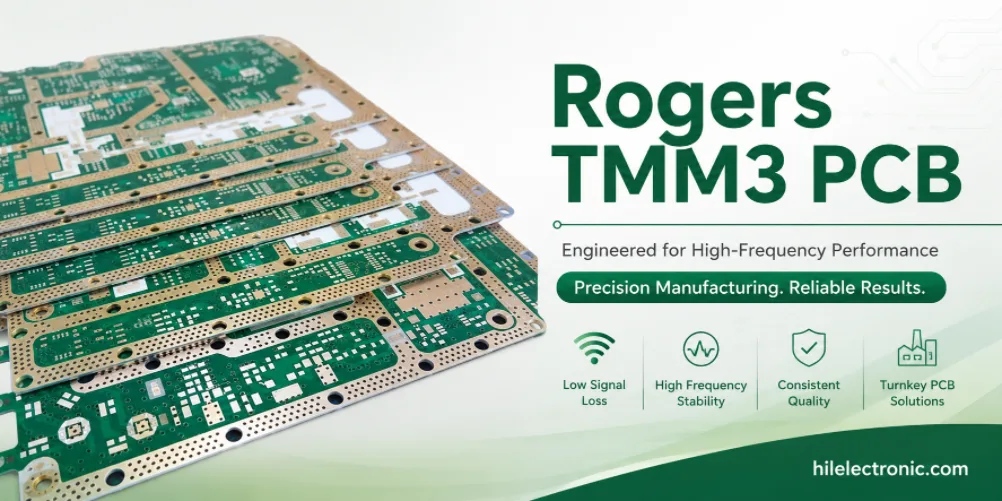
TMM3 PCB manufacturing is most useful where the RF module...
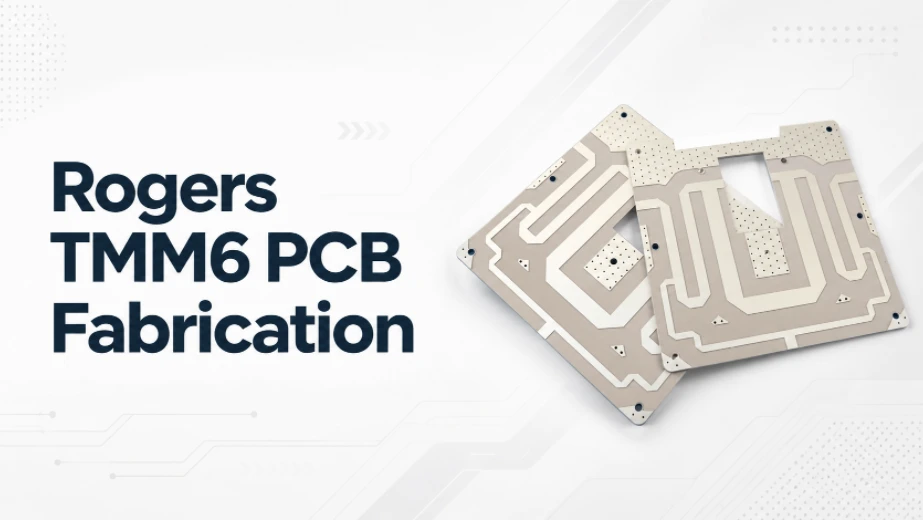
TMM6 PCB Fabrication
TMM6 fabrication is the process-control page for a mid-Dk...

TMM10i PCB Fabrication and DFM
TMM10i PCB fabrication has a stronger DFM emphasis because...
How to get a quote for PCBs
Let’s run DFM/DFA analysis for you and get back to you with a report. You can upload your files securely through our website. We require the following information in order to give you a quote:
-
- Gerber, ODB++, or .pcb, spec.
- BOM list if you require assembly
- Quantity
- Turn time
For PCBA services, please provide your BOM (Bill of Materials) and any specific assembly instructions. We also offer DFM/DFA analysis to optimize your designs for manufacturability and assembly, ensuring a smooth production process.