
Electronic Component Lead Times PCBA Solutions
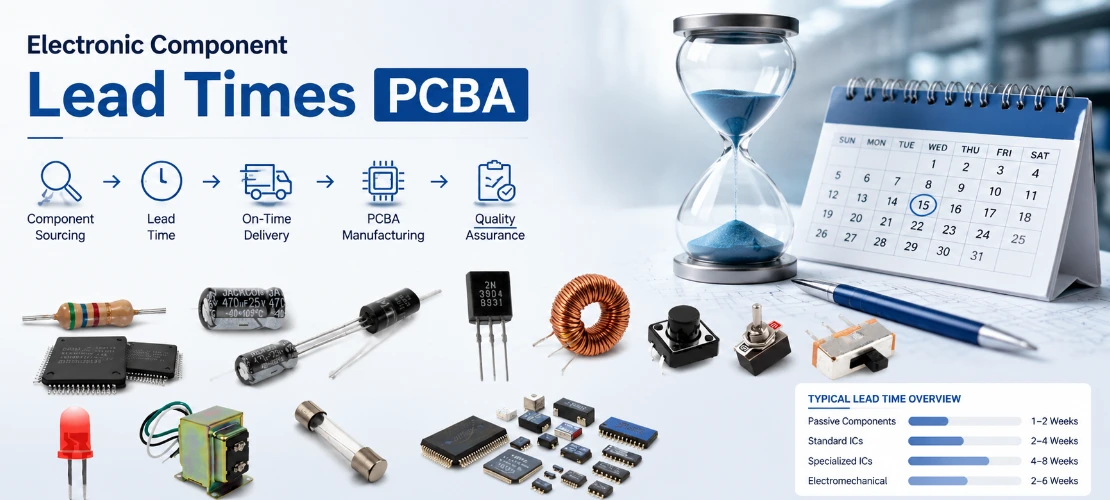
Electronic component lead times determine whether a PCB assembly quotation can become a reliable production schedule. A quoted factory cycle, distributor replenishment estimate and material-ready date are not the same. Buyers need to know which BOM lines control the build, what inventory is actually reserved and which dates remain conditional.
Highleap Electronics coordinates component procurement with PCB fabrication, assembly, programming and testing. The objective is to issue a delivery plan based on released materials and explicit assumptions rather than quoting an assembly date that ignores the critical component path.
Request a component and PCBA lead-time review
Send the BOM, quantity, forecast, approved alternates and production files. Highleap can identify the critical-path parts and separate material lead time from fabrication and assembly time.
Understand What an Electronic Component Lead Time Actually Includes
Lead time can describe several different intervals. Factory lead time is the manufacturer’s expected production cycle after an accepted order. Distributor lead time may include replenishment, allocation and inbound logistics. A PCBA material-ready date also includes purchase approval, payment or credit processing, transport, customs where applicable, receiving, incoming inspection and release to production.
| Quoted status | What it means | Planning treatment |
|---|---|---|
| Authorized stock available | Inventory is currently visible at an approved source | Reserve or purchase promptly; visibility is not a reservation |
| Factory lead time | Expected manufacturing interval after order acceptance | Add order processing, logistics and incoming release |
| Allocation | Demand exceeds available supply or allocation is controlled | Quantity and date may not be guaranteed |
| NCNR | Order cannot be cancelled or returned | Obtain written commercial approval |
| Broker or independent stock | Material is outside the normal authorized path | Escalate source, authenticity and inspection decision |
| Customer-consigned | Customer supplies the part | Schedule depends on confirmed arrival and incoming acceptance |
Quoted dates can change because the manufacturer has not accepted the order, inventory is shared across customers, the part requires a full reel, the requested package differs from available stock or customs and logistics are excluded. A reliable quotation states price validity, stock status, reservation assumptions and the point at which the delivery date becomes committed.
Distinguish estimated, confirmed and committed dates
An estimated date is based on current information and may change before order acceptance. A confirmed date normally means the supplier has acknowledged the order, but allocation or logistics can still affect delivery. A committed PCBA date should be issued only after critical materials, files and approval gates are sufficiently controlled. Using these terms consistently prevents a distributor estimate from being presented to the end customer as a guaranteed shipment date.
Find the BOM Lines That Control the PCBA Schedule
The component with the longest published lead time is not always the critical part. The schedule is controlled by the line that combines late availability with no approved substitute and high design dependence. Typical critical-path items include MCUs, FPGAs, memory, power modules, displays, sensors, transformers, custom magnetics, connectors and product-specific mechanical parts.
Highleap reviews the PCB BOM using exact MPN, package, lifecycle status, approved-source count, required quantity, available inventory and product impact. Generic descriptions delay this analysis and can create false availability. A capacitor described only by value and package may have many options; a certified safety capacitor or high-capacitance MLCC under DC bias may not.
Rank by schedule consequence
Classify each line as available, watch, critical or unresolved. “Watch” parts have adequate current supply but limited sources or changing lead time. “Critical” parts exceed the build window or have insufficient quantity. “Unresolved” parts lack an exact MPN, approved source or engineering decision.
The review should also include programming and test dependencies. A substitute MCU may be available but cannot release the schedule until firmware and programming are validated. A connector can block enclosure assembly even if every electronic part is ready. The material plan therefore needs input from purchasing, engineering, manufacturing and test.
For each critical line, record the required-on-site date, available quantity, order status, approved alternate status and next decision date. This creates a material exception list that can be reviewed without reopening the entire BOM at every meeting. Parts with enough stock for the first build but not the forecast should remain on the watch list.
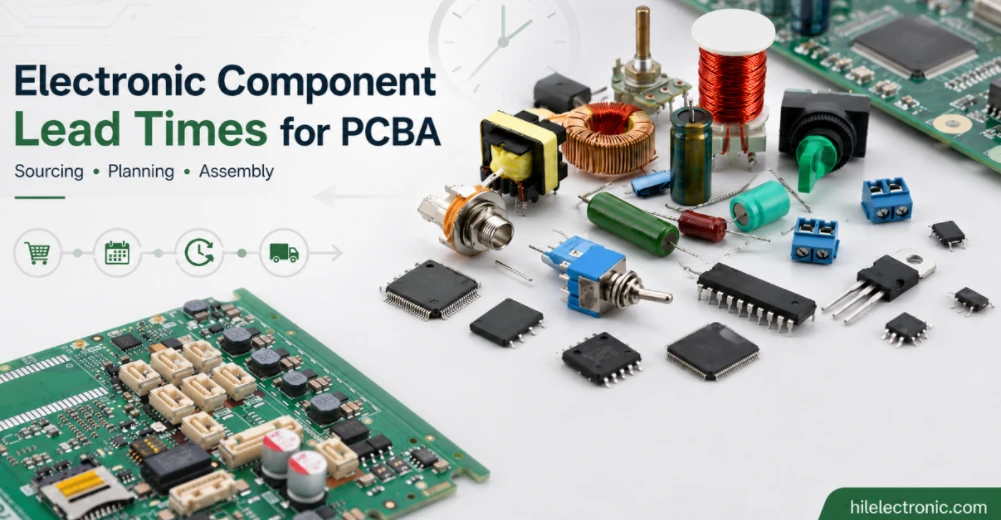
Build a Sourcing Strategy for Long-Lead and Uncertain Components
Different component conditions require different actions. Reserving authorized stock is appropriate when the design is released and demand is firm. Factory orders may be necessary for predictable volume. NCNR commitments require documented approval. Approved alternates reduce dependence when they are validated before the shortage. Customer consignment can protect strategic parts but shifts responsibility for delivery and quality.
| Strategy | Use when | Control required |
|---|---|---|
| Buy or reserve authorized stock | Inventory is available and the design is released | Confirm quantity, lot, date code, package and reservation period |
| Place factory/NCNR order | Demand is firm and lead time exceeds normal order cycle | Approval for cancellation liability and forecast risk |
| Approve alternate components | Original part has limited sources or unstable lead time | Engineering comparison, sample and release control |
| Customer consignment | Customer has allocation, negotiated pricing or restricted parts | Arrival date, traceability, incoming criteria and shortage ownership |
| Split delivery | Partial material can support useful early quantity | Lot traceability, setup cost and customer acceptance |
Current market information should be category-specific. ECIA publishes component lead-time trends across semiconductor, passive and electromechanical categories. A tight memory market does not justify buying every passive early, and stable availability in one package does not prove supply in another. Highleap’s electronic component sourcing review uses current authorized availability and the released BOM rather than relying on old shortage narratives.
Coordinate Component, PCB Fabrication and Assembly Lead Times
A complete PCBA schedule includes engineering review, material approval, PCB fabrication, stencil preparation, incoming inspection, SMT/THT assembly, programming, cleaning or coating where specified, test and packing. These activities can overlap only when revision risk is controlled.
Starting PCB fabrication before a critical component is approved may be safe when the footprint and design are frozen. It is risky when the unresolved part could change land pattern, power requirements or firmware. Ordering long-lead components before design release can create excess or unusable inventory. The schedule should identify each approval gate.
Highleap aligns the material-ready date with PCB lead time and PCB assembly lead time. For urgent projects, parallel work may include DFM review, PCB material preparation, stencil data review and test-fixture planning while strategic components are being secured. The quotation should state which activities are conditional and which can begin immediately.
Split deliveries can help when a limited quantity of critical parts is available, but they may add setup, stencil, programming and inspection cost. The customer should decide whether early partial quantity has enough business value to justify multiple production lots.
Include inspection and release time for customer-supplied materials
Consigned components do not become production-ready when the shipment reaches the factory. Receiving quantity, packaging condition, labels, moisture controls, traceability and part identity may need review. Nonconforming or short material can delay the build even when the customer shipped on time. The schedule should include an agreed incoming window and escalation process.
Control Forecast, Safety Stock, NCNR and Repeat-Order Changes
Lead-time management continues after the first order. A prototype BOM can become exposed before volume release because a part moves to NRND, demand changes or the selected package enters allocation. Repeat quotations should therefore recheck lifecycle, source, price and lead time rather than copying the previous material plan.
Forecasts can improve reservations and factory planning, but they should be linked to authorization levels. Define when a forecast is informational, when Highleap may reserve stock and when a purchase order or NCNR approval is required. Safety stock should be based on demand variability, replenishment time, consequence of shortage and storage constraints—not a uniform number of weeks for every component.
Revision control is essential. If an alternate is approved, update the BOM and AVL before purchasing. If customer-consigned parts arrive late or short, define whether production will wait, build partial quantity or use an approved substitute. Material ownership, excess inventory, cancellation and price-change treatment should be stated commercially.
Authorized-channel sourcing reduces traceability and authenticity risk. ECIA’s 2026 position reinforces the importance of manufacturer-authorized channels and warns about unknown provenance and improper handling in gray-market supply.
Use exception-based communication
Routine status reports should focus on changes that affect price, quantity or date: supplier decommit, partial allocation, failed incoming inspection, late consignment, expired quote or unresolved alternate approval. Listing every stable BOM line can hide the issues that need a decision. Each exception should identify the required customer action and the date after which the production schedule changes.
What Highleap Needs to Issue an Accurate PCBA Delivery Quote
An accurate PCB assembly quote requires more than board quantity. Provide:
- BOM with exact MPNs, quantities and approved alternates;
- Gerber or ODB++, centroid and assembly drawings;
- order quantity, forecast and requested delivery profile;
- customer-supplied, restricted-source and NCNR-sensitive parts;
- programming files, security requirements and test specification;
- acceptable split-delivery rules;
- product revision and change-control contacts.
Highleap can return a material-status summary, critical-path list, sourcing assumptions, PCB fabrication interval, assembly/test interval and overall estimated delivery. The quote should identify stock that is not reserved, prices subject to reconfirmation and any unresolved BOM line that prevents a committed schedule.
For repeat production, Highleap can recheck material status during requotation and notify the customer when an approved source, lifecycle condition or lead time changes. The customer retains approval authority for technical substitutes and inventory commitments.
The delivery quotation can present separate milestones for material approval, material-ready date, PCB completion, assembly start, test completion and shipment. For projects with unresolved parts, Highleap can issue a conditional schedule showing the latest date by which the customer must approve an alternate, accept NCNR terms or deliver consigned stock.
When a customer requests acceleration, Highleap can review which cost actually buys time: reserving current stock, changing an approved source, using a faster PCB route, splitting delivery or adding production capacity. Expedited freight does not solve a part that is not manufactured, and overtime does not solve an unapproved BOM.
Build the delivery plan around the real critical path
Highleap can review component availability, PCB fabrication, assembly, programming and test as one schedule, with assumptions and approval gates visible before the order.

Recommended Posts
TMM4 Filter PCB Manufacturing
TMM4 filter PCB manufacturing is controlled by the...
TMM3 PCB Manufacturing for RF Modules
TMM3 PCB manufacturing is most useful where the RF module...

TMM6 PCB Fabrication
TMM6 fabrication is the process-control page for a mid-Dk...
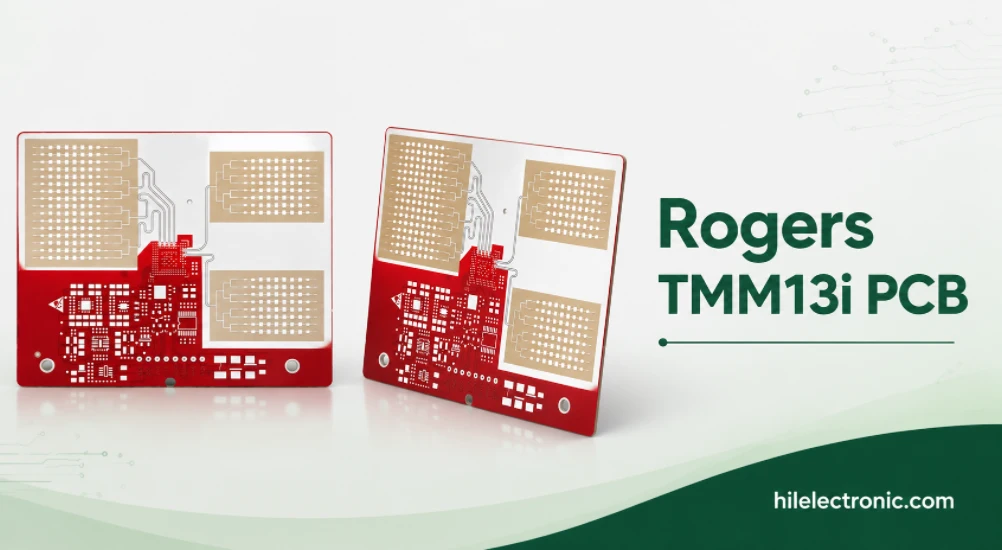
TMM13i PCB Manufacturing
TMM13i PCB manufacturing is aimed at ultra-compact RF...
How to get a quote for PCBs
Let’s run DFM/DFA analysis for you and get back to you with a report. You can upload your files securely through our website. We require the following information in order to give you a quote:
-
- Gerber, ODB++, or .pcb, spec.
- BOM list if you require assembly
- Quantity
- Turn time
For PCBA services, please provide your BOM (Bill of Materials) and any specific assembly instructions. We also offer DFM/DFA analysis to optimize your designs for manufacturability and assembly, ensuring a smooth production process.