
Your Trusted Global Ceramic PCB Supplier

Figure 1. Global Ceramic PCB Supplier
Table of Contents
- Why Most Ceramic PCBs Are Sourced Internationally
- Managing Communication Across Time Zones
- Remote Quality Assurance: Verification Without Presence
- International Logistics and Import Planning
- Intellectual Property Protection in Cross-Border Partnerships
- Total Cost Evaluation: Beyond Unit Price
- Highleap’s Global Service Infrastructure
Working with a global ceramic PCB supplier introduces operational complexities that domestic purchasing does not — time zone gaps that slow engineering questions, language barriers that create specification ambiguity, customs procedures that can stall delivery, and the challenge of verifying quality at a distance. However, the global concentration of ceramic PCB manufacturing capability in Asia (primarily China, Japan, and Korea) means that most engineering teams worldwide source ceramic substrates internationally — making effective cross-border collaboration a core competency for hardware development programs.
This guide covers the practical strategies for maintaining clear communication, verifying quality remotely, managing logistics, and protecting intellectual property when working with ceramic PCB suppliers across borders.
1. Why Most Ceramic PCBs Are Sourced Internationally
1.1 Manufacturing Concentration
Ceramic PCB fabrication requires specialized equipment — DBC bonding furnaces, thick-film screen printing lines, laser singulation systems, and controlled-atmosphere processing chambers — that represents significant capital investment. This specialization naturally concentrates manufacturing in regions with established ceramic electronics infrastructure: China (fastest-growing capacity and most competitive pricing), Japan (highest precision and premium materials), and Korea (strong automotive-grade DBC capability).
1.2 Limited Domestic Options
In North America and Europe, ceramic PCB manufacturers are few in number and primarily focused on defense/aerospace markets with ITAR compliance requirements. For commercial, industrial, and automotive applications, Asian suppliers offer broader capability, faster turnaround, and lower cost — making international sourcing the practical default rather than an exception.
2. Managing Communication Across Time Zones
2.1 The Time Zone Problem
A question sent at 5 PM Eastern time reaches a China-based factory at 6 AM the next morning. If the answer generates a follow-up question, another full day passes before the second response. During DFM review, order confirmation, and troubleshooting, this compounding delay can add 3–5 days to a process that would take hours with a local supplier.
2.2 Effective Communication Protocols
- Written specifications over verbal descriptions: Every requirement should be in a document — fabrication drawing, PO, quality agreement — not in email threads or phone call notes. Documents survive time zones; verbal understanding does not
- Overlapping work hours: Identify a 2–3 hour daily window where both teams are available (e.g., 8–10 AM Eastern / 8–10 PM China). Schedule technical discussions during this window
- Bilingual technical contact: At least one person at the supplier must communicate fluently in your language and understand ceramic PCB technical terminology. Sales translators without technical background misinterpret specifications
- Visual communication: Annotated screenshots of Gerber files, photos of reference boards, and marked-up drawings communicate more clearly across language barriers than text descriptions. “See red circle on attached image” eliminates ambiguity that “the pad near the edge” creates
3. Remote Quality Assurance: Verification Without Presence
3.1 Certification-Based Framework
| Certification | Scope | What It Assures |
|---|---|---|
| ISO 9001 | General quality management | Documented processes, internal audits, management review, corrective action system |
| IATF 16949 | Automotive quality | PPAP, FMEA, SPC, automotive-specific process controls |
| ISO 13485 | Medical device quality | Design controls, traceability, risk management, validated processes |
| ISO 14001 | Environmental management | RoHS compliance, waste management, environmental impact controls |
3.2 Lot-Level Verification
- First Article Inspection (FAI): Require detailed FAI reports with dimensional measurements, photos, and electrical test data for the first production lot. Compare against your specification before approving ongoing production
- In-process documentation: Request furnace temperature logs, inspection photos, and test data for each lot — not just a pass/fail Certificate of Conformance
- Peel strength data: For DBC substrates, request peel strength test results from each production lot as objective evidence of bond quality
- Periodic on-site audits: Visit the facility annually or send a third-party auditor to verify that documented processes match actual practice
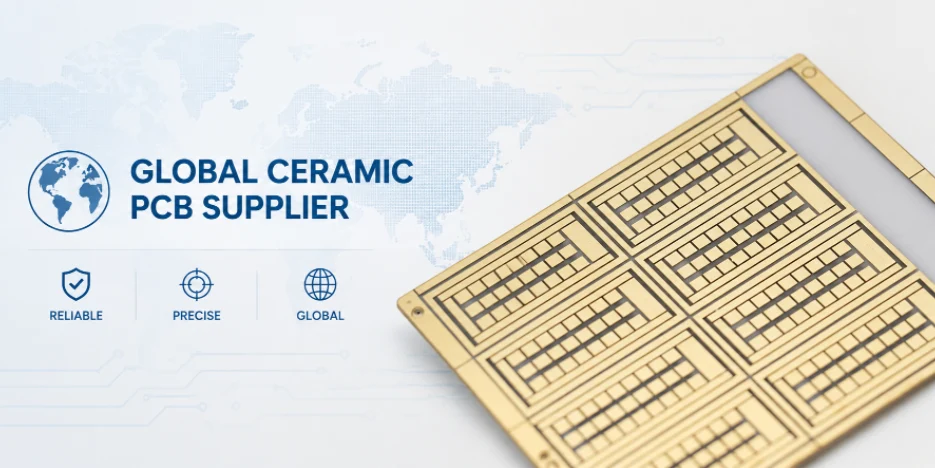
Figure 2. Ceramic PCB
4. International Logistics and Import Planning
4.1 Incoterms for Ceramic PCB Orders
- DDP (Delivered Duty Paid): Supplier handles all customs, duties, and delivery to your door. Simplest for the buyer; eliminates recipient-side customs delays. Recommended for fast delivery priorities
- DAP (Delivered at Place): Supplier ships to your location; buyer handles import duties. Use if your customs broker provides faster clearance than the carrier’s default brokerage
- FOB (Free on Board): Customer arranges all shipping from the manufacturer’s dock. Maximum control, but requires more coordination and logistics knowledge
4.2 Customs Classification and Documentation
Ceramic PCBs typically fall under HS code 8534.00 (printed circuits). Ensure the commercial invoice from your supplier includes: precise material description, metallization type, quantity per part number, declared unit value and total value, country of origin, and net/gross weight. Incorrect or incomplete documentation causes customs holds that add 1–5 days to delivery.
5. Intellectual Property Protection in Cross-Border Partnerships
5.1 Standard IP Protections
- NDA (Non-Disclosure Agreement): Execute before sharing any design files. Ensure the NDA is enforceable under the supplier’s local jurisdiction (Chinese NDA law has specific requirements)
- Design ownership clause in PO terms: Explicitly state that all design IP remains customer property and the supplier may not use, copy, or share designs with any third party
- Restricted file access: Share only manufacturing files (Gerbers, fab drawing) — never full schematic or design source files. The manufacturer needs only fabrication data, not your circuit design intent
5.2 Practical Risk Management
For most ceramic PCB applications, the practical IP risk is low — a custom DBC substrate layout has little standalone commercial value without the complete system design, firmware, and application knowledge. The greater risk is typically specification miscommunication, not IP theft.
6. Total Cost Evaluation: Beyond Unit Price
6.1 True Cost Components
When comparing global suppliers, evaluate total landed cost — not just the quoted unit price:
- Unit price × quantity
- NRE charges (tooling, test fixtures, setup)
- Shipping cost (express air freight adds $30–$300 per shipment depending on weight)
- Import duties and taxes (HS 8534.00 duty rates vary by country: US ~0%, EU ~2.5%)
- Quality cost (incoming inspection time, potential rejection and re-order cost)
- Communication cost (engineering hours spent on specification clarification and follow-up)
- Inventory carrying cost (larger minimum orders from overseas may require warehousing buffer stock)
A supplier with 20% lower unit price but 10% rejection rate and 2× longer communication cycles may have higher total cost than a nearby supplier with higher unit price and zero defects.
7. Highleap’s Global Service Infrastructure
Highleap Electronics serves ceramic PCB customers across North America, Europe, Japan, and Southeast Asia with infrastructure specifically designed for international collaboration:
- Bilingual engineering team: English and Chinese-speaking engineers available for direct technical discussions — no translation intermediaries
- Responsive communication: Email response within 12 hours; overlapping working hours available for US and European time zones
- Documentation: All reports, CoCs, FAI data, and reliability test results provided in English
- Shipping: DHL, FedEx, UPS express accounts; DDP shipping available; 2–3 day air freight worldwide from our manufacturing facility
- Certifications: ISO 9001, ISO 13485, IATF 16949, ISO 14001
- NDA and IP protection: Standard NDA executed before receiving customer design files

Recommended Posts
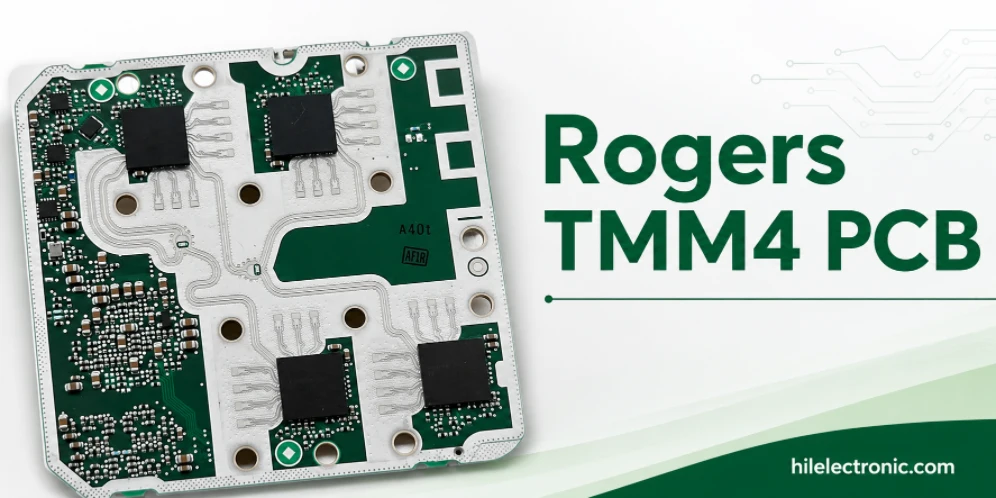
TMM4 Filter PCB Manufacturing
TMM4 filter PCB manufacturing is controlled by the...
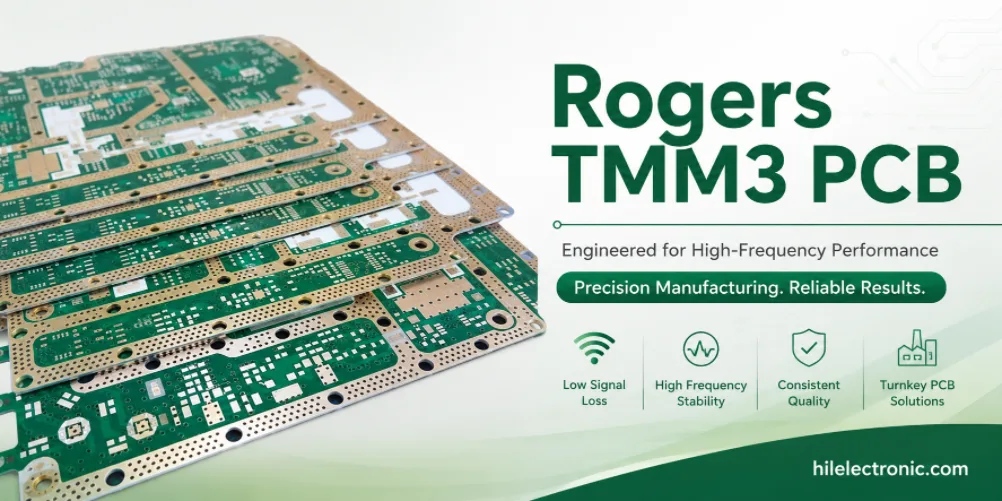
TMM3 PCB Manufacturing for RF Modules
TMM3 PCB manufacturing is most useful where the RF module...
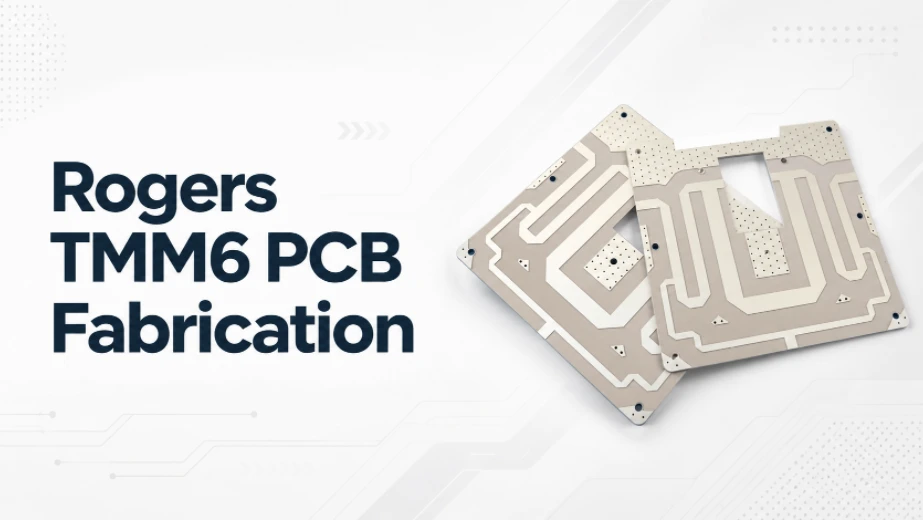
TMM6 PCB Fabrication
TMM6 fabrication is the process-control page for a mid-Dk...
TMM10 PCB Manufacturing for Compact RF Designs
Table of contentsHow TMM10 Shrinks RF StructuresTMM10 vs...
How to get a quote for PCBs
Let‘s run DFM/DFA analysis for you and get back to you with a report. You can upload your files securely through our website. We require the following information in order to give you a quote:
-
- Gerber, ODB++, or .pcb, spec.
- BOM list if you require assembly
- Quantity
- Turn time
For PCBA services, please provide your BOM (Bill of Materials) and any specific assembly instructions. We also offer DFM/DFA analysis to optimize your designs for manufacturability and assembly, ensuring a smooth production process.