
Halogen Free FR-4 PCB Manufacturing for Controlled Material Builds
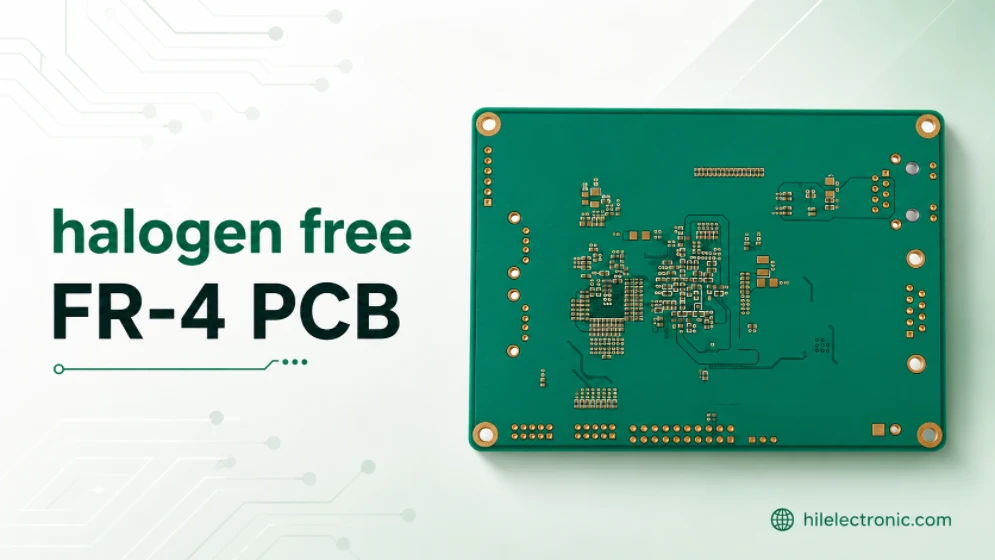
Halogen free FR-4 PCB manufacturing is used when a product drawing, AVL, customer specification, or environmental material policy requires an FR-4 based circuit board with controlled chlorine and bromine content. Highleap Electronics is a PCB fabrication and PCB assembly factory. We do not manufacture laminate, prepreg, resin, or copper-clad material. Our role is to build bare PCBs and PCB assemblies using customer-specified or customer-approved halogen free FR-4 materials from qualified laminate suppliers.
In a real PCB or PCBA project, halogen free FR-4 is not just an environmental label. It is usually a controlled material requirement from the fabrication drawing, AVL, customer specification, or product compliance plan. The manufacturing task is to turn that requirement into approved laminate sourcing, stackup confirmation, fabrication notes, lead-free assembly planning, documentation, and traceability for prototype and repeat production.
Related projects can be reviewed through multilayer PCB manufacturing, PCB assembly services, PCB impedance control, and Highleap quick quote. The discussion below stays focused on halogen free FR-4 PCB production.
Halogen Free FR-4 PCB Material Requirements for Manufacturing
A halogen free FR-4 requirement should be treated as a controlled material instruction, not as a decoration in the drawing title block. In PCB production, the requirement affects which laminate and prepreg can be purchased, how the stackup is built, which certificates may be needed, and whether any alternate material can be used.
The first manufacturing step is to identify where the requirement comes from. It may be written in the fabrication drawing, customer AVL, product environmental policy, purchase specification, or end-customer compliance document. Once that source is known, the PCB factory can align material sourcing, documentation, and production control with the actual project requirement.
Halogen-free definition used in PCB material control
Halogen free FR-4 is an FR-4 laminate and prepreg system designed to control bromine and chlorine content. A commonly used IEC 61249-2-21 based definition limits chlorine to no more than 900 ppm, bromine to no more than 900 ppm, and total chlorine plus bromine to no more than 1500 ppm. For a PCB order, this limit should be connected to the actual laminate and prepreg used in production, not only to a general statement in the purchase order.
Halogen-free is not the same thing as RoHS. RoHS restricts certain hazardous substances in electrical and electronic equipment, while halogen-free PCB material focuses on chlorine and bromine content in the base material system. Many B2B electronics projects require both, but the two requirements should be documented separately.
Typical applications of halogen free FR-4 PCB
- Industrial control equipment requiring controlled material declarations
- Telecommunication systems and networking hardware
- Medical electronics with customer-defined material requirements
- Automotive electronics and EV-related control boards
- Consumer electronics requiring halogen-free compliance documentation
- Multilayer PCBs designed for lead-free assembly and repeat production
The main risk is unclear documentation. If the drawing says “FR-4” but the purchase order says “halogen free FR-4,” engineering confirmation should be completed before material purchasing and CAM tooling. If the project has already been qualified with one material series, any alternate material should be approved before release.
Halogen Free FR-4 Material Properties for PCB Design
Halogen free FR-4 is not one universal material. Different laminate suppliers offer different Tg levels, Td values, dielectric performance, CAF resistance, copper foil options, glass styles, and prepreg constructions. Engineers should therefore review the selected supplier data sheet rather than assume that every halogen free FR-4 behaves the same.
The table below gives typical review points for PCB design and production planning. These values are useful for early engineering discussions, but the final build should follow the approved laminate data sheet, fabrication drawing, stackup, and customer specification.
Material data points to confirm before production
| Property | Typical review value or requirement | Why it matters for PCB manufacturing |
|---|---|---|
| Halogen content | Cl ≤ 900 ppm, Br ≤ 900 ppm, total Cl + Br ≤ 1500 ppm under common IEC 61249-2-21 style control | Defines whether the laminate and prepreg meet the halogen-free material requirement |
| Tg | Commonly 150°C to 180°C+, depending on grade | Affects multilayer reliability, lead-free assembly tolerance, and thermal stress performance |
| Td | Often above 330°C to 340°C for reliability-focused grades | Helps evaluate resistance to thermal decomposition during fabrication and soldering |
| Dk | Typically around 4.0 to 4.5, depending on resin, glass style, and test frequency | Used for controlled impedance and signal integrity calculations |
| Df | Often around 0.010 to 0.020 for standard or mid-loss halogen free FR-4 grades | Affects insertion loss in higher-speed digital designs |
| CAF resistance | Often enhanced in high-reliability grades | Important for dense multilayer boards, fine-pitch vias, automotive electronics, and humid environments |
| Lead-free assembly compatibility | Must be checked against the selected material series and assembly profile | Supports SMT and through-hole assembly planning under higher soldering temperatures |
| Documentation | Material declaration, compliance statement, or traceability may be requested | Prevents late-stage disputes between purchasing, engineering, and quality teams |
For controlled impedance designs, the actual Dk and dielectric thickness of the selected construction matter more than the generic phrase “halogen free FR-4.” For reliability-focused projects, Tg, Td, CTE, CAF performance, resin system, copper balance, and reflow exposure should be reviewed together before the board is released.
Halogen Free FR-4 PCB Fabrication for Lead-Free PCBA
Many halogen free FR-4 projects are also lead-free assembly projects, but the two requirements should still be verified separately. A laminate may be halogen-free, but the final PCB build must also survive lamination, drilling, plating, surface finishing, solder mask curing, and assembly heat exposure.
Production planning should connect the material requirement with the actual board construction. A simple two-layer board, a dense HDI board, and a high-layer-count industrial controller may all use halogen free FR-4, but their fabrication risks are different.
Fabrication controls affected by the material requirement
- Laminate and prepreg sourcing from approved suppliers
- Core and prepreg construction matched to the approved stackup
- Lamination cycle and resin flow control for multilayer boards
- Drilling, desmear, plating, and plated-through-hole reliability
- Thermal stress review for lead-free soldering exposure
- Surface finish selection for the assembly process
- Material certificate or compliance statement when required
For procurement teams, the key point is that halogen free FR-4 can affect both cost and lead time. Material availability, supplier approval, certificate requirements, layer count, copper weight, and assembly scope should be confirmed before the purchase order is finalized.
Halogen Free FR-4 Stackup and Impedance Control
Halogen free FR-4 is often used in multilayer electronics where impedance, signal integrity, and repeatable production are part of the engineering requirement. The stackup should be reviewed before CAM tooling because dielectric thickness, retained resin, glass style, copper thickness, solder mask, and reference plane position can all affect the finished electrical result.
If the board includes high-speed buses, differential pairs, Ethernet, DDR, PCIe, SerDes, clock routing, or mixed-signal sections, the fabrication package should provide a real impedance table instead of leaving the factory to infer electrical intent from the Gerber files.
Stackup information needed for controlled manufacturing
- Layer count and finished board thickness
- Core and prepreg thickness by layer
- Approved halogen free FR-4 material series or equivalent rule
- Inner and outer copper weights
- Single-ended and differential impedance targets
- Trace geometry, reference plane, and solder mask assumptions
- Impedance coupon and test report requirements
Changing from one halogen free FR-4 material to another can still change Dk, Df, available prepreg thickness, resin content, glass weave, and impedance results. For qualified products, the approved stackup and material source should be controlled as part of the production record.
If the project has tighter signal integrity demands than a typical FR-4 system can support, related material planning may involve AI server PCB materials, high-frequency PCB fabrication, or other lower-loss laminate options. The material should be chosen by design requirement, not by keyword alone.
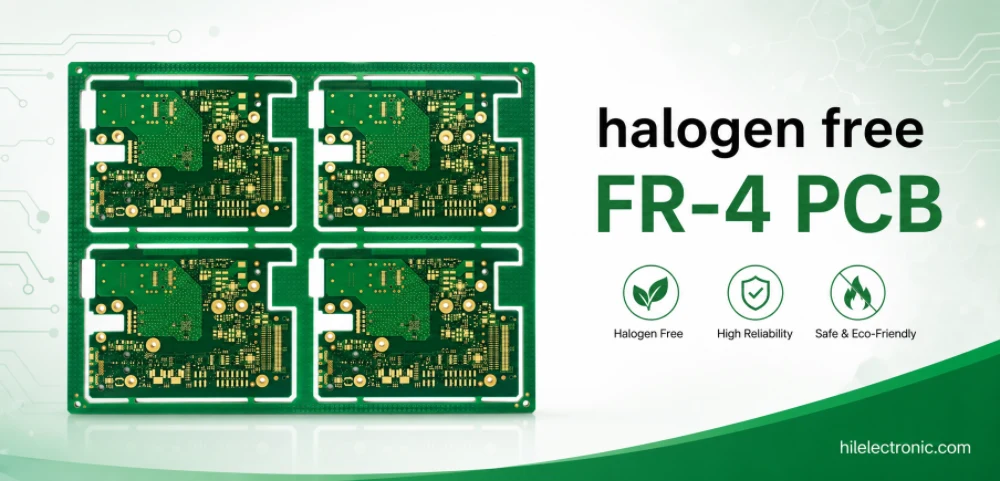
Standard FR-4 vs Halogen Free FR-4 for PCB Projects
This comparison is useful when a drawing, AVL, customer specification, or compliance requirement calls for halogen free FR-4 and the project team needs to understand how that requirement affects material selection, fabrication control, assembly, cost, and lead time. It should not be used to justify an unapproved substitution from halogen free FR-4 to standard FR-4.
The table also helps when a customer allows approved equivalents. Even then, the comparison should be tied to material data sheets, stackup approval, qualification records, and production documentation.
Engineering comparison for material approval and sourcing
| Comparison item | Standard FR-4 | Halogen free FR-4 | PCB manufacturing implication |
|---|---|---|---|
| Bromine content | May use brominated flame-retardant systems | Controlled to halogen-free limits such as Br ≤ 900 ppm | Confirm by laminate data sheet, declaration, or supplier documentation |
| Chlorine content | Not necessarily controlled as a halogen-free material | Controlled to halogen-free limits such as Cl ≤ 900 ppm | Certificate requirements should be stated before production |
| Tg and Td | Depends on material grade; standard, mid-Tg, and high-Tg options exist | Available in multiple grades; high-Tg and lead-free compatible options are common | Check reflow profile, multilayer reliability, and customer qualification requirements |
| Dk and Df | Depends on selected FR-4 system and construction | Depends on selected halogen-free series and construction | Use actual data sheet values for impedance and signal integrity calculations |
| CAF resistance | Varies by resin system, glass treatment, and processing | Often specified in reliability-focused halogen-free grades | Important for dense vias, fine pitch, high voltage spacing, and humid environments |
| Lead-free assembly | Requires suitable Tg, Td, and thermal reliability | Must still be verified against the selected material and PCBA profile | Review reflow exposure, copper balance, surface finish, and component thermal mass |
| Environmental documentation | Basic material information may be enough for general products | Material declaration, compliance statement, or traceability may be required | Define documentation needs in the RFQ instead of after shipment |
Halogen free FR-4 should not be substituted with standard FR-4 after quotation unless the customer approves the change. The reverse is also true. If a design was qualified on standard FR-4, changing to halogen free FR-4 may require stackup, impedance, reliability, and assembly review before release.
Halogen Free FR-4 Laminate Suppliers and AVL Control
Real PCB purchasing does not usually stop at the phrase “halogen free FR-4.” Many programs require an approved supplier, a named material series, or a controlled equivalent rule. This section clarifies how material brands and approval rules should be handled by a PCB manufacturing and assembly factory.
For Highleap Electronics, supplier control means purchasing the approved laminate and prepreg, building the PCB according to the confirmed stackup, and keeping the production records required by the customer. It does not mean producing the base material in-house.
Common qualified suppliers for halogen-free laminate options
Typical halogen-free laminate options are available from major PCB material suppliers such as Shengyi, Kingboard, ITEQ, EMC, Nan Ya, Panasonic, Isola, Ventec, and other qualified manufacturers. The exact series should be selected according to the customer drawing, approved vendor list, electrical requirement, thermal reliability target, board thickness, layer count, and sourcing availability.
- Customer-specified halogen free FR-4 material series
- Approved manufacturer list or AVL control
- Equivalent material review only with customer approval
- Material availability and lead time check before order release
- Traceability and documentation requirements for production batches
When the design only says “halogen free FR-4,” the engineering team may need to confirm whether approved equivalents are allowed or whether a specific brand and series must be used. If a certain product has already passed qualification, replacing it with another halogen free FR-4 material can affect dielectric performance, thermal behavior, impedance, process route, and customer approval status.
The best fabrication drawing identifies the exact material requirement. If alternates are allowed, the drawing should state the acceptance rule clearly. This helps purchasing, engineering, and quality teams avoid delays during material sourcing and CAM review.
Halogen Free FR-4 PCB Assembly and DFM Review
Material compliance only becomes useful when the finished PCB and PCBA can be produced consistently. DFM review connects the fabrication drawing, stackup, material source, soldering process, inspection plan, and repeat production controls before the build is released.
For turnkey PCB assembly, the bare-board material requirement should be reviewed together with BOM sourcing, SMT process, through-hole soldering, test requirements, and any requested compliance documentation.
DFM checks before fabrication and assembly release
- Halogen free FR-4 material callout in the fabrication drawing
- Core and prepreg construction consistency
- Layer count, board thickness, and copper weight feasibility
- Minimum trace width, spacing, annular ring, and drill size
- Via plugging, via filling, tenting, or resin-filled via notes
- Controlled impedance table and coupon requirement
- Surface finish and solder mask compatibility
- BOM, pick-and-place file, assembly drawing, and test requirement
For SMT and through-hole builds, the review may also include pad geometry, solder mask opening, via-in-pad notes, thermal relief, panelization, fiducials, component spacing, high copper areas, BGA inspection, connector soldering, and test access.
For repeat production, the approved stackup, material source, fabrication notes, assembly process, and inspection requirements should be controlled as part of the build record. A prototype built with one available halogen free material and a production batch built with another material may create qualification questions unless the alternate material policy is clear.
Halogen Free FR-4 PCB Quote and Documentation Requirements
A useful quote should price the real production requirement, not only a board outline and layer count. For halogen free FR-4 projects, the RFQ package needs enough information to confirm material sourcing, stackup feasibility, assembly scope, documentation needs, and production lead time.
If the project only includes Gerber files without a fabrication drawing, it may not be possible to confirm whether the board truly requires halogen free material, a specific laminate series, or standard FR-4. That uncertainty can delay quotation or create engineering holds after the order is placed.
RFQ files needed for accurate production review
- Gerber, ODB++, or IPC-2581 files
- Fabrication drawing with halogen free FR-4 material callout
- Stackup drawing with core, prepreg, copper, and finished thickness
- Controlled impedance table if required
- Surface finish requirement such as ENIG, immersion silver, OSP, or lead-free HASL
- Finished copper weight and hole plating requirement
- Approved material supplier or accepted equivalent material rule
- Required certificates, compliance statements, or traceability records
- BOM, pick-and-place file, and assembly drawing if PCBA is required
- Prototype quantity, production forecast, and lead time target
To begin a production review, submit the data through the Highleap quick quote form. Halogen free FR-4 projects should not be quoted only from screenshots or partial Gerber exports because material selection, stackup, assembly process, documentation, and lead time are part of the manufacturing decision.
The most useful RFQs identify the material requirement, stackup, electrical requirements, assembly scope, certificate needs, and expected production volume. When those details are missing, the quote may appear simple but can hide material sourcing risk, engineering holds, or later customer approval problems.
Halogen Free FR-4 PCB FAQ
The questions below answer common procurement, engineering, and manufacturing concerns about halogen free FR-4 PCB projects. They are kept in the FAQ section so the main article can read like a manufacturing page rather than a list of search questions.
What is halogen free FR-4?
Halogen free FR-4 is an FR-4 laminate and prepreg system with controlled chlorine and bromine content. A common IEC 61249-2-21 based definition uses chlorine no more than 900 ppm, bromine no more than 900 ppm, and total chlorine plus bromine no more than 1500 ppm.
Is halogen free FR-4 required by RoHS?
Halogen-free and RoHS are related environmental topics, but they are not the same requirement. RoHS restricts certain hazardous substances in electrical and electronic equipment, while halogen-free PCB material focuses on chlorine and bromine content in the laminate and prepreg system. A customer may require both, but one does not automatically replace the other.
Can halogen free FR-4 replace standard FR-4?
It can replace standard FR-4 only when the customer approves the material change and the stackup, impedance, thermal reliability, fabrication process, assembly process, and documentation requirements are still satisfied. For qualified products, substitution should not be made only for purchasing convenience.
Does halogen free FR-4 improve thermal reliability?
Some halogen free FR-4 materials are offered in high-Tg, high-Td, lead-free compatible, or CAF-resistant grades, but thermal reliability depends on the exact material series and board construction. Engineers should check Tg, Td, CTE, copper distribution, lamination structure, soldering exposure, and the current supplier data sheet.
Which laminate suppliers provide halogen free FR-4?
Halogen-free FR-4 materials are available from major laminate suppliers such as Shengyi, Kingboard, ITEQ, EMC, Nan Ya, Panasonic, Isola, Ventec, and other qualified manufacturers. The correct choice depends on customer approval, electrical performance, reliability target, lead time, and production availability.
Can Highleap source customer-approved halogen free FR-4 materials?
Highleap can review customer-approved material requirements and source suitable laminate and prepreg through qualified supply channels when availability and project conditions allow. If a specific brand or series is mandatory, it should be stated in the fabrication drawing and RFQ package.
What documents should be requested for halogen free FR-4 PCB production?
Common documentation may include the fabrication drawing, approved material list, material declaration, compliance statement, stackup record, impedance report, electrical test report, inspection report, and production traceability record. The exact documents should be confirmed before quotation.
Request a Halogen Free FR-4 PCB Engineering Review
Highleap Electronics manufactures and assembles halogen free FR-4 PCB projects for B2B customers who need controlled material sourcing, lead-free PCBA, multilayer PCB fabrication, stackup review, DFM support, documentation, and repeat production capability. We are not a laminate manufacturer. We are a PCB and PCBA factory that turns approved halogen free FR-4 material requirements into finished circuit boards and assemblies.
To request an engineering review, prepare your Gerber or ODB++ files, fabrication drawing, halogen free FR-4 stackup, approved material requirement, impedance table, BOM, pick-and-place file, and expected order quantity. Highleap can review the files for fabrication, assembly, inspection, documentation, and production feasibility before manufacturing starts.

Recommended Posts
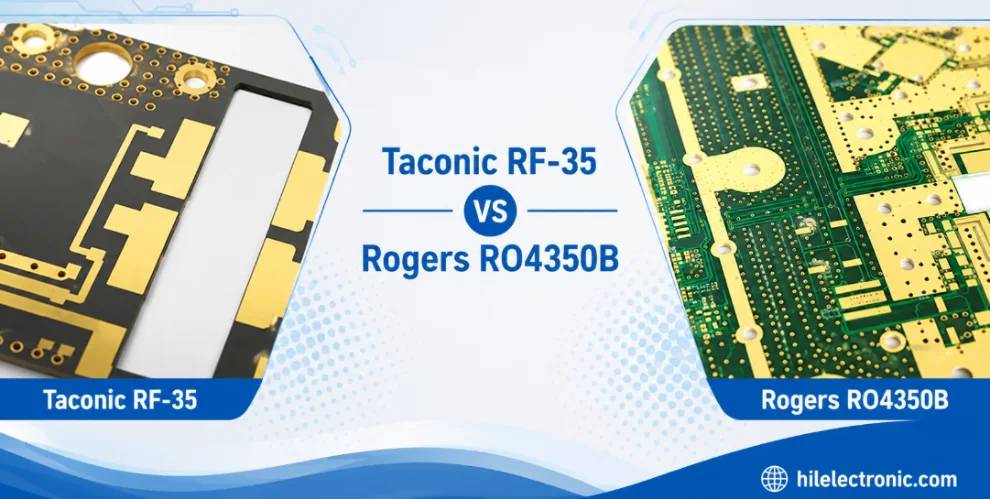
Taconic RF 35 vs RO4350B PCB
Table of contentsRF-35 vs RO4350B Procurement and...
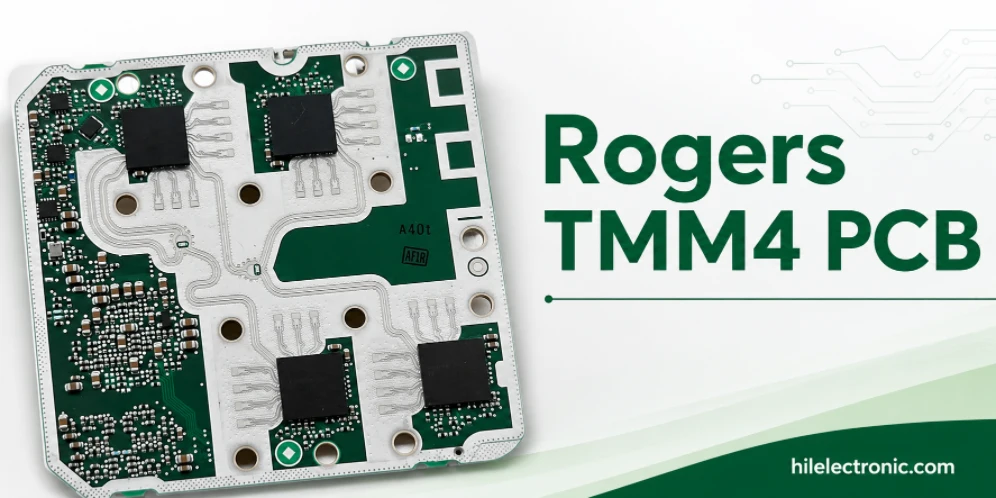
TMM4 Filter PCB Manufacturing
TMM4 filter PCB manufacturing is controlled by the...
TMM6 PCB Fabrication
TMM6 fabrication is the process-control page for a mid-Dk...
TMM3 PCB Manufacturing for RF Modules
TMM3 PCB manufacturing is most useful where the RF module...
How to get a quote for PCBs
Let’s run DFM/DFA analysis for you and get back to you with a report. You can upload your files securely through our website. We require the following information in order to give you a quote:
-
- Gerber, ODB++, or .pcb, spec.
- BOM list if you require assembly
- Quantity
- Turn time
For PCBA services, please provide your BOM (Bill of Materials) and any specific assembly instructions. We also offer DFM/DFA analysis to optimize your designs for manufacturability and assembly, ensuring a smooth production process.