
Back to blog
How to Choose the Correct HDMI RF Modulator

HDMI RF Modulator
For OEM/ODM teams building HDMI RF modulator boards: these design-for-manufacturing checkpoints help reduce rework and speed up mass production.
- HDMI high-speed routing: differential impedance control, length matching, return path continuity
- RF output section: grounding strategy, shielding/keep-out, coax connector footprint & mechanical strength
- Power integrity: clean rails for encoder/RF ICs, decoupling placement, thermal considerations
- Assembly risks: fine-pitch/QFN/BGA inspection (AOI/X-ray as needed), soldering profile validation
- Testability: test points, programming headers, functional test plan for volume builds
Need PCB fabrication + SMT assembly for an RF modulator motherboard? See our manufacturing capabilities or request a quote with Gerber/ODB++ + BOM.
Understanding HDMI RF Modulators
What Does an HDMI RF Modulator Mean?
An HDMI RF modulator is a device that allows devices with HDMI output, such as gaming consoles, set-top boxes, and media players, to transmit their signals as radio frequencies (RF). This signal can then be transmitted via a wire, typically an A/V cable or coaxial cable, to devices equipped with antennas, allowing for wireless transmission.
Modulation
The process of modulation involves converting the HDMI signal into an RF signal. Direct conversion can sometimes result in quality loss or audio/video stuttering due to interference. To mitigate this, higher frequency waves are added or mixed with the HDMI signal. This modulation process helps maintain signal integrity, ensuring that the image or video appears on your TV without significant quality reduction.
Output
An HDMI RF modulator typically has one RF output, requiring a coaxial cable to connect your device to your TV. Some models may also feature an HDMI output, allowing you to connect multiple TVs or displays using a single source.
How to Choose the Right HDMI RF Modulator for Coax TV Distribution
An HDMI RF modulator converts an HDMI source into a tunable RF channel delivered over coaxial cable, which is widely used in hotel TV systems, CCTV distribution, campus networks, and digital signage. To avoid “no signal” problems and unstable picture quality, selection should focus on RF standard compatibility, channel planning, output level, and real-world deployment conditions—not resolution alone.
For OEM/ODM teams developing an RF modulator motherboard, these requirements should be considered early in the design stage to reduce redesign cycles and ensure smooth PCB fabrication and SMT assembly at volume.
Key Selection Factors That Impact Stability and Compatibility
- RF standard compatibility: Confirm the required standard (ATSC/QAM/DVB-T/T2/DVB-C) so your TVs or headend system can tune the channel reliably.
- Channel plan and interference avoidance: Choose a clean channel/frequency range that won’t conflict with local broadcasts or in-house channels, especially in multi-TV deployments.
- RF output level for distribution: Check whether output power is adjustable and suitable for splitters, amplifiers, and long coax cable runs.
- HDMI/HDCP behavior: Verify compatibility with your source devices (set-top boxes, media players, consoles), since HDCP mismatch is a common cause of a black screen.
- 1080p vs 4K and bitrate control: In real coax networks, stable bitrate settings often matter more than raw resolution. 4K is most valuable for large-format displays and detailed UI content.
- Latency requirements by use case: For CCTV monitoring and conferencing, prioritize lower latency and stable synchronization.
- High-speed routing readiness for product builds: If you are designing the motherboard, plan for impedance control and differential routing early. Our controlled impedance PCB stack-up guide helps reduce signal-integrity risk before production.
- Prototype-to-production planning: Align design choices with manufacturability so prototypes scale smoothly. See our PCB fabrication services for build options and lead-time planning.
- Assembly yield and testability: RF modulator boards often include fine-pitch ICs and RF connectors, so inspection and test points matter. Refer to our PCB assembly process guide to improve yield and reduce rework.
By validating these factors upfront, you can choose an HDMI RF modulator that performs reliably in real coax networks—and if you’re building the product itself, you can shorten the DFM loop and move faster from prototype to mass production.
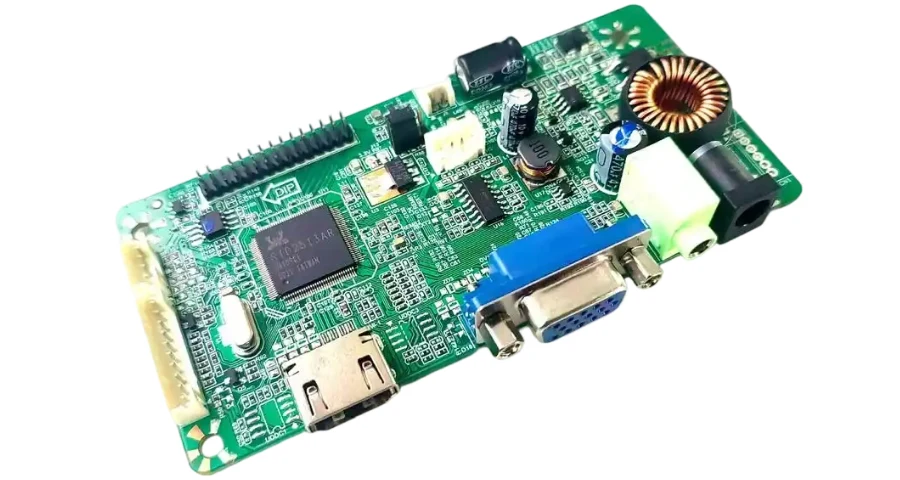
HDMI RF Modulator PCBA
Applications of HDMI RF Modulators
HDMI RF modulators can be applied in various situations, including:
- Security monitoring systems
- Multimedia information publishing systems
- Digital signage HD transmission
- Home cable TV systems
- HD video conferencing systems
- Train vehicle and platform HD video transmission
- Bus station passenger information display systems
- Airport multimedia information release systems
- Supermarket and store HD advertising systems
Benefits of Using an HDMI RF Modulator
- HD Transmission: HDMI signal transmitters support HD resolution and multiple audio formats, providing clear and realistic audio-visual experiences.
- Long-distance Transmission: HDMI signal transmitters extend the transmission distance of HDMI signals, allowing for use in different rooms.
- Stable Transmission: HDMI signal transmitters ensure stable signal transmission, providing a smooth, stay-free high-definition audio-visual experience.
- Multi-device Connection: HDMI signal transmitters can connect multiple devices simultaneously, offering freedom in device usage.
Why Choose Highleap to Produce RF Modulator Motherboards
For OEM/ODM teams building HDMI RF modulator products (hotel TV, CCTV distribution, digital signage, campus coax systems), choosing the right PCB/PCBA partner helps reduce redesign risk and speed up production ramp.
Engineering + Manufacturing Support
- RF/video board experience: support for RF output sections, grounding strategy, and shielding/keep-out considerations.
- High-speed HDMI readiness: controlled-impedance stack-up options and manufacturability feedback for differential routing.
- DFM feedback before build: footprint/pad review, solderability risks, and connector mechanical reinforcement suggestions.
PCB Fabrication + SMT Assembly Capabilities
- PCB fabrication: prototype to mass production, impedance-controlled stack-up options (as required).
- SMT assembly: fine-pitch parts, QFN/BGA support, AOI inspection (X-ray available if required).
- Quality control: incoming inspection, process control, and traceability based on project requirements.
- Test readiness: support for test points, programming headers, and fixture-friendly design notes.
What We Need for a Fast Quote (24h Response)
- PCB files: Gerber or ODB++
- BOM: part numbers + allowed substitutions (if any)
- Quantity: prototype / low volume / mass production
- Requirements: impedance, surface finish, conformal coating, functional test, programming (if needed)
Get a PCB + SMT quote: upload your files or share key specs—response within 24 hours. NDA available.
Conclusion
An HDMI RF modulator converts an HDMI source into a tunable RF channel for distribution over coaxial cable, making it a practical solution for hotel TV systems, CCTV monitoring, digital signage, campuses, and other multi-display deployments. To choose the right model, first confirm the required RF standard (such as ATSC/QAM/DVB), then check the channel/frequency range, HDMI/HDCP compatibility, output level for splitters/long cable runs, and whether you need 1080p or 4K with stable bitrate settings.
For product developers and OEM/ODM teams building an RF modulator motherboard, performance in the field depends just as much on PCB/PCBA execution—such as controlled-impedance routing for high-speed HDMI, grounding and shielding for the RF output section, power integrity, and production testability. If you need PCB fabrication + SMT assembly for an HDMI RF modulator board, Highleap can support prototype to mass production—share your Gerber/ODB++ and BOM to receive a fast quotation (NDA available).

Recommended Posts
Robot PCB Thermal Management for Motors, Power Rails and Compute
Robot PCB thermal management affects service life, field...
Robot PCB EMI/EMC Design for Reliable Robotics
Robot PCB EMI and EMC design affects whether a robot can...
High-Speed PCB for Robotics: PCIe, DDR, MIPI and Ethernet Layout
High-speed PCB manufacturing for robotics supports data...
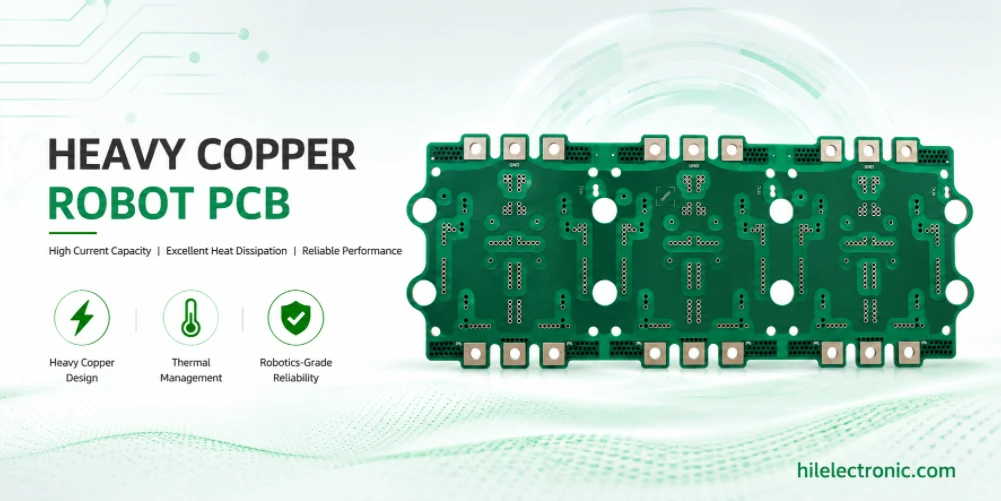
Heavy Copper Robot PCB for Motor Drives, BMS and Power Distribution
Heavy copper robot PCBs are used when standard 1 oz copper...