
IPC Certification Cost in 2026: Exam Fees, Course Prices, and Real ROI

Figure 1. IPC Certification cost
Last updated: May 2026 · A clear breakdown of what IPC certification really costs and whether it pays
Researching IPC certification cost is confusing because two completely different numbers get quoted as “the cost” — a small exam fee and a much larger training-course price — and almost no one separates them. This guide pulls them apart cleanly, then lays out prices by standard and by certification level, explains how recertification works, weighs whether the investment actually pays off for an individual or a company, and clears up a point many buyers miss entirely: you do not need to be certified yourself to receive IPC-class workmanship from a manufacturer. By the end you will know exactly which number applies to your situation and what you should budget.
- The key distinction: exam fee vs. course fee
- The three certification levels: CIS, CIT, CSE
- The main IPC standards and what they cover
- Cost by standard and level
- Hidden and indirect costs to budget for
- Recertification and renewals
- Is IPC certification worth it?
- If you’re a buyer, not an operator
- Frequently asked questions
The key distinction: exam fee vs. course fee
This single point clears up the majority of the confusion online, where one writer quotes “$100” and the next quotes “$2,000” for what sounds like the same thing. They are describing two separate costs.
The exam fee
Paid to IPC, the exam itself is modest — often around $75–$120 for a CIS exam set, and somewhat more for the higher CIT level. The catch is that standalone exam credits are generally only available to certified trainers re-testing their own students. An individual off the street typically cannot just buy and sit the exam; the exam is bundled into a course. So while the exam fee is the smallest number in this article, it is rarely the number you actually pay on its own.
The training course
This is the big number most people end up paying. Delivered by an authorized training center, the course bundles instructor time, the official IPC materials, hands-on practice for the soldering standards, and frequently the standard document itself. When an article says “IPC certification costs about $1,000,” it almost always means this course price, not the exam. Recognizing that “certification cost” usually means “course cost” is the first step to budgeting accurately.
The three certification levels: CIS, CIT, CSE
IPC certification is tiered, and the level you pursue is the single biggest driver of price after the choice of standard. Each level serves a different role on the floor.
| Level | Full name | Who it’s for |
|---|---|---|
| CIS | Certified IPC Specialist | Operators and inspectors applying the standard daily |
| CIT | Certified IPC Trainer | Those who train and certify CIS staff in-house |
| CSE | Certified Standards Expert | Technical authorities who interpret the standard |
The economics of training a CIT in-house
The level structure hides a real cost-saving lever. If a whole team needs certifying, paying once to train a single CIT in-house is often far cheaper long-term than repeatedly sending every operator to external CIS courses — the in-house trainer can then certify staff internally. A Master IPC Trainer (MIT) designation exists for CITs working at licensed training centers, for organizations that train at scale.
When CSE makes sense
CSE is a smaller, more specialized population — typically quality engineers and standards authorities who need to interpret and defend acceptance criteria rather than simply apply them. For most buyers and operators it is not the starting point, but it matters for companies that sit on standards committees or arbitrate acceptance disputes with customers.
The main IPC standards and what they cover
“IPC certification” is not one credential — it is a family of them, each tied to a specific standard, and the standard you choose affects both relevance and price. The most commonly certified standards are:
- IPC-A-610 — Acceptability of Electronic Assemblies; the most widely held certification, covering visual workmanship criteria for assembled boards.
- J-STD-001 — Requirements for Soldered Electrical and Electronic Assemblies; the preeminent soldering standard, with hands-on practical requirements.
- IPC/WHMA-A-620 — Requirements and acceptance for cable and wire harness assemblies.
- IPC-A-600 — Acceptability of bare printed boards (the fabricated PCB itself, before assembly).
- IPC-6012 — Qualification and performance specification for rigid PCBs.
- CID (Certified Interconnect Designer) — aimed at PCB designers, with its own distinct cost and exam structure.
Which standard to start with
For most people entering electronics manufacturing, IPC-A-610 is the natural first certification because it defines what “acceptable” looks like across the whole assembled board. Operators who physically solder usually add J-STD-001; wire-harness shops go for A-620; and PCB designers pursue CID. Picking the standard that matches your actual job is the difference between a credential that earns its cost and one that sits unused.
Cost by standard and level
Approximate 2026 course prices in the US, which vary by provider, location, delivery format, and language. Treat these as planning ranges, not quotes.
| Standard | CIS course | CIT course |
|---|---|---|
| IPC-A-610 | ~$700–$1,200 | ~$1,800–$2,500 |
| J-STD-001 | Similar, often higher (hands-on) | Higher (materials/equipment) |
| A-610 + J-STD-001 combo | ~$1,400–$2,300 | Varies |
| IPC/WHMA-A-620 | Higher (specialized) | Higher |
| Private / team program | Often starts around $10,000 for on-site group training | |
Why J-STD-001 costs more than A-610
J-STD-001 typically runs higher than A-610 at the same level because it includes hands-on soldering, which requires consumable materials, workstations, and equipment the training center has to supply and maintain. A-610, by contrast, is largely a visual-criteria course, so it carries less overhead. The bare exam fee, recall, is far smaller than any of these course prices — the course is where the money goes.
Group and on-site pricing
For a company certifying many people at once, a private on-site program (often starting around $10,000) can be cheaper per head than sending each person to a public course, and it avoids travel and downtime. This is where training a CIT first and then certifying staff internally usually wins on total cost.
Hidden and indirect costs to budget for
The course price is not the whole bill. A realistic budget should also account for:
- Lost production time — certification courses take staff off the floor for one to several days, which is a genuine cost even though it never appears on an invoice.
- Travel and accommodation — relevant for public courses held off-site.
- The standard document — sometimes included with the course, sometimes purchased separately.
- Materials and equipment for hands-on standards, if you train in-house rather than at a center.
- Recurring recertification — a real, repeating cost rather than a one-time spend (covered next).
Factoring these in is what separates a surprise overrun from a plan you can defend to a manager.
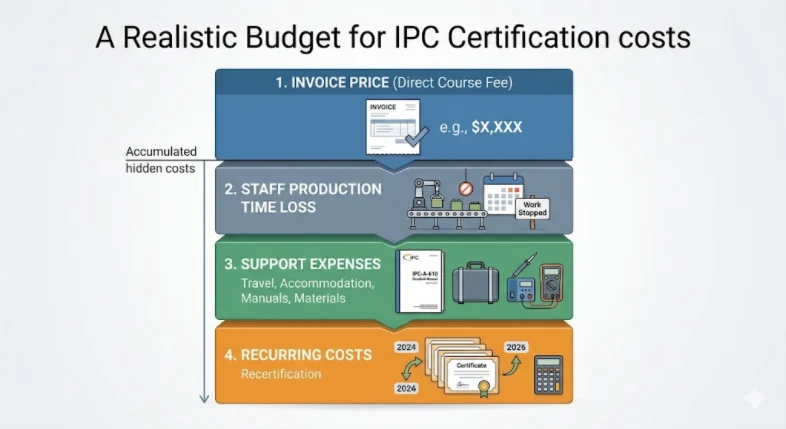
Figure 2. IPC certification cost in PCB assembly
Recertification and renewals
IPC certifications are not permanent. Most must be renewed every 2 years, and recertification usually costs about 60–70% of the original course, with shortened training plus an exam that confirms you are current with the latest revision of the standard. Budgeting for this recurring cost from the start avoids treating certification as a one-time line item when it is really an ongoing commitment.
Matching the training revision to the standard revision
One technical note that trips people up: the training revision and the standard revision must match. Standards are periodically updated, and a certification has to be tied to the correct revision letter — including any required addendum — to remain valid. When you recertify, you are partly paying to be brought current with whatever changed in the standard since you last certified.
Is IPC certification worth it?
For people working in electronics assembly and inspection, the answer is generally yes, and the case has strengthened over time. IPC certification is increasingly required rather than merely preferred, especially by high-reliability, aerospace, defense, and medical manufacturers whose contracts mandate certified staff. That shift turns the certification from a nice-to-have into a gate for certain work.
The return for individuals
Certified individuals often command higher pay — industry reports cite premiums in the range of 10–30% — and the credential improves employability in a field where it is becoming a baseline expectation. For someone building a career in assembly or quality, the course cost is usually recovered quickly through wages and opportunity.
The return for companies
For employers, the return shows up as lower defect and rework rates, more consistent workmanship, and eligibility for contracts that require certified personnel. Many organizations report strong first-year ROI from reduced rework alone — fewer scrapped boards and re-inspections can outweigh the training spend well within the first year. The harder the reliability requirements, the faster the payback.
If you’re a buyer, not an operator
Here is the point a lot of people researching IPC cost actually need to hear: you do not have to be certified yourself to get IPC-class boards. If your goal is to receive product built and inspected to a recognized standard, the certification is your manufacturer’s responsibility, not yours.
You simply specify the IPC class your product requires — for example, IPC-A-610 Class 2 for general electronics or Class 3 for high-reliability — and let your manufacturer build and inspect to it. The cost of keeping certified staff is theirs to carry; your job is to state the standard and class clearly on your order and confirm the manufacturer can meet it.
Highleap Electronics builds to IPC acceptance criteria and can confirm the inspection class and documentation for your order. See our PCB assembly services, or send your files for a free DFM review and tell us the class you need.
Specify your IPC class on a quote →
Frequently asked questions
How much does IPC-A-610 certification cost?
The course is roughly $700–$1,200 for CIS and $1,800–$2,500 for CIT. The exam fee alone is much smaller (often $75–$120), but it is usually bundled into the course rather than sold separately.
Why is the exam cheap but certification expensive?
Because most of what you pay for is the training course — instructor time, official materials, and hands-on practice — not the exam itself. “Certification cost” almost always means course cost.
How often do I need to recertify?
Generally every 2 years, at about 60–70% of the original course cost, with a shorter course and an exam that brings you current with the latest revision.
What’s the difference between CIS and CIT?
CIS certifies you to apply a standard; CIT certifies you to train and certify others (CIS) in-house. Training one CIT is often cheaper than sending a whole team to external CIS courses.
Do I need IPC certification to order quality PCBs?
No. Specify the IPC standard and class you require (for example, IPC-A-610 Class 2 or 3), and your manufacturer builds and inspects to it. The certification is their cost, not yours.
Which IPC standard should I certify in first?
IPC-A-610 (assembly acceptability) is the most common starting point. Add J-STD-001 if you do hands-on soldering, A-620 for wire harnesses, or CID if you design PCBs.
Is IPC certification worth the money?
For most people in assembly and inspection, yes — it is increasingly required, often raises pay, and for companies typically pays back through reduced rework within the first year.

Recommended Posts
TMM4 Filter PCB Manufacturing
TMM4 filter PCB manufacturing is controlled by the...
TMM3 PCB Manufacturing for RF Modules
TMM3 PCB manufacturing is most useful where the RF module...
TMM6 PCB Fabrication
TMM6 fabrication is the process-control page for a mid-Dk...
TMM10 PCB Manufacturing for Compact RF Designs
Table of contentsHow TMM10 Shrinks RF StructuresTMM10 vs...
How to get a quote for PCBs
Let‘s run DFM/DFA analysis for you and get back to you with a report. You can upload your files securely through our website. We require the following information in order to give you a quote:
-
- Gerber, ODB++, or .pcb, spec.
- BOM list if you require assembly
- Quantity
- Turn time
For PCBA services, please provide your BOM (Bill of Materials) and any specific assembly instructions. We also offer DFM/DFA analysis to optimize your designs for manufacturability and assembly, ensuring a smooth production process.