
LED Emergency & Exit Light PCBs: Battery-Backed Boards, Self-Test & Driver Electronics
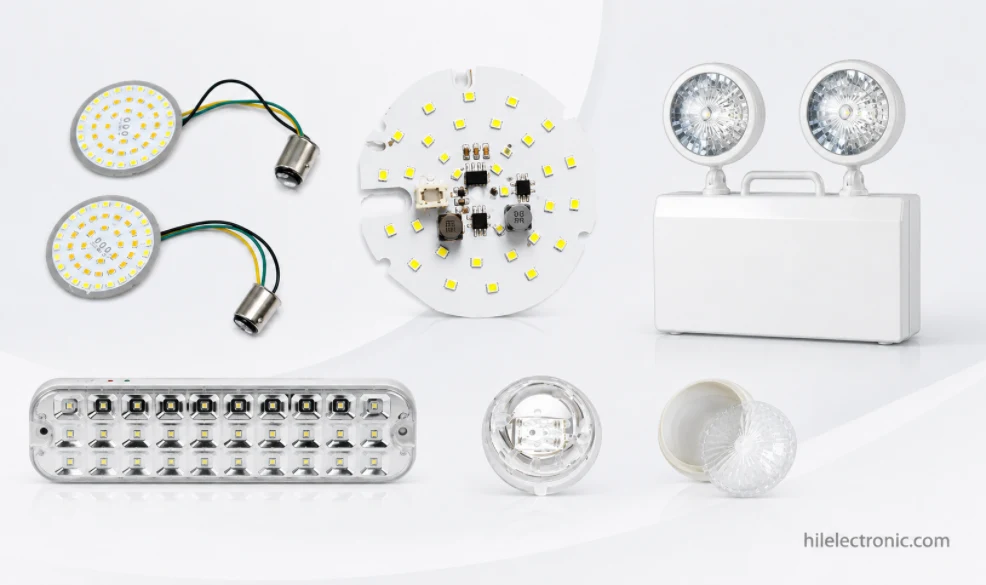
Figure 1. LED emergency light PCB manufacturing reference.
Table of Contents
- Why emergency lighting is a life-safety electronics problem
- The board set inside an emergency luminaire
- Battery charging and management boards
- Self-test and self-diagnostic logic
- Maintained vs non-maintained, and exit signs
- Light engine and driver for emergency mode
- Battery chemistry, protection, and safety
- Environmental and reliability requirements
- Capabilities at a glance
- Why one factory for the whole emergency electronics set
- How to Order — Files, MOQ & Lead Time
- Emergency & Exit LED PCB — Frequently Asked Questions
Emergency lighting is the one category where the product exists for the moment everything else fails. When mains power is lost in a fire or a blackout, emergency luminaires and exit signs have to illuminate escape routes and signage for a mandated duration — typically 90 minutes to three hours — on battery power alone. That is a life-safety function governed by strict codes, and it is fundamentally an electronics problem: charging a battery, watching over it, switching to it instantly when power fails, and proving the whole chain still works.
Highleap Electronics is a full-capability bare-board fabrication and turnkey-grade assembly factory, and the multi-board electronics inside emergency and exit fixtures are exactly the kind of mixed power-and-control work our lines are built for. We are not a fixture brand; we build every board the luminaire needs and assemble them into a tested package. This guide explains the emergency electronics architecture and how to order. The wider category is on our lighting PCB capabilities page.
Why emergency lighting is a life-safety electronics problem
Ordinary lighting fails safely — if a bulb dies, you replace it. Emergency lighting fails dangerously, because the failure only reveals itself at the moment of an actual emergency, when it is too late. That is why emergency and exit fixtures are governed by codes and standards worldwide — NFPA 101 and the National Electrical Code in the US, the UL 924 listing for the equipment, and EN 1838/IEC 60598-2-22 internationally — that mandate a minimum duration (commonly 90 minutes), minimum light levels, and, increasingly, automatic testing. Meeting those requirements is almost entirely about the electronics inside the fixture.
The fixture has to do several things flawlessly: keep a battery charged for years without overcharging it, switch to battery power fast enough that the light never visibly drops (codes such as NFPA 101 require restored illumination within 10 seconds; self-contained unit equipment typically transfers in milliseconds), drive the LEDs at the right level for the full rated duration, and regularly prove it can still do all of that. Each of those functions is a board, and the boards have to work as one coordinated system — which is why emergency lighting is the strongest case of all for building the whole electronics set with one manufacturer.
The board set inside an emergency luminaire
An emergency luminaire is the most multi-board of the common lighting products, and every board is a different discipline. Understanding the set explains why coordination matters so much here:
- Battery charger board — keeps the backup battery topped up and healthy without overcharging, using a charge profile matched to the battery chemistry. Often built with our DC-DC conversion expertise.
- Battery management / protection board — watches voltage, current, and temperature and protects the cells; for lithium packs this is a battery protection board that is itself safety-critical.
- AC-to-emergency transfer circuit — detects mains loss and switches the light to battery power within the mandated fraction of a second, then back when power returns.
- Constant-current driver — a driver that runs the LEDs from mains in normal operation and from the battery in emergency mode, often at a reduced level to stretch duration.
- Light engine — a metal-core or FR-4 board carrying the LEDs that provide the escape-route or exit-sign illumination.
- Self-test / control logic board — runs the periodic tests, drives the status indicator, and (in addressable systems) reports to a central panel.
The reason to build all of these together is that they form a single safety chain, and the chain is only as good as the coordination between its links. The charger’s profile has to match the battery the protection board guards; the transfer circuit’s switchover has to be fast enough for the driver to keep the light on without a visible gap; the self-test logic has to exercise the real charge, transfer, and drive path, not a simulation of it. When one manufacturer builds and tests the whole set through a turnkey program, that coordination is designed in. When the boards come from different suppliers, the integration gaps are exactly where a life-safety product fails its commissioning test — or worse, fails silently in the field.
Battery charging and management boards
The battery subsystem is the heart of an emergency luminaire, because the battery is both the thing that makes the product work and the thing most likely to limit its life. Getting the charging and management electronics right is what separates a fixture that still works in year five from one that quietly died in year two.
Charging done correctly. An emergency battery sits on charge continuously for years, so the charging board has to keep it full without degrading it. That means a charge profile matched to the chemistry:
- Chemistry-matched profiles — NiMH, NiCd, LiFePO4, and Li-ion each need a different charge approach; the wrong profile either undercharges (short emergency duration) or overcharges (early battery death).
- Trickle and maintenance charging — holding full charge without cooking the cells over years of continuous connection.
- Temperature-compensated charging — adjusting for ambient temperature, since charge behavior and safe limits shift with heat.
Management and protection. Watching over the battery is a safety function in its own right, especially for lithium chemistries:
- Voltage and current monitoring — detecting a weak or failing battery before it cannot deliver the rated duration; this is core battery management work.
- Over-charge, over-discharge, and over-current protection — keeping the cells inside their safe operating window.
- Temperature protection — shutting down charge or discharge if the pack overheats, critical for lithium safety.
- Capacity testing — the self-test routine periodically runs the battery to confirm it still holds enough charge for the full rated duration, not just that it has some charge.
This is genuinely safety-critical electronics: a lithium emergency pack with a poorly designed protection board is a fire risk, and an emergency fixture whose battery silently lost capacity is a code violation waiting to be discovered during an inspection — or an emergency. We build the charger and the protection board to match the specified battery and to coordinate with the self-test logic, so the fixture both stays safe and proves its own readiness. Building these together with the rest of the electronics is the only way to guarantee the charge profile, the protection thresholds, and the test routine all agree on the same battery.
Self-test and self-diagnostic logic
Manual testing of emergency lighting — someone walking the building pressing test buttons monthly and running a full-duration test annually — is labor-intensive and easy to skip, so codes increasingly require automatic self-test. We build the logic boards that provide it:
- Automatic function test — periodically verifies the fixture switches to battery and the LEDs light — the monthly 30-second functional check NFPA 101 calls for.
- Automatic duration test — periodically runs the full rated-duration discharge (the annual 90-minute capacity test) to confirm the battery still meets the mandate.
- Status indication — a multi-color indicator showing healthy, battery-fault, or lamp-fault states at a glance.
- Addressable reporting — in networked systems, each fixture reports its test results to a central panel, a feature that shares design DNA with our smart power management boards.
Self-test logic has to exercise the real charge, transfer, and drive path to be meaningful, which is why we design it together with the boards it tests rather than as an add-on.
Maintained vs non-maintained luminaires, and exit signs
Emergency fixtures come in distinct operating modes, and the board design follows the mode:
- Non-maintained — the emergency lamp is off in normal operation and only lights when mains fails. The transfer and driver logic is built for that standby-then-activate behavior.
- Maintained — the lamp is lit all the time (as normal lighting) and continues on battery when mains fails. The driver runs from both sources and switches seamlessly.
- Exit signs — illuminated running-man or text signs, usually maintained, with an efficient edge-lit or direct light engine sized for the sign and a battery for the mandated duration.
- Combo units — exit sign plus emergency floodlights in one fixture, combining both light engines on one electronics set.
We build the engine, driver, and control to suit whichever mode the fixture uses, matched to the duration and light level the code requires.
Light engine and driver for emergency mode
The light-producing side of an emergency fixture has its own twist: it has to run efficiently from a battery for the full duration, so efficiency and the dual-source driver matter more than raw output. We build the light engine and the driver for that:
- Efficient light engines — sized to deliver the required escape-route or sign illumination at low power so the battery lasts the rated duration.
- Dual-source drivers — running from mains normally and from the battery in emergency, often at a reduced output to stretch runtime.
- Seamless switchover — the driver keeps the light on through the transfer with no visible gap.
- Constant output on battery — holding the light level steady as the battery voltage falls through the discharge.
Designing the engine and driver for battery efficiency is what makes the difference between a fixture that meets its full rated duration and one that fades early.
Battery chemistry, protection, and safety
The battery choice shapes the whole electronics set, and we build to suit each chemistry safely:
- NiMH and NiCd — long-standing emergency chemistries with simple, robust charging; still common in many fixtures.
- LiFePO4 — increasingly preferred for safety and cycle life, with a charge and protection scheme suited to its characteristics.
- Li-ion — high energy density where size matters, always paired with a proper lithium protection board because the safety margin is non-negotiable.
- Pack-level safety — protection thresholds, temperature limits, and fault handling matched to the cells and verified in test.
For any lithium pack the protection board is treated as a safety-critical assembly, built to IPC Class 3 and fully tested.
Environmental and reliability requirements
Emergency fixtures live in stairwells, car parks, corridors, and outdoor escape routes, and they must work after years of doing nothing. That demands real reliability engineering: in-house conformal coating for damp and outdoor locations, burn-in reliability testing to screen out early failures in a product that cannot be allowed to fail, IPC Class 3 workmanship, and full material and batch traceability for a life-safety product. We build every emergency board to that standard, because the one time the fixture is needed, it has to work.
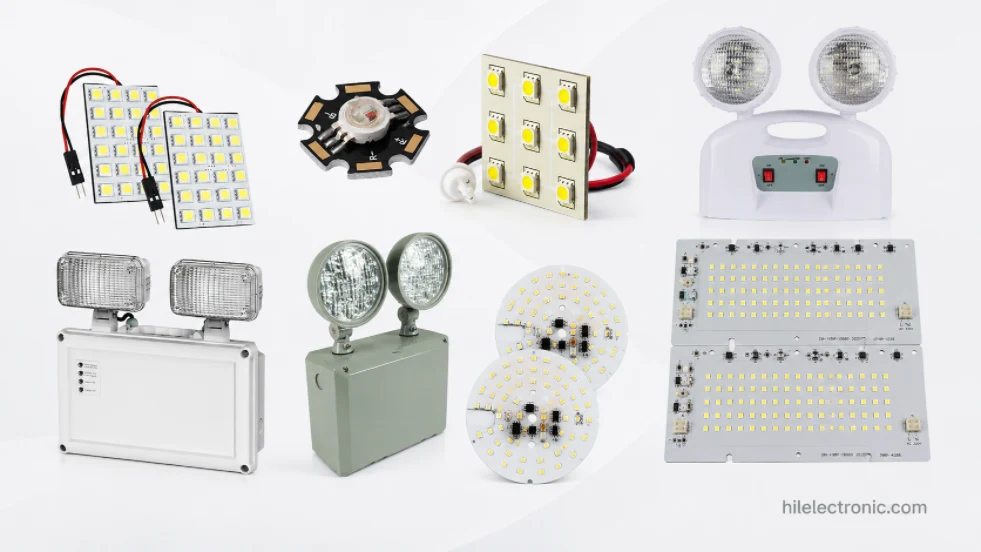
Figure 2. LED emergency light PCB assembly production and assembly detail.
Emergency lighting PCB capabilities at a glance
The table summarizes what we bring to emergency and exit lighting boards:
| Capability | Standard | Advanced |
|---|---|---|
| Boards built | Charger, driver, engine | Full set + BMS, transfer, self-test |
| Battery chemistry | NiMH, NiCd | LiFePO4, Li-ion with protection board |
| Testing logic | Manual test | Automatic function & duration self-test |
| Reporting | Local indicator | Addressable central-panel reporting |
| Mode | Non-maintained | Maintained, combo, exit sign |
| Protection | Conformal coating | Potting for outdoor escape routes |
| Workmanship | IPC Class 2 | IPC Class 3 + full traceability |
| Testing | AOI + functional | Burn-in, capacity verification |
| MOQ | 1 unit | Volume breaks from 10+ |
The right configuration is matched to your fixture’s mode, duration, and battery during the free DFM review.
Why one factory for the whole emergency electronics set
Emergency lighting is the strongest case in this whole category for single-source manufacturing. The charger, battery protection, transfer circuit, driver, engine, and self-test logic form one safety chain, and the chain fails at the integration gaps between separately sourced boards — the exact gaps that only show up during commissioning or, catastrophically, during a real emergency.
Highleap Electronics builds every board in the set, to IPC Class 3, with the charge profiles, protection thresholds, transfer timing, and self-test routines all designed to agree on the same battery and the same fixture — and tested together. Send your fixture mode, duration, and battery specification to our PCB assembly team for a 24-hour quote.
How to Order — Files, MOQ & Lead Time
Ordering emergency and exit lighting boards from Highleap Electronics starts with your fixture mode, rated duration, and battery specification. Every quote includes a free Design for Manufacturability (DFM) review, and our minimum order is a single unit with no prototype surcharge.
What files to send
- PCB fabrication only — Gerber RS-274X files (all copper, solder-mask, and silkscreen layers), Excellon drill file, board outline on the mechanical layer, and fabrication notes covering substrate, dielectric, copper weight, surface finish, and solder-mask color.
- PCB assembly (PCBA) — the above plus a Bill of Materials with manufacturer part numbers and quantities, and a Pick-and-Place (Centroid) file for the SMT components.
- Turnkey electronics — the above plus mechanical files (STEP/DXF) for the heat sink or housing, optic or lens details, driver or control specification, firmware if applicable, and any branding or packaging artwork. If files are missing, send what you have and our engineering team identifies the gaps during the DFM review.
MOQ and pricing
- Minimum order quantity is 1 unit for both fabrication and assembly, with no prototype penalty fee.
- Volume price breaks at 10, 50, 100, 500, and 1,000+ units.
- We retain your files so repeat orders skip re-quoting the engineering cost.
Lead times
- PCB fabrication — 5 to 7 business days standard; 24 to 48 hours express, subject to capacity confirmation.
- PCB assembly (PCBA) — 7 to 12 business days including component sourcing; 5 days express for an in-stock BOM.
- Turnkey modules — typically 12 to 18 business days depending on substrate, protection, and volume.
- All lead times are confirmed in your quote and begin from order confirmation and file approval.
Certifications and standards: ISO 9001 quality management, IPC Class 2 and Class 3 workmanship, AOI and functional testing on every board, with X-ray, ICT, and burn-in screening available. We ship to more than 40 countries with full tracking and provide compliance documentation on request. For LED emergency and exit light PCB projects, submit the Gerber files, BOM, battery-backup requirements, self-test notes, and target quantities through the website quote form so Highleap Electronics can review the light engine, charger, and driver package together.
Emergency & Exit LED PCB — Frequently Asked Questions
Do you build the whole emergency lighting electronics set or just one board?
The whole set. An emergency luminaire is a multi-board safety chain — battery charger, battery management/protection board, AC-to-emergency transfer circuit, dual-source driver, light engine, and self-test logic — and we fabricate and assemble every one of them in the same facility. Building them together is essential because the charge profile, protection thresholds, transfer timing, and test routine all have to agree on the same battery; sourcing the boards separately is where these products fail commissioning.
Can you build self-test and self-diagnostic emergency fixtures?
Yes. We build the logic boards for automatic function testing (verifying switchover and lamp operation on schedule) and automatic duration testing (running a full rated-duration discharge to confirm the battery still meets code), with multi-color status indication and, for networked systems, addressable reporting to a central panel. The self-test exercises the real charge, transfer, and drive path, so we design it together with the boards it tests.
How do you handle lithium battery safety in emergency fixtures?
For any lithium pack (Li-ion or LiFePO4) we build a dedicated lithium protection board as a safety-critical assembly to IPC Class 3, with over-charge, over-discharge, over-current, and temperature protection, plus a charge profile matched to the chemistry and temperature-compensated. The protection thresholds are coordinated with the charger and the self-test routine so the pack stays safe and the fixture proves its own readiness.
What quality standard do you build emergency lighting boards to?
IPC Class 3, in an ISO 9001 facility, with full material, batch, and operator traceability — appropriate for a life-safety product. Every board passes AOI; we add burn-in to screen out early failures, capacity verification on the battery subsystem, and conformal coating or potting for damp and outdoor escape routes. The one time the fixture is needed, it has to work, and we build to that standard.
Do you build both maintained and non-maintained fixtures, and exit signs?
Yes. We build non-maintained fixtures (emergency lamp off until mains fails), maintained fixtures (lamp lit always, continues on battery), illuminated exit signs (usually maintained, with an efficient edge-lit or direct engine), and combo units that pair an exit sign with emergency floodlights on one electronics set. The engine, driver, and control are built to suit the mode, duration, and light level your code requires.

Recommended Posts
TMM4 Filter PCB Manufacturing
TMM4 filter PCB manufacturing is controlled by the...
TMM3 PCB Manufacturing for RF Modules
TMM3 PCB manufacturing is most useful where the RF module...
TMM6 PCB Fabrication
TMM6 fabrication is the process-control page for a mid-Dk...
TMM10 PCB Manufacturing for Compact RF Designs
Table of contentsHow TMM10 Shrinks RF StructuresTMM10 vs...
How to get a quote for PCBs
Let’s run DFM/DFA analysis for you and get back to you with a report. You can upload your files securely through our website. We require the following information in order to give you a quote:
-
- Gerber, ODB++, or .pcb, spec.
- BOM list if you require assembly
- Quantity
- Turn time
For PCBA services, please provide your BOM (Bill of Materials) and any specific assembly instructions. We also offer DFM/DFA analysis to optimize your designs for manufacturability and assembly, ensuring a smooth production process.