
LED High Bay Light PCBs: Metal-Core Light Engines, Drivers & Turnkey Boards Built to Spec
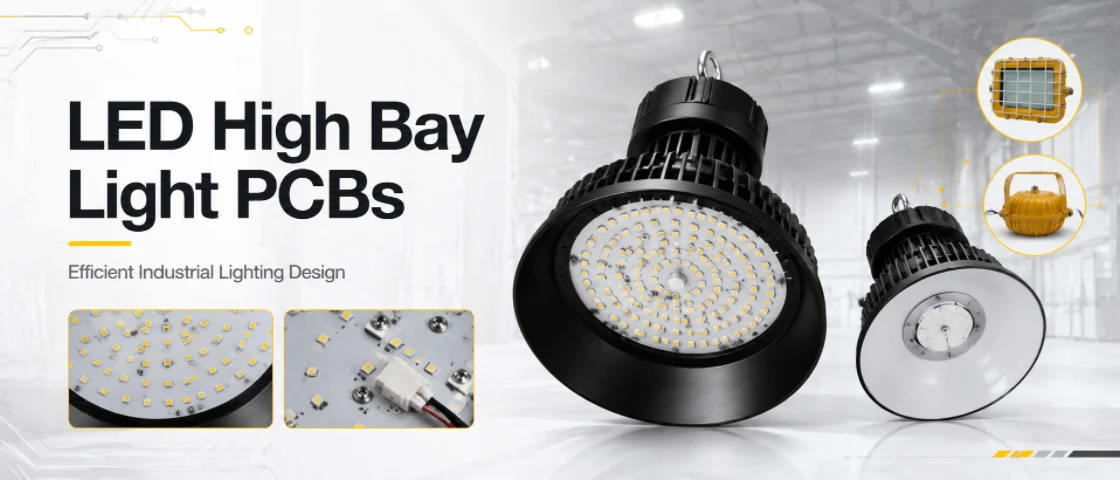
Figure 1. LED high bay light PCB manufacturing reference.
Table of Contents
- Why high bay performance lives or dies on the PCB
- The multiple boards inside a high bay fixture
- Metal-core and copper-core light engines
- Driver and surge-protection boards
- Smart, sensor, and dimming control boards
- UFO vs linear high bay — board formats
- Fabrication and assembly capabilities
- Quality, testing, and reliability
- Why a full-capability PCB factory beats a single-board shop
- How to Order — Files, MOQ & Lead Time
- High Bay LED PCB — Frequently Asked Questions
A high bay luminaire hangs 6 to 15 metres over a warehouse, factory floor, or gym and is expected to run for years with almost no maintenance. At those mounting heights a failed driver or an overheated light engine is expensive to reach, so the electronics inside have to be built right the first time. That starts with the printed circuit boards — the metal-core light engine that carries the LEDs, the high-current driver that powers them, and the sensor and control boards that modern high bays increasingly depend on.
Highleap Electronics is a full-capability PCB fabrication and PCB assembly factory, and high-power industrial fixtures like high bays are squarely in our wheelhouse. We are not a fixture brand and not a single-product workshop — we build every board the luminaire needs and assemble them into a tested electronics package. This guide covers the boards inside a high bay, how we engineer them for heat and reliability, and how to order. The wider category sits on our lighting PCB manufacturer overview.
Why high bay performance lives or dies on the PCB
High bay fixtures push more lumens through a smaller housing than almost any other general-lighting product. A single UFO high bay can dissipate 100 to 400 watts in a body the size of a dinner plate, and every watt that does not leave as light leaves as heat that has to travel out through the board. If that thermal path is wrong, the LED junction temperature climbs, light output drops, color shifts, and lifetime collapses. The board is the first and most important link in that chain.
Three properties of the PCB decide whether a high bay fixture performs: the substrate’s ability to move heat from the LED solder pad to the heat sink, the copper weight’s ability to carry driver and string currents without voltage drop, and the assembly quality that keeps every thermal and electrical joint sound through years of thermal cycling. Get those right and the rest of the fixture is straightforward. Get them wrong and no heat sink can rescue the design.
The multiple boards inside a high bay fixture
One of the most common misconceptions about LED lighting is that a fixture is “a board with LEDs on it.” A modern high bay is a small multi-board system, and each board is a different PCB type with different requirements. This is exactly where a factory that builds every board type — rather than one that only makes metal-core or only makes FR-4 — changes the outcome, because the boards are designed to work together instead of being sourced from three suppliers and forced to cooperate.
Here is what is typically inside, and the board family each one belongs to:
- The light engine — a metal-core PCB, almost always aluminum and sometimes copper-core, carrying the LED array. This is the thermal heart of the fixture and the board most people picture.
- The LED driver board — frequently a heavy-copper PCB or FR-4 board that converts mains AC to the constant current the LED string needs, with power-factor correction to meet commercial PFC requirements.
- The surge-protection board — high bays in industrial buildings see real electrical transients, so a dedicated SPD board (often 10 kV/10 kA for industrial spec) protects the driver. It is a small but critical board many designs integrate.
- The sensor and control board — microwave or PIR occupancy sensing, daylight harvesting, and 0-10 V or DALI dimming live on a separate low-voltage control board, sometimes a high-density mixed-signal design.
- Wireless and networking — connected high bays for warehouse management add a Bluetooth, Zigbee, or LoRa board for grouping, scheduling, and energy reporting.
When one factory fabricates and assembles all of these, the driver’s output ripple is matched to the engine’s LED configuration, the surge board’s clamping is coordinated with the driver’s input stage, the sensor board’s logic is tuned to the dimming range the driver supports, and the whole stack is tested together. That system-level coordination is the practical reason to build a multi-board fixture with a comprehensive manufacturer rather than assembling boards from separate shops — and it is why our customers consolidate the whole electronics package onto one purchase order through our turnkey PCB assembly program.
It also protects you commercially. When a fixture is built from three suppliers’ boards and it fails in the field, each supplier blames the others; when one manufacturer builds and tests the whole electronics set, accountability sits in one place. For a product mounted 12 metres in the air, that single point of accountability is worth as much as any spec line.
Metal-core and copper-core light engines for high bay
The light engine is where high bay thermal engineering is won or lost, so it is worth understanding the substrate choices in detail. The job of the board is to get heat from the LED junction to the heat sink with as little thermal resistance as possible, and the substrate’s dielectric layer is the dominant term in that resistance.
Aluminum MCPCB handles the majority of high bay fixtures. Built on our aluminum LED PCB line, an aluminum core with a thermally conductive dielectric moves heat efficiently at a cost that suits volume production. The dielectric conductivity is the lever: a standard 1.0-2.0 W/m·K dielectric suits mid-power fixtures, while 2.0-3.0 W/m·K is specified for higher-flux UFO models. We select the dielectric to the fixture’s watt density during the DFM review rather than defaulting to one material.
Copper-core MCPCB is the answer when aluminum runs out of headroom — the highest-power UFO high bays, high-output linear fixtures, and any design using closely packed COB arrays. Copper’s bulk thermal conductivity is roughly double aluminum’s, and a copper-core board can carry a thermal load that would force an aluminum design into a larger, more expensive housing. For demanding COB LED fixtures we frequently recommend copper-core to keep junction temperature in a safe band.
Several construction details matter on top of the core choice:
- Dielectric thickness — thinner dielectric lowers thermal resistance but reduces dielectric strength; we balance the two to the fixture’s isolation and thermal needs.
- Copper weight on the engine — 2 oz and above where the LED string current and trace routing demand it.
- Thermal vias and direct-thermal pads — for arrays where the LED thermal pad benefits from a direct path to the core.
- High-reflectance white solder mask — to push usable lumens off the board surface instead of absorbing them.
- Surface finish — OSP or ENIG depending on assembly and shelf-life needs; finishes are matched to the LED thermal design and the assembly process.
The result is an engine that holds junction temperature where the LED manufacturer’s lifetime curves stay flat — which is the entire point of paying for a metal-core board in the first place.
LED driver and surge-protection boards
The driver is the second pillar of a high bay’s reliability. It converts mains voltage into the regulated constant current the LED string needs, and in a commercial product it has to do so efficiently, with high power factor, and with the surge tolerance an industrial supply demands. We build LED driver PCBs for high bay fixtures with the heavy copper and thermal management that high output currents require.
Key driver-side capabilities for high bay programs:
- Constant-current output with the ripple and regulation the LED array needs for stable, flicker-controlled light.
- Power-factor correction to meet commercial PFC thresholds (typically >0.9) for industrial and energy-code compliance.
- Surge protection — integrated or as a dedicated SPD board, commonly to 10 kV/10 kA for industrial installations.
- Wide input range for the varied and sometimes unstable supplies in industrial buildings.
- Thermal derating headroom so the driver runs cool inside a hot fixture, since driver electrolytics are often the true lifetime-limiting component.
Because we build the driver in the same facility as the light engine, the driver output is specified to the exact LED configuration on the engine — no mismatch between a generic driver and a custom array.
Smart, sensor, and dimming control boards
High bays are increasingly intelligent. Warehouses dim aisles that are empty, harvest daylight near skylights, and report energy use to a building management system. All of that lives on control boards we build alongside the engine and driver:
- Occupancy sensing — microwave/radar or PIR sensor boards that dim or switch the fixture by zone.
- Daylight harvesting — photocell boards that trim output when ambient light is sufficient.
- Dimming interfaces — 0-10 V, DALI, and PWM control boards integrated with the driver.
- Wireless control — Bluetooth, Zigbee, Wi-Fi, and LoRa boards for grouping, scheduling, and energy reporting; these often share design DNA with our intelligent power management boards.
- Emergency and battery backup — where code requires a portion of high bays to stay lit during outages.
Building the control board in-house means its dimming range, sensor logic, and communication timing are matched to the driver it commands — not reverse-engineered to fit a driver from another vendor.
UFO vs linear high bay — board formats we build
The two dominant high bay form factors put different demands on the boards, and we build for both:
- UFO high bay — a round, compact body with high watt density. These favor circular aluminum or copper-core engines, often with COB or dense mid-power arrays, and benefit most from the highest dielectric conductivity. Round metal-core engines with a central driver cavity are typical.
- Linear high bay — a long body for retail, gyms, and logistics aisles, using long-form or segmented light engines. These can use multiple board segments, and for tight or curved profiles we also build flexible and rigid-flex LED engines.
Both formats can be built as fabrication-only boards, fabrication-plus-assembly, or complete turnkey electronics with driver, sensor, and wiring — whatever scope your program needs.
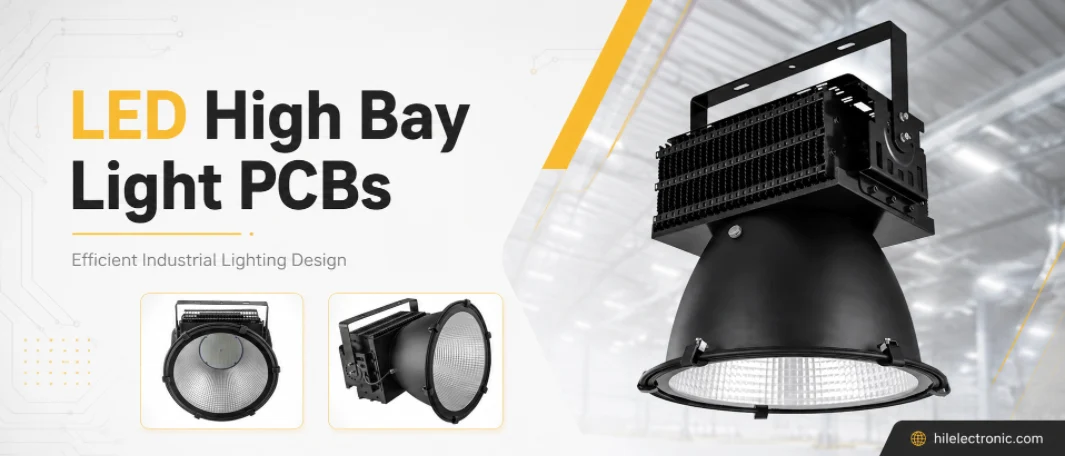
Figure 2. LED high bay light PCBs production and assembly detail.
High bay PCB capabilities at a glance
The table summarizes what we bring to high bay boards, from standard production to advanced high-flux builds:
| Capability | Standard | Advanced |
|---|---|---|
| Engine substrate | Aluminum MCPCB | Copper-core, multilayer aluminum, ceramic for COB |
| Dielectric conductivity | 1.0-2.0 W/m·K | 2.0-3.0+ W/m·K |
| Driver substrate | FR-4 | Heavy copper 3-4 oz |
| LED format | SMD 2835/3030/5050 | COB, high-density mid-power arrays |
| Surge protection | Integrated | Dedicated 10 kV/10 kA SPD board |
| Control | 0-10 V dimming | DALI, microwave/PIR sensor, wireless |
| Protection | Conformal coating | Potting for harsh environments |
| Inspection | AOI + functional test | X-ray, burn-in, thermal imaging |
| Workmanship | IPC Class 2 | IPC Class 3 |
| MOQ | 1 unit | Volume breaks from 10+ |
The right combination is recommended during the free DFM review, matched to your fixture’s wattage, mounting height, and environment.
Quality, testing, and reliability for industrial fixtures
A fixture mounted high over a working floor cannot be a warranty risk, so high bay boards get our full quality treatment. We operate an ISO 9001 system and build to IPC Class 2 or Class 3 per order, with Class 3 typical for industrial programs. Every batch passes AOI; X-ray inspects dense arrays and BGA-style packages; and burn-in testing screens out infant-mortality failures before fixtures ever ship.
For high-reliability programs we add thermal imaging to verify the engine’s heat path under load, functional test on assembled driver-plus-engine sets, and full material and batch traceability. The goal is simple: no fixture should ever need a ladder and a service call in its first years of life.
Why a full-capability PCB factory beats a single-board shop
Because a high bay is a multi-board system, the supplier choice matters more than for a simple fixture. A metal-core-only shop can build a good engine but subcontracts the driver and control boards; a general FR-4 shop can build a driver but lacks metal-core and thermal expertise; a trading company has no factory at all. Each of those models reintroduces the hand-offs and accountability gaps that cause field failures.
Highleap Electronics builds the engine, the driver, the surge board, and the control board under one roof, assembles and tests them together, and ships a coordinated electronics package. You get metal-core depth, heavy-copper driver capability, mixed-signal control, environmental protection, and one accountable manufacturer — the combination a high bay actually needs. Start with our PCB assembly team and a 24-hour quote.
How to Order — Files, MOQ & Lead Time
Ordering high bay LED boards from Highleap Electronics is straightforward whether you have production files or only a fixture specification. Every quote includes a free Design for Manufacturability (DFM) review, and our minimum order is a single unit with no prototype surcharge.
What files to send
- PCB fabrication only — Gerber RS-274X files (all copper, solder-mask, and silkscreen layers), Excellon drill file, board outline on the mechanical layer, and fabrication notes covering substrate, dielectric, copper weight, surface finish, and solder-mask color.
- PCB assembly (PCBA) — the above plus a Bill of Materials with manufacturer part numbers and quantities, and a Pick-and-Place (Centroid) file for the SMT components.
- Turnkey electronics — the above plus mechanical files (STEP/DXF) for the heat sink or housing, optic or lens details, driver or control specification, firmware if applicable, and any branding or packaging artwork. If files are missing, send what you have and our engineering team identifies the gaps during the DFM review.
MOQ and pricing
- Minimum order quantity is 1 unit for both fabrication and assembly, with no prototype penalty fee.
- Volume price breaks at 10, 50, 100, 500, and 1,000+ units.
- We retain your files so repeat orders skip re-quoting the engineering cost.
Lead times
- PCB fabrication — 5 to 7 business days standard; 24 to 48 hours express, subject to capacity confirmation.
- PCB assembly (PCBA) — 7 to 12 business days including component sourcing; 5 days express for an in-stock BOM.
- Turnkey modules — typically 12 to 18 business days depending on substrate, protection, and volume.
- All lead times are confirmed in your quote and begin from order confirmation and file approval.
Certifications and standards: ISO 9001 quality management, IPC Class 2 and Class 3 workmanship, AOI and functional testing on every board, with X-ray, ICT, and burn-in screening available. We ship to more than 40 countries with full tracking and provide compliance documentation on request. For LED high bay light PCBs, send the Gerber files, BOM, thermal targets, driver requirements, and order quantity through the website quote form so Highleap Electronics can review the light engine and assembly package accurately.
High Bay LED PCB — Frequently Asked Questions
What PCB substrate is best for a high bay LED fixture?
For most high bay fixtures an aluminum metal-core PCB (MCPCB) with a 1.0-2.0 W/m·K dielectric is the right balance of thermal performance and cost. For the highest-flux UFO and linear models, or designs using dense COB arrays, copper-core MCPCB or even ceramic substrate is recommended because it moves more heat and keeps the LED junction temperature in the band where lifetime stays high. We select the substrate to your fixture’s wattage and mounting during the free DFM review.
Do you build the driver and sensor boards too, or only the light engine?
We build all of them. A high bay is a multi-board system — light engine, high-current driver, surge-protection board, and occupancy/dimming control board — and we fabricate and assemble each in the same facility through our turnkey PCB assembly program. Building them together means the driver output is matched to the LED array and the control logic is tuned to the driver, rather than forcing boards from separate suppliers to cooperate.
Can you handle high-current and surge requirements for industrial installations?
Yes. We build LED driver boards on heavy copper (3-4 oz) for the high string currents UFO and linear high bays draw, with power-factor correction for commercial compliance, and we add dedicated surge-protection boards rated to 10 kV/10 kA for industrial supplies. Wide input range and thermal derating headroom are designed in so the driver survives unstable industrial power.
What is your minimum order and lead time for high bay boards?
Our minimum order is 1 unit for both fabrication and assembly, with no prototype surcharge, so you can validate a design before volume. Fabrication runs 5-7 business days standard (24-48 hours express), assembly 7-12 business days including sourcing, and turnkey modules 12-18 business days. We return an itemized quote within 24 hours of receiving your Gerber files and BOM.
Do you provide burn-in and reliability testing for high bay fixtures?
Yes. Because high bays are mounted high and are costly to service, we offer burn-in testing, thermal imaging of the engine under load, and functional testing of assembled driver-plus-engine sets, on top of AOI on every batch and X-ray for dense arrays. We build to IPC Class 3 for industrial programs and provide full traceability.

Recommended Posts
TMM4 Filter PCB Manufacturing
TMM4 filter PCB manufacturing is controlled by the...
TMM6 PCB Fabrication
TMM6 fabrication is the process-control page for a mid-Dk...
TMM3 PCB Manufacturing for RF Modules
TMM3 PCB manufacturing is most useful where the RF module...
TMM10 PCB Manufacturing for Compact RF Designs
Table of contentsHow TMM10 Shrinks RF StructuresTMM10 vs...
How to get a quote for PCBs
Let’s run DFM/DFA analysis for you and get back to you with a report. You can upload your files securely through our website. We require the following information in order to give you a quote:
-
- Gerber, ODB++, or .pcb, spec.
- BOM list if you require assembly
- Quantity
- Turn time
For PCBA services, please provide your BOM (Bill of Materials) and any specific assembly instructions. We also offer DFM/DFA analysis to optimize your designs for manufacturability and assembly, ensuring a smooth production process.