
Robot PCB Manufacturing and Assembly Services

At Highleap Electronics, we manufacture high-performance robot PCBs that power the next generation of autonomous systems and intelligent machines. Robot printed circuit boards act as the “neural backbone” of modern robotics—integrating control logic, sensor interfaces, communications, and power management into compact, reliable platforms. This guide walks through robotics PCB design fundamentals, manufacturing technologies, key component integration, and the standards that support dependable robotic operation.
Table of Contents
- What is Robot PCB?
- Robot PCB Design Fundamentals
- Essential Components Integration
- Manufacturing Technologies
- Robot PCB Applications
- Quality Standards and Testing
- Cost Optimization Strategies
- Conclusion
What is Robot PCB?
A robot PCB is a purpose-built circuit board engineered for robotics applications, combining computing, sensing, motor control, and communication on a single platform. Unlike general-purpose boards, robot printed circuit boards must support real-time decision-making, high-current actuation, and robust connectivity—while remaining stable under vibration, thermal cycling, and electrical noise. A clear understanding of PCB manufacturing capabilities helps ensure the final design can be produced reliably at scale and meet industrial expectations.
Key Characteristics of Robot PCBs
Robot PCB manufacturing services deliver performance features essential for autonomous and semi-autonomous operation:
- Multi-layer architecture enabling dense signal routing and stable power distribution
- Enhanced EMI resilience protecting sensitive control loops and sensor signals from interference
- Ruggedized construction built to withstand vibration, shock, and temperature variation
- Integrated sensor interfaces supporting LiDAR, cameras, ultrasonic sensors, and IMUs
- Real-time responsiveness enabling deterministic control for safety and stability
Robot PCBs differ substantially from standard consumer electronics PCBs in their emphasis on reliability, redundancy, and predictable timing. Where conventional boards often prioritize cost and compactness, robotics platforms must maintain consistent performance across long duty cycles and complex operating conditions.

Robot PCB Design Fundamentals
Modern robotics PCB design demands careful signal integrity planning, especially when integrating high-bandwidth sensors and high-speed communication links. PCBs used in industrial robots also require strong thermal management, as many systems run continuously in production environments where downtime is costly.
At Highleap, our robot PCB prototype services leverage simulation-driven verification to validate stackups, impedance targets, thermal paths, and EMI risk before fabrication—reducing iteration cycles and improving first-pass success for complex robotic designs.
Critical Design Considerations
- Controlled impedance routing: Preserving signal integrity for high-speed differential pairs used in vision and networking
- Power plane segmentation: Separating noisy motor domains from low-noise sensor circuits
- Thermal via placement: Conducting heat away from motor drivers and power management ICs
- Layer stackup optimization: Reducing crosstalk between analog sensing and digital processing layers
- Component placement strategy: Minimizing radiated emissions from switching regulators and high-current loops
- Ground plane continuity: Maintaining low-impedance return paths for stable reference and lower noise
Signal Integrity Management
As robotics platforms grow more capable, high-speed interfaces become non-negotiable. Our high-speed PCB design services support robust routing strategies for multi-gigabit links used in real-time video, high-throughput sensing, and deterministic communications.
For parallel processing workloads, the integration of FPGA-based solutions often requires strict length matching and impedance control. Similarly, DDR4 memory interfaces demand disciplined topology planning to maintain margin at high data rates and reduce timing skew.
Essential Components Integration
Robot PCB assembly brings together diverse components that collectively enable perception, control, and actuation. From processors and microcontrollers to sensors and motor drivers, each element impacts latency, stability, power efficiency, and serviceability. Our robot PCBs for service and industrial robots integrate connectivity, power conversion, and real-time control into a reliable hardware foundation.
Core Processing Components
- ARM Cortex-A processors: High-level planning and navigation workloads (Linux/ROS)
- STM32 microcontrollers: Deterministic motor control and real-time safety loops
- NVIDIA Jetson modules: AI processing for vision and edge inference
- ESP32 controllers: IoT connectivity and wireless device integration
- DSP processors: Efficient filtering and sensor-fusion computation
- FPGA accelerators: Parallelized workloads for high-throughput, low-latency processing
Sensor Integration Technologies
Robots rely on sensor diversity to interpret environments accurately and safely. Our robotics PCB design integrates:
- LiDAR interfaces: High-bandwidth connections for mapping and ranging modules
- Camera modules: MIPI CSI interfaces supporting multi-camera vision pipelines
- IMU sensors: 6/9-axis motion tracking for attitude estimation and stabilization
- Ultrasonic transceivers: Short-range detection for obstacle avoidance and docking
- Force/torque sensors: Precision analog front-ends for collaborative manipulation
- Encoders: High-resolution position feedback for servo and traction systems
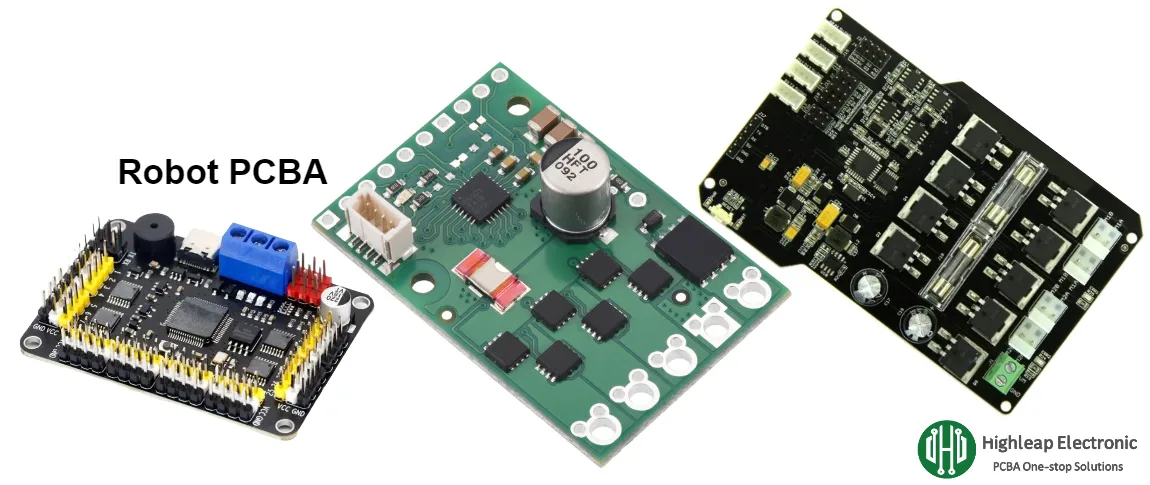
Manufacturing Technologies
Advanced robot PCB manufacturing requires precision processes that support high density, stable impedance, and reliable interconnects across complex stackups. Highleap facilities use microvia-capable drilling, tight registration controls, and automated inspection workflows to maintain yield and consistency in demanding robotics builds, including HDI PCB technology for compact, high-pin-count designs.
State-of-the-Art Capabilities
- Minimum trace width: 0.075mm (3 mil) for dense controller and compute layouts
- Via capabilities: Microvias and fine-pitch escape with via-in-pad technology
- Layer count: Up to 40 layers for sophisticated, mixed-signal control systems
- Copper weight: Heavy copper PCB options for high-current actuation paths
- Surface finishes: ENIG, HASL, OSP, immersion silver (selected per reliability and assembly needs)
- Material options: FR4, polyimide, and specialty laminates for thermal or electrical performance
Quality Control Processes
Every robot printed circuit board is verified through multi-stage inspection and electrical validation, including automated optical inspection, in-circuit testing, and functional verification. For advanced packages such as BGAs and QFNs, additional inspection and process controls are used to protect solder joint integrity and long-term reliability.
Robot PCB Applications
Robot PCBs support a wide spectrum of applications—from factory automation to consumer service robotics. Each use case imposes its own constraints across power, thermal performance, connectivity, safety, and environmental durability.
Industrial Automation Systems
Robot PCBs for industrial robots enable next-level automation across:
- Collaborative robots (cobots): Safe interaction through sensing and controlled actuation
- Welding robots: High-current control for stable arc and motion coordination
- Pick-and-place systems: High-speed motion control and synchronized I/O
- Painting robots: Boards designed for harsh environments and chemical exposure protection
- Material handling AGVs: Power conversion, motion control, and fleet communication
- Quality inspection systems: Machine vision integration for detection and classification
Service and Consumer Robotics
Robot PCBs for service robots typically optimize for compactness, cost efficiency, battery life, and user safety:
- Autonomous vacuum cleaners: Compact control boards with docking and power management
- Delivery robots: Navigation compute, GNSS support, and cellular/wireless communications
- Medical assistants: Higher reliability requirements with regulated manufacturing expectations
- Educational robots: Modular interfaces for teaching, prototyping, and expansion
- Entertainment robots: Audio, motion, and interactive UI subsystems
- Agricultural drones: Flight control, positioning, and payload actuation integration
Quality Standards and Testing
Robot PCB suppliers must meet strict reliability and safety requirements, especially when robots operate near people, expensive equipment, or regulated environments. Our test strategy validates performance under electrical, thermal, and mechanical stress typical of real-world robotics deployments.
Industry Compliance Standards
- ISO 9001:2015: Quality management systems
- IPC-A-610: Assembly workmanship and acceptability criteria
- CE marking: European safety and EMC alignment (as applicable)
- UL certification: Electrical safety requirements for applicable markets
- RoHS compliance: Hazardous substance restrictions
- IATF 16949: Automotive-grade process expectations for mobility and harsh-use robots
Reliability Testing Protocols
Comprehensive validation supports long-term performance through:
- Thermal cycling: -40°C to +125°C profiles to simulate operational extremes
- Vibration testing: Verification for mobile platforms and high-shock environments
- Salt spray testing: Corrosion resistance checks for outdoor or coastal deployments
- Accelerated aging: Stress-based prediction for long service lifetimes
- EMC testing: Electromagnetic compatibility and susceptibility evaluation
- Burn-in testing: Early-failure screening under controlled stress conditions
Cost Optimization Strategies
Balancing performance and cost requires smart decisions throughout design and manufacturing. Prototype validation helps reduce risk before volume ramps, while targeted DFM practices protect yield, schedule, and field reliability.
Design for Manufacturing Excellence
- Component standardization: Reusing common parts across product variants to improve availability
- Panelization optimization: Maximizing board utilization to reduce material waste
- Test point accessibility: Enabling efficient electrical validation and production test coverage
- Assembly simplification: Reducing secondary operations and minimizing rework risk
- Material selection: Aligning laminate choice with actual electrical/thermal needs
- Volume planning: Prototyping efficiently while designing for smooth scale-up
Supply Chain Management
Cost control and continuity depend on robust sourcing strategy and lifecycle planning:
- Strategic inventory: Managing lead times for long-cycle components
- Alternative components: Maintaining qualified substitutes to prevent disruptions
- Volume agreements: Long-term purchasing strategies to stabilize pricing
- Local sourcing: Reducing logistics risk when timelines are tight
- Obsolescence management: Planning for lifecycle transitions and multi-year support
Conclusion
Robot PCBs bring together advanced electronics manufacturing and intelligent system design—enabling autonomous machines that are reshaping industries from manufacturing to healthcare. Whether you need robust robot PCB manufacturing for industrial automation or prototype development for emerging service robots, success depends on partnering with a supplier that understands real-time control, high-speed signal integrity, thermal constraints, and reliability engineering.
At Highleap Electronics, our comprehensive turnkey PCB assembly services deliver end-to-end robot PCB solutions—from design support through volume production—built for demanding environments and long-term performance.
Ready to bring your robotics innovation to life? Contact our engineering team to discuss how our robot PCB capabilities can accelerate development while delivering the reliability your autonomous systems require.

Recommended Posts
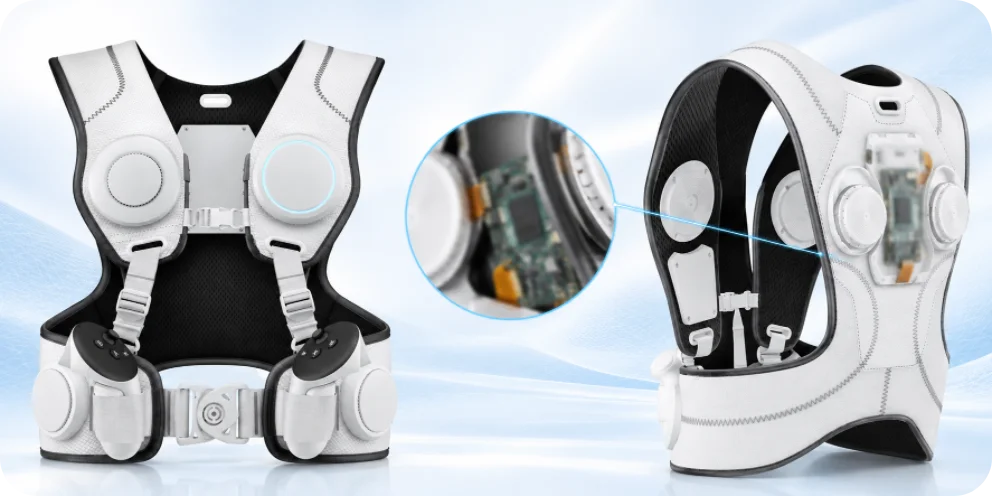
Wearable Haptic Vest PCB Manufacturing & Assembly for Multi-Zone Haptic OEMs
In a wearable haptic vest, the wearer notices the...
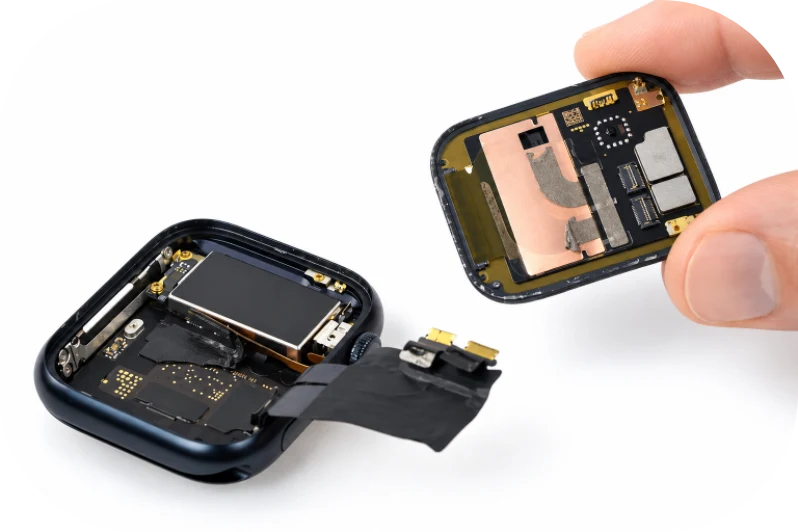
Wearable Temperature Logger PCB Manufacturing & Assembly for BLE Sensor OEMs
A wearable temperature logger PCB is the electronic board...
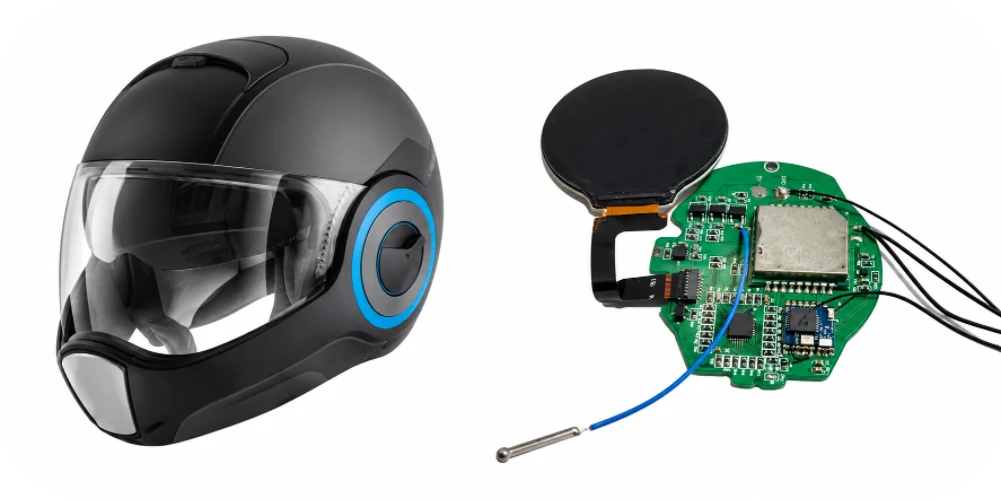
Connected Safety Helmet PCB Manufacturing & Assembly for Industrial IoT OEMs
A Connected Safety Helmet PCB is an industrial IoT...
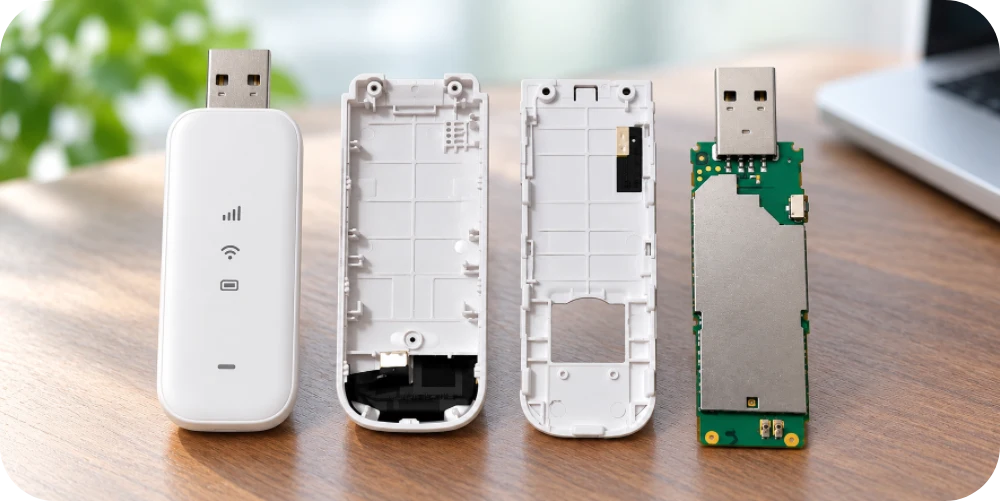
Mobile Wi-Fi Router PCB Manufacturing & Assembly for 4G/5G Hotspot OEMs
A Mobile Wi-Fi Router PCB is the production platform...
How to get a quote for PCBs
Let us run DFM/DFA analysis for you and get back to you with a report.
You can upload your files securely through our website.
We require the following information in order to give you a quote:
-
- Gerber, ODB++, or .pcb, spec.
- BOM list if you require assembly
- Quantity
- Turn time
In addition to PCB manufacturing, we offer a comprehensive range of electronic services, including PCB design, PCBA (Printed Circuit Board Assembly), and turnkey solutions. Whether you need help with prototyping, design verification, component sourcing, or mass production, we provide end-to-end support to ensure your project’s success. For PCBA services, please provide your BOM (Bill of Materials) and any specific assembly instructions. We also offer DFM/DFA analysis to optimize your designs for manufacturability and assembly, ensuring a smooth production process.