
Resistor: The Complete Guide to Types, Specifications, and Selection

1. Introduction
The resistor remains the most fundamental passive component in electronic circuits, controlling current flow, dividing voltage, limiting inrush currents, and providing critical feedback paths. Every PCB design relies on resistors to establish proper operating points, protect sensitive components, and ensure circuit stability across varying conditions.
For PCB manufacturers and electronics assemblers, resistor selection extends beyond simple resistance values—material properties, thermal behavior, tolerance specifications, and package compatibility determine whether a design meets its performance targets through production volumes and operating life.

2. What Is a Resistor?
A resistor is a passive two-terminal component that implements electrical resistance in a circuit. Its primary function involves opposing current flow in a controlled manner, converting electrical energy into thermal energy through the resistance mechanism. When voltage applies across the component, charge carriers collide with atoms in the resistive material, losing kinetic energy as heat.
Resistor behavior follows Ohm’s Law (V = IR), establishing a linear relationship between voltage and current under stable conditions. Power dissipation occurs according to P = IV, P = I²R, or P = V²/R, depending on known circuit parameters.
3. How a Resistor Works
Microscopic Operation
At the atomic level, resistor materials contain structures that impede electron flow. In carbon compositions, randomly distributed carbon particles create tortuous conduction paths. Metal films offer more uniform resistivity through controlled deposition. Free electrons colliding with lattice structures transfer energy, manifesting as heat dissipation.

Macroscopic Behavior
Circuit designers apply Ohm’s Law to predict resistor performance. A 10kΩ resistor under 5V produces 0.5mA current flow, dissipating 2.5mW. High resistance indicates current limitation for a given voltage, not weak current capability. Resistance drift results from thermal stress and material aging rather than inherently poor quality.
4. Resistor Structure & Materials
Carbon Film Construction
Carbon film resistors deposit resistive carbon onto ceramic substrates. Manufacturing simplicity yields low costs, but these components exhibit higher temperature coefficients and tolerance variations suitable for standard applications.
Metal Film Architecture
Metal film resistors use vacuum-deposited nickel-chromium or similar alloys on ceramic cores. This construction delivers superior stability, lower noise, and tighter tolerances required for precision circuits.
Wirewound Design
Wirewound resistors wind resistance wire around ceramic or fiberglass cores. High power handling capacity makes them suitable for power electronics, though inductive effects limit high-frequency applications where thermal management becomes critical.
SMD Resistor Structure
Surface-mount resistors integrate resistive films on alumina substrates with termination electrodes and protective coatings. Standardized footprints (0201, 0402, 0603, 0805, 1206) enable automated assembly while the layered construction balances performance, size, and manufacturing compatibility.
5. Types of Resistors
Fixed vs Variable Resistors
Fixed resistors maintain constant resistance values, forming the majority of circuit applications. Variable resistors include potentiometers for user adjustment and trimmers for calibration during manufacturing.
Through-Hole vs SMD Resistors
Through-hole resistors utilize axial leads for insertion into plated holes, common in legacy designs and high-power applications. SMD resistors dominate modern electronics, offering compact size, automated placement compatibility, and superior high-frequency performance.
Material-Based Classification
- Carbon film resistors – Economic solutions for general applications with acceptable drift characteristics
- Metal film resistors – Precision requirements with superior stability and low noise performance
- Wirewound resistors – High power handling for demanding thermal environments
- Thick film technology – Dominates SMD production with cost-effective manufacturing scalability
- Thin film precision – Tight tolerances and low TCR for measurement and reference circuits

Specialized Resistor Types
Precision resistors maintain ±0.1% to ±1% tolerances with low TCR for measurement circuits. High-power resistors dissipate substantial energy in power electronics. Thermistors exhibit resistance changes with temperature (PTC increases, NTC decreases), while varistors offer voltage-dependent resistance for surge protection.
6. Key Resistor Specifications
Resistance Value and Tolerance
Measured in ohms (Ω), kilohms (kΩ), or megohms (MΩ), the nominal resistance defines current limitation for a given voltage. Standard E24, E96, and E192 series provide organized value selections. Tolerance indicates maximum deviation from nominal value, typically ±1%, ±5%, or ±10%, with precision circuits requiring tighter tolerances.
Temperature Coefficient (TCR)
Expressed in ppm/°C, TCR quantifies resistance change per degree temperature variation. Low TCR values (±25 to ±50 ppm/°C) maintain stable resistance across operating temperatures, critical for measurement and reference circuits that cannot tolerate drift.
Power Rating and Thermal Limits
Power rating specifies maximum continuous power dissipation without exceeding temperature limits:
- 0.063W to 0.125W – Standard for compact SMD packages (0402, 0603) in space-constrained designs
- 0.25W to 0.5W – Mid-range power for general purpose applications (0805, 1206)
- 1W and above – High-power ratings for demanding thermal environments requiring larger footprints
Proper derating based on ambient temperature and PCB thermal characteristics ensures reliability.

Voltage Rating and Operating Range
Maximum working voltage prevents arc-over and internal breakdown. Operating temperature ranges typically span -55°C to +155°C, though specific applications may require extended ranges based on package size and construction methods.
7. Resistor Coding Systems
Color Code Identification
Through-hole resistors employ colored bands encoding resistance value, tolerance, and sometimes temperature coefficient. Four-band codes remain standard, while five-band and six-band systems provide increased precision with additional specifications requiring proper orientation for accurate interpretation.

SMD Resistor Marking
Three-digit codes indicate resistance where the first two digits represent significant figures and the third indicates multiplier (e.g., 473 = 47kΩ). Four-digit codes add precision (1002 = 10kΩ). EIA-96 codes use alphanumeric systems for tight-tolerance components requiring magnification for small packages.

8. How to Choose a Resistor for Your Application
Circuit Function Requirements
Feedback networks demand precision resistors with low TCR to maintain stable transfer functions. Power supply circuits require appropriate power ratings and surge tolerance. Signal chains benefit from low-noise metal film types to preserve signal integrity across the frequency spectrum.
Environmental and Reliability Factors
Operating temperature ranges, humidity exposure, and mechanical stress influence material selection. Automotive applications require AEC-Q200 qualification while industrial environments may demand conformal coating or hermetic sealing. Conservative design practices apply 50% to 70% power derating to extend component life beyond minimum specifications.
SMD Package and Manufacturing Considerations
Package choice balances size constraints, power dissipation requirements, and assembly process capabilities:
- 0201/0402 packages – High-density designs requiring advanced placement equipment and tight process control
- 0603/0805 packages – Optimal balance of size, handling characteristics, and assembly reliability
- 1206 and larger – Better power capacity and simplified manufacturing with reduced placement challenges
Volume production requires consistent component batches to maintain assembly yields and circuit performance uniformity through supplier quality systems and traceability.
9. Resistor Applications Across Industries
Consumer Electronics
Smartphones, tablets, and wearables utilize millions of SMD resistors in compact assemblies. Miniaturization drives adoption of 0201 and 01005 packages where precision touchscreen circuits and power management systems rely on tight-tolerance components.
Automotive Systems
Engine control units, safety systems, and infotainment platforms require resistors meeting stringent temperature ranges and vibration specifications. High-reliability designs incorporate automotive-grade components with documented qualification testing that exceeds consumer standards.
Medical and Industrial Applications
Patient monitoring equipment demands precision resistors for accurate measurements with comprehensive component traceability. Process automation, motor drives, and sensor interfaces utilize resistors across wide power ranges where harsh environments necessitate robust construction and proven reliability.
10. Conclusion
Matching Resistor Types to Application Needs
Resistor selection directly affects circuit reliability and manufacturing yield. Different construction technologies carry inherent trade-offs: carbon film is suitable for non-critical functions, metal film offers superior stability for precision circuits, and wirewound devices provide power handling that compact SMD parts cannot achieve.
Key Electrical Parameters That Shape Performance
Temperature coefficient determines stability across operating conditions, while proper power derating—typically 50% to 70%—extends resistor life in thermally constrained assemblies. Package size influences not only board density but also placement accuracy and solder joint reliability.
Ensuring Consistency in Manufacturing
Supplier qualification and batch traceability reduce variations that can lead to yield loss or field failures. For PCBA projects requiring careful component selection and process optimization, Highleap Electronics offers engineering support from design through production.

Recommended Posts
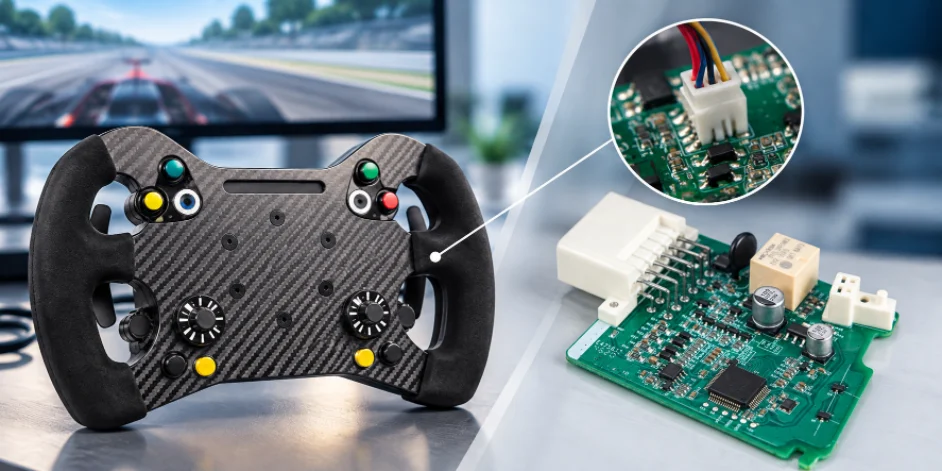
Racing Wheel Controller PCB Manufacturing & Assembly for Force-Feedback and Direct-Drive Gaming Systems
Highleap Electronics provides PCB fabrication and PCBA for...
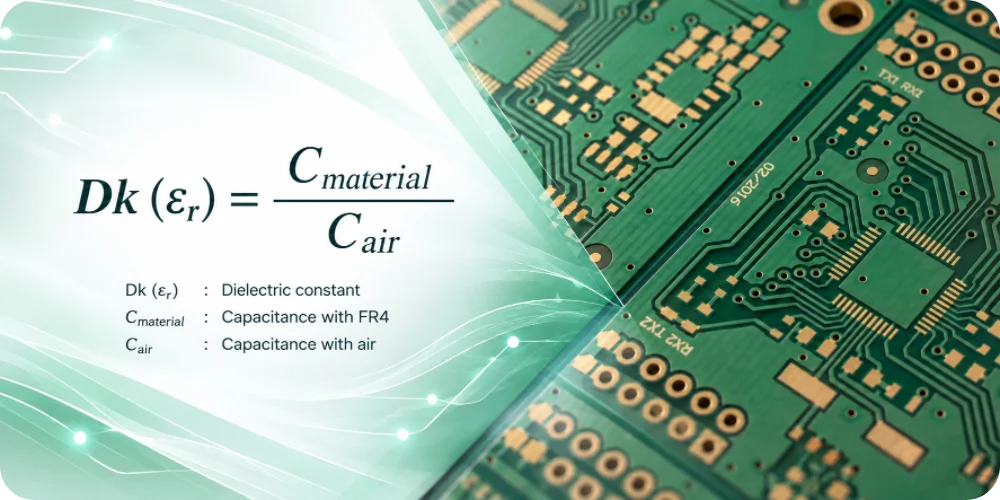
FR4 Dielectric Constant Calculator and PCB Design Guide
How to get a quote for PCBs Let's run DFM/DFA analysis for...

GPS Sports Watch PCB Design: GNSS, RF, Sensors and PCBA Manufacturing
Turning a compact GPS sports watch controller from an...
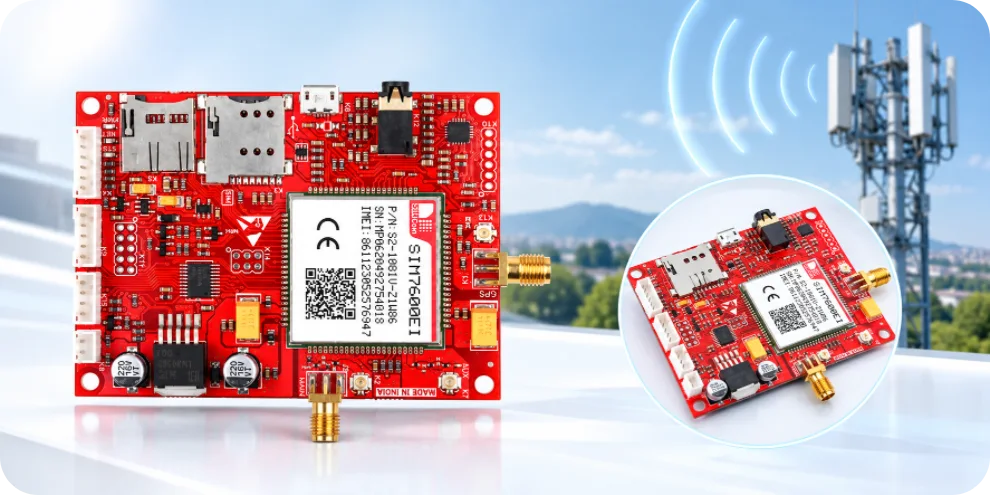
Cellular Modem PCB: From Module Carriers to PCBA
Need a manufacturer for a cellular modem PCB or a fully...
How to get a quote for PCBs
Let‘s run DFM/DFA analysis for you and get back to you with a report. You can upload your files securely through our website. We require the following information in order to give you a quote:
-
- Gerber, ODB++, or .pcb, spec.
- BOM list if you require assembly
- Quantity
- Turn time
In addition to PCB manufacturing, we offer a comprehensive range of electronic services, including PCB design, PCBA, and turnkey solutions. Whether you need help with prototyping, design verification, component sourcing, or mass production, we provide end-to-end support to ensure your project’s success.
For PCBA services, please provide your BOM (Bill of Materials) and any specific assembly instructions. We also offer DFM/DFA analysis to optimize your designs for manufacturability and assembly, ensuring a smooth production process.