
SMD Resistor Sizes — Complete Guide to Package Dimensions, Power Ratings & Choosing the Right Size

Introduction to SMD Resistor Sizes
SMD resistor sizes are fundamental to modern PCB design, directly impacting circuit density, thermal performance, and manufacturing reliability. This guide covers common resistor package sizes (0201, 0402, 0603, 0805, 1206, and beyond), their physical dimensions, power handling capabilities, and practical selection criteria for engineers balancing miniaturization with performance requirements.
The Standard Resistor Color Code Chart
The resistor color code system follows IEC 60062, the international standard for marking passive components. Each color corresponds to a specific digit, multiplier, and in some cases, tolerance or temperature coefficient value.
Standard Package Dimensions and Power Ratings
| Code | Length (l) | Width (w) | Height (h) | Power | ||||
|---|---|---|---|---|---|---|---|---|
| Imperial | Metric | inch | mm | inch | mm | inch | mm | Watt |
| 0201 | 0603 | 0.024 | 0.6 | 0.012 | 0.3 | 0.01 | 0.25 | 1/20 (0.05) |
| 0402 | 1005 | 0.04 | 1.0 | 0.02 | 0.5 | 0.014 | 0.35 | 1/16 (0.062) |
| 0603 | 1608 | 0.06 | 1.55 | 0.03 | 0.85 | 0.018 | 0.45 | 1/10 (0.10) |
| 0805 | 2012 | 0.08 | 2.0 | 0.05 | 1.2 | 0.018 | 0.45 | 1/8 (0.125) |
| 1206 | 3216 | 0.12 | 3.2 | 0.06 | 1.6 | 0.022 | 0.55 | 1/4 (0.25) |
| 1210 | 3225 | 0.12 | 3.2 | 0.10 | 2.5 | 0.022 | 0.55 | 1/2 (0.50) |
| 1812 | 3246 | 0.12 | 3.2 | 0.18 | 4.6 | 0.022 | 0.55 | 1 |
| 2010 | 5025 | 0.20 | 5.0 | 0.10 | 2.5 | 0.024 | 0.6 | 3/4 (0.75) |
| 2512 | 6332 | 0.25 | 6.3 | 0.12 | 3.2 | 0.024 | 0.6 | 1 |
Note: Actual resistor power rating values depend on manufacturer specifications, substrate thermal resistance, pad design, and ambient conditions. Always verify with datasheets.
How SMD Resistor Sizes Affect Performance
Thermal Management
Smaller SMD resistor package formats exhibit higher thermal resistance due to reduced surface area and mass. A 0201 dissipating 50 mW can reach temperatures exceeding its rating when insufficient copper area connects to the pads, while a 1206 handling the same power remains comfortably cool.
Electrical Characteristics at High Frequencies
Parasitic inductance and capacitance scale with physical dimensions. In RF and high-speed digital circuits, compact packages like 0402 minimize parasitics, but at lower frequencies, these effects become negligible compared to thermal constraints.
Precision and Temperature Coefficient
Larger packages typically achieve tighter tolerances and lower TCR (Temperature Coefficient of Resistance) due to manufacturing process maturity and improved thermal stability. Critical precision applications often require 0805 or larger formats despite space constraints.
Mechanical Reliability
Solder joint stress from thermal expansion, vibration, and flexure impacts smaller components disproportionately. The PCB footprint resistor design must account for CTE mismatch, particularly in automotive or aerospace applications where 0603 or larger packages demonstrate superior long-term reliability.

Common SMD Resistors
Selecting the Right SMD Resistor Size
Power Dissipation Analysis
Calculate maximum power under worst-case voltage and current, then derate by 50–70% for reliability. Cross-reference this value against manufacturer curves showing power handling versus PCB copper area and ambient temperature.
Frequency and Signal Integrity Requirements
For circuits above 100 MHz, prioritize packages with published parasitic data. Use 0402 or 0603 in signal paths where controlled impedance matters, avoiding larger formats that introduce unwanted inductance.
Manufacturing Capability Assessment
Verify your assembly partner’s pick-and-place accuracy and nozzle inventory. Not all contract manufacturers reliably handle 0201; attempting cost savings through extreme miniaturization can backfire with yield issues and rework costs.
Testability and Rework Considerations
In-circuit testing with flying probes or bed-of-nails fixtures requires accessible test points. If field repair is anticipated, specify 0603 or larger to enable technician intervention without specialized micro-soldering equipment.
Supply Chain and Cost Analysis
Ultra-small packages often carry price premiums and longer lead times. Balance BOM cost against inventory risk, especially for specialized resistance values where 0201 availability fluctuates significantly compared to commodity 0805 stock.
PCB Layout Guidelines for SMD Resistors
IPC-Compliant Land Patterns
Follow IPC land pattern resistor standards (IPC-7351) as a baseline, then adjust based on manufacturer recommendations. Pad dimensions directly influence solder joint reliability and heat transfer efficiency.
Solder Paste Stencil Design
Maintain aperture-to-pad ratios between 0.8–1.0 for optimal paste release. Avoid placing thermal vias within pads, as they can wick solder during reflow, creating insufficient fillet formation on smaller packages.
Thermal Relief and Copper Pours
For resistors approaching their resistor power rating limits, expand pad areas into copper pours or add thermal vias connecting to internal ground planes. Calculate thermal resistance using manufacturer tools or thermal simulation software.
Array Layout Thermal Coupling
When placing multiple resistors in dense arrays, stagger positions to prevent localized hot spots. Clustered 0402 resistors in series-parallel configurations can create thermal runaway conditions if inadequate spacing exists.

Common SMD Resistors Sizes
Manufacturing and Testing Best Practices
Reflow Profile Optimization
Small-package SMD resistor sizes heat and cool rapidly. Tune peak temperatures and soak zones to manufacturer specifications—overly aggressive profiles cause metallization damage, while insufficient heat yields cold joints.
Automated Optical Inspection Challenges
0201 packages push AOI resolution limits. Implement programming strategies that account for component polarity ambiguity and solder fillet visibility constraints inherent to sub-millimeter geometries.
Electrical Test Strategy
Flying probe systems require larger target pads or dedicated test points when resistor density exceeds fixture capabilities. For 0402 and smaller, consider in-circuit functional testing rather than individual component verification.
Common SMD Resistor Size Selection Mistakes
Is smaller always better for miniaturization?
No. Aggressive downsizing without thermal analysis leads to premature failure. A properly thermally-managed 0805 often outperforms a thermally-stressed 0402 in the same application despite larger footprint.
Can I directly substitute 1206 with 0805?
Only after validating power dissipation and temperature rise. The substitution reduces thermal mass by approximately 60%, potentially causing operation beyond safe limits even if wattage ratings appear equivalent.
Does solder mask affect power ratings?
Yes. Solder mask over pads reduces heat transfer to surrounding copper. Exposed pad designs recommended by manufacturers assume solder mask-defined (SMD) or non-solder mask-defined (NSMD) configurations per their testing.
Should I use the smallest package my assembler can place?
Not necessarily. Balancing how to choose SMD resistor size involves evaluating the full product lifecycle—manufacturing yield, field reliability, and serviceability—not just initial assembly capability.
Conclusion
Choosing appropriate SMD resistor sizes requires balancing electrical performance, thermal management, manufacturing feasibility, and total cost of ownership. The relationship between package dimensions and SMD resistor size vs power dissipation fundamentally shapes circuit reliability and production success.
At Highleap Electronics, our engineering team provides thermal simulation analysis and NPI validation to optimize resistor selection for your specific PCB stackup and operating environment. Contact us for design-for-manufacturing consultation on your next project.

Recommended Posts
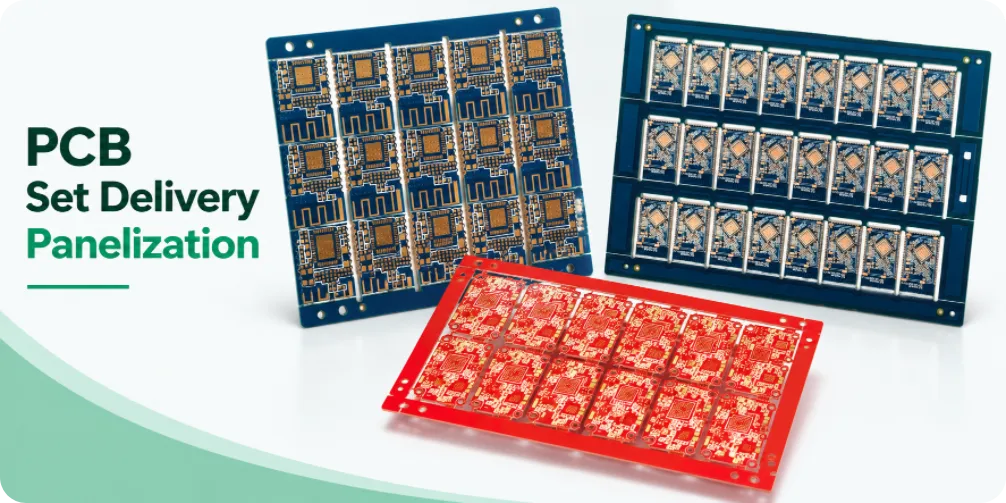
PCB SET Delivery and Panelization: Quantities and Acceptance
A purchase order for “500 SET” looks straightforward until...
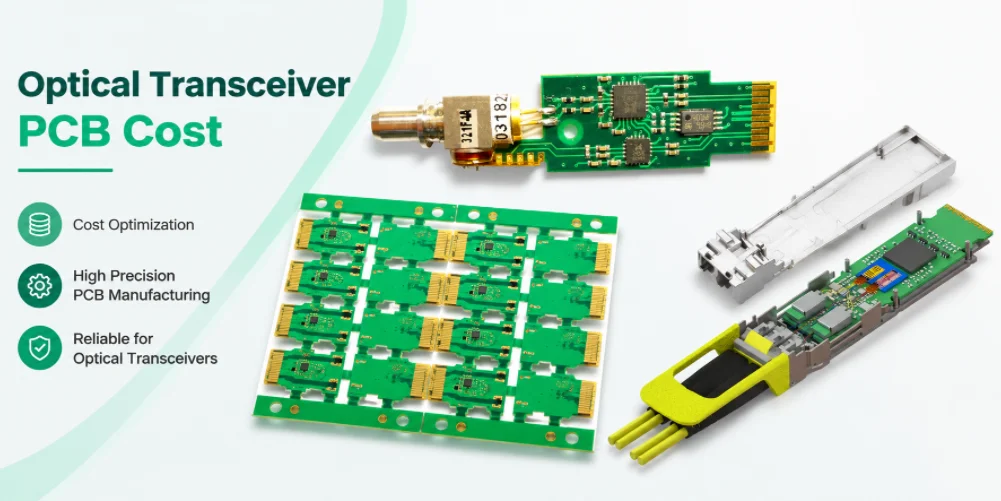
Optical Transceiver PCB Cost: Compare Equivalent Quotes
Two suppliers may quote a nominally identical six-layer...
PCB Materials Database: Laminate Grades & Properties
How to get a quote for PCBs Let‘s run DFM/DFA analysis for...
Optical Transceiver PCB Manufacturer for Custom Pluggable Modules
Highleap Electronics manufactures and assembles custom...
How to get a quote for PCBs
Let‘s run DFM/DFA analysis for you and get back to you with a report. You can upload your files securely through our website. We require the following information in order to give you a quote:
-
- Gerber, ODB++, or .pcb, spec.
- BOM list if you require assembly
- Quantity
- Turn time
In addition to PCB manufacturing, we offer a comprehensive range of electronic services, including PCB design, PCBA, and turnkey solutions. Whether you need help with prototyping, design verification, component sourcing, or mass production, we provide end-to-end support to ensure your project’s success.
For PCBA services, please provide your BOM (Bill of Materials) and any specific assembly instructions. We also offer DFM/DFA analysis to optimize your designs for manufacturability and assembly, ensuring a smooth production process.