
How to Clean Flux Off a PCB: The Right Method for Each Flux Type
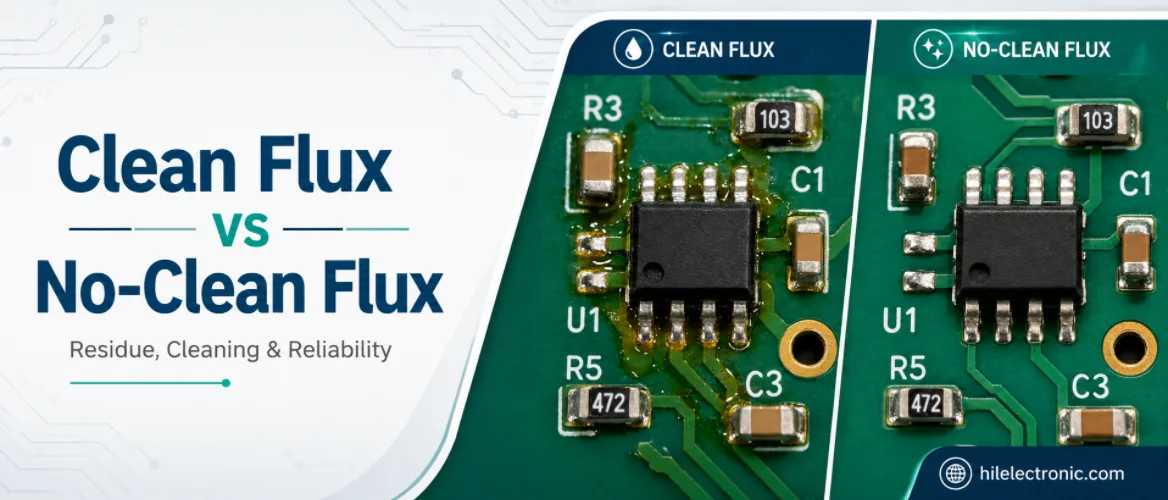
Figure 1. How To Clean Flux Off Pcb reference image for PCB manufacturing review.
Cleaning flux off a board sounds trivial until you use the wrong solvent on the wrong residue and end up with a hazy, corroded, or even more contaminated PCB. How to clean flux off a PCB depends entirely on which flux was used, because rosin, water-soluble, and no-clean residues respond to completely different chemistries. This guide explains why residue has to come off in the first place, how to identify your flux, the step-by-step method for each type, and the one case where the smartest move is to leave the residue alone.
1. Why Flux Residue Has to Come Off
Flux exists to strip oxides off metal so solder can wet it, and to do that job it is chemically active at soldering temperature. After the joint forms, what is left behind is not always harmless.
What residue actually does
Depending on the flux, residue can be mildly to aggressively corrosive, slowly attacking copper and leads. Under humidity and bias it can grow conductive dendrites between fine-pitch pads, causing leakage and intermittent faults. It interferes with bed-of-nails test probing, and it prevents conformal coating from adhering, so a coated-over residue traps the problem permanently. On high-impedance, high-voltage, and RF circuits even “benign” residue can shift performance. That is why cleanliness is a defined requirement in workmanship standards, not a cosmetic nicety.
Flux activity levels matter as much as type
Fluxes are classified by activity under IPC J-STD-004 — for example ROL0/ROL1 (rosin, low activity), ORH1 (organic, high activity), and similar designations across rosin, organic, and inorganic families. The higher the activity, the more aggressive the cleaning chemistry must remove, and the less acceptable it is to leave residue on the board. A low-activity no-clean residue may be fine left alone, while a high-activity residue on the same board would be a reliability hazard — so the flux’s J-STD-004 designation, not just its broad type, guides how hard you have to clean.
No-clean chemistries now dominate much of SMT production, yet cleanliness requirements are tightening rather than relaxing as boards shrink and densify — and the PCB assembly market reached roughly $103.6 billion in 2025, much of it fine-pitch work where residue between close conductors is least forgivable.
“Most ‘mystery’ field failures I trace back to residue — a board that was never cleaned to the standard the coating or the circuit actually needed. Cleanliness is cheap insurance; chasing the corrosion it would have prevented is not.”
— an SMT process engineer
2. Know Your Flux First: Rosin, Water-Soluble, and No-Clean
The single most important step in cleaning flux off a PCB is identifying the flux, because the residue chemistry dictates the cleaner. Using water on a rosin residue, or leaving an activated water-soluble residue on the board, both end badly.
| Flux Type | Residue Character | Cleaning Method |
|---|---|---|
| Rosin (R / RMA / RA) | Sticky, rosin-based; activated grades are corrosive | Isopropyl alcohol (IPA) or a dedicated flux remover |
| Water-soluble (OA) | Highly active organic acids; must be removed | Deionized water wash (often with a saponifier) |
| No-clean | Low, designed-to-be-benign residue | Usually left on; clean with the matching solvent if removal is required |
If you are unsure which flux is on the board, the safest default for a hand-soldered or rework joint is a dedicated flux remover or high-purity IPA, and a clear understanding of the difference between solder paste and solder flux so you know what residue you are dealing with.
How to tell which flux you have
The definitive source is the solder, paste, or flux datasheet, which states the family and the J-STD-004 designation. Visually, rosin residue tends to be amber, glossy, and tacky; water-soluble residue is often whitish or clear and is typical of high-volume lines that run an inline aqueous wash; no-clean leaves a thin, mostly clear film. When the history is unknown — a field return, a hand-reworked joint, an unlabeled board — treat it as potentially activated and clean with a flux remover rather than guessing it is benign.
3. How to Clean Flux Off a PCB, Step by Step
The method below works for rosin and no-clean residues with IPA or flux remover; for water-soluble flux, substitute a deionized-water wash for the solvent.
The procedure
- Power down and protect. Disconnect power and remove or protect moisture-sensitive parts, batteries, and unsealed relays or switches.
- Choose the cleaner by flux type. High-purity isopropyl alcohol or a dedicated flux remover for rosin and no-clean; deionized water (with a saponifier if needed) for water-soluble.
- Apply and agitate. Wet the residue and work it with a soft anti-static brush, moving in one direction to lift residue rather than smear it; an ultrasonic bath or spray system is used for production volumes.
- Rinse. Rinse with fresh solvent or deionized water so dissolved residue is carried away, not redeposited as a haze.
- Dry completely. Dry with clean compressed air and, where appropriate, a low-temperature bake, so no moisture is trapped under components.
- Inspect and verify. Inspect under magnification, and for critical boards confirm cleanliness with an ionic (ROSE) or ion-chromatography test rather than by eye alone.
How clean is “clean enough”?
Cleanliness is a measured result, not an eyeball judgment. The traditional screen is an ionic contamination (ROSE) test, which dissolves residue and reads back a single sodium-chloride-equivalent number — historically a rough acceptance figure around 1.56 µg/cm². For tighter or modern requirements, ion chromatography (IC) identifies and quantifies the specific ionic species (chlorides, weak-organic-acid residues, and so on) against per-ion limits, which is far more diagnostic than a single ROSE number. High-reliability boards, anything that will be conformally coated, and dense fine-pitch assemblies sit at the strict end of these limits, so the cleaning process is qualified against the number the product actually requires.
4. No-Clean Flux: When You Can Leave It
No-clean flux is formulated so its residue is benign and can stay on the board, which is exactly why it is popular — it removes a process step. But “no-clean” is a property of the residue, not a rule, and there are cases where you should clean it anyway.
Leave no-clean residue when the assembly is general-purpose, the residue is minimal, and nothing downstream is sensitive to it. Clean it off when the board has high-impedance or high-voltage nets, RF circuitry, tight fine-pitch spacing, a conformal coating to follow (residue ruins adhesion), strict medical or aerospace cleanliness requirements, or a cosmetic specification. The mistake to avoid is mixing chemistries — partially cleaning a no-clean residue with the wrong solvent can activate it and leave a worse mess than doing nothing.
There is also a subtler trap: no-clean residue that has been through a second heat cycle — a rework pass or a touch-up — can char or spread, and once it is white and crusty it is harder to remove and more likely to matter. If a no-clean board will see rework or a conformal coat, plan to clean the affected area with the matching flux remover rather than hoping the residue stays benign through a process it was never qualified for.
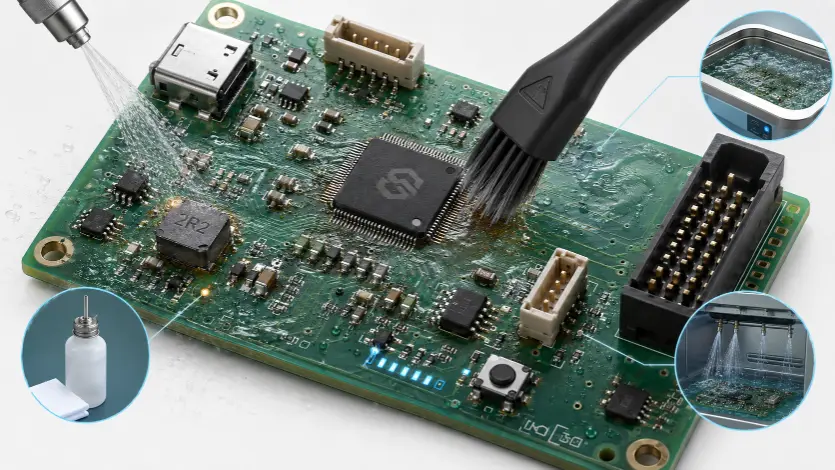
Figure 2. How To Clean Flux Off Pcb details should be checked before quotation and production.
5. Cleaning and Cleanliness Control at Highleap
On the production side, cleanliness is a controlled, measured outcome rather than a wipe-down. At Highleap we match the PCB cleaning process to the flux chemistry on the board — solvent or aqueous — run it as a documented step, and verify the result against the cleanliness requirements in the IPC J-STD-001 and IPC-A-610 standards, including ionic cleanliness testing for boards that demand it. When a board is bound for conformal coating, we clean to the standard the coating needs so it adheres and protects.
If your product has cleanliness, coating, or reliability requirements — or you are fighting flux-residue failures in the field — tell us the flux and the application and we will build cleaning and verification into the process. For rework and repair, our technicians clean to the same standard as production.
Talk to Us About Cleanliness Requirements
6. How to Clean Flux Off a PCB FAQs
What is the best thing to clean flux off a PCB?
For rosin and no-clean residues, high-purity isopropyl alcohol (90% or higher) or a dedicated flux remover works well. For water-soluble (organic-acid) flux, use a deionized-water wash, sometimes with a saponifier. The right cleaner depends on the flux chemistry, so identify the flux first.
Can I use isopropyl alcohol to remove flux?
Yes, for rosin and no-clean residues isopropyl alcohol is a common and effective cleaner, ideally 90% or higher purity applied with a soft anti-static brush. It is not the right choice for water-soluble flux, which needs a deionized-water wash.
Do I need to clean no-clean flux?
Usually no — no-clean residue is formulated to be benign and can stay on general-purpose assemblies. Clean it off when the board has high-impedance or high-voltage nets, RF circuitry, a conformal coating to follow, strict medical or aerospace cleanliness requirements, or a cosmetic specification.
Why is flux residue a problem if I leave it on?
Activated rosin and water-soluble residues can be corrosive and can grow conductive dendrites under humidity and bias, causing leakage and intermittent faults. Residue also interferes with electrical testing and prevents conformal coating from adhering, so it should be removed when any of these matter.
How do I clean water-soluble flux?
Water-soluble (organic-acid) flux is removed with a deionized-water wash, often with a saponifier to help lift it, followed by a clean rinse and thorough drying. Do not leave water-soluble residue on the board, because it is highly active and corrosive.
How do I know the board is actually clean?
Visual inspection under magnification catches gross residue, but for critical boards cleanliness is verified with an ionic contamination (ROSE) test or ion chromatography, which measure residual ionic contamination against a defined limit rather than relying on appearance.
Can I clean a PCB with an ultrasonic cleaner?
Yes, ultrasonic cleaning is effective and common in production, but it must be used with care on boards with sensitive components or fine bond wires, since cavitation energy can damage delicate parts. Process parameters should be qualified for the assembly.

Recommended Posts
TMM4 Filter PCB Manufacturing
TMM4 filter PCB manufacturing is controlled by the...
TMM3 PCB Manufacturing for RF Modules
TMM3 PCB manufacturing is most useful where the RF module...
TMM6 PCB Fabrication
TMM6 fabrication is the process-control page for a mid-Dk...
TMM10 PCB Manufacturing for Compact RF Designs
Table of contentsHow TMM10 Shrinks RF StructuresTMM10 vs...
How to get a quote for PCBs
Let’s run DFM/DFA analysis for you and get back to you with a report. You can upload your files securely through our website. We require the following information in order to give you a quote:
-
- Gerber, ODB++, or .pcb, spec.
- BOM list if you require assembly
- Quantity
- Turn time
For PCBA services, please provide your BOM (Bill of Materials) and any specific assembly instructions. We also offer DFM/DFA analysis to optimize your designs for manufacturability and assembly, ensuring a smooth production process.