
IC Package Types Explained: BGA vs QFN vs QFP, and How to Choose for Your PCB
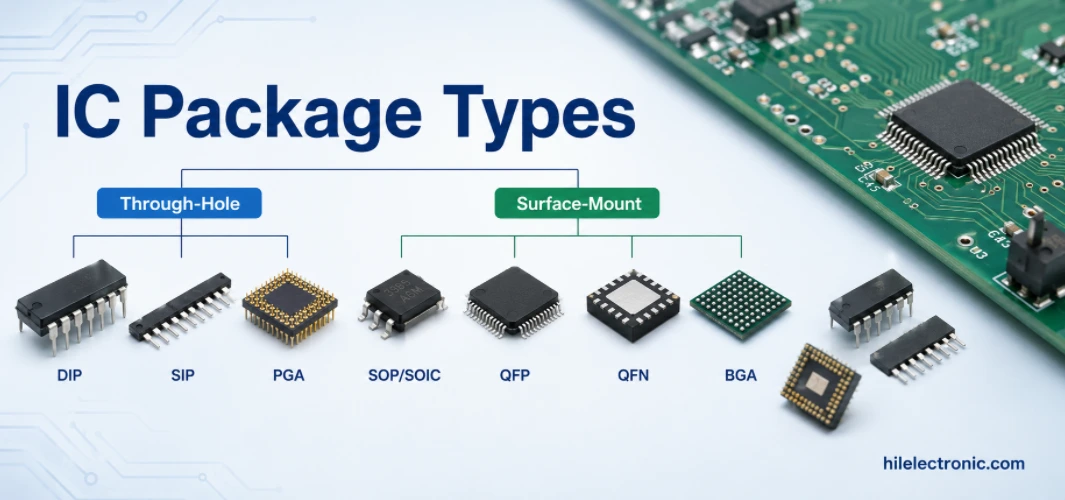
Figure 1. IC package types image for PCB manufacturing review.
An IC package is the housing around a silicon chip that protects it and connects it to the board — and the package you choose (BGA, QFN, QFP, and others) shapes the board’s size, thermal behavior, assembly process, and cost. Picking the right one is as much a manufacturing decision as an electrical one. This guide explains the main IC package types, how the popular ones compare, how packaging affects assembly, and how Highleap Electronics assembles every package type reliably.
1. What is an IC package and what does it do?
An IC package is the protective housing that encloses a semiconductor die and provides the electrical connections — leads, pins, or balls — from the chip to the PCB. It does three things: protects the fragile silicon from physical and environmental damage, fans the die’s tiny connections out to a board-mountable pitch, and provides a path for heat to leave the chip. Without packaging, a bare die could not be handled, connected, or cooled in normal manufacturing.
The package also defines how the chip is assembled onto the board — whether it has pins for holes, leads for surface mounting, or an array of balls underneath. That packaging choice ripples through the whole board: its size, thermal design, assembly process, and inspection needs. Because the package sits at the boundary between the chip and the board, it is closely tied to the substrate technology of advanced parts, such as IC-substrate PCBs and BGA substrates that route the die’s connections out within the package itself.
2. Types of IC packages: through-hole, leaded SMT, and array
IC packages fall into three broad families: through-hole (pins inserted into holes, like DIP), leaded surface-mount (leads soldered to the surface, like QFP and SOIC), and array packages (connections underneath, like BGA and QFN). Each family represents a step toward smaller size and higher connection density, and the family largely dictates the assembly method:
| Family | Examples | Connection |
|---|---|---|
| Through-hole | DIP, PGA | Pins through holes in the board |
| Leaded surface-mount | SOIC, QFP, TQFP | Leads soldered to surface pads |
| Array (no/under leads) | BGA, QFN, CSP | Balls or pads underneath the body |
Through-hole packages are the largest and easiest to hand-solder but use the most space; leaded SMT packages have accessible leads along their edges; and array packages put connections under the body for the highest density and smallest footprint. The trend over time has been toward array packages as devices shrink, which raises the demands on assembly and inspection — the trade explored in the next sections, and seen in package comparisons like BGA versus LGA.
3. BGA vs QFN vs QFP: what’s the difference?
QFP has leads extending from all four sides for easy inspection, QFN has pads on the bottom edges with no extended leads for a smaller footprint, and BGA has an array of solder balls across its entire underside for the highest connection count. The difference is where the connections are and how accessible they are, which trades inspectability against density:
- QFP (Quad Flat Package) has gull-wing leads on all four sides; the leads are visible and relatively easy to inspect and rework, making it forgiving to assemble — details in this look at QFN versus QFP packages.
- QFN (Quad Flat No-lead) has pads along the bottom edges and often a central thermal pad, with no extended leads — smaller and better thermally, but the joints are under the body and harder to inspect, covered in BGA versus QFN.
- BGA (Ball Grid Array) uses an array of solder balls across the whole underside, giving the most connections in a small area — but every joint is hidden, requiring X-ray to verify, as discussed in BGA soldering.
The pattern is clear: as you move QFP → QFN → BGA, footprint and connection density improve while inspectability gets harder. That inspection challenge is exactly why hidden-joint packages need the verification capability described next.
4. How IC package type affects PCB assembly
The IC package type determines the assembly process and inspection method: leaded packages can be placed and visually inspected straightforwardly, while array packages like BGA and QFN need precise placement, controlled reflow, and X-ray inspection because their joints are hidden under the body. Packaging is therefore a manufacturing decision, not just an electrical one — it sets what the line and inspection must do:
- Leaded SMT (QFP, SOIC) places easily and its joints are visible to automated optical inspection, making it the most forgiving to build.
- QFN needs careful paste and a good thermal-pad joint, with hidden edge and bottom joints that often warrant X-ray.
- BGA requires precise placement and a controlled reflow profile so the balls collapse correctly, and its fully hidden joints can only be verified by X-ray inspection — the heart of reliable BGA assembly.
- Through-hole uses wave or selective soldering and is the easiest to hand-solder and inspect.
The takeaway is that choosing a dense package commits you to a capable assembly process with X-ray, so the package and the manufacturing plan should be decided together rather than the package being chosen in isolation.
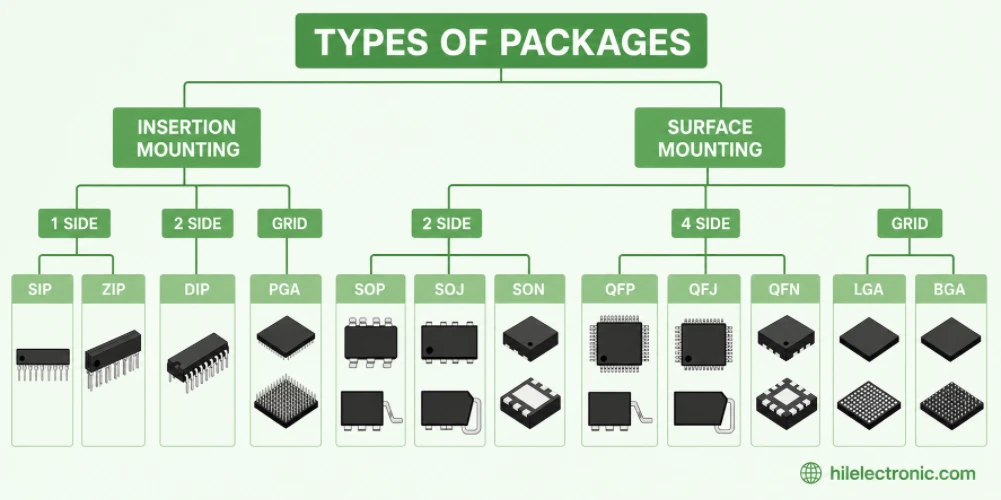
Figure 2. Manufacturing details for IC package types should be checked before quotation and production.
5. How to choose the right IC package
Choose an IC package by balancing board space, thermal needs, assembly capability, and cost against the part’s availability — the smallest package is not always the best if it forces a harder, costlier build than your product needs. Often the same chip is offered in several packages, making this a real design choice. The factors to weigh:
- Board space. Tight, dense designs push toward QFN and BGA; roomier boards can use leaded packages that are easier to assemble.
- Thermal needs. Packages with thermal pads or larger bodies dissipate heat better, which matters for power-hungry parts.
- Assembly capability. BGA and fine-pitch parts require a reflow line with X-ray; if that is available, they are fine — if not, a leaded package is safer.
- Cost and availability. Package choice affects both the part cost and the assembly cost, and a part may only be stocked in certain packages.
The best approach is to confirm the package suits both the design and the intended manufacturing process early — ideally in a manufacturability review — so you do not commit to a package your assembly process cannot reliably build or inspect.
6. How Highleap assembles every IC package type
Highleap assembles every IC package type — through-hole, leaded surface-mount, QFN, and BGA — with the placement, reflow, and inspection each one requires, including X-ray for hidden joints. Leaded packages are placed and optically inspected, fine-pitch and QFN parts get controlled paste and profiles, and BGAs are placed precisely and reflowed to a profile that forms sound ball joints, then verified by X-ray.
Because package choice drives assembly difficulty, a pre-build manufacturability review checks that footprints, thermal pads, and pitch are buildable and that the right inspection is planned — catching package-related risks before the run. Highleap delivers this within turnkey assembly, covering sourcing, placement, soldering, and inspection across all package types, and supports the bare board through PCB manufacturing. When you request a quote, list the IC packages on the board — especially any BGA or fine-pitch parts — and the smallest pitch, so the right process and inspection are scoped.
7. IC package FAQ
What is the difference between an IC package and the chip inside?
The chip (die) is the bare semiconductor that does the work; the package is the housing that protects it, fans its connections out to a board-mountable pitch, and helps remove heat. The package is what makes the chip handleable and solderable.
Which IC package is easiest to solder by hand?
Through-hole packages like DIP are the easiest, followed by leaded surface-mount packages such as SOIC and QFP whose leads are accessible. QFN and BGA, with connections under the body, are difficult or impossible by hand and need reflow.
Why does BGA need X-ray inspection?
Because a BGA’s solder balls are entirely hidden under the package, no camera can see them. X-ray sees through the body to verify the ball joints and detect voids or shorts, which is the only non-destructive way to confirm BGA assembly.
What is the difference between QFN and a thermal pad?
A QFN is a package type with pads along its bottom edges; the thermal pad is the larger metal pad in the center of many QFNs (and other packages) that conducts heat into the board. The thermal pad must be soldered well for both heat removal and mechanical strength.
Can the same chip come in different packages?
Yes — many ICs are offered in several package options, letting you trade board space, thermal performance, assembly difficulty, and cost. This makes package selection a genuine design decision rather than a fixed property of the chip.
Does package choice affect PCB cost?
Yes — denser packages like BGA can require more board layers to route, finer features, and X-ray inspection, all of which add cost, while leaded packages are cheaper to assemble. Package choice affects both component and assembly cost.

Recommended Posts
TMM4 Filter PCB Manufacturing
TMM4 filter PCB manufacturing is controlled by the...
TMM3 PCB Manufacturing for RF Modules
TMM3 PCB manufacturing is most useful where the RF module...
TMM6 PCB Fabrication
TMM6 fabrication is the process-control page for a mid-Dk...

TMM10 PCB Manufacturing for Compact RF Designs
Table of contentsHow TMM10 Shrinks RF StructuresTMM10 vs...
How to get a quote for PCBs
Let’s run DFM/DFA analysis for you and get back to you with a report. You can upload your files securely through our website. We require the following information in order to give you a quote:
-
- Gerber, ODB++, or .pcb, spec.
- BOM list if you require assembly
- Quantity
- Turn time
For PCBA services, please provide your BOM (Bill of Materials) and any specific assembly instructions. We also offer DFM/DFA analysis to optimize your designs for manufacturability and assembly, ensuring a smooth production process.