
Back to blog
The Ultimate Guide to Taconic PCBs: Features, Benefits, and Uses

Taconic PCBs are crafted from advanced composite materials, specifically designed to meet the rigorous demands of modern electronic devices. They are characterized by their exceptional electrical properties, including stable dielectric constants and low loss tangents, which are crucial for high-frequency signal integrity. Moreover, Taconic’s commitment to innovation has resulted in PCB materials that not only excel in electrical performance but also offer significant advantages in terms of thermal management and mechanical stability.
Introduction to Taconic PCBs
Taconic PCBs represent a significant advancement in the field of printed circuit board technology, particularly for applications that demand high-frequency performance. Manufactured by Taconic Advanced Dielectric Division, these PCB materials are specifically designed to meet the unique challenges of modern electronics. Taconic PCBs are distinguished by their exceptional dielectric properties, which are optimized for applications that operate in the microwave to millimeter-wave frequencies.
What Sets Taconic PCBs Apart?
At the core of Taconic PCBs’ uniqueness is their advanced material composition. Unlike traditional PCB materials, such as FR4, which are predominantly fiberglass and epoxy-based, Taconic PCBs utilize high-performance thermoset or thermoplastic resins combined with ceramic fillers. This combination ensures superior electrical performance, especially in terms of dielectric constant (Dk) stability and low dissipation factor (Df), across a broad frequency range.
The dielectric constant of a PCB material is a critical parameter that affects the speed of signal propagation through the circuit. Taconic’s materials are engineered to provide a stable Dk over a wide range of frequencies, temperatures, and environmental conditions, thereby ensuring consistent signal integrity and performance. Additionally, the low dissipation factor of these materials minimizes signal loss, making Taconic PCBs ideal for high-frequency applications where preserving signal strength and quality is paramount.
Advantages of Taconic PCBs
One of the key advantages of Taconic PCBs is their adaptability to a wide range of applications. Thanks to their superior electrical properties, these materials are not only suitable for RF and microwave circuits but also for high-speed digital applications. Moreover, Taconic PCBs exhibit excellent thermal stability and mechanical strength, attributes that are essential for ensuring reliability and longevity in demanding environments.
Taconic has developed a variety of PCB materials to cater to specific application needs, from laminates designed for high-power RF applications to those optimized for low signal loss in complex multi-layer designs. This versatility allows designers and engineers to select the most appropriate material for their specific requirements, whether they are creating compact consumer electronics, sophisticated aerospace systems, or critical medical devices.
If this requirement affects sourcing or production release, compare it with high-frequency PCB manufacturing and Gerber and drill package before sending the final files for review.
Key Features of Taconic PCB Materials
1. High Frequency Performance
Taconic PCBs are engineered for optimal performance in high-frequency applications. Their materials are designed to maintain signal integrity even at microwave frequencies, making them an ideal choice for RF applications, high-speed communications, and radar systems. The superior dielectric properties ensure minimal signal loss and dispersion, which are critical in maintaining the efficacy of communication signals and high-speed data.
2. Thermal Stability
Thermal management is a critical aspect of electronic design, especially as devices become smaller and power densities increase. Taconic PCB materials exhibit excellent thermal stability, which means they can withstand high temperatures without degrading in performance. This feature is essential for maintaining the reliability and longevity of electronic components in demanding environments, including aerospace and automotive applications.
3. Low Dielectric Loss
One of the standout features of Taconic PCB materials is their low dielectric loss, especially at high frequencies. This property ensures that the energy loss during signal transmission is minimized, contributing to more efficient circuit designs. Low dielectric loss is particularly beneficial in applications where preserving signal strength and quality over distance is paramount.
4. Dimensional Stability
Dimensional stability refers to the material’s ability to maintain its dimensions under various environmental conditions. Taconic PCB materials are known for their exceptional dimensional stability, which is crucial for high-precision applications. This ensures that the physical integrity of the PCB is preserved, preventing warping or deformation that could affect the functionality of the device.
5. Environmental Resistance
Taconic PCB materials are designed to be resistant to a wide range of environmental factors, including moisture, chemicals, and thermal shock. This resilience makes them suitable for use in outdoor or harsh environments, where exposure to adverse conditions could otherwise compromise the performance of electronic devices.
Types of Taconic Laminates
Taconic RF-35
Properties: Ceramic-filled, woven glass-reinforced, low dissipation factor, low moisture absorption, great dimensional stability, RoHS compliant.
Applications: Ideal for antennas, power amplifiers, passive components, and suitable for RF and microwave applications. It’s used in hybrid multiple layer boards for enhanced reliability.
Taconic CER 10
Properties: Ceramic-filled, woven glass-reinforced, solder resistant, uniform electrical properties, dimensionally stable, available clad with brass, aluminum, or copper.
Applications: Used in couplers, power amplifiers, filters, passive components, and suitable for high volume and low-cost applications with great thermal and mechanical properties. It’s beneficial for microwave designs requiring flexural strength and low moisture absorption.
Taconic TLY-5
Properties: Dimensionally stable, uniform dielectric constant (Dk=2.20), low dissipation factor, reinforced with woven glass, clad with aluminum, copper, or brass.
Applications: Suitable for power amplifiers, aerospace, cellular communications, automotive radars, and satellite communications. It’s chosen for low-cost, high-performance applications requiring dimensional stability.
Taconic TLY-5A
Properties: Dimensionally stable, the lowest dissipation factor among Taconic laminates, PTFE-coated, woven glass-reinforced, low water absorption, high peel strength, low dielectric constant.
Applications: Used in aerospace, power amplifiers, satellite communications, and the automotive radar industry, supporting hybrid builds for varied application requirements.
Each of these laminates is engineered to meet the rigorous demands of modern electronic devices and systems, offering designers and engineers the ability to optimize performance, reliability, and cost-effectiveness. The choice among these laminates depends on the specific requirements of the application, including the need for low loss, high thermal conductivity, mechanical durability, and environmental resistance.

Related Articles
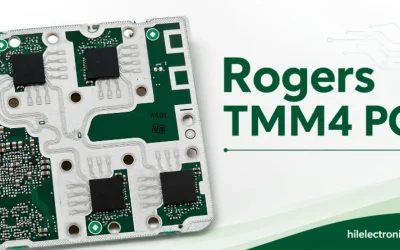
TMM4 Filter PCB Manufacturing
A practical guide to rogers tmm4 pcb manufacturer for compact microwave filters, covering material control, RF stackup decisions, fabrication checks, inspecti
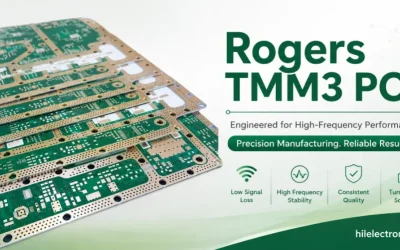
TMM3 PCB Manufacturing for RF Modules
A practical guide to rogers tmm3 pcb manufacturer for mechanical rf modules, covering material control, RF stackup decisions, fabrication checks, inspection e
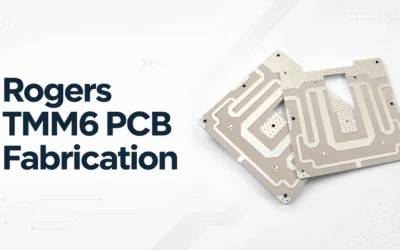
TMM6 PCB Fabrication
A practical guide to rogers tmm6 pcb fabrication for dk 6.0 thermoset microwave boards, covering material control, RF stackup decisions, fabrication checks, i