
TMM6 PCB Fabrication
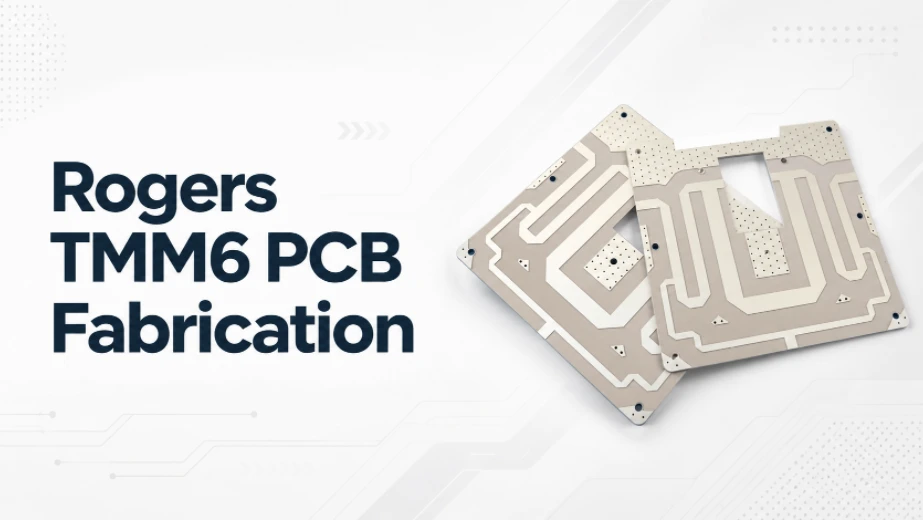
TMM6 fabrication is the process-control page for a mid-Dk thermoset microwave construction. It concentrates on stackup release, drilling, lamination, registration and metallization, while the TMM6 filter page owns the RF-filter geometry and validation topic.
Figure 1. Rogers TMM6 PCB fabrication
TMM6 PCB fabrication is the process-focused route for a high-Dk TMM construction. The main production challenge is to keep the finished thickness, registration, copper geometry and hole quality stable across the panel. Rogers TMM6 PCB fabrication is used when a design needs Dk 6.0 microwave performance with the mechanical behavior of a ceramic-filled thermoset material. TMM6 has process Dk 6.00 +/- 0.080 and dissipation factor 0.0023 at 10 GHz. It is often selected for filters, antennas, couplers, power amplifiers, and microwave assemblies where dimensional stability and practical fabrication matter.
Table of Contents
Material scope: Highleap Electronics manufactures and assembles the finished PCB. The Rogers grade named on this page identifies the specified laminate; Highleap does not manufacture or sell Rogers laminates.
When TMM6 Is the Right PCB Material
TMM6 is a thermoset ceramic hydrocarbon material used when a microwave board needs Dk 6.0 performance with more conventional processing behavior than PTFE-based materials. It is commonly selected for filters, patch antennas, couplers, RF power circuits, and microwave assemblies that need stable dielectric properties and mechanically robust substrates.
The main manufacturing decision is whether the board thickness, finished hole sizes, copper weight, and connector interfaces are practical for repeat production. TMM6 often appears in thicker RF structures, so drilling, routing, plating, and edge quality should be reviewed before the quote is finalized.
TMM6 Often Fails or Succeeds on Thick-Substrate Process Planning
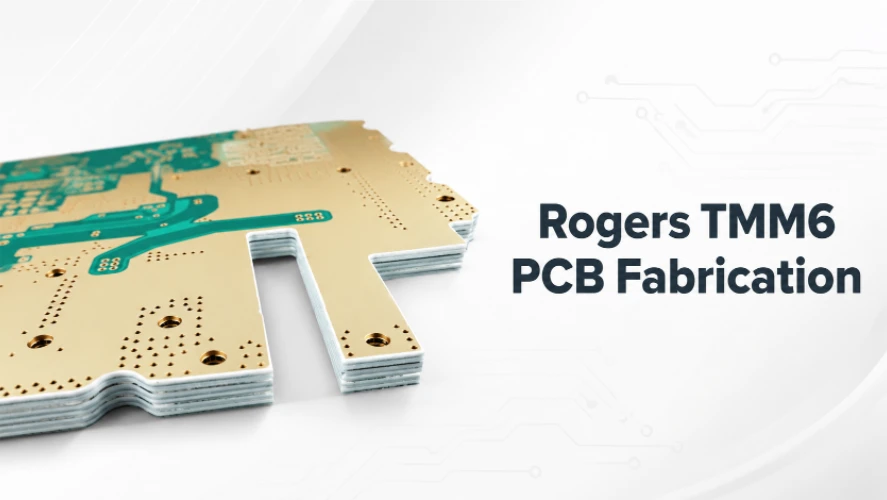
TMM6 is frequently used in thicker microwave structures, which changes the manufacturing review. Thick substrates affect drilling, routing, plated-hole geometry, connector transitions, and mechanical tolerance. A hole size that is comfortable on a thin board may become risky once aspect ratio, copper plating, and annular ring are considered together.
The detailed topic for TMM6 is thick-substrate process planning. Highleap reviews drill diameter, finished hole size, material thickness, copper weight, routing method, edge quality, and connector launch details before quoting. The goal is to prevent a drawing from being quoted as a simple RF board when it actually needs special attention to hole quality, routing stability, board flatness, and mechanical fit.
If the board uses heavy copper, a metal fixture, a carrier plate, or a coaxial connector transition, thermal and mechanical constraints are reviewed together with the RF stackup. Connector launch pads should be checked against board thickness and plating limits, while any mounting holes or routed edges should be evaluated for positional tolerance and edge finish. This makes the finished board easier to assemble and reduces rework risk.
- Check finished hole size, aspect ratio, and annular ring together instead of separately.
- Review routing and edge quality early when the board interfaces with housings, carriers, or connectors.
- Keep the approved thickness, copper, and drill rules unchanged when the design moves into repeat production.
TMM6 Properties That Affect Drilling and Registration
| Item | Manufacturing meaning |
|---|---|
| Process Dk | 6.00 +/- 0.080 at 10 GHz, supporting Dk 6 microwave layouts. |
| Dissipation factor | 0.0023 at 10 GHz. |
| Thermoset ceramic system | Processing differs from FR-4 and from PTFE-heavy RF materials. |
| Thick substrate availability | Thicker TMM constructions need careful drill, routing, and plated-hole review. |
DFM and Stackup Review Before Quoting
A reliable quote starts with the complete Gerber set, drill files, netlist, board outline, stackup drawing, material callout, copper weight, surface finish, solder mask notes, impedance targets, and any assembly requirements. Highleap checks whether the design can be fabricated repeatably before tooling starts.
| DFM item | What to check |
|---|---|
| Drilling plan | Confirm hole size, aspect ratio, drill quality, and route method for thick material. |
| Copper and impedance | Review copper weight, etch compensation, and coupon design. |
| Assembly fit | Check connectors, shields, thermal contact, finish, and soldering exposure. |
Manufacturing Process Controls
The process route should be selected before material is released to production. Typical controls include material verification, inner layer inspection, lamination review, drill quality, hole-wall preparation, copper plating, solder mask registration, surface finish, routing accuracy, electrical test, and final inspection. Highleap reviews drilling, lamination, registration and RF-critical features from the fabrication drawing. Where the board is thicker or uses compact microwave geometry, tooling and inspection are planned around the actual stackup rather than a generic TMM6 recipe. Exact material property values should be checked against the current supplier documentation for the specified grade and construction.
For repeat TMM6 builds, keep the approved thickness, drilling recipe, routing method, copper construction and inspection plan stable. Changes to board thickness or hole classes can alter both mechanical fit and the repeatability of RF structures.
RFQ Package and Production Records
TMM6 is a good fit for microwave filters, RF power networks, patch antennas, couplers, resonators, delay structures, and microwave modules that need Dk 6.0 performance with controlled production yield.
Send Gerber files, drill data, TMM6 thickness, copper weight, finish, impedance table, dimensional tolerances, routing notes, prototype and production quantities, and assembly files if Highleap will build the PCBA.
For TMM6 builds, useful evidence includes finished thickness, drill and plated-hole inspection, dimensional checks, impedance verification where required, material records and first-article results. This is particularly useful when the board uses thick substrate or frequency-sensitive microwave geometry. For quotation, provide TMM6 grade, board thickness, layer count, copper, hole classes, impedance requirements and quantity. These inputs are enough to assess the fabrication route and inspection scope.

Recommended Posts
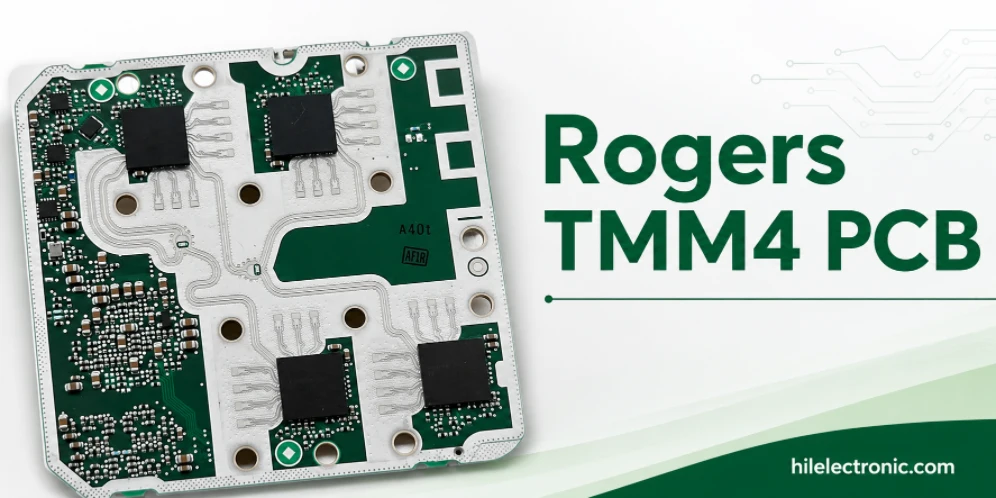
TMM4 Filter PCB Manufacturing
TMM4 filter PCB manufacturing is controlled by the...
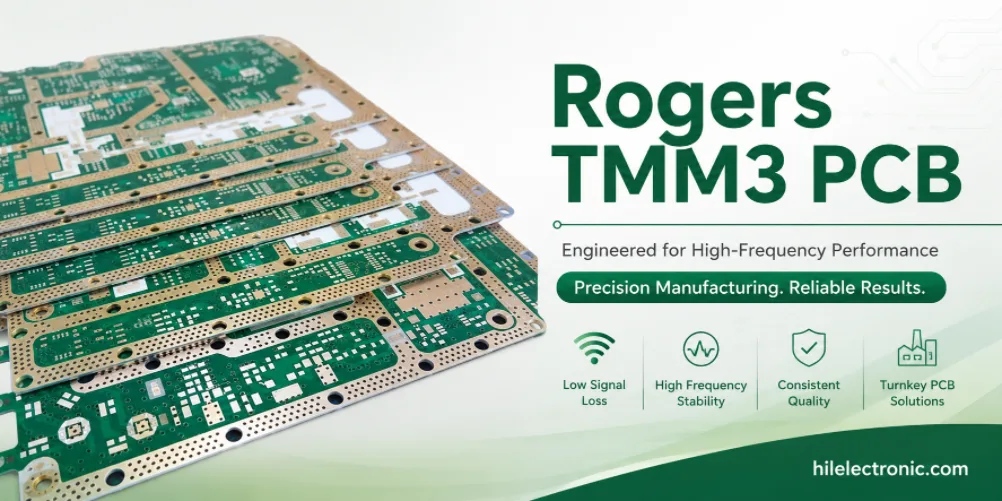
TMM3 PCB Manufacturing for RF Modules
TMM3 PCB manufacturing is most useful where the RF module...

TMM10 PCB Manufacturing for Compact RF Designs
Table of contentsHow TMM10 Shrinks RF StructuresTMM10 vs...

TMM10i PCB Fabrication and DFM
TMM10i PCB fabrication has a stronger DFM emphasis because...
How to get a quote for PCBs
Let’s run DFM/DFA analysis for you and get back to you with a report. You can upload your files securely through our website. We require the following information in order to give you a quote:
-
- Gerber, ODB++, or .pcb, spec.
- BOM list if you require assembly
- Quantity
- Turn time
For PCBA services, please provide your BOM (Bill of Materials) and any specific assembly instructions. We also offer DFM/DFA analysis to optimize your designs for manufacturability and assembly, ensuring a smooth production process.