
Medical MCPCB for High-Power Medical Device Applications
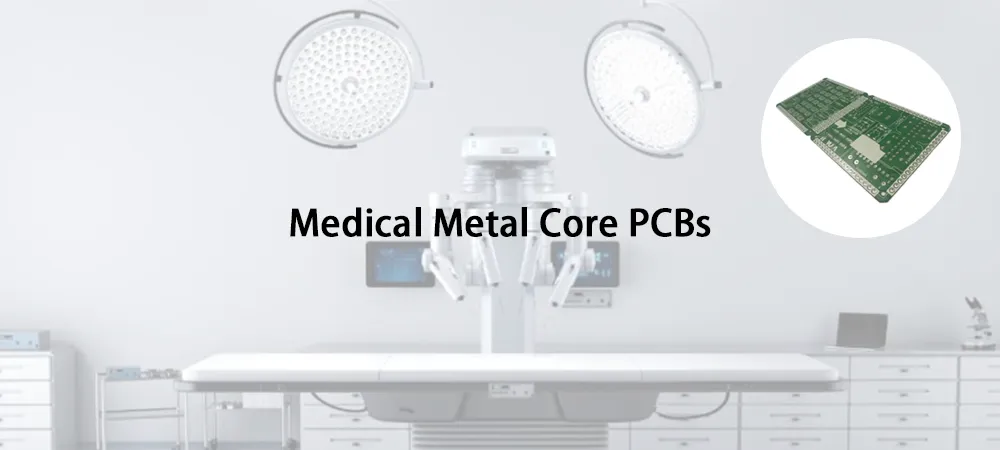
Introduction
Modern medical equipment demands exceptional reliability and safety from electronic systems operating under stringent conditions. As diagnostic imaging systems, surgical lighting, and therapeutic devices continue to advance, managing heat dissipation and power density has become increasingly critical. Thermal failures in medical electronics can compromise diagnostic accuracy, shorten equipment lifespan, and create patient safety risks.
Metal Core PCB (MCPCB) technology addresses these challenges by providing superior thermal management capabilities specifically engineered for medical applications. The integration of medical MCPCB solutions enables high-power medical modules to maintain stable performance while meeting rigorous safety standards required in healthcare environments.
Importance of Thermal Management in Medical MCPCB Applications
Critical Operating Environments
Medical devices frequently operate continuously under high-power conditions where thermal stability directly impacts clinical outcomes. Equipment such as laser therapy systems, LED surgical lighting, CT scanners, and patient monitoring devices generate substantial heat that must be efficiently dissipated.
Without effective heat dissipation MCPCB solutions, thermal accumulation degrades component performance, introduces measurement errors, and accelerates system degradation. The consequences extend beyond equipment longevity to affect patient safety and diagnostic accuracy.
Risks of Thermal Failure
Temperature fluctuations can affect sensor calibration in diagnostic equipment, compromise LED color temperature consistency in surgical environments, and create hot spots that pose safety concerns. Thermal reliability becomes non-negotiable when patient safety depends on consistent device performance.
Metal Core PCBs provide a direct thermal pathway from heat-generating components to external heat sinks, maintaining operational temperatures within specified ranges. This ensures continuous performance stability in demanding medical applications where failure is not an option.
Role of Medical MCPCB in Precision and Safety
Structural Advantages for Thermal Performance
The structural composition of medical MCPCB directly contributes to enhanced reliability in medical electronics. A typical MCPCB consists of three primary layers: a metal substrate (aluminum or copper), a thermally conductive dielectric layer, and a copper circuit layer.
This configuration delivers superior heat spreading compared to conventional FR4 boards while maintaining electrical isolation between circuits and the metal base. The metal substrate provides mechanical rigidity that resists warping under thermal stress, preserving dimensional stability critical for precise component placement.
Safety and Electrical Isolation
From a safety perspective, the dielectric layer in safety PCB designs must provide adequate insulation while facilitating thermal transfer. Medical-grade MCPCBs incorporate dielectric materials engineered to withstand high breakdown voltages, typically exceeding 3000V, ensuring patient and operator safety.
The metal base also functions as an electromagnetic shield, reducing interference that could affect sensitive diagnostic signals. Advanced reliability PCB design considerations include creepage distances, clearance requirements, and surface treatments that prevent contamination in clinical environments where cleanliness standards are paramount.
Application Examples of Medical MCPCB in Healthcare Equipment
LED Surgical Lighting Systems
LED surgical lights require LED medical lighting PCB solutions capable of managing concentrated heat from high-brightness arrays. MCPBs enable tight LED spacing for uniform illumination while preventing thermal droop that would alter color temperature during procedures.
The thermal stability provided by metal core construction ensures consistent light output throughout extended surgical operations. This consistency is critical for maintaining accurate tissue visualization and color rendering in the operating room.
Diagnostic Imaging Equipment
CT scanners, MRI systems, and ultrasound devices rely on MCPCB for medical equipment to support power electronics and signal processing modules. The superior thermal conductivity maintains precise temperature control necessary for accurate image acquisition.
The electromagnetic shielding properties of the metal substrate help preserve signal integrity in environments where electromagnetic compatibility is essential. This shielding prevents interference that could degrade image quality or introduce artifacts in diagnostic results.
Patient Monitoring and Laser Therapy Devices
Patient monitoring systems demand low-noise, thermally stable circuits to ensure accurate physiological measurements. High-power PCB technology in laser therapy equipment manages the significant thermal loads generated during treatment while maintaining precise power delivery.
The rapid thermal response of MCPCBs supports the dynamic power requirements characteristic of pulsed laser systems. This responsiveness ensures that therapeutic energy delivery remains consistent and controllable throughout treatment protocols.

LED Medical Lighting
Design and Material Considerations for Medical MCPCB
Substrate Material Selection
Material selection significantly influences medical MCPCB performance characteristics. The choice between aluminum and copper substrates depends on specific application requirements:
- Aluminum substrates – Cost-effective solution with dielectric thermal conductivity ranging from 1.0 to 3.0 W/mK, suitable for most medical LED and moderate-power applications
- Copper substrates – Superior thermal performance with dielectric conductivity reaching 4.0 to 8.0 W/mK, necessary for extremely high-power density applications
- Weight considerations – Aluminum offers lighter weight for portable or handheld medical devices
- Budget optimization – Material choice balances thermal requirements against cost constraints
Dielectric Layer Engineering
Thermal conductivity PCB performance depends critically on the dielectric layer formulation. Medical applications typically require ceramic-filled epoxy or polyimide-based dielectrics that balance thermal transfer with electrical insulation properties.
The dielectric layer thickness and composition must be optimized to achieve both low thermal resistance and high breakdown voltage. This balance ensures efficient heat dissipation while maintaining the electrical safety margins required for medical device certification.
Regulatory Compliance and Surface Finishing
Compliance with medical device standards, particularly ISO 13485 quality management systems and IEC 60601 safety requirements, guides material selection and process controls. Surface finishes such as ENIG MCPCB (Electroless Nickel Immersion Gold) provide excellent solderability and corrosion resistance essential for long-term reliability.
The combination of material reliability and appropriate surface treatments ensures robust performance throughout the medical device lifecycle. Other suitable finishes include OSP (Organic Solderability Preservative) for cost-sensitive applications and immersion silver for high-frequency designs.
Manufacturing and Quality Assurance for Medical MCPCB
Production Controls and Testing
Production consistency remains fundamental to medical electronics reliability. Medical PCB assembly requires controlled manufacturing environments with stringent contamination controls and process validation protocols.
Advanced testing procedures verify that each board meets electrical and thermal specifications before integration into medical devices:
- Automated optical inspection – Detects manufacturing defects and ensures dimensional accuracy
- Flying probe testing – Validates electrical connectivity and isolation without custom fixtures
- Thermal cycling – Confirms reliability under temperature stress conditions
- High-potential insulation testing – Verifies dielectric integrity and safety margins
- Thermal impedance measurement – Validates heat transfer performance against design specifications
Quality Management Systems
Quality assurance extends beyond individual board testing. ISO13485 PCB manufacturer certification demonstrates systematic compliance with medical device quality management principles throughout the production chain.
This includes documented procedures for design controls, traceability systems, risk management, and corrective action processes. Complete material traceability enables rapid response to quality issues and supports regulatory documentation requirements.
Partnership with experienced manufacturers who understand medical regulatory requirements ensures that MCPCB solutions meet both functional performance targets and regulatory compliance obligations. This expertise spans from initial design consultation through final assembly and validation testing.
Conclusion: Ensuring Reliability and Patient Safety with Medical MCPCB
Medical MCPCB technology plays a vital role in achieving reliable performance in modern high-power medical equipment. By combining efficient heat dissipation, signal precision, and electrical safety, it addresses the core challenges of thermal management in healthcare electronics and ensures long-term system stability during continuous operation.
As medical systems evolve toward higher power density and multifunctional integration, thermal reliability and manufacturing quality become key factors for patient safety and regulatory compliance. Properly designed MCPCB solutions enable consistent temperature control, improve device accuracy, and extend service life in mission-critical medical environments.
Highleap Electronics Capabilities:
- ISO 13485 – certified manufacturing system ensuring compliance with medical device quality standards
- Expertise in metal core PCB fabrication for high-power and thermally demanding medical applications
- Advanced testing and inspection for dielectric integrity, solder reliability, and long-term stability
- Custom thermal design and material optimization support for LED lighting, imaging, and diagnostic systems
Partner with Highleap Electronics to develop safe, reliable, and high-performance MCPCB solutions that meet the stringent demands of modern medical device manufacturing.

Recommended Posts
Prototype PCB Assembly: From Design Files to Tested Boards
Highleap Electronics builds prototype PCB assemblies for...
Hard Gold Finger PCB Manufacturing: Plating and Beveling
Hard gold finger PCB manufacturing is used when a circuit...
Small PCB Panelization: Array Design and Depaneling
Imagine a 26 × 18 mm circuit that must pass through...
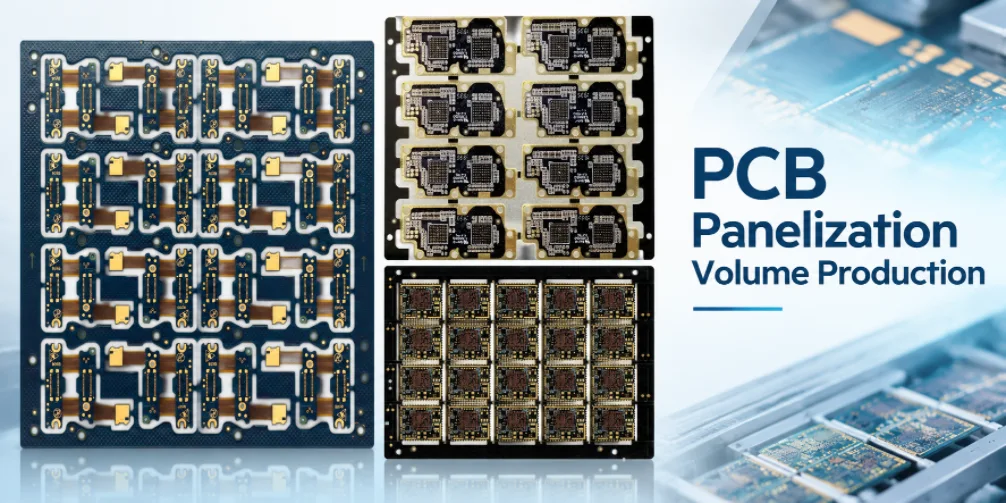
PCB Panelization for Volume Production: Cost and Yield
A fabrication panel that holds more boards is not...
How to get a quote for PCBs
Let‘s run DFM/DFA analysis for you and get back to you with a report. You can upload your files securely through our website. We require the following information in order to give you a quote:
-
- Gerber, ODB++, or .pcb, spec.
- BOM list if you require assembly
- Quantity
- Turn time
In addition to PCB manufacturing, we offer a comprehensive range of electronic services, including PCB design, PCBA, and turnkey solutions. Whether you need help with prototyping, design verification, component sourcing, or mass production, we provide end-to-end support to ensure your project’s success.
For PCBA services, please provide your BOM (Bill of Materials) and any specific assembly instructions. We also offer DFM/DFA analysis to optimize your designs for manufacturability and assembly, ensuring a smooth production process.