
MCPCB Surface Finish Guide | Types & Selection Criteria

Why MCPCB Surface Finish Selection Matters for Thermal Performance
The thermal pathway in a Metal Core Printed Circuit Board (MCPCB) follows a well-defined sequence: heat transfers from components through solder joints and copper pads, across the dielectric layer via thermal vias or heat-spreading pads, into the metal substrate, and finally dissipates through the heat sink. Within this thermal chain, the MCPCB surface finish serves as a critical interface that bridges electrical connectivity and mechanical bonding.
Although the dielectric layer thickness and metal substrate material primarily determine overall thermal resistance, the MCPCB surface finish directly affects three essential factors:
- Solderability during assembly, which influences joint quality and process yield;
- Interface thermal resistance at the solder joint, impacting localized heat dissipation;
- Corrosion resistance, which determines storage stability and long-term reliability.
Because the surface finish layer is extremely thin—typically only a few microinches—it contributes negligible direct thermal resistance. However, inappropriate finish selection can lead to poor wetting, increased contact resistance, or early oxidation, all of which degrade overall board performance.
For engineers specifying MCPCB surface finish options, it is therefore vital to evaluate each finish type—such as ENIG, HASL, OSP, or immersion silver—based on cost, assembly process compatibility, and application environment. Selecting the proper finish ensures consistent solder joints, preserves the designed thermal performance, and extends the operational lifespan of the metal core PCB.
MCPCB Surface Finish Considerations vs. Standard FR-4
Metal Core PCBs differ fundamentally from standard FR-4 boards in thermal architecture. The aluminum or copper base acts as the primary heat spreader in system-level thermal design, while surface finish primarily affects the component mounting interface rather than bulk heat dissipation.
This distinction matters because it shifts specification priorities compared to conventional boards. In LED lighting, power conversion, and automotive applications, MCPCB surface finish selection depends heavily on assembly volume, operating environment, and reliability requirements.
High-volume LED production may prioritize cost-effective finishes with consistent solderability, while automotive power modules demand finishes that maintain integrity through thermal cycling and harsh conditions. Understanding these application-specific priorities guides appropriate finish selection for each Metal Core PCB project.

Common MCPCB Surface Finish Types: Technical Comparison
ENIG (Electroless Nickel Immersion Gold)
- Process structure – Two-step plating: electroless nickel (3–6 μm) followed by immersion gold (0.05–0.15 μm).
- Flatness and precision – Provides an exceptionally flat surface, ideal for fine-pitch SMDs and wire bonding on Metal Core PCBs.
- Corrosion protection – The gold layer seals the nickel from oxidation, extending shelf life and maintaining solderability stability.
- Solderability – Excellent wetting across multiple reflow cycles ensures high yield and uniform joint formation.
- Reliability advantage – Preferred MCPCB surface finish for high-reliability sectors such as automotive, aerospace, and medical electronics.
- Design consideration – Requires strict process control to prevent black-pad defects; sourcing from certified MCPCB manufacturers is essential.
HASL (Hot Air Solder Leveling)
- Process overview – Exposed copper coated with molten solder, then leveled using hot-air knives for a uniform coating.
- Cost efficiency – The most economical and widely adopted MCPCB surface finish, ideal for cost-sensitive designs.
- Solderability – Provides a solder-to-solder interface, ensuring reliable wetting and joint integrity.
- Surface planarity – Less flat than ENIG or silver, which may limit fine-pitch or BGA placement accuracy.
- Application scope – Well-suited for larger components, through-hole assemblies, and designs with ≥ 0.5 mm pitch.
- Lead-free variant – LF-HASL meets RoHS environmental standards while retaining traditional solderability advantages.
Immersion Silver (IAg)
- Deposition process – Chemical displacement creates a thin silver coating (0.12–0.40 μm) directly over copper pads.
- Surface characteristics – Flatness comparable to ENIG, with higher electrical and thermal conductivity.
- Solder performance – Excellent wetting behavior during reflow, ensuring clean and consistent joints.
- Handling requirements – Sensitive to sulfur and moisture; requires anti-tarnish packaging and humidity-controlled storage.
- Application suitability – Ideal MCPCB surface finish for LED modules or high-power designs demanding both thermal and electrical efficiency.
- Shelf life note – Shorter storage life than ENIG; plan just-in-time assembly to maintain quality.
OSP (Organic Solderability Preservative)
- Coating principle – Applies a thin organic layer to protect bare copper from oxidation prior to assembly.
- Cost advantage – Lowest-cost MCPCB surface finish option with inherently flat surface topology.
- Solderability – The organic film dissolves during reflow, exposing clean copper for solder wetting.
- Thermal sensitivity – Limited durability across multiple reflow cycles; each heating step reduces protection.
- Shelf life – Typically a few months; boards should be assembled promptly after fabrication.
- Best use case – High-volume, single-reflow production lines where quick turnover offsets storage limitations.
Additional MCPCB Surface Finish Options
- Immersion Tin – Offers flat surfaces with moderate shelf life; prone to Cu-Sn intermetallic formation over long storage.
- ENEPIG – Adds a palladium barrier between nickel and gold to prevent black-pad formation and enhance wire-bond reliability.
- Hard Gold – Provides superior wear resistance for edge connectors but is rarely applied to full MCPCB surface areas due to cost.
- Selection criteria – Match the finish to assembly method, thermal environment, corrosion exposure, and project budget.
Thermal Impact of MCPCB Surface Finish Selection
Minimal Direct Thermal Contribution
The extremely thin nature of surface finish layers means their direct contribution to vertical thermal resistance is negligible compared to the dielectric layer thickness and metal substrate conductivity. Typical MCPCB surface finish thicknesses measure in micrometers or less, while dielectric layers typically span 75–150 micrometers or more.
Thermal resistance calculations confirm that the surface finish contributes less than one percent of total junction-to-case thermal resistance in properly designed Metal Core boards.
Influence on Localized Contact Thermal Resistance
Although thin, the MCPCB surface finish significantly affects localized thermal resistance at solder joint interfaces. Poor solderability can lead to incomplete wetting, forming small voids that reduce effective contact area and increase thermal resistance at critical component interfaces. Similarly, the quality of the finish where the Metal Core board contacts external heat sinks influences the performance of thermal interface materials.
Key Factors Dominating Thermal Performance
- Thermal via design and density – Direct copper pathways through the dielectric reduce thermal bottlenecks.
- Copper thickness optimization – Heavier copper layers improve lateral heat spreading across the board.
- Dielectric material selection – Low thermal resistance materials minimize junction-to-case temperature rise.
- Metal substrate specification – Aluminum alloy or copper base determines ultimate heat dissipation capacity.
Surface Finish Selection Guidance
For MCPCB surface finish, selection should focus primarily on assembly reliability and environmental protection rather than its thermal conductivity. Ensuring complete, void-free solder joints is critical for maintaining the designed thermal performance of Metal Core boards.
Solderability and Assembly Performance by MCPCB Surface Finish
Impact on Solder Paste Transfer
Different MCPCB surface finish options demonstrate measurable differences in solder paste transfer efficiency during stencil printing. Comparative studies show that ENIG and immersion silver generally achieve superior transfer, with 85–95% area ratio under optimized printing parameters. OSP performance varies more significantly with age and handling, typically achieving 75–90% transfer efficiency depending on coating condition.
Wetting Behavior during Reflow
Wetting angle measurements during reflow indicate that fresh immersion silver provides the best solder wetting characteristics, followed closely by ENIG and HASL finishes. OSP performance degrades more rapidly with storage time and exposure to contaminants, affecting wetting consistency and solder joint reliability.
High-Volume SMT Considerations
For high-volume Surface Mount Technology (SMT) lines producing Metal Core assemblies, conducting design-of-experiments (DOE) with actual finish samples under production conditions provides the most reliable determination of process windows. Finish choice interacts with stencil design, paste chemistry, and reflow profile, making real-world testing essential for optimizing solderability.
Assembly Validation Recommendations
Manufacturers should request process development samples with specified MCPCB surface finish options to validate assembly performance before committing to full production. Proper validation ensures consistent solder paste transfer, reliable wetting, and overall assembly yield while accounting for the specific requirements of Metal Core PCB designs.
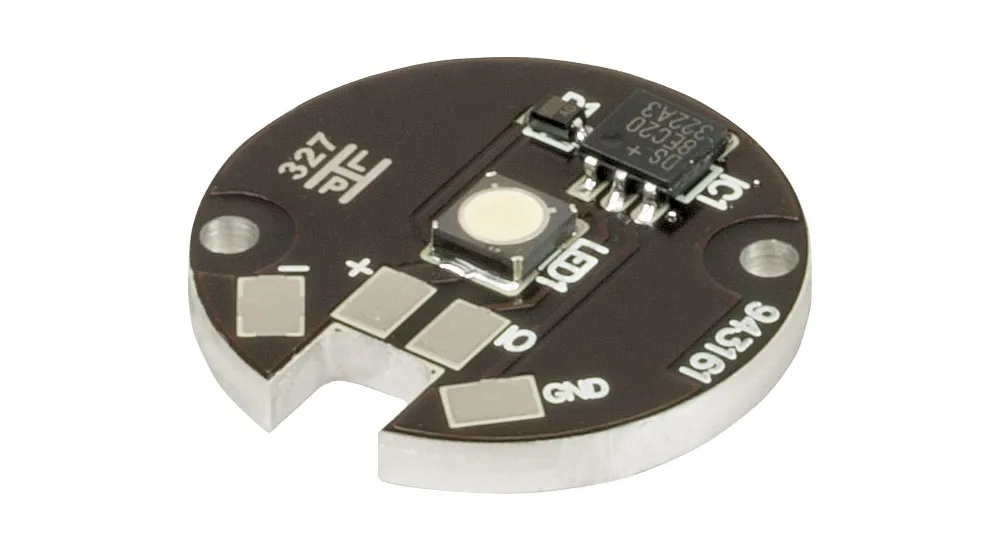
LED Metal Core PCB
Application-Specific MCPCB Surface Finish Recommendations
LED Lighting and COB Applications
- Thermal and electrical performance – Immersion silver and ENIG provide excellent thermal conductivity and reliable electrical connections across multiple solder joints.
- Surface flatness – Both finishes ensure flat surfaces required for chip-on-board and fine-pitch LED packages.
- Storage considerations – Silver-finished boards require vacuum-sealed packaging, humidity indicators, and limited shelf life (up to six months) to prevent tarnishing.
- Long-term reliability – ENIG offers better long-term stability for high-reliability LED products, despite higher initial cost.
Power Electronics and Motor Drive Applications
- Thermal cycling resistance – ENIG and ENEPIG withstand repeated thermal cycles without compromising solder joint integrity.
- Mechanical stress durability – Nickel barrier layers prevent copper diffusion, maintaining mechanical strength over product lifetime.
- Primary design focus – Dielectric thickness, thermal via density, and metal substrate selection dominate overall thermal management.
- Surface finish role – Selection is secondary, focused on assembly reliability and environmental protection rather than enhancing thermal performance.
Cost-Sensitive Consumer Applications
- Economic finish options – HASL and OSP are suitable where assembly simplicity and cost reduction are key factors.
- Component pitch compatibility – HASL works well for larger components typical in consumer LED bulbs and power supplies.
- Rapid-turnover production – OSP performs best when boards move quickly from fabrication to assembly with minimal storage.
- Quality control measures – Incoming inspection of surface condition and defined shelf-life limits ensure assembly yield despite using less robust finishes.
MCPCB Surface Finish Comparison Overview
This comparison provides quick reference for MCPCB surface finish selection based on project requirements. Individual project constraints around budget, assembly capability, and reliability requirements guide final specification decisions.
Finish Type
Flatness
Solderability
Shelf Life
Relative Cost
Thermal Impact
Best Applications
Finish Type
Flatness
Solderability
Shelf Life
Relative Cost
Thermal Impact
Best Applications
Finish Type
Flatness
Solderability
Shelf Life
Relative Cost
Thermal Impact
Best Applications
Finish Type
Flatness
Solderability
Shelf Life
Relative Cost
Thermal Impact
Best Applications
Finish Type
Flatness
Solderability
Shelf Life
Relative Cost
Thermal Impact
Best Applications
Implementing Optimal MCPCB Surface Finish Selection
Successful Metal Core board design begins with thermal stackup fundamentals: selecting appropriate dielectric thickness, copper weight, thermal via placement, and metal substrate type. These factors establish the baseline thermal performance of the board.
Once the thermal design is set, MCPCB surface finish selection focuses on assembly reliability, solderability, and environmental protection. The most effective approach involves requesting sample boards with different finishes for process qualification.
Key Steps for Effective Surface Finish Implementation
- Sample board qualification – Compare multiple finish options on identical stackups.
- Assembly process validation – Run production-representative components through actual reflow profiles.
- Accelerated reliability testing – Perform thermal cycling and aging tests matching the application environment.
- Supply chain verification – Audit manufacturer process controls and quality systems for consistent finish application.
- Documentation standards – Define acceptance criteria and inspection procedures for incoming boards.
Engineering teams developing new Metal Core products benefit from partnering with experienced MCPCB manufacturers who provide finish selection guidance based on similar applications. Proper MCPCB surface finish choice ensures reliable assembly and long-term performance without unnecessary cost increases.
Highleap Electronics specializes in Metal Core PCB fabrication and assembly with comprehensive surface finish options. Our engineering team offers application-specific guidance to align finish selection with your thermal and assembly requirements. Contact us to discuss your project and request sample boards for process validation.

Recommended Posts
Prototype PCB Assembly: From Design Files to Tested Boards
Highleap Electronics builds prototype PCB assemblies for...
Hard Gold Finger PCB Manufacturing: Plating and Beveling
Hard gold finger PCB manufacturing is used when a circuit...
Small PCB Panelization: Array Design and Depaneling
Imagine a 26 × 18 mm circuit that must pass through...
PCB Panelization for Volume Production: Cost and Yield
A fabrication panel that holds more boards is not...
How to get a quote for PCBs
Let‘s run DFM/DFA analysis for you and get back to you with a report. You can upload your files securely through our website. We require the following information in order to give you a quote:
-
- Gerber, ODB++, or .pcb, spec.
- BOM list if you require assembly
- Quantity
- Turn time
In addition to PCB manufacturing, we offer a comprehensive range of electronic services, including PCB design, PCBA, and turnkey solutions. Whether you need help with prototyping, design verification, component sourcing, or mass production, we provide end-to-end support to ensure your project’s success.
For PCBA services, please provide your BOM (Bill of Materials) and any specific assembly instructions. We also offer DFM/DFA analysis to optimize your designs for manufacturability and assembly, ensuring a smooth production process.