
Wearable Temperature Logger PCB Manufacturing & Assembly for BLE Sensor OEMs
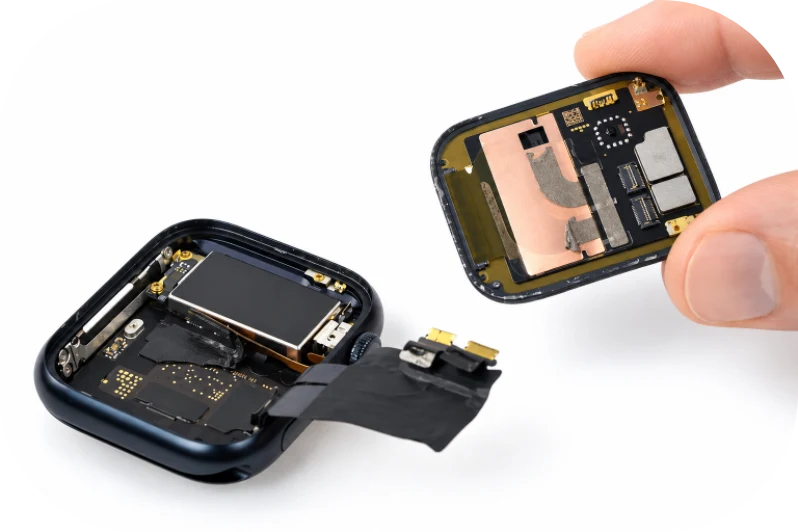
A wearable temperature logger PCB is the electronic board inside a compact device that measures temperature at defined intervals and keeps a record of the readings. Depending on the product, the board may include a temperature sensor, microcontroller, memory, battery-management circuit and Bluetooth Low Energy (BLE) connectivity. It can be built for a skin-contact patch, a wrist-worn monitor or a wearable device that records surrounding air temperature.
Highleap Electronics provides PCB fabrication and PCB assembly for customer-designed wearable temperature loggers. We support OEM and hardware teams with board manufacturing, component sourcing, SMT assembly and agreed inspection or functional-test requirements. Our focus is to turn an approved electronic design into a manufacturable, repeatable PCBA—not to make unsupported claims about the accuracy or certification of the finished wearable.
How a Wearable Temperature Logger PCB Works
The temperature sensor detects its own local temperature and sends a reading to the controller. The firmware determines how often to sample, how each value is time-stamped and where records are stored. Some loggers transfer data through BLE to a phone or nearby gateway. Others save readings locally until the user connects the device. Wireless communication is an option, not a requirement for every temperature logger.
The intended measurement location changes the hardware requirements. A skin-contact logger needs a stable thermal path between the sensing area and the skin. A wearable ambient-temperature logger needs the sensor to respond to the surrounding air without being dominated by body heat or heat trapped in its enclosure. An ear-worn or adhesive patch design may need a much smaller or more flexible sensor section than a clip-on unit.
These products are useful for recording temperature trends and reviewing changes over time. However, skin temperature, ambient temperature and core body temperature are different measurements. The sensor’s component-level accuracy does not prove the performance of a completed wearable. Any medical use or clinical accuracy claim requires validation appropriate to the finished device and its intended purpose.
For a buyer evaluating the PCB, the first questions are practical: Where must the sensor sit? How often will the device log a reading? Does it need onboard memory, wireless transfer or both? How will the board fit into the enclosure? The answers determine the board layout and assembly requirements more reliably than a generic request for a small Bluetooth PCB.
Key Design Considerations for Accurate, Low-Power Logging
Thermal layout is one of the most important differences between a temperature logger and a general wearable control board. A precision temperature sensor measures the temperature at its package. Nearby regulators, batteries, charging circuits and radios can produce heat that reaches the sensor through copper, the PCB material or the product housing. A sensor that works on an exposed prototype board may behave differently after the electronics are enclosed and worn.
For that reason, sensor placement, copper geometry and the mechanical interface should be checked together. Some products use a sensor at the edge of a rigid PCB; others place it on a separate flexible section to reduce heat transfer from active components. The appropriate choice depends on the validated product design, not on an assumption that every wearable must use rigid-flex technology.
A rigid PCB can be suitable when space and thermal separation are sufficient. A flexible PCB can help position the sensing area against the intended surface or accommodate a thin enclosure. If the flex is repeatedly bent during use, its bend radius, component keep-outs and stiffener positions need particular attention. Highleap’s flex PCB assembly services are relevant when a logger uses this type of construction.
Power consumption also affects the product’s useful life and its temperature readings. The board may spend most of its time asleep, briefly wake to sample and store data, then transmit a group of records through BLE. Battery life depends on the actual current in each state and how often those states occur. Charging and continuous wireless operation can generate different levels of heat, so representative operating modes should be considered during validation.
Reliable logging requires more than a functioning sensor. The OEM should also define what happens when the battery runs low, the memory reaches capacity, the device restarts or the BLE connection drops. Accurate timestamps and recoverable records are essential if the temperature history is meant to be useful rather than merely displayed in real time.
Wearable Temperature Logger PCB Manufacturing and Assembly
Highleap’s role is to manufacture the electronics specified by the customer. Our PCB fabrication services cover the bare-board stage, while PCB assembly services cover component sourcing, placement, soldering and related production operations. A temperature logger project may use a compact rigid board, flexible circuit or rigid-flex construction, depending on the released files and quotation scope.
Although these boards are small, several details deserve more attention than on a typical general-purpose PCB. Temperature sensor part numbers should match the approved BOM because pin-compatible alternatives may have different response times, calibration characteristics or package construction. Changes to the sensor position, nearby copper or adhesive interface may affect the thermal behavior even if electrical continuity remains correct.
The manufacturing review should also consider antenna clearance when BLE is used, the orientation of connectors, battery attachment, handling of thin boards and accessibility of programming or test pads. A board that is easy to populate but difficult to test or install may create unnecessary cost during repeated production.
Inspection can verify placement and soldering quality; electrical and customer-defined functional tests can check that the assembled board operates as specified. A practical logger test may cover sensor communication, firmware programming, memory access, wireless connection and power-state current measurements. Where the customer provides a suitable fixture and acceptance limits, a defined temperature-reference check may be included.
PCBA functional testing is not the same as finished-product temperature calibration. The enclosure, body contact, operating environment and firmware correction method can all affect the result. The quotation and test plan should clearly state which checks are performed at board level and which qualifications remain with the OEM.
For repeat orders, it helps to keep the approved BOM, PCB revision, flex construction, firmware version and test limits under change control. This reduces the chance that a seemingly minor purchasing or manufacturing adjustment changes how the logger performs.
Request a Wearable Temperature Logger PCB Quote
To obtain an accurate manufacturing estimate, share the design information that defines the actual work. The following items are especially useful for a wearable temperature logger project:
- PCB production files: Gerber or ODB++ data, stack-up, board outline and fabrication notes.
- Assembly information: BOM with manufacturer part numbers, pick-and-place file, assembly drawing and approved component alternatives, if any.
- Wearable-specific details: sensor location, thermal keep-outs, enclosure constraints and flex or stiffener requirements where applicable.
- Production requirements: prototype or repeat-order quantity, delivery schedule, programming files and agreed inspection or functional-test criteria.
If the project is still being validated, identify which features are not yet frozen. That allows manufacturing questions about the sensor location, board construction or component availability to be resolved before materials are committed. If the design is released, supplying revision-controlled files helps keep later orders consistent with the approved build.
Highleap Electronics works with OEM customers who need wearable temperature logger PCB manufacturing and PCBA assembly based on their own designs. Provide the available project files and requirements to discuss fabrication, sourcing, assembly and the tests needed for your order. A clear RFQ helps both sides agree on the deliverables without assuming that ordinary PCB assembly includes complete device engineering or regulatory certification.

Recommended Posts
TMM4 Filter PCB Manufacturing
TMM4 filter PCB manufacturing is controlled by the...
TMM3 PCB Manufacturing for RF Modules
TMM3 PCB manufacturing is most useful where the RF module...
TMM6 PCB Fabrication
TMM6 fabrication is the process-control page for a mid-Dk...

TMM10i PCB Fabrication and DFM
TMM10i PCB fabrication has a stronger DFM emphasis because...
How to get a quote for PCBs
Let’s run DFM/DFA analysis for you and get back to you with a report. You can upload your files securely through our website. We require the following information in order to give you a quote:
-
- Gerber, ODB++, or .pcb, spec.
- BOM list if you require assembly
- Quantity
- Turn time
For PCBA services, please provide your BOM (Bill of Materials) and any specific assembly instructions. We also offer DFM/DFA analysis to optimize your designs for manufacturability and assembly, ensuring a smooth production process.