
Portable White Noise Machine PCB Manufacturing and PCBA

Portable white noise machines combine audio generation, amplification, battery power, user controls and sometimes wireless connectivity in a compact enclosure. For OEM buyers, the PCB manufacturing plan should focus on consistent audio behavior, controlled power operation, compact assembly, sourcing and a test scope that is measurable at the PCBA level. See the high-volume PCB assembly service page for the corresponding manufacturing scope.
Manufacturing Priorities for Portable Audio Electronics
Speaker selection should be treated as a controlled interface when the customer supplies the speaker. Impedance, power rating, connector and mechanical mounting can affect the amplifier load and final acoustic result. If the speaker is sourced by the factory, the approved part number and acceptable substitute criteria should be stated. The PCB quotation should not assume a generic speaker because the audio output circuit is designed around a specific electrical load.
Audio DFM should focus on the actual electrical architecture. Ground return paths, amplifier placement, power routing, connector orientation and sensitive analog or digital interfaces can all deserve review, but the factory should not claim to redesign the audio circuit unless that service is explicitly requested. If the design has already been validated by the OEM, the manufacturing review should protect the released intent and identify only manufacturability risks that can affect production.
A portable white noise product may use stored audio, synthesized noise, a codec, amplifier, processor, speaker interface, battery charger and wireless module. The manufacturing scope should be based on the actual architecture. A quotation that covers only the bare PCB is not directly comparable with a turnkey PCBA quotation that includes sourcing, programming and functional test. See the audio amplifier PCB service page for the corresponding manufacturing scope.
Highleap’s PCB assembly service can support turnkey or defined-scope PCBA programs. For the RFQ, provide the PCB files, BOM, speaker or audio-module information, battery requirements, firmware and the production test expectations. This gives procurement teams a clearer basis for comparing suppliers.
RFQ inputs
- PCB construction
- BOM
- Audio IC or module
- Speaker interface
- Battery and charger
- Wireless option
- Firmware
- Test scope
Compact audio boards also require sensible placement and assembly access. Speaker connectors, buttons, charging connectors and wireless modules may have mechanical references that are more important than their electrical function alone. If the board is still being developed, the customer can use PCB design support as an engineering reference, while the factory should manufacture the final production board from the released design rather than making unapproved layout changes. See the circuit board assembly service page for the corresponding manufacturing scope.
Manufacturing cost for a compact audio PCBA is influenced by more than board size. Component count, package density, wireless module sourcing, memory or audio-device requirements, connector selection, programming and test time can all affect the assembly price. Procurement teams should therefore compare complete PCBA quotations rather than selecting a supplier from a bare PCB unit price. A small board with a complex BOM can be more expensive to assemble than a larger board with fewer components. See the component sourcing service page for the corresponding manufacturing scope.
Audio, Power and Charging Interfaces
Test fixture design should consider operator usability as well as electrical coverage. A fixture that requires many manual cable connections can create more variation than an automated sequence. For a larger production run, the customer may benefit from a repeatable connector interface, automatic firmware verification and a defined pass/fail record. Fixture cost should be considered together with expected production volume.
Audio firmware can change production behavior even when the PCB is unchanged. Volume limits, sound selection, timers, wireless pairing and sleep modes may all be controlled by software. When programming is part of the PCBA scope, the factory should have one approved firmware release for each production configuration and a defined verification step.
Component sourcing is particularly relevant to audio ICs, wireless modules, connectors and battery-management devices. A substitute should be reviewed for electrical characteristics, firmware compatibility and package or footprint differences before it is introduced. For products sold under several model numbers, the sourcing list should also show which components are common and which are SKU-specific so that procurement changes do not accidentally affect every model.
| Label subsystem | Required information | Production impact |
|---|---|---|
| Media sensor | Type, part number and position | Controls registration and calibration. |
| Print engine | Thermal head and interface | Defines driver and power requirements. |
| Mechanism | Motor plus cutter/tear/peel option | Prevents assuming a feature the product does not have. |
| Firmware | Approved calibration and control image | Controls thresholds and print sequence. |
| Reference media | Approved stock and tolerance | Makes production acceptance repeatable. |
The audio path may include a codec, DAC, amplifier, memory or wireless module. Electrically similar components are not always interchangeable, so approved part numbers should be controlled. Power behavior should also be defined across battery-only, external-power and charging states.
If playback while charging is supported, it should be included in the test specification. If it is not supported, the factory should not assume that condition is part of acceptance. Highleap’s battery management PCB reference can help frame the power architecture, while the customer’s released design determines the exact components and limits.
Operating states to define
- Battery playback
- External power
- Charging
- Playback while charging, if supported
- Low-battery state
- Wireless active state
A portable white noise machine can spend much of its life in standby and then operate continuously during playback. Charging may occur while playback is active or may be restricted by the product design. These states create different demands on the power-management circuit, battery path and connector. The production test should identify which states are actually supported and which are part of acceptance.
| Label subsystem | Required information | Production impact |
|---|---|---|
| Media sensor | Type, part number and position | Controls registration and calibration. |
| Print engine | Thermal head and interface | Defines driver and power requirements. |
| Mechanism | Motor plus cutter/tear/peel option | Prevents assuming a feature the product does not have. |
| Firmware | Approved calibration and control image | Controls thresholds and print sequence. |
| Reference media | Approved stock and tolerance | Makes production acceptance repeatable. |
Managing Noise in Compact Audio PCBs
Audio products may be sold in several regions with different packaging, firmware language or wireless configuration. If the PCB is common but the firmware differs by market, the production work order should identify the correct configuration. This prevents a common hardware platform from becoming a source of regional configuration errors.
Thermal behavior should be reviewed when the amplifier, charging circuit and wireless module are close together. The PCB factory should preserve the released copper areas, thermal vias and component placement, but the OEM should define any system-level temperature limit. A board-level production test can verify electrical operation; it should not be presented as a substitute for complete enclosure thermal qualification.
Compact audio products can place switching regulators, digital clocks and high-current amplifier paths close to sensitive audio nodes. The PCB manufacturer should build to the released stack-up and layout rather than introduce routing or material changes simply to simplify production. Any design change that could alter grounding or signal integrity should go through engineering approval.
Highleap’s audio amplifier PCB assembly guidance is directly relevant to production repeatability in audio assemblies. If the customer specifies a noise floor, THD+N, frequency-response or other quantitative limit, the measurement setup and acceptance criteria should accompany the test requirement.
Audio requirements that can be measured
- Noise floor
- Output level
- Frequency response
- THD+N when required
- Current consumption
- Thermal behavior
Some portable white noise machines have no wireless interface, while others include Bluetooth, Wi-Fi or another connectivity method. The manufacturing package should identify the exact module or integrated circuit and its approved configuration. A wireless module can be customer-supplied, factory-sourced or part of a larger subassembly, and those choices affect the quotation and incoming-material responsibility.
Programming should be tied to the PCB and BOM revision when it is part of the PCBA scope. Volume production is easier to control when the work order identifies the approved firmware image, product variant and test profile. This is particularly important when several models share a PCB but use different sound libraries, buttons, memory or wireless functions.
Programming, Wireless Options and Variant Control
Procurement teams should also separate one-time engineering charges from recurring unit cost when comparing suppliers. Fixture development, programming setup and NPI work may occur before the first volume order, while component and assembly cost recur. A quotation that combines everything into one unexplained number is harder to compare with another supplier’s offer.
Firmware may control sound selection, timers, buttons, volume, wireless behavior and charging-state logic. The production package should therefore connect the firmware image to the PCB revision and SKU. For wireless variants, the module and antenna implementation should be part of the approved configuration.
Highleap’s Bluetooth PCB capability is relevant where Bluetooth connectivity is used. Functional testing can be scoped around boot, user inputs, wireless communication, audio output and current consumption when those are part of the customer’s acceptance criteria.
Variant-control items
- PCB revision
- BOM
- Wireless module
- Firmware
- Audio configuration
- Test profile
A production fixture can verify power-up, control input, audio output, charging behavior, wireless communication and other defined functions. The customer should specify the endpoint. For example, confirming that an amplifier produces an electrical output is different from measuring the final acoustic response of a speaker inside an enclosure. Highleap can perform the agreed PCBA test scope without claiming that a board-level test is a complete product acoustic qualification.
Where firmware controls playback, the test sequence should load or recognize the approved firmware revision and then verify the required functions. Highleap’s functional testing page describes production-oriented checks such as boot-up, I/O response, communication interfaces and output behavior. These checks can be adapted to the customer’s released test requirements.
AOI and electrical inspection remain useful complementary controls. They can identify placement, soldering, continuity and isolation issues that a short functional test may not expose. The final test plan should therefore be a combination of the inspection and functional methods that match the design, rather than a generic list of every possible test.
Functional Testing and Production Acceptance
Long-running consumer-electronics programs benefit from clear after-sales responsibility. Highleap can provide extended after-sales support within the agreed manufacturing scope, but product warranty policy, acoustic claims and customer-service obligations for the finished device remain the OEM’s responsibility. The distinction should be stated clearly in the manufacturing agreement.
Related products such as sleep sound machines, compact speakers and rechargeable audio accessories may share components or manufacturing processes, but they should not be used as a substitute for the customer’s actual design. A supplier with broad PCB and PCBA capability can support different audio applications without pretending that every product uses the same circuit. Highleap’s manufacturing role is to reproduce the customer’s released electronics consistently from prototype through recurring production.
Highleap Electronics manufactures customer-designed PCBs and PCB assemblies for OEM and electronics-development programs. The application keyword identifies the customer’s electronic product; it does not mean Highleap sells the finished consumer or commercial device. Manufacturing is performed from the released engineering data and the agreed production scope.
- Released PCB fabrication data and board specification
- Approved BOM and component-sourcing responsibility
- Assembly drawing and pick-and-place data where applicable
- Firmware, programming and functional-test requirements when applicable
- Prototype, pilot and recurring production quantities
For volume programs, also state the expected annual demand, order pattern and any customer-controlled components. If the project requires component sourcing, identify whether approved alternates are permitted and which changes require engineering approval. This helps separate a genuine manufacturing quotation from an estimate based on assumptions.
A useful quotation package should be specific enough that different suppliers are pricing the same manufacturing scope. For this application, include the current PCB fabrication files, board specification, BOM with manufacturer part numbers, assembly data where applicable, mechanical references for controlled interfaces, firmware and programming requirements, functional-test procedure, acceptance limits, production quantity and packaging or traceability requirements.
RFQ information to send
Production acceptance structure
- Assembly inspection
- Electrical verification
- Firmware verification
- Audio functional test
- Wireless test when applicable
- Charging test
- Traceable pass/fail record
For a broader manufacturing scope, buyers can also review electrical testing and one-stop PCBA when comparing production routes. These services should be selected only when they match the released design and agreed scope. See the DFM review service page for the corresponding manufacturing scope.

Recommended Posts
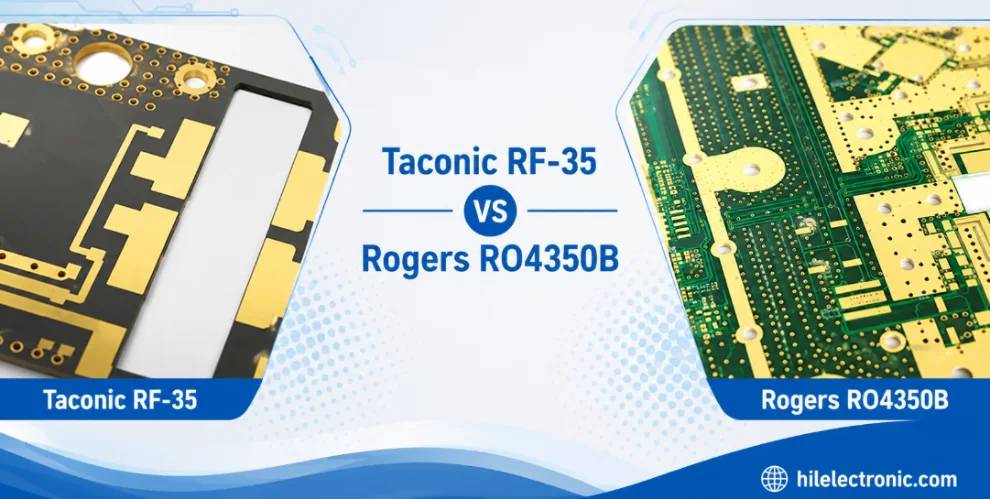
Taconic RF 35 vs RO4350B PCB
Table of contentsRF-35 vs RO4350B Procurement and...
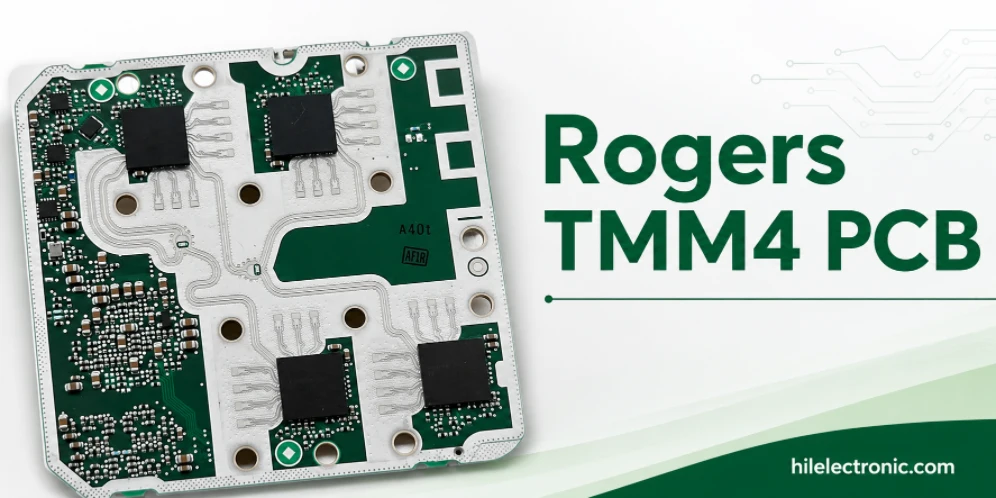
TMM4 Filter PCB Manufacturing
TMM4 filter PCB manufacturing is controlled by the...
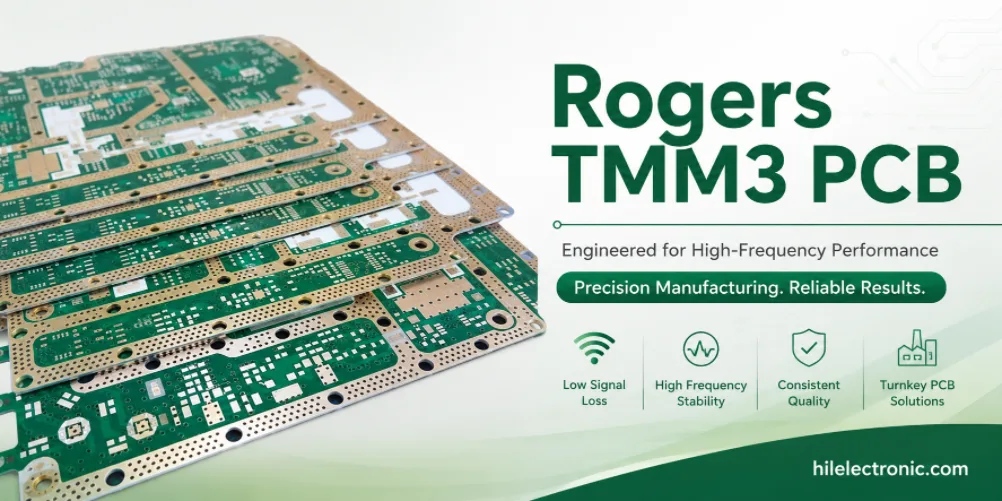
TMM3 PCB Manufacturing for RF Modules
TMM3 PCB manufacturing is most useful where the RF module...
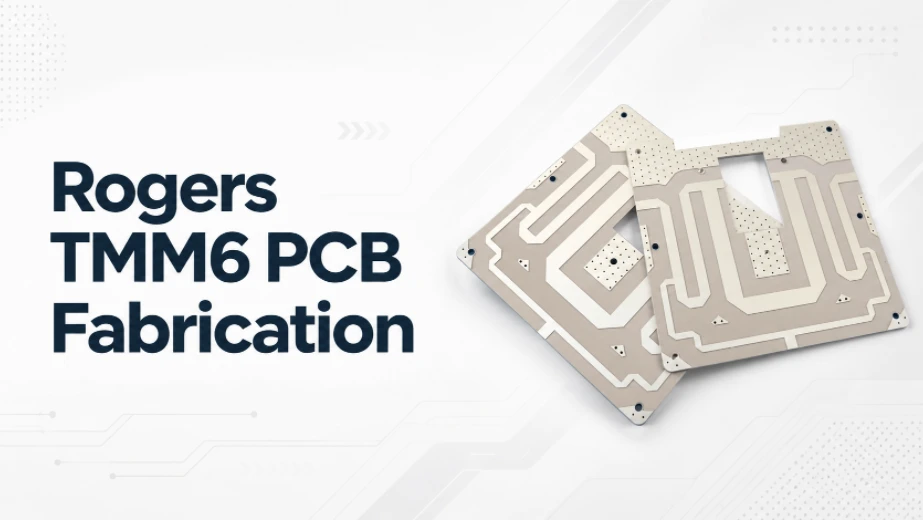
TMM6 PCB Fabrication
TMM6 fabrication is the process-control page for a mid-Dk...
How to get a quote for PCBs
Let’s run DFM/DFA analysis for you and get back to you with a report. You can upload your files securely through our website. We require the following information in order to give you a quote:
-
- Gerber, ODB++, or .pcb, spec.
- BOM list if you require assembly
- Quantity
- Turn time
For PCBA services, please provide your BOM (Bill of Materials) and any specific assembly instructions. We also offer DFM/DFA analysis to optimize your designs for manufacturability and assembly, ensuring a smooth production process.