
RO5880 PCB Manufacturing

RO5880 PCB manufacturing is a fabrication problem as much as a material-selection problem. The board may require very low-loss behavior, but the finished result still depends on how the fabricator handles PTFE, holes, copper surfaces, registration and the RF test method. Material scope: Highleap Electronics is the PCB manufacturer and assembler for the build described here. Rogers and the referenced grade names identify the specified material and are not a description of Highleap material manufacturing.
As the demand for advanced wireless technology continues to grow, the need for high-performance high-frequency PCB materials has should not been greater. Rogers 5880 PCB stands at the forefront of this evolution, offering low-loss signal behavior and thermal stability for applications ranging from 5G infrastructure to automotive radar systems. Whether you’re working on 28GHz 5G antennas, 77GHz radar sensors, or satellite communication circuits, Rogers 5880 is the material you need to meet the challenges of modern wireless communication.
The manufacturing focus is low-loss PTFE board construction rather than a generic description of RO5880. The released drill structure, hole preparation, copper treatment, lamination approach and dimensional control need to match the RF geometry that was designed for the board.
How to Evaluate Rogers 5880 for High-Frequency Applications
In high-frequency PCB design, Rogers 5880 is one option whose suitability depends on loss budget, geometry, handling, and qualification needs. Unlike traditional FR4 materials, Rogers 5880 is engineered with a PTFE-based laminate that incorporates randomly oriented glass microfibers. This unique structure helps to maintain consistent electrical properties across all signal propagation directions, which is essential for high-speed communication circuits that operate at millimeter-wave frequencies.
With a dielectric constant of just 2.20 ±0.02 at 10GHz and an ultra-low dissipation factor of 0.0009, Rogers 5880 PCB offers the low-loss performance required for advanced RF designs. Whether you’re designing a 5G base station, automotive radar, or high-speed communication system, these properties ensure the signal integrity needed for target performance.
China Rogers 5880 PCB Reliable Manufacturer and Competitive Advantages
Rogers 5880 is widely recognized for its exceptional performance in high-frequency PCB applications. With the global demand for low-loss RF boards on the rise, Chinese PCB manufacturers have become reliable partners in delivering Rogers 5880-based solutions across advanced industries like 5G infrastructure, automotive radar, aerospace, and satellite communication.
Why Rogers 5880 Stands Out
-
Dielectric Constant: 2.20 ± 0.02 (stable across 1 MHz to 40+ GHz)
-
Dissipation Factor: As low as 0.0009 @10 GHz
-
Thermal Coefficient of εr: -125 ppm/°C
-
Moisture Absorption: <0.02%
These properties make Rogers 5880 well suited to signal integrity, low signal loss, and stable performance in environments with wide temperature and humidity variations.
Key Benefits of Choosing a China-Based Manufacturer
Chinese PCB fabricators offer more than just cost advantages:
1. Proven High-Frequency Expertise
Manufacturers experienced with PTFE-based materials provide:
-
Surface treatment expertise for strong copper adhesion
-
Impedance-controlled stackups with ±5% tolerance
-
Support for antenna layout and RF shielding strategies
2. Precision Manufacturing for Complex Designs
-
0.1mm microvias for HDI designs
-
Support for rigid, flexible, and rigid-flex combinations
-
Up to 20-layer stackups with fine-pitch component assembly
3. Application-Specific Solutions
Tailored Rogers 5880 PCBs for:
-
mmWave 5G antennas and beamforming modules
-
77–79 GHz automotive radar boards
-
Aerospace telemetry and satellite transceivers
-
RF ablation and diagnostic medical electronics
4. Quality & Traceability
-
quality-system certification scope confirmed for the supplying site
-
AOI, X-ray, and RF functional testing
-
Batch traceability and full documentation
5. Speed and Scalability
From 5–10 piece prototyping to 10,000+ unit production runs, qualified suppliers may offer short lead times, but quality and schedule depend on the released stackup, inspection plan, and available capacity. The manufacturing route should be agreed before release, especially for plated through holes and fine RF features. Highleap’s review focuses on the finished geometry and the process window required to reproduce it, with panel coupons or additional RF checks defined when the qualification plan calls for them. Exact material property values should be checked against the current supplier documentation for the specified grade and construction.
Typical Rogers 5880 PCB Combinations
-
Multilayer HDI + Rogers 5880 Core: Ideal for compact RF modules
-
Rigid-Flex + Rogers Stackups: Used in space-constrained devices like phased arrays
-
Hybrid FR4 + Rogers Designs: Cost-effective integration of RF and digital sections on one board
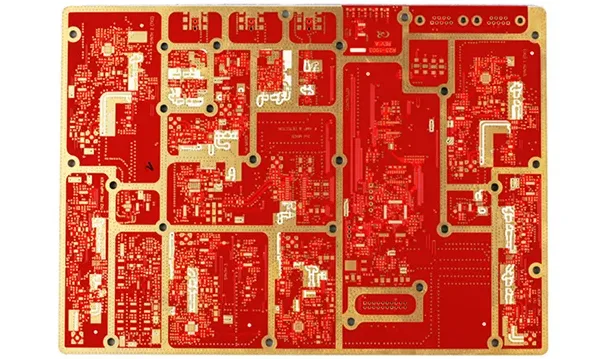
RO5880 Board Types and Build Scope
1. 5G Base Stations:
For the deployment of 5G networks, Rogers 5880 ensures that 28GHz and 39GHz MIMO base stations maintain high data rates by minimizing signal loss. With its low dissipation factor, more power is transmitted to the antenna, ensuring high-quality signals and greater network efficiency.
2. Automotive Radar Systems:
In automotive radar applications, Rogers 5880 delivers precise phase alignment, crucial for 77GHz radar systems used in collision avoidance and adaptive cruise control. Its uniform dielectric properties ensure that radar signals maintain their integrity for safety-critical applications.
3. Satellite Communications:
For satellite communication systems, Rogers 5880 excels in Ku-band and Ka-band frequencies, where its dimensional stability and low moisture absorption make it well suited to circuits operating in space environments. Its performance is stable even with the extreme temperature variations and radiation exposure typical in space.
4. Military Systems:
Military applications, such as missile guidance and radar systems, demand materials that can perform reliably under harsh conditions. Rogers 5880 PCB offers the necessary thermal stability and signal consistency, ensuring precision even in extreme vibration, acceleration, and temperature shifts.
Rogers 5880 vs Other High-Frequency Materials: Understanding When to Choose the Right Material
While Rogers 5880 Laminates are often the go-to choice for high-frequency applications, it’s crucial to understand when other materials may offer a more cost-effective solution without compromising too much on performance. For example, Rogers 4350B is an excellent alternative for lower-frequency circuits. It provides a more affordable option while still delivering reliable performance for many RF applications that do not require extreme low-loss performance or high-frequency consistency.
However, when signal integrity and low loss are paramount, Rogers 5880 Materials excel and outperform most alternatives, especially in applications that operate above 10GHz. With a low dissipation factor of 0.0009 and an extremely consistent dielectric constant, Rogers 5880 Laminates ensure superior signal fidelity. These properties make Rogers 5880 the preferred choice for high-performance designs like 5G antenna arrays, automotive radar systems, and military radar systems—where even the smallest variations in signal loss or dielectric properties can significantly affect overall performance and reliability.
For more detailed insights into why Rogers 5880 Laminates are crucial for demanding high-frequency applications, check out our comprehensive comparison of Rogers 5880 Materials against other high-frequency PCB materials.
Conclusion
For engineers comparing materials for high-frequency circuit design, Rogers 5880 PCB provides a proven, high-performance solution. Whether you’re designing for 5G, automotive radar, or satellite communications, Rogers 5880 offers exceptional signal integrity, thermal stability, and reliability under the most demanding conditions.
By choosing Rogers 5880 PCB, you are investing in long-term performance and future-proof technology. Stay ahead in the rapidly evolving world of high-frequency electronics—choose Rogers 5880 for your next project and experience the difference it makes in your designs. For a firm quote, include the exact grade, finished thickness, copper, layer count, hole construction and RF acceptance criteria. This prevents a PTFE board from being priced using a generic high-frequency PCB assumption.

Recommended Posts
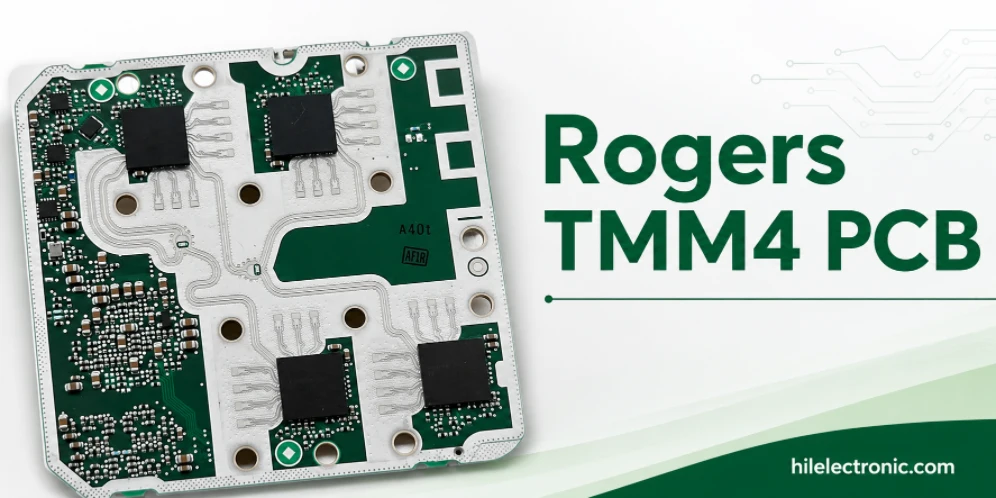
TMM4 Filter PCB Manufacturing
TMM4 filter PCB manufacturing is controlled by the...
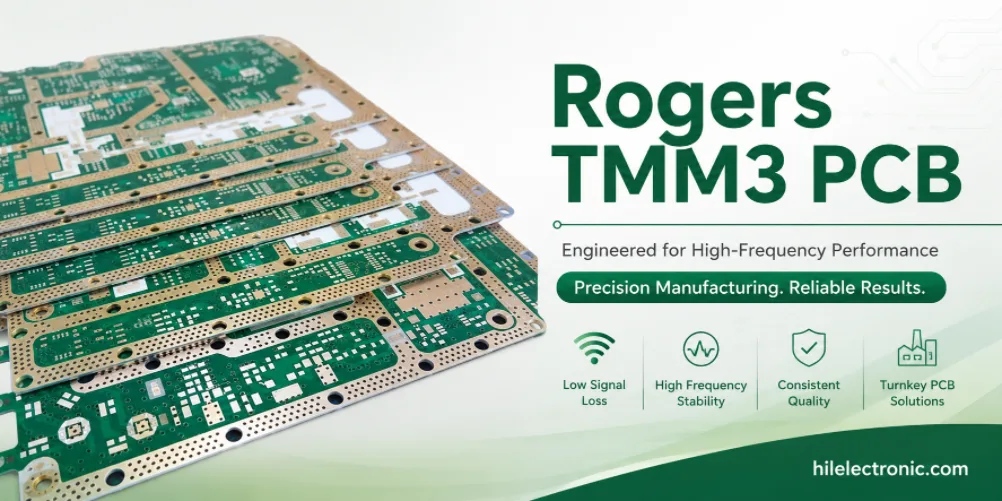
TMM3 PCB Manufacturing for RF Modules
TMM3 PCB manufacturing is most useful where the RF module...
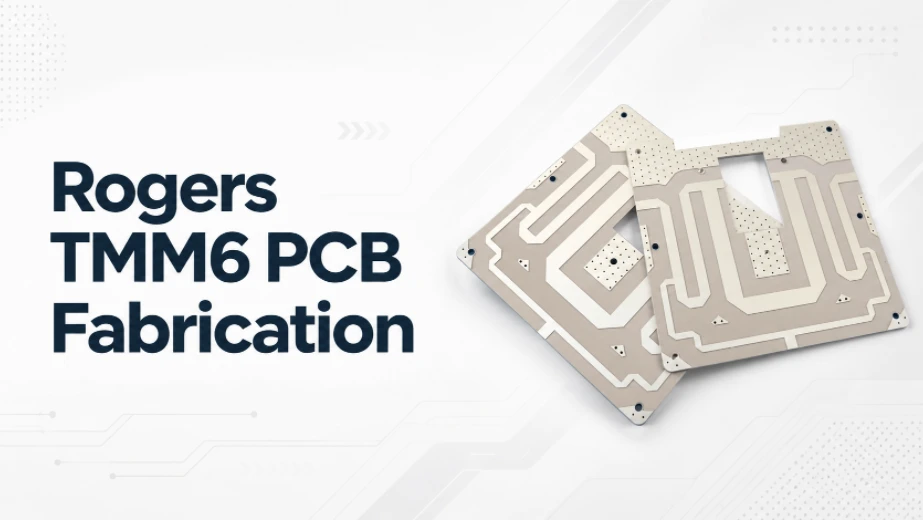
TMM6 PCB Fabrication
TMM6 fabrication is the process-control page for a mid-Dk...
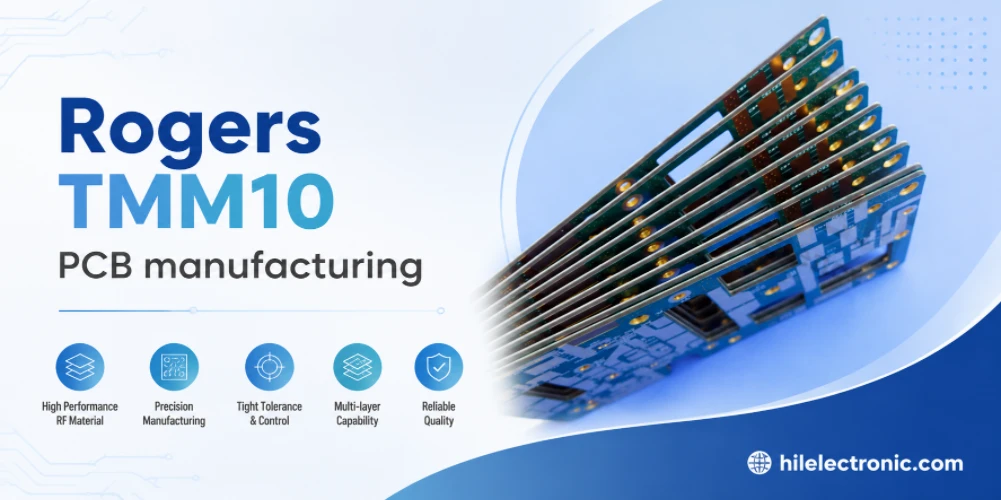
TMM10 PCB Manufacturing for Compact RF Designs
Table of contentsHow TMM10 Shrinks RF StructuresTMM10 vs...
How to get a quote for PCBs
Let’s run DFM/DFA analysis for you and get back to you with a report. You can upload your files securely through our website. We require the following information in order to give you a quote:
-
- Gerber, ODB++, or .pcb, spec.
- BOM list if you require assembly
- Quantity
- Turn time
For PCBA services, please provide your BOM (Bill of Materials) and any specific assembly instructions. We also offer DFM/DFA analysis to optimize your designs for manufacturability and assembly, ensuring a smooth production process.