
0201 SMD Components: PCB Design and Assembly Guide

Figure 1. 0201 SMD component guide
An 0201 SMD component is a tiny surface-mount passive, an imperial 0201 measures 0.020 by 0.010 inches, or about 0.6 by 0.3 mm (metric 0603). At that size, resistors and capacitors enable dense, miniaturized boards, but they demand precise placement, tightly controlled solder paste, and careful pad design to avoid defects like tombstoning. This guide explains exactly what 0201 means, how it compares to other sizes, why it is challenging, and how to design and assemble it reliably, plus when a larger part is the smarter choice.
Key takeaways
- Imperial 0201 is about 0.6 by 0.3 mm (metric 0603); the next size down, 01005, is roughly 0.4 by 0.2 mm.
- 0201 parts need high-accuracy pick-and-place and tightly controlled solder paste volume.
- Symmetric pads and balanced thermal design are essential to prevent tombstoning.
- They are not practical to hand-solder and rely on AOI and paste inspection in production.
- Use 0201 only when density truly requires it; 0402 and 0603 are cheaper, more robust, and higher-yield.
Table of Contents
- What Is an 0201 SMD Component?
- SMD Component Size Chart (0201, 0402, 01005)
- 0201 vs 0402 vs 01005: Choosing a Size
- Why 0201 Components Are Hard to Assemble
- How to Design a PCB for 0201 Components
- How to Assemble 0201 Components
- Common 0201 Assembly Defects
- When to Use 0201 (and When Not To)
- Frequently Asked Questions
What Is an 0201 SMD Component?
The “0201” code describes the component’s footprint in imperial units: 0.020 inches long by 0.010 inches wide. In millimeters that is about 0.6 by 0.3 mm.
The imperial/metric naming trap
There is a well-known source of confusion: the same physical part has both an imperial code (0201) and a metric code (0603). That metric 0603 is not the same as an imperial 0603, which is much larger. To avoid ordering or designing the wrong size, always state which system you mean, “imperial 0201” or “metric 0603”, when there is any doubt.
What kind of parts
0201 is used for passive components, chip resistors and capacitors, where the value does not require a larger body. Their appeal is area: many of them fit where a few larger parts would, which is why they appear in space-constrained, high-density designs handled during PCB assembly.
SMD Component Size Chart (0201, 0402, 01005)
Seeing 0201 next to its neighbors puts its size in perspective.
| Imperial | Metric | Approx. size |
|---|---|---|
| 0603 | 1608 | 1.6 x 0.8 mm |
| 0402 | 1005 | 1.0 x 0.5 mm |
| 0201 | 0603 | 0.6 x 0.3 mm |
| 01005 | 0402 | 0.4 x 0.2 mm |
An 0201 is roughly a quarter of the area of the common 0402, and 01005 is smaller still. Each step down saves board space but tightens every process window, so the size chart is really a difficulty chart: the smaller you go, the more your equipment, paste, and design must be in control.
0201 vs 0402 vs 01005: Choosing a Size
Picking a passive size is a trade between density on one side and cost, robustness, and yield on the other.
| Size (imperial) | Hand-solderable? | Process difficulty | Best for |
|---|---|---|---|
| 0603 | Yes, easily | Low | Prototypes and easy rework |
| 0402 | With care and magnification | Moderate | Mainstream SMT; good balance |
| 0201 | Not practically | High | Dense, miniaturized, and RF boards |
| 01005 | No | Very high | Extreme miniaturization only |
Why size discipline pays off
Each step smaller buys board area at the price of tighter process control and lower hand-rework ability. 0402 is the mainstream sweet spot for most boards; 0201 earns its place only when density genuinely demands it; and 01005 is reserved for the most extreme miniaturization. Specifying the smallest part the layout actually allows, rather than the smallest part available, usually gives the best mix of cost and yield. Confirm a partner’s capability at your chosen size before committing the design to volume production, and use a design review to catch footprint or spacing issues early.
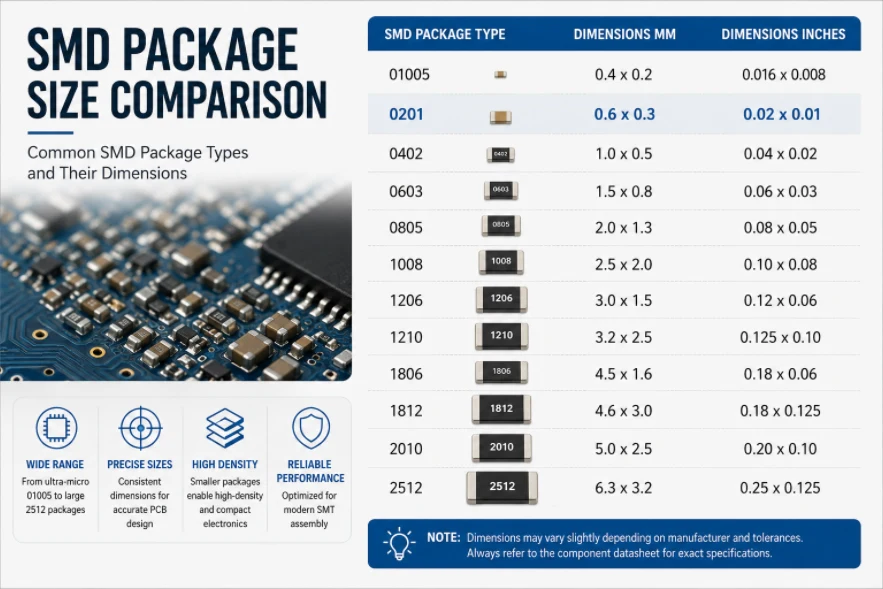
Figure 2. 0201 SMD PCB design and assembly
Why 0201 Components Are Hard to Assemble
0201 is not simply “a small 0402.” Several effects scale unfavorably as the part shrinks.
- Placement accuracy. The placement machine must position the part within a tiny tolerance, which demands a capable, well-calibrated pick-and-place.
- Paste volume control. The amount of solder paste must be precise; too much bridges, too little starves the joint.
- Tombstoning risk. If one end heats and wets before the other, surface tension can stand the part on end like a tombstone.
- Handling. The parts are easily lost or mishandled and need controlled feeders and storage.
- Inspection. Verifying such small joints relies on automated optical inspection and paste inspection, not the naked eye.
Crucially, 0201 is not practical to hand-solder; it is an automated-assembly component. The combination of tiny pads, small paste deposits, and tombstoning sensitivity means success depends on equipment and process control rather than operator skill.
How to Design a PCB for 0201 Components
Much of 0201 success is decided in the layout, well before the board reaches the line.
Pad design and spacing
Use a qualified land pattern (for example, following IPC-7351 recommendations) rather than guessing pad sizes. Keep adequate spacing between parts and a clean courtyard so placement and inspection are not crowded. These footprint details are exactly what a design-for-manufacturing review checks.
Thermal balance to prevent tombstoning
The most important rule is symmetry: both pads should heat at the same rate. That means equal copper connections to each pad and thermal relief on both sides, so neither end wets first. Routing a wide trace into one pad and a thin one into the other is a classic recipe for tombstoning.
Stencil and mid-chip balls
Aperture shaping (such as home-plate apertures) and reduced paste volume help avoid mid-chip solder balls and bridging. The pad and stencil should be designed together, which is part of coordinating layout with PCB manufacturing and assembly.
How to Assemble 0201 Components
On a capable line, 0201 placement is routine, but it depends on tight process control at several steps.
- Stencil and paste. Stencil thickness and aperture area ratio must release a small, consistent paste deposit.
- Paste inspection. Solder paste inspection confirms the right volume before placement, catching problems early.
- Placement. A high-accuracy machine sets each part precisely on its pads.
- Reflow profile. A controlled, even profile, sometimes under nitrogen, melts the joints without standing parts up.
- AOI. Automated optical inspection verifies presence, alignment, and joint quality afterward.
Because the margins are small, first-article inspection and consistent process control matter a great deal, especially as a board moves from prototype into high-volume assembly, where the same tight windows must hold across every board.
Common 0201 Assembly Defects
Most 0201 problems fall into a familiar set, each tied back to placement, paste, or thermal balance.
| Defect | Typical cause |
|---|---|
| Tombstoning | Uneven heating or unbalanced pads; one end wets first |
| Bridging | Too much paste or misplacement joining adjacent pads |
| Insufficient solder | Too little paste or poor stencil release |
| Mid-chip solder balls | Excess paste squeezed out under the body during reflow |
The thread running through these is control of paste volume and thermal symmetry. Get the stencil aperture, paste deposit, and pad balance right, and the defect rate drops sharply. This is why 0201 is as much a process-engineering exercise as a design one.
When to Use 0201 (and When Not To)
Smaller is not automatically better. The right size balances density against cost, robustness, and yield.
- Use 0201 when board space is genuinely tight, density is critical, or a compact RF or wearable layout demands it, the kind of dense, high-frequency work seen in high-speed designs.
- Prefer 0402 or 0603 when the space exists, because they cost less, tolerate process variation better, can be hand-soldered for rework, and generally yield higher.
A common, avoidable mistake is miniaturizing for its own sake. If a 0402 fits, it is usually the more robust and economical choice. Reserve 0201 (and 01005) for designs where the size is a real requirement, and confirm that your assembly partner is equipped for it before committing.
0201 components unlock dense, miniaturized boards, but only with accurate placement, tight paste control, symmetric pad design, and automated inspection. Use them where density truly demands it, design for thermal balance, and assemble with a capable, well-controlled line. You can read more about Highleap Electronics and our fine-pitch assembly capability. Heavy or thermally demanding boards may also pair 0201 work with metal-core assembly.
Frequently Asked Questions
What size is an 0201 SMD component?
An imperial 0201 is 0.020 by 0.010 inches, or about 0.6 by 0.3 mm, which is the metric 0603 size. It is a very small chip resistor or capacitor, roughly a quarter of the area of a common 0402. The next size down, 01005, is about 0.4 by 0.2 mm.
Why is 0201 written as both 0201 and 0603?
Because of two naming systems: 0201 is the imperial code and 0603 is the metric code for the same physical part. The metric 0603 is not the imperial 0603, which is far larger. To avoid confusion, always state which system you mean when there is any ambiguity.
Can I hand-solder 0201 components?
In practice, no. They are too small for reliable hand placement and soldering, and they are highly prone to tombstoning. 0201 is an automated-assembly component that depends on accurate pick-and-place, controlled paste, and a good reflow profile rather than operator skill.
What causes tombstoning on 0201 parts?
Uneven heating: if one end of the part reaches melting and wets before the other, surface tension lifts the part upright. The usual culprits are unbalanced pads, unequal copper connections, or asymmetric thermal relief. Designing both pads to heat at the same rate is the main prevention.
How are 0201 joints inspected?
With automated optical inspection (AOI) and solder paste inspection (SPI), not the naked eye. SPI confirms the right paste volume before placement, and AOI checks presence, alignment, and joint quality after reflow. The joints are too small to judge reliably by visual inspection alone.
Should I use 0201 or stick with 0402?
Use 0201 only when board space and density genuinely require it, such as compact RF or wearable designs. If a 0402 fits, it is usually better: cheaper, more tolerant of process variation, hand-solderable for rework, and higher-yielding. Avoid miniaturizing for its own sake.
What design rules matter most for 0201?
Use a qualified land pattern such as IPC-7351, keep adequate spacing and courtyard, and above all design for thermal balance with equal copper and symmetric thermal relief on both pads. Coordinate the stencil aperture with the pad design to control paste volume and avoid mid-chip balls and bridging.
Is 0201 the smallest SMD size?
No. Below imperial 0201 (about 0.6 by 0.3 mm) is 01005 (about 0.4 by 0.2 mm), and even smaller experimental sizes exist. 01005 is harder still to place and inspect and is reserved for the most extreme miniaturization, such as advanced mobile and wearable devices. For most designs, 0201 is already at the practical edge.
Do 0201 parts cost more than larger passives?
The components themselves are not necessarily expensive, but the assembly is more demanding: tighter stencil and placement control, more careful inspection, and lower tolerance for process variation can raise effective cost and affect yield. When a larger part fits, it is often cheaper overall once assembly and yield are considered.
Can a standard SMT line assemble 0201 components?
Many modern lines can, but it depends on the placement machine’s accuracy, the stencil and paste process, and inspection capability. Not every line is set up for reliable 0201 work, and fewer still for 01005. Confirm a partner’s demonstrated capability at your chosen size before committing the design.

Recommended Posts
TMM4 Filter PCB Manufacturing
TMM4 filter PCB manufacturing is controlled by the...
TMM3 PCB Manufacturing for RF Modules
TMM3 PCB manufacturing is most useful where the RF module...
TMM6 PCB Fabrication
TMM6 fabrication is the process-control page for a mid-Dk...

TMM10 PCB Manufacturing for Compact RF Designs
Table of contentsHow TMM10 Shrinks RF StructuresTMM10 vs...
How to get a quote for PCBs
Let‘s run DFM/DFA analysis for you and get back to you with a report. You can upload your files securely through our website. We require the following information in order to give you a quote:
-
- Gerber, ODB++, or .pcb, spec.
- BOM list if you require assembly
- Quantity
- Turn time
For PCBA services, please provide your BOM (Bill of Materials) and any specific assembly instructions. We also offer DFM/DFA analysis to optimize your designs for manufacturability and assembly, ensuring a smooth production process.