
Taconic TLX PCB Price and Manufacturing Quote
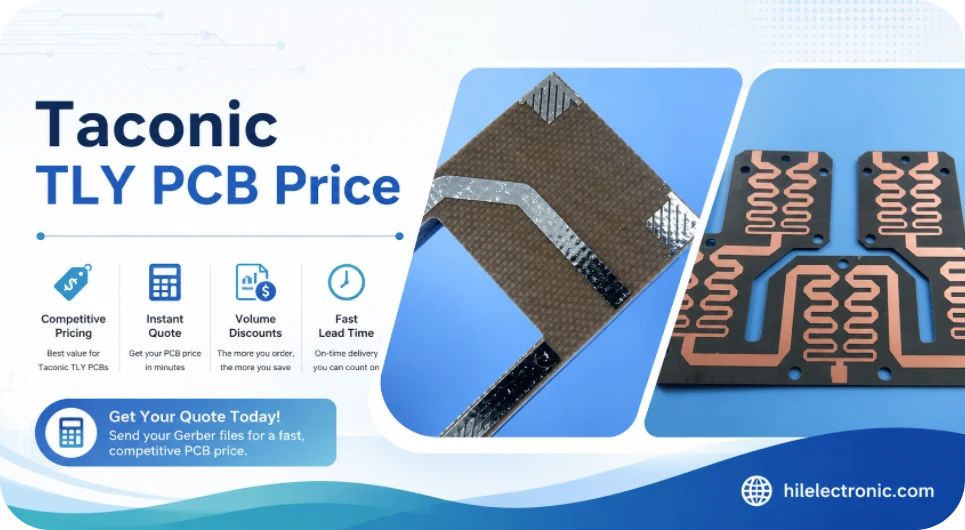
Highleap Electronics provides Taconic TLX PCB price quotations for prototypes, antenna and microwave validation boards, legacy service orders and repeat production. The quote can include material procurement, RF fabrication, controlled inspection, PCB assembly, customer-defined testing, packaging and international delivery.
A valid TLX price requires the exact grade and construction. Current TLX-8 and legacy TLX-0 have different supply, documentation and qualification conditions. Highleap identifies the controlled material route before calculating panel utilisation, manufacturing cost and lead time.
TLX Material Family Characteristics That Change Cost
Current AGC TLX-8 is a woven-glass PTFE material positioned for low-layer-count microwave designs, antennas and passive components. AGC publishes Dk 2.55 ± 0.04 and Df 0.0018. Legacy TLX grades must be quoted from the controlled customer specification because thickness, copper and supply may not match current TLX-8.
| Cost factor | Why TLX price changes | Quotation treatment |
|---|---|---|
| Exact grade/status | Current and legacy materials have different procurement routes and documentation. | State stock, MOQ, lead time, certificates and approved alternatives separately. |
| Dielectric thickness/copper | Special combinations affect purchase quantity, impedance geometry and etch yield. | Quote the exact construction rather than a generic TLX square-area rate. |
| Panel size and utilisation | Large antenna circuits or low nesting efficiency increase laminate consumption. | Return panelisation and quantity breaks where they materially reduce cost. |
| RF acceptance requirements | Tight dimensions, coupons, PIM or RF tests add controlled inspection and fixture cost. | Separate one-time setup, first-article and recurring verification charges. |
Use the official AGC TLX-8 product page for current product context and Highleap’s high-frequency PCB cost guidance for broader manufacturing cost drivers.
Taconic TLX PCB Price: Exact Grade and Construction
“Taconic TLX PCB price” is not one material price. TLX drawings may specify a legacy grade such as TLX-0, a current TLX-8 construction, or an internal customer description. Highleap first confirms the official grade, dielectric thickness, copper, board size, quantity and certificates before pricing.
What Highleap Can Include in a TLX Quote
| Project area | Highleap project support |
|---|---|
| Material route | Current or legacy grade, thickness, copper, MOQ, certificates and substitution policy |
| PCB fabrication | CAM, tooling, RF etching, PTH, mechanical features, electrical test and final inspection |
| Quality evidence | Critical-dimension data, impedance/PIM/RF records and first-article reporting when specified |
| PCB assembly | Components, stencil/NRE, SMT/THT, RF connectors, shields and cleaning |
| Testing | Programming, functional fixtures and customer-defined RF verification |
| Delivery/after-sales | Packing, freight assumptions, split shipment, traceability and repeat-order change control |
Highleap Rigid RF PCB Manufacturing Capabilities
The published factory limits below define the rigid-PCB process envelope used for a TLX quotation. The selected TLX grade, material thickness, copper, board size and RF tolerances determine which limits can be combined and how they affect price. See the complete Highleap rigid PCB capability table for the published factory specification.
| Manufacturing item | Published Highleap capability | RF/PTFE project condition |
|---|---|---|
| Maximum layer count | Up to 60 layers | Layer count for a specific RF/PTFE or hybrid stackup is confirmed after lamination, registration, via and material review. |
| Minimum inner-layer trace/space | 2/2 mil (0.05/0.05 mm) | The released RF geometry also depends on copper thickness, foil type, etch compensation and critical-dimension tolerance. |
| Minimum outer-layer trace/space | 2/2 mil (0.05/0.05 mm) | Fine RF gaps and coupled structures require project-specific feasibility and inspection criteria. |
| Board thickness range | 0.2–8.0 mm | Available thickness for a named Taconic/AGC construction depends on laminate gauge, bonding method and approved stackup. |
| Board-thickness tolerance | ±0.1 mm below 1.0 mm; ±10% at 1.0 mm and above | RF connector launches and enclosure interfaces should state any tighter product-level requirement. |
| Minimum finished board size | 10 × 10 mm | Small circuits may require delivery in a manufacturing panel or array for fabrication and assembly. |
| Maximum finished board size | 22.5 × 47.5 in (571.5 × 1206.5 mm) | Large-format PTFE boards require separate review for material sheet size, registration, flatness, routing and shipment. |
| Minimum mechanical drill / annular ring | 0.15 mm / 0.127 mm | Final via design depends on board thickness, aspect ratio, plating requirement and material-specific drilling process. |
| Minimum laser drill / annular ring | 0.075 mm / 0.075 mm | Laser microvias are subject to dielectric thickness, capture-pad design, copper build and sequential-lamination review. |
| Mechanical-drill aspect ratio | Up to 20:1 | The achievable ratio for an RF/PTFE build must be confirmed with finished hole size, board thickness and plating requirement. |
| Laser-drill aspect ratio | 1:1 | Microvia geometry is released only after stackup and reliability review. |
| Maximum inner/outer copper | Up to 10 oz | Maximum copper cannot automatically be combined with the finest trace/space or every PTFE construction. |
| PTH / NPTH tolerance | PTH ±0.075 mm; NPTH ±0.05 mm | Connector and RF grounding holes should identify finished diameter and any tighter fit requirement. |
| Contour tolerance | ±0.1 mm | Edge launches, cavities, slots and connector locations may need a dedicated dimensional-control plan. |
| Controlled-impedance tolerance | Single-ended and differential: ±5 Ω at ≤50 Ω; ±7% above 50 Ω | The quoted tolerance applies to an approved stackup, coupon strategy and measurement method. |
| Available surface finishes | ENIG, ENEPIG, OSP, HASL, immersion silver, immersion tin, flash gold, hard gold and gold fingers | Finish selection is reviewed for RF loss, soldering, wire bonding, connector contact and environmental requirements. |
Capability-combination notice: values in the table are individual factory capability limits. Layer count, 2/2 mil geometry, 10 oz copper, maximum panel size, 20:1 aspect ratio and the thinnest board construction are not assumed to be simultaneously achievable. Highleap confirms the usable combination after reviewing the exact material, stackup, copper, drill, RF tolerance, surface finish and assembly package.
The current AGC RF/microwave portfolio identifies TLX-8 as a high-volume antenna material with Dk 2.55 ±0.04 and Df 0.0018, while legacy technical references include other TLX designations. Highleap does not use TLX-8 pricing or geometry for a TLX-0 drawing without approval.
| Required input | Why it changes price |
|---|---|
| Exact TLX grade | Determines current/legacy status, source, processing and qualification. |
| Dielectric thickness and tolerance | Controls material SKU, MOQ, RF geometry and panel availability. |
| Copper foil and weight | Changes laminate cost, conductor loss, etch process and finished thickness. |
| Board and panel dimensions | Determines material utilisation and handling. |
| RF tolerances and test | Adds engineering, coupons, measurement and yield controls. |
| Assembly/test scope | Can exceed bare-board cost depending on BOM and fixtures. |
Material Procurement, MOQ, and Legacy Supply Risk
Highleap’s quotation separates material status from fabrication. A low unit price is not useful if the specified grade cannot support the forecast or the supplier cannot provide the required lot documents.
Pricing Legacy TLX Without Hiding Supply Risk
For a constrained legacy grade, Highleap shows material procurement and usable yield separately from fabrication. This prevents a quote based on an unavailable nominal material. Where the customer permits a current alternative, the original and transition routes are quoted with separate engineering and qualification assumptions.
- current standard stock or factory-order material;
- nonstandard thickness or copper with minimum purchase quantity;
- legacy stock requiring identity and condition verification;
- customer-supplied material requiring incoming acceptance;
- approved alternative requiring new stackup and engineering release;
- reserved material for scheduled repeat production.
Procurement planning follows the material-selection discipline in Taconic PCB materials and the commercial assumptions in accurate budgetary quotations. Highleap states material MOQ, usable quantity, certificate scope and lead time in the offer.
Fabrication Cost: More Than Board Area
TLX PCB fabrication price is affected by RF geometry, drilling, plating, surface finish, routing and quality evidence. Highleap prices the production flow generated from the actual data package.
| Fabrication factor | Cost mechanism | Possible optimisation |
|---|---|---|
| Panel utilisation | Material waste and pieces per panel | Adjust rails, rotation or array where RF orientation permits. |
| Etch tolerance | Process control and yield on critical lines/gaps | Separate critical RF dimensions from ordinary artwork. |
| Ground-via density | Drill count, tool wear, plating and electrical test | Consolidate drill sizes only with design approval. |
| PTH or special holes | PTFE-compatible preparation and inspection | Use manufacturable aspect ratios and tolerances. |
| Surface finish | Chemistry, selective processing, storage and RF effect | Select finish from assembly and RF requirements. |
| Reports/test | Coupons, measurement, microsections, PIM/RF fixtures | Define necessary evidence without duplicate tests. |
For broader RF cost drivers, review high-frequency PCB cost and RF PCB tolerance. Highleap can return cost-down suggestions without altering the released RF function.
Prototype and Volume Price Are Structured Differently
Prototype pricing carries one-time engineering, material procurement and setup across a small quantity. Volume pricing benefits from stable panelisation, reserved material, repeat tooling and scheduled production. A legacy TLX-0 service batch may remain setup-intensive even when the design is old.
| Commercial case | Price structure | Recommended buyer input |
|---|---|---|
| First prototype | Material minimum, CAM/tooling, fabrication and basic evidence | One or two quantities plus target delivery. |
| Engineering validation | Prototype plus first-article reports and test | Acceptance plan and revision freeze. |
| Pilot PCBA | Bare board, BOM, setup, assembly, inspection, programming and test | Complete assembly package and component alternates. |
| Volume production | Quantity breaks, forecast, material reservation and scheduled releases | Annual demand and delivery cadence. |
| Legacy service batch | Data/material recovery, setup and small-quantity production | Expected remaining lifetime demand. |
For assembly cost, Highleap uses the factors detailed in PCB assembly cost and can quote low-volume work through low-volume PCB assembly.
TLX Lead Time and Expedited Production
The committed TLX schedule depends first on grade and material status. Current TLX-8, legacy TLX-0, nonstandard thickness and customer-supplied laminate follow different critical paths. Highleap quotes engineering, material, fabrication, assembly and test milestones separately.
After complete data is received, Highleap confirms material, engineering, fabrication, assembly and test readiness before fixing delivery. Priority production can be quoted through the quick-turn PCB services route, but material lead time and customer approvals remain visible constraints.
- standard scheduling for released material and complete data;
- priority production through expedited PCB manufacturing where material is ready;
- first-article or bare-board-first shipment for early RF validation;
- split production when components or test fixtures lag behind bare-board fabrication;
- forecast/reserved-material planning for stable repeat delivery.
Expedite price reflects the actual priority operations and capacity impact. Highleap does not add a generic “rush percentage” before confirming whether material, fabrication, assembly or test is the true constraint.
Get a Firm TLX PCB and Assembly Quote
Send exact TLX grade, material document, stackup, Gerber/ODB++, drawing, drill/route data, copper, RF geometry/impedance, finish, quantity breaks, target date and delivery location. Add BOM, centroid, assembly drawings, firmware and test for PCBA. Submit through Highleap quick quote or contact Highleap.
For current TLX-8 manufacturing, see Taconic TLX-8 PCB. For a legacy TLX-0 drawing, use the TLX-0 PCB continuity service.
Can Highleap give a TLX PCB price without the exact grade?
Only a rough budget. A firm price requires official grade, thickness, copper, board data, quantity, finish and test requirements.
Why can legacy TLX cost more than a current material?
Limited stock, minimum purchase, special handling, documentation and small-batch setup can dominate unit price.
Can Highleap reduce TLX PCB cost?
Yes, through panel utilisation, standard available constructions, appropriate tolerances, forecast purchasing and integrated PCBA—subject to customer approval.
Can Highleap quote delivery to Europe or North America?
Yes. Provide destination and Incoterm preference so packing, freight and customs assumptions can be stated.
What information is needed for a firm TLX PCB price?
Provide exact grade, thickness, copper, Gerber/ODB++, drawings, stackup, RF and mechanical tolerances, quantities, target delivery, BOM, assembly files and test requirements.
Can Highleap quote bare PCB and PCBA as separate options?
Yes. Highleap can return bare-board, consigned assembly, turnkey assembly and test options so procurement can compare the complete landed production scope.

Recommended Posts
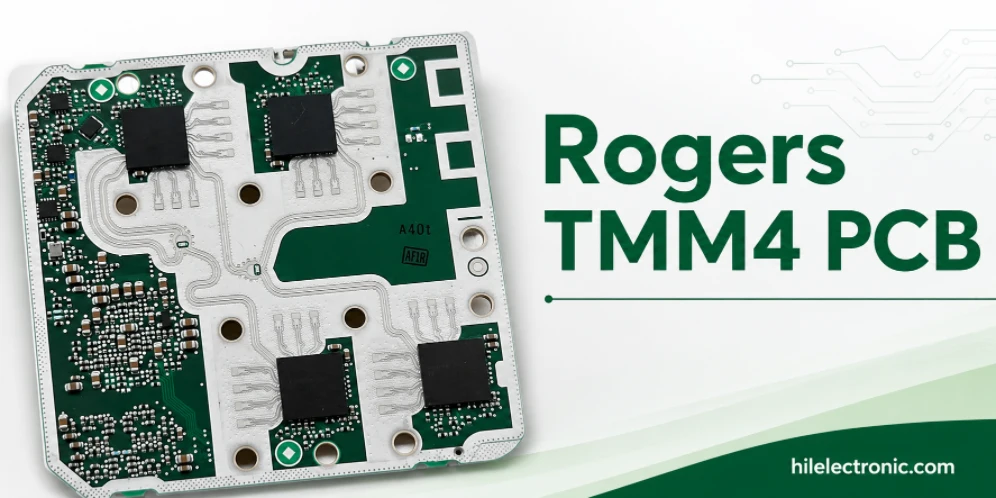
TMM4 Filter PCB Manufacturing
TMM4 filter PCB manufacturing is controlled by the...
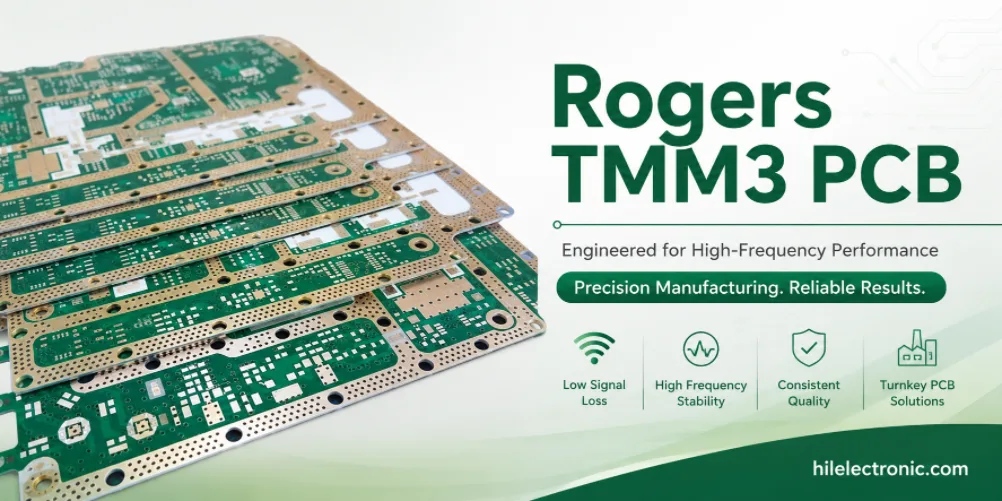
TMM3 PCB Manufacturing for RF Modules
TMM3 PCB manufacturing is most useful where the RF module...
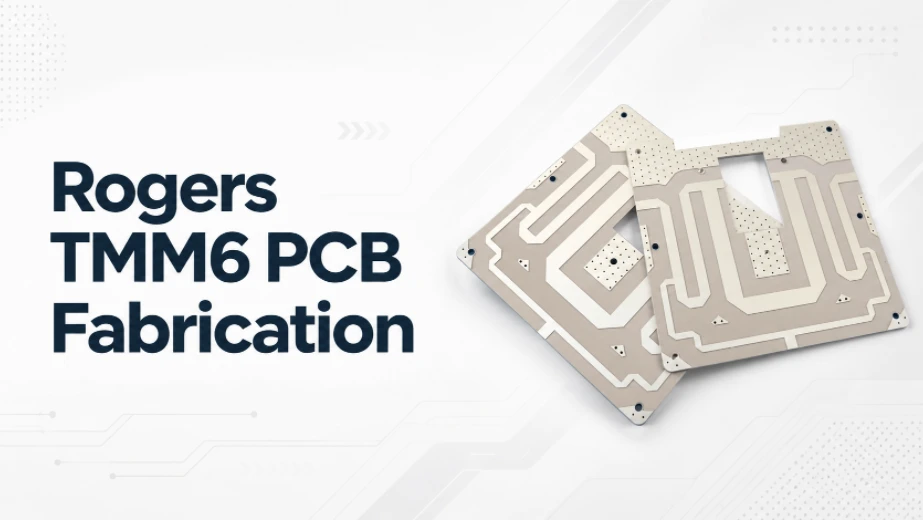
TMM6 PCB Fabrication
TMM6 fabrication is the process-control page for a mid-Dk...

TMM10 PCB Manufacturing for Compact RF Designs
Table of contentsHow TMM10 Shrinks RF StructuresTMM10 vs...
How to get a quote for PCBs
Let’s run DFM/DFA analysis for you and get back to you with a report. You can upload your files securely through our website. We require the following information in order to give you a quote:
-
- Gerber, ODB++, or .pcb, spec.
- BOM list if you require assembly
- Quantity
- Turn time
For PCBA services, please provide your BOM (Bill of Materials) and any specific assembly instructions. We also offer DFM/DFA analysis to optimize your designs for manufacturability and assembly, ensuring a smooth production process.