
OEM Electronics Assembly for Product Manufacturing
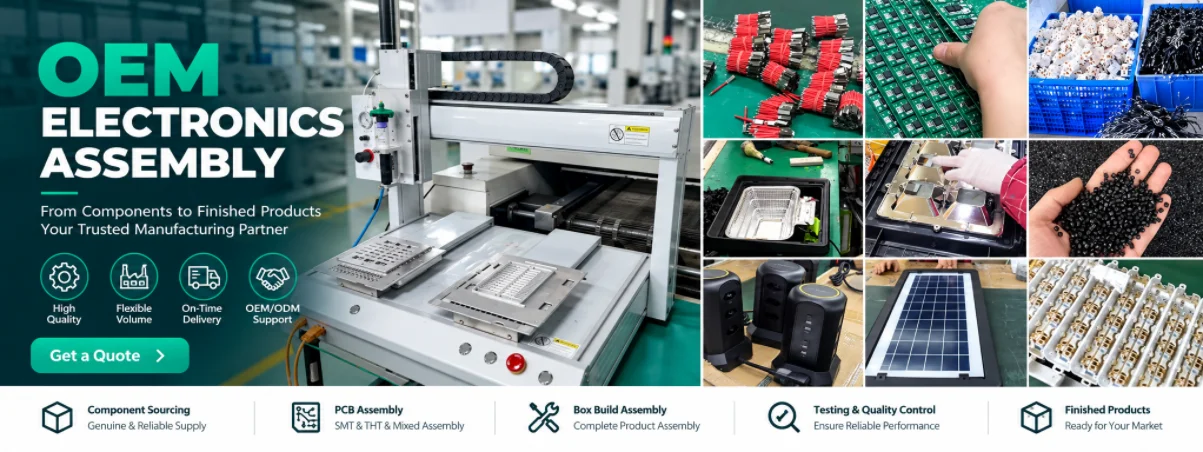
OEM electronics assembly is built around a customer’s released product design, manufacturing documentation and production requirements. Instead of maintaining the entire PCB production operation in-house, an OEM can assign the manufacturing work to a dedicated electronics partner for board fabrication, component procurement, PCB assembly, inspection, testing and repeat production according to the agreed scope.
- OEM Electronics Assembly for Product Manufacturing
- What an OEM Electronics Assembly Program Can Include
- PCB Assembly Technologies for OEM Products
- Manufacturing Documentation and Engineering Review
- Component Procurement and Material Control
- Inspection, Testing and Production Release
- Prototype, Pilot and Recurring OEM Production
OEM Electronics Assembly for Product Manufacturing
OEM production typically starts with a product owner that controls the design and commercial requirements while manufacturing is performed by an external supplier. That separation allows engineering and product teams to focus on product development while the manufacturing partner manages the agreed physical production activities.
For an OEM, the key issue is not simply whether a supplier can place components. The supplier needs to work from controlled manufacturing data, maintain the agreed product configuration and understand which parts of the supply chain belong to the customer and which belong to the manufacturer. This is where a structured OEM electronics assembly service becomes useful.
When OEMs Outsource Electronics Assembly
- Internal production capacity is limited or not economical for the required volume.
- The product requires established SMT, through-hole, inspection or testing processes.
- The OEM wants one manufacturing relationship instead of coordinating several production suppliers.
- A product is moving from engineering builds into pilot or recurring manufacturing.
Where the requirement extends beyond board assembly into a broader production relationship, electronics manufacturing support can connect the PCB build with related manufacturing activities within the agreed project scope.
What an OEM Electronics Assembly Program Can Include
There is no single definition of an OEM electronics assembly package. One OEM may supply finished PCBs and all components for assembly, while another may require the manufacturer to coordinate PCB fabrication and component purchasing as part of the same order. The quotation should reflect the actual production responsibility.
OEM Assembly Versus Turnkey Production
OEM electronics assembly describes the manufacturing relationship; turnkey PCB assembly describes one possible commercial model within that relationship. When the manufacturer purchases the complete approved BOM and manages the assembly supply chain, turnkey PCB assembly may be the appropriate scope. If the OEM supplies selected components, a partial-turnkey arrangement may be more suitable.
Defining the Manufacturing Boundary
Before production, the purchase scope should identify who supplies the bare PCB, who purchases components, what happens when a specified part is unavailable, which assembly operations are included, and which inspection or test records are required. Clear boundaries make an OEM production order easier to execute and review.
- What exact product revision is being built?
- Who supplies the PCB and components?
- Which assembly technologies are required?
- What inspection and testing are part of the order?
- What quantity and delivery requirement is being quoted?
PCB Assembly Technologies for OEM Products
OEM boards can use different package technologies depending on electrical, mechanical and product requirements. The manufacturing process should follow the released design rather than force every product into the same assembly route.
SMT Assembly for OEM Electronics
Surface-mount technology is widely used for compact electronic products and automated production. Accurate placement coordinates, reference designators, component orientation and the current BOM are important to maintain the intended assembly configuration.
For boards built primarily with surface-mount components, SMT PCB assembly production can be integrated into the OEM manufacturing workflow.
Through-Hole Assembly for Mechanical or High-Stress Components
Connectors, terminals and certain mechanically loaded components may use through-hole packages. The required soldering sequence and component orientation should be defined in the manufacturing documentation.
Where leaded components are part of the design, through-hole assembly capability can be combined with SMT in the same production program.
Mixed-Technology OEM PCBA
Many OEM products combine SMT and through-hole components. Mixed assembly requires the production sequence to account for component geometry, soldering requirements and any mechanical constraints. A controlled process is particularly important when the same product will be built repeatedly.
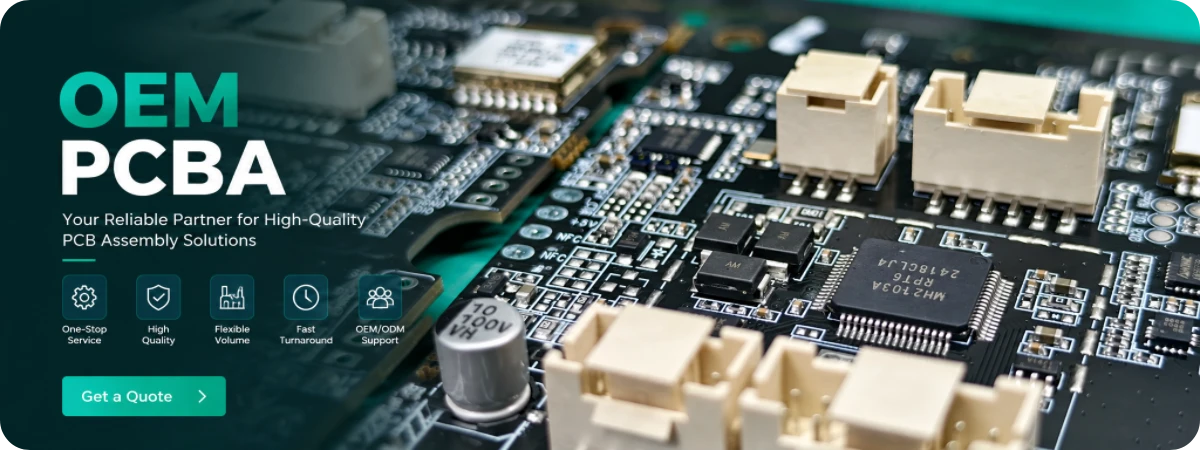
Manufacturing Documentation and Engineering Review
A successful OEM build depends on more than a BOM. The manufacturer needs enough information to understand the board revision, component placement, assembly requirements and any special production or testing instructions. Missing or conflicting information should be resolved before the production order is released.
- Collect the current files: PCB fabrication data, BOM, placement data, assembly drawing and relevant notes.
- Check the revision: Confirm that the files describe the same product version and that obsolete data is not mixed into the package.
- Review manufacturing requirements: Identify package constraints, special components, assembly notes and test requirements.
- Confirm the commercial scope: Establish PCB, component and production responsibilities before quotation approval.
- Release the build: Use the approved package for purchasing, assembly, inspection and testing.
For OEM projects, documentation is often the bridge between engineering and production. A defined DFM review process can help identify manufacturing-related issues in the released design before they become production problems.
What Files Are Normally Needed?
The exact package varies by product, but a practical starting set normally includes Gerber or other approved PCB fabrication data, BOM, centroid or placement data, assembly drawings and any test or special-process documentation. The production package should also identify the applicable revision.
Component Procurement and Material Control
Component responsibility is one of the most important parts of an OEM manufacturing agreement. Some OEMs want the manufacturing partner to purchase the complete BOM, while others retain purchasing control for selected or all components.
| Material model | OEM typically provides | Manufacturer typically handles | Typical reason |
|---|---|---|---|
| Turnkey | Released product and manufacturing documentation | Approved PCB and component procurement plus assembly and agreed testing | Maximum outsourcing of production purchasing |
| Partial turnkey | Selected controlled components or materials | Remaining procurement and assembly | OEM retains control of critical or customer-specific parts |
| Customer supplied | Specified PCBs and/or components | Receiving, assembly, inspection and agreed testing | OEM retains direct material purchasing responsibility |
OEM Component Sourcing
When purchasing is included, the BOM should clearly identify manufacturer part numbers, approved alternatives where applicable and any customer-specific sourcing restrictions. The purchasing process should follow the released BOM rather than making undocumented substitutions.
For projects where procurement is part of the manufacturing scope, electronic component sourcing can be coordinated with the assembly order.
Customer-Supplied Components
An OEM may supply components because of an existing supply agreement, proprietary part, controlled inventory or internal procurement policy. In that case, quantities, part numbers, packaging and receiving requirements should be agreed before the build begins. This is consistent with a consigned PCB assembly arrangement when the customer retains material ownership and supply responsibility.
Inspection, Testing and Production Release
Quality control for an OEM assembly program should be connected to the actual product and its acceptance criteria. Visual inspection alone may not be sufficient for a product that requires electrical or functional verification, while a simple board may not need an elaborate test system.
- AOI: Automated optical inspection can check many component-placement and solder-related conditions, particularly on SMT assemblies.
- Electrical testing: Appropriate electrical checks can be applied where the product design and test access support them.
- Functional testing: A defined fixture or procedure can verify specified product functions after assembly.
- First-article verification: New products or significant revisions may benefit from an initial production checkpoint before wider release.
For example, AOI in PCBA production can provide an automated inspection stage, while electrical PCB testing or functional verification can be added when required by the product.
First Article Inspection for OEM Builds
A first article process can be useful when a product is entering a new production line, moving to a new supplier or undergoing a significant revision. The objective is to confirm that the released PCB, BOM, placement information and assembly requirements have been translated correctly into the physical build.
For applicable new-product builds, first article inspection for PCB assembly provides an additional checkpoint before recurring production.
Prototype, Pilot and Recurring OEM Production
OEM manufacturing often changes as a product moves from engineering samples to pilot builds and then into recurring production. The manufacturing relationship should be able to preserve the approved product configuration while adapting the production scope to the current stage.
Prototype and Pilot Builds
Early builds can expose documentation gaps, component availability issues, assembly constraints or test requirements that were not obvious during design. A controlled pilot build provides an opportunity to resolve those issues before the product enters a recurring manufacturing cycle.
Recurring Production
For repeat orders, revision control becomes increasingly important. PCB revisions, BOM changes, component substitutions and assembly-process changes should be reflected in the controlled production documentation before the affected order is released.
When production quantities are smaller or demand is still developing, low-volume PCBA production can be a practical starting point before recurring quantities increase.
What to Send for an OEM Electronics Assembly Quote
A useful quotation package should include the current PCB fabrication files, BOM, placement data, assembly drawing, production quantity, sourcing requirements and testing requirements. If the OEM will supply specific components or boards, identify those materials clearly.
Providing complete information through the PCB assembly quotation process gives the manufacturing team a stronger basis for reviewing the production scope, while direct project discussion can clarify unusual requirements before an order is released.
The objective is a controlled handoff from product design to production—not simply a purchase order for assembled boards. Clear files, material responsibility, test requirements and revision control make that handoff easier to manage.

Recommended Posts

Isola Astra MT77 PCB Manufacturing
Figure 1. Isola Astra MT77 PCB ManufacturingIsola Astra...

Nelco N4000-13 PCB Material and Manufacturing Guide | Highleap Electronics
Figure 1. Nelco N4000-13 PCBNelco N4000-13 PCB is a...

Copper Clad Laminate: Complete Material Selection Guide for PCB Engineers
Every electrical property that matters in a printed...

Inside a China Ceramic PCB Factory: Process Control Across Power/LED/RF/Medical
Table of Contents Inside a China Ceramic PCB Factory: How...
How to get a quote for PCBs
Let’s run DFM/DFA analysis for you and get back to you with a report. You can upload your files securely through our website. We require the following information in order to give you a quote:
-
- Gerber, ODB++, or .pcb, spec.
- BOM list if you require assembly
- Quantity
- Turn time
For PCBA services, please provide your BOM (Bill of Materials) and any specific assembly instructions. We also offer DFM/DFA analysis to optimize your designs for manufacturability and assembly, ensuring a smooth production process.