
BOM Risk Management for PCB Assembly: Control Supply, Cost and Lifecycle Exposure
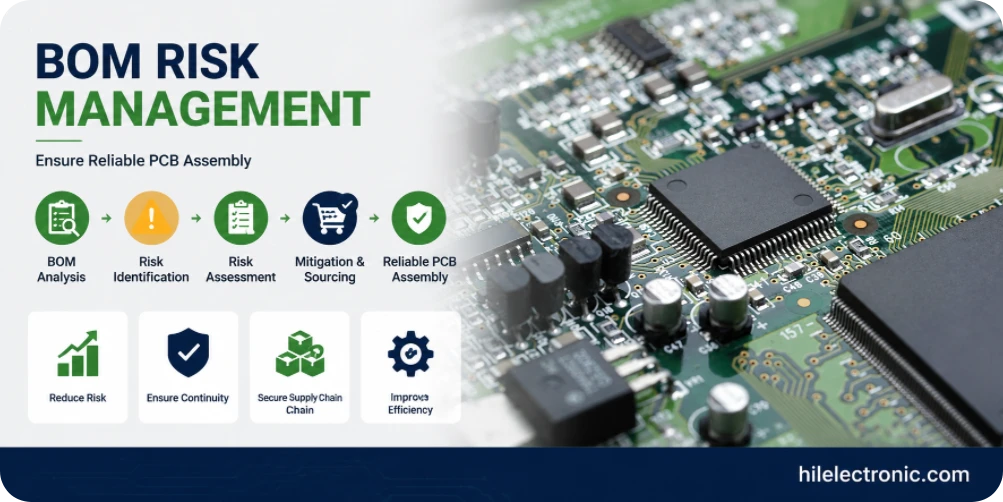
BOM risk management identifies the components and manufacturing dependencies most likely to interrupt PCB assembly, increase cost or force an uncontrolled product change. A useful review does not label the entire BOM “high risk.” It ranks specific lines, explains the consequence and assigns a practical mitigation.
Highleap Electronics can combine BOM review, authorized sourcing, PCB/assembly impact assessment, prototype builds and customer-defined testing. The purpose is to convert a risk report into an approved production action plan.
Request a BOM risk and PCBA readiness review
Send the BOM, annual volume, current sourcing issues, product-life target and production files. Highleap can identify critical lines and quote the sourcing, validation or redesign work required.
Build a BOM Risk Model From Clean Data and Product Consequence
A risk model is only as reliable as the BOM data. Each line should identify the exact manufacturer part number, quantity per assembly, approved manufacturers, lifecycle status, package, qualification grade, source restrictions, annual demand and product function. Generic descriptions and internal codes without MPN mapping prevent reliable analysis.
Risk should combine probability and consequence. Probability indicators include one approved source, EOL/NRND status, long or volatile lead time, broker-only availability, high MOQ, allocation and unstable raw-material exposure. Consequence depends on replacement difficulty, product criticality, compliance impact, firmware dependence, PCB footprint and the cost of a line stop.
| Risk input | Question | Why it matters |
|---|---|---|
| Lifecycle | Is the part active, NRND, EOL or affected by a PCN? | Determines the available decision window |
| Supply | How many approved manufacturers and authorized sources exist? | Shows single-source and allocation exposure |
| Commercial | What are annual spend, MOQ, standard pack and NCNR conditions? | Defines cash and excess-inventory risk |
| Technical | Can the part change without schematic, PCB, firmware or test work? | Determines mitigation time and NRE |
| Quality | Is traceable authorized supply available? | Controls counterfeit and unknown-handling exposure |
| Business impact | What happens if the line is unavailable? | Separates critical parts from low-impact items |
A low-cost connector can be high risk if it controls enclosure fit. An expensive processor may be manageable if it has long-term support and approved alternates. The score should therefore drive action, not merely sort by component price.
Use risk bands that trigger defined actions
A score is useful only when its bands have meaning. For example, a low-risk line may require normal requotation checks; a medium-risk line may require a second-source search; a high-risk line may require an owner and decision date; a critical line may block production release until supply or engineering mitigation is approved. Thresholds should be adjusted for the product’s forecast, service obligations and consequence of failure.
Evaluate Lifecycle, Supply, Cost, Quality and Technical Risk Separately
Lifecycle and change-notification risk
EOL and NRND status require action, but product change notifications also matter. A die, package, lead finish, manufacturing site or process change may affect assembly and qualification without changing the MPN. IEC 62402 provides a lifecycle framework for obsolescence planning and resolution.
Supply and lead-time risk
Review approved-source count, current stock, factory lead time, allocation, package availability and geographic concentration. ECIA publishes current lead-time trends across semiconductor, passive and electromechanical categories. Use category data as an input, then confirm the exact MPN and quantity.
Cost and commercial risk
High annual spend, raw-material sensitivity, currency, MOQ, reel quantity and NCNR terms can move the complete PCBA cost. A low unit price can still create high exposure when the minimum order exceeds product demand.
Quality and counterfeit risk
Authorized supply provides manufacturer-backed traceability and controlled handling. ECIA’s authorized-channel guidance warns that gray-market material can have unknown provenance or storage. If independent stock is considered, source approval, inspection, testing and liability must be explicit; it should not be treated as equivalent to authorized inventory.
Technical and manufacturing risk
Some parts are difficult to replace because of firmware, calibration, safety function, thermal behavior, custom magnetics, mechanical interface or unique footprint. Assembly-sensitive packages can also create yield risk. Link the BOM review to DFA, inspection and test requirements rather than analyzing procurement in isolation.
Risk can also exist outside the component itself. A component may be available but only in packaging unsuitable for automated placement, or an alternate may be orderable but lack the required environmental declaration. Custom programming, calibration, serialization and customer-specific labels can create dependencies that should be recorded beside the BOM line.
Match Each BOM Risk to a Specific Mitigation and Decision Threshold
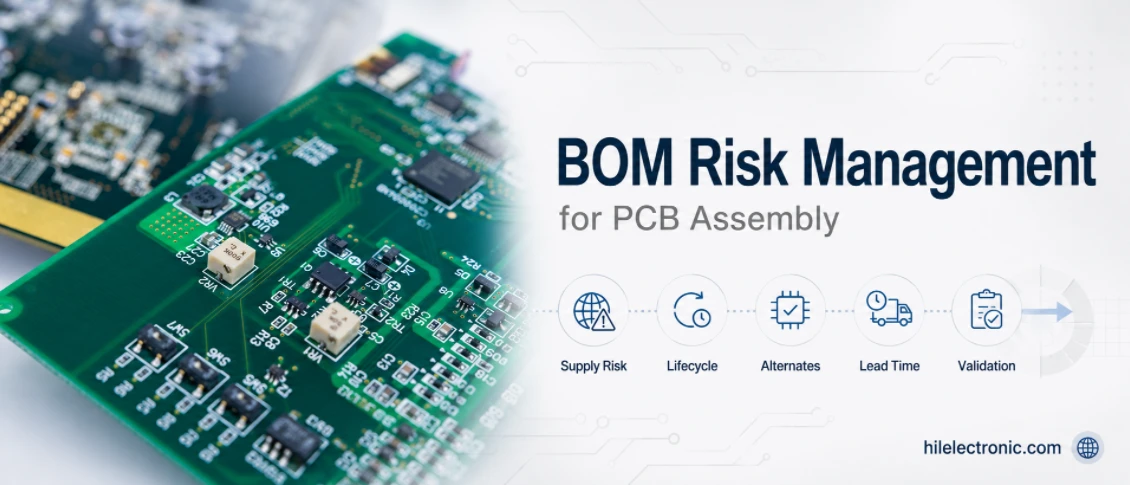
Risk reports become useful when every critical line has an owner, action and deadline. Common mitigations include authorized stock reservation, approved second sources, last-time buy, customer consignment, package or footprint standardization, PCB redesign, firmware migration and test-plan improvement.
| Risk condition | Mitigation | Decision threshold |
|---|---|---|
| One approved source but stable supply | Identify and prequalify a second source | Before lead time exceeds the production window |
| EOL notice with finite remaining demand | Last-time buy plus storage plan | Before internal order and approval deadlines |
| EOL notice with long product life | Alternate qualification or redesign | While original stock still supports pilot builds |
| High-spend line with multiple equivalents | Controlled alternate and volume negotiation | After technical comparison and quote validation |
| Broker-only availability | Redesign, consignment or enhanced inspection path | Before accepting source and warranty exposure |
| Manual or unstable assembly process | Package, PCB or process change | When yield/rework cost exceeds validation cost |
Set escalation thresholds that reflect the product. Examples include lead time longer than the order-to-build window, inventory below confirmed demand, one approved manufacturer, lifecycle notice received, quotation validity shorter than customer approval time, or annual spend large enough to materially change PCBA price.
Mitigation cost should be compared with expected disruption cost. A second-source qualification may appear expensive until it is compared with missed shipments, expedited broker purchases and redesign under time pressure. Highleap can provide original and mitigated PCBA quotation scenarios.
Prioritize actions by decision lead time
Some mitigations can be completed in days, such as reserving authorized inventory or approving another distributor for the same MPN. Others require weeks or months, such as validating a new MCU, changing a connector footprint or completing product compliance work. The action list should therefore sort by the time needed to implement the mitigation, not only by the current risk score.
A mitigation also needs an exit condition. A stock reservation ends when the material is purchased or released. An alternate project ends when the BOM, manufacturing files and validation evidence are approved. A redesign project ends when the revised hardware and firmware are released for the defined product revision. Clear exit conditions prevent risks from remaining permanently “under review.”
Control BOM Changes With Approval, Validation and Traceability
No mitigation should enter production through an informal purchasing note. The approval workflow should identify who can change distributor, manufacturer, MPN, package or design. Purchasing controls source and commercial terms; engineering approves technical equivalence; manufacturing confirms process compatibility; quality confirms traceability and inspection; the customer owns product-level qualification.
For a technical alternate, release a comparison matrix, updated BOM/AVL, affected schematic or PCB files, firmware reference and test specification. A first-article or pilot build should verify assembly and product behavior at the appropriate depth. Highleap can perform inspection and functional test when the test method and acceptance criteria are part of the agreed scope.
Traceability should link the production lot to the approved source and hardware revision. If original and alternate parts are both released, state whether they may be mixed in one lot, whether labeling differs and whether test limits change. For customer-consigned material, define incoming acceptance, shortage handling and ownership of excess or rejected stock.
Risk review should repeat at quotation, prototype-to-volume transition and major forecast changes. A BOM that was low risk during development may become exposed before production due to lifecycle, allocation or design changes.
Review effectiveness after production
After a mitigation enters production, review first-pass yield, incoming issues, rework, test failures, field feedback and actual sourcing performance. If an alternate solves availability but creates assembly defects, the risk has moved rather than disappeared. The approved-source list and risk score should be updated from production evidence.
What Highleap Delivers for BOM Risk Management and Production Support
A Highleap BOM risk project can include:
- BOM normalization and exact-MPN verification;
- risk classification by lifecycle, supply, cost, quality and technical impact;
- authorized-source and approved-alternate options;
- critical-line action list with customer approval gates;
- PCB, assembly, programming and test impact assessment;
- original and mitigated sourcing/PCBA quotations;
- prototype or first-article build for approved changes;
- revision-controlled production release and lot traceability.
Send the BOM, Gerber or ODB++ files, assembly drawings, forecast, current stock, affected suppliers, product-life requirement and available test specification. Highleap will focus on the risks that can change delivery, cost or product performance, not generate a generic scorecard disconnected from manufacturing.
Where a risk requires a design change, Highleap can support PCB design review and prototype manufacturing within the agreed engineering scope. Customer approval remains required before technical substitutions or revised product requirements are released.
The commercial output can separate immediate actions from engineering projects. Immediate actions may include authorized stock purchase, consigned-material planning and same-MPN source changes. Engineering projects may include alternate qualification, PCB modification, fixture updates or firmware work. Each line should show customer approvals, assumptions, quotation validity and excluded product-level qualification.
For ongoing production, the risk register should be reviewed when the forecast changes, the product moves from prototype to volume, a major PCN/EOL notice arrives or an approved supplier can no longer support the required quantity. This makes the review a production-control tool rather than a one-time report.
Convert the BOM risk report into production actions
Highleap can identify critical lines, prepare sourcing and engineering options, and quote the pilot or manufacturing work needed to release the mitigation.

Recommended Posts
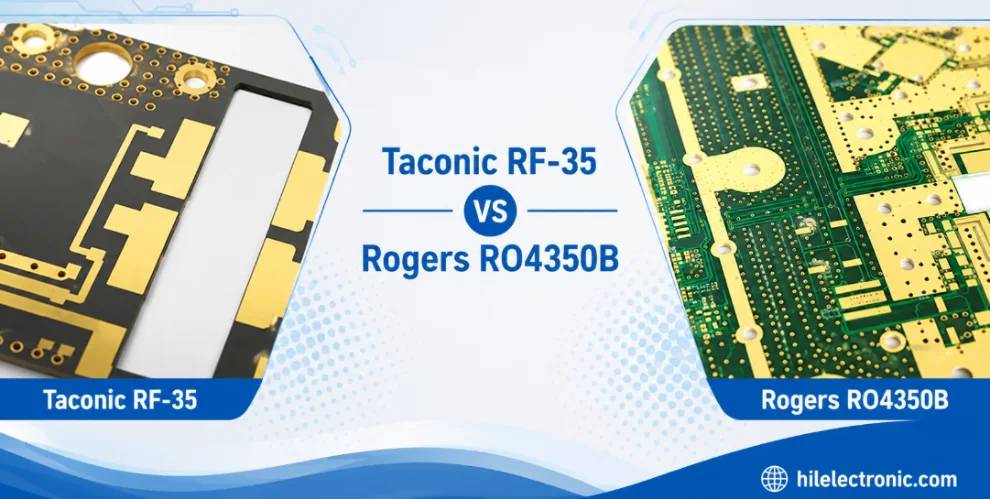
Taconic RF 35 vs RO4350B PCB
Table of contentsRF-35 vs RO4350B Procurement and...
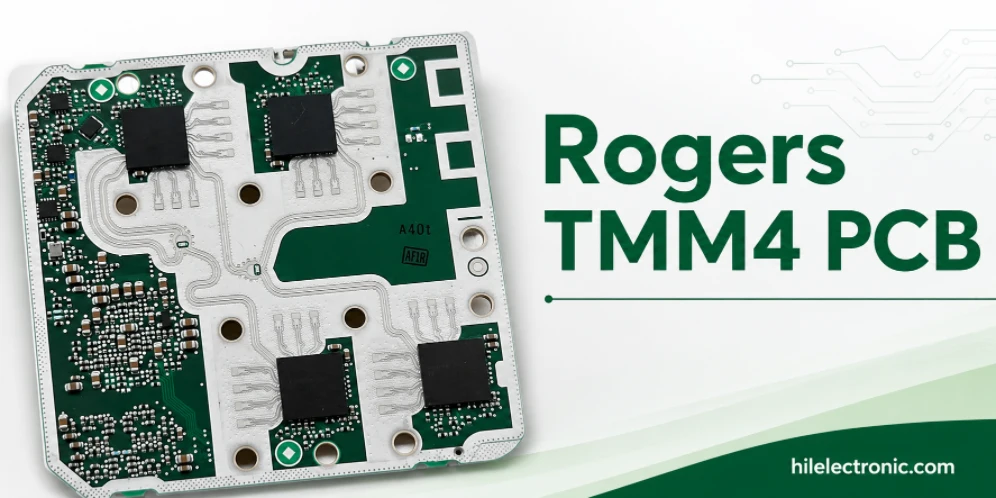
TMM4 Filter PCB Manufacturing
TMM4 filter PCB manufacturing is controlled by the...
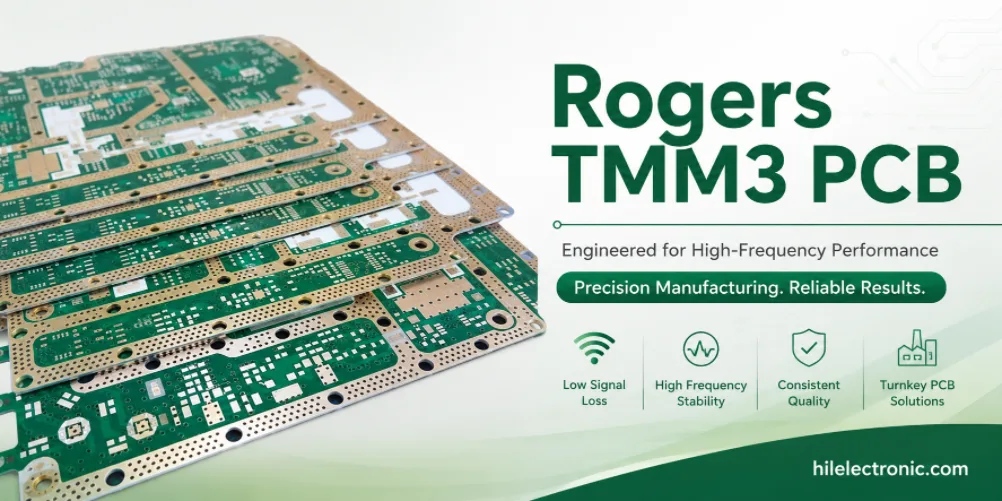
TMM3 PCB Manufacturing for RF Modules
TMM3 PCB manufacturing is most useful where the RF module...
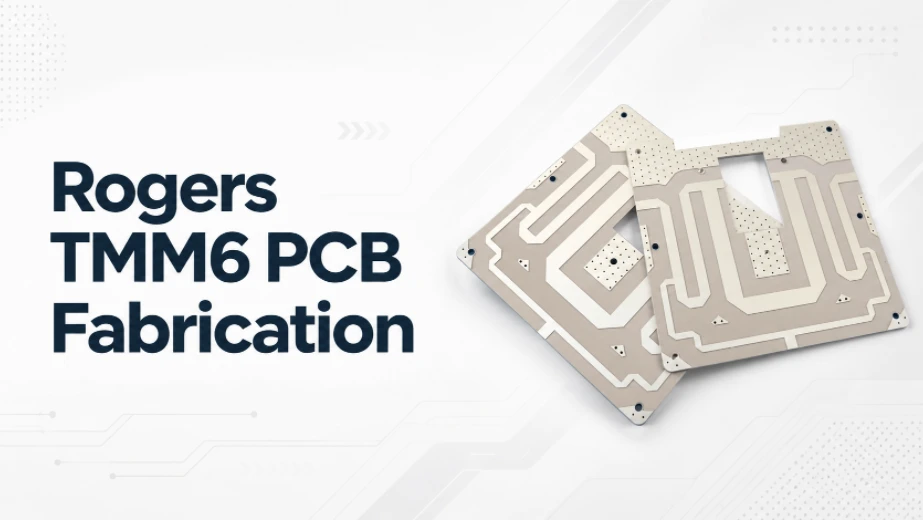
TMM6 PCB Fabrication
TMM6 fabrication is the process-control page for a mid-Dk...
How to get a quote for PCBs
Let’s run DFM/DFA analysis for you and get back to you with a report. You can upload your files securely through our website. We require the following information in order to give you a quote:
-
- Gerber, ODB++, or .pcb, spec.
- BOM list if you require assembly
- Quantity
- Turn time
For PCBA services, please provide your BOM (Bill of Materials) and any specific assembly instructions. We also offer DFM/DFA analysis to optimize your designs for manufacturability and assembly, ensuring a smooth production process.