
Kelvin Connection PCB Layout Guide

Figure 1. Kelvin connection PCB layout
A Kelvin connection, also called a four-wire or four-terminal connection, separates the path that carries current through an element from the path that senses the voltage across it, so that the resistance of the wiring and the solder joints does not corrupt the measurement. It is the standard technique for measuring small resistances and for sensing current across a low-value shunt. This guide explains what a Kelvin connection is, why an ordinary two-wire measurement fails, and exactly how to lay out the sense-resistor footprint, route the sense lines, and manufacture the board so the accuracy survives in production.
Key takeaways
- A Kelvin (4-wire) connection separates the current (force) path from the voltage (sense) path so wiring and joint resistance do not add error.
- It is essential for low-resistance and high-current shunt measurement, where milliohms and solder-joint resistance dominate.
- The sense lines must tap right at the element’s body, inside the force connections, and carry almost no current into a high-impedance input.
- The shunt footprint should be a dedicated 4-pad pattern with symmetric force pads; asymmetry causes uneven reflow heating and tombstoning.
- Manufacturing matters: solder-joint resistance, footprint symmetry, and trace control directly affect measurement accuracy.
Table of Contents
What a Kelvin (4-Wire) Connection Is
The idea is to give the element being measured two independent pairs of connections rather than one shared pair.
Force and sense paths
- The force path carries the measurement (or load) current into and out of the element. Any resistance in this path causes a voltage drop, but that drop happens outside the sensing point.
- The sense path connects to the element to measure the voltage across it. It is routed to a high-impedance input so that almost no current flows in it, which means the resistance of the sense wiring causes essentially no error.
Because the sense connection taps the voltage directly at the element and carries no meaningful current, the measurement reflects the element itself, not the wiring and joints leading to it. That is the entire benefit of the technique.
A bit of history
The method is named after Lord Kelvin, whose 19th-century Kelvin bridge was developed precisely to measure very low resistances accurately. The same principle, separating force and sense, underlies modern current-sensing and precision-measurement circuits today.
Why a 2-Wire Measurement Fails
To see why four wires are needed, look at what goes wrong with two. In a two-wire measurement, the same pair of connections carries the current and senses the voltage, so the measured voltage includes the drops across the wiring and the solder joints, not just across the element.
A worked example
Suppose you pass 50 A through a 0.5 mΩ shunt to measure current. The useful signal is:
50 A × 0.0005 Ω = 25 mV
Now consider the parasitics. A solder joint can easily add 0.1–0.2 mΩ, and the connecting traces add more. In a two-wire scheme those resistances sit in series with the shunt and are measured along with it. Even a few tenths of a milliohm of joint and trace resistance, against a 0.5 mΩ shunt, introduces an error of 20% or more, and it drifts with temperature as the joints and copper warm up. The table makes the contrast clear.
| Aspect | 2-wire measurement | 4-wire (Kelvin) |
|---|---|---|
| What is measured | Element + traces + solder joints | The element alone |
| Joint resistance error | Included in the reading | Excluded |
| Temperature drift | Significant, joints drift | Largely removed |
| Suitability for milliohms | Poor | Designed for it |
The four-wire connection removes this error because the sense path taps the voltage at the shunt itself and carries no current. That is why precision current sensing essentially always uses a Kelvin connection.
Where Kelvin Connections Are Used
Anywhere a small resistance or a current must be measured accurately, the Kelvin connection appears.
- Current-sense shunts, the classic case, measuring load current via a low-value resistor.
- Battery management systems, where accurate current and state-of-charge tracking depends on clean sensing.
- Motor drives and inverters, sensing phase or bus current for control and protection.
- Power supplies, for current limiting, regulation, and monitoring.
- Low-resistance measurement generally, such as characterizing connectors, windings, or contacts.
These applications often involve high currents and significant heat, which is why the layout and the manufacturing both matter so much, and why current sensing is a recurring theme in power electronics manufacturing.
Choosing the Shunt Resistor
Before laying out the Kelvin connection, the shunt itself has to be chosen. Four parameters dominate that decision.
| Parameter | What to consider |
|---|---|
| Resistance value | Low enough to limit power and voltage burden, high enough for a measurable signal |
| Power rating | Must handle I²R at the maximum current, with margin |
| Temperature coefficient (TCR) | Lower TCR means the reading drifts less as the part heats |
| Package and construction | Larger packages dissipate more heat; many shunts offer a Kelvin (4-terminal) footprint |
The value is a balancing act. The worked example earlier, 50 A through 0.5 mΩ giving 25 mV, is comfortable for a current-sense amplifier without wasting much power. Pick the lowest value that still gives a clean signal, confirm the power rating with margin at peak current, and prefer a low-TCR part for accuracy. In high-current designs the heat a shunt dissipates can be significant, so it ties back into the same thermal planning that drives power electronics manufacturing decisions.
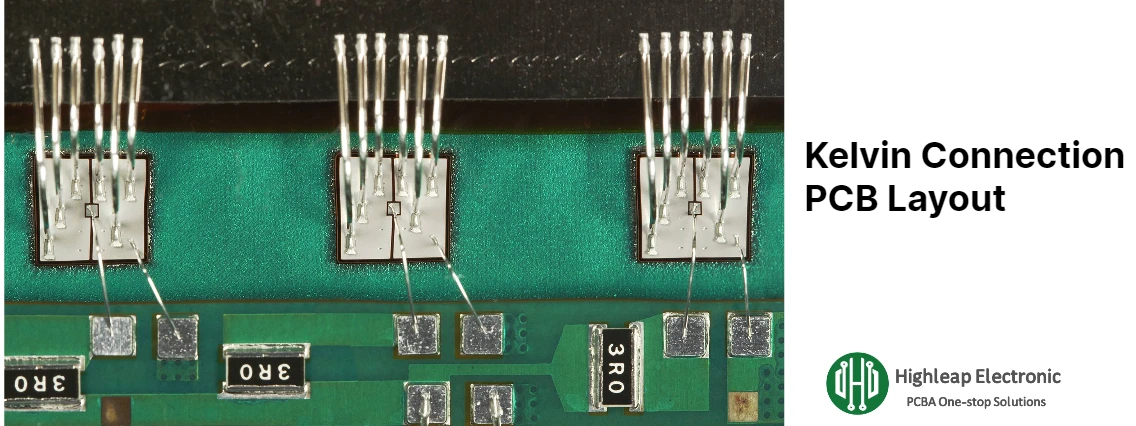
Figure 2. Kelvin connection PCB layout details
Laying Out the Sense-Resistor Footprint
The Kelvin connection is made or lost in the layout. A few specific practices are essential.
Use a dedicated 4-pad footprint
Rather than a plain 2-pad resistor footprint, use a 4-pad pattern: two large force pads carrying the current and two small sense pads tapping the voltage. Many precision shunts are specified with exactly this Kelvin footprint, and following the manufacturer’s recommended pattern is the starting point.
Tap the sense connection at the element’s edge
Connect the sense pads right at the body of the resistor, inside the force connections, so the sensed voltage is across the element only and excludes the force-pad and joint resistance. Where the sense taps is the single most important detail: tap it outside the force path and you reintroduce the very error the technique removes.
Keep the force pads symmetric
Make the two force pads symmetric in size and copper connection. Asymmetry is not only an electrical issue, it is a manufacturing one: unequal copper draws heat unevenly during reflow, so one end of the part heats and wets before the other. That imbalance can lift or shift the component, the classic tombstoning failure. Symmetric, balanced force pads keep both ends heating evenly and the part placed correctly, which is where assembly experience pays off during PCB assembly.
Routing the Sense Lines
With the footprint right, the sense traces need careful routing to preserve the accuracy.
Short, matched, and away from the current
- Route the two sense lines as a closely spaced, length-matched pair, treating them as a differential signal so noise couples into both equally and cancels.
- Keep them short and route them away from the high-current force path and from switching nodes.
- Send them to a high-impedance input, a current-sense amplifier or an ADC, so negligible current flows and the sense-wire resistance causes no drop.
The measurement front end
The sense pair typically connects to a dedicated current-sense amplifier (devices such as the INA219 or INA240 are common examples) or directly to a precision ADC input. Adding small, matched series resistors (on the order of a few to ten ohms) in each sense line provides input filtering and protection without unbalancing the pair. Because this is precision analog routing near high currents, the same discipline used in high-speed and controlled-impedance work, careful return paths and trace control, applies here too.
Second-Order Effects
Once the basics are right, a few subtler effects set the limit on accuracy.
Thermal EMF (thermoelectric voltages)
Junctions between dissimilar metals, solder, copper, the resistor element, generate small voltages when there is a temperature gradient across them. At the microvolt level these thermoelectric EMFs matter for the most precise measurements. Keeping the sense junctions symmetric and at similar temperatures, and avoiding hot spots near the sense taps, minimizes the effect.
Calibration and drift
For the highest accuracy, calibrate the finished assembly and account for the temperature coefficient of the shunt. A good layout removes the gross errors; calibration handles the residual, and managing heat keeps the shunt’s own resistance stable, sometimes calling for a substrate suited to metal-core assembly in high-power designs.
Manufacturing Considerations
A Kelvin design that looks perfect in CAD still depends on how it is built. Several manufacturing factors directly affect the result.
- Solder-joint resistance and consistency. Although the sense path bypasses the force joints, consistent, low-resistance force joints keep the current path stable; controlled assembly delivers that consistency.
- Footprint symmetry in practice. The symmetric force pads must be built and soldered symmetrically to avoid tombstoning and placement shift, a function of stencil design and reflow profile.
- Trace and copper control. Accurate, repeatable copper geometry keeps the force path and the matched sense pair behaving as designed, which depends on the underlying PCB manufacturing quality.
- Test and verification. Verifying the measurement against a known reference confirms both the design and the build, and consistent results at scale come from process control in high-volume PCB assembly.
Catching layout-versus-manufacturing issues early is exactly what a DFM review is for, confirming the shunt footprint, pad balance, and sense routing are buildable before you commit.
A Kelvin connection is conceptually simple, separate force from sense, but it only delivers its accuracy when the footprint, the sense tap, the routing, and the manufacturing all cooperate. Get them right and you can measure milliohms and high currents with confidence. You can read more about Highleap Electronics and our precision and power assembly capabilities.
Frequently Asked Questions
What is a Kelvin connection?
A four-wire (four-terminal) connection that separates the current-carrying (force) path from the voltage-sensing (sense) path. Because the sense path taps the voltage at the element and carries no current, the wiring and solder-joint resistance do not corrupt the measurement, allowing accurate low-resistance and current sensing.
Why can’t I just use a normal two-wire connection?
In a two-wire scheme the same connections carry current and sense voltage, so the reading includes the drops across the traces and solder joints. Against a milliohm-level shunt, a few tenths of a milliohm of joint resistance can cause 20% or more error, and it drifts with temperature.
Where do I tap the sense lines on a shunt?
Right at the body of the resistor, inside the force connections, so the sensed voltage is across the element only. Tapping outside the force path reintroduces the joint and trace resistance you are trying to exclude, defeating the purpose of the Kelvin connection.
Why must the shunt’s force pads be symmetric?
Unequal copper on the two force pads draws heat unevenly during reflow, so one end wets before the other and the part can lift or shift, tombstoning. Symmetric, balanced force pads heat both ends evenly, keeping placement correct and the connection reliable.
How should I route the two sense traces?
As a short, closely spaced, length-matched differential pair, kept away from the high-current force path and switching nodes, terminating at a high-impedance input such as a current-sense amplifier or ADC. Small matched series resistors add filtering and protection without unbalancing the pair.
What manufacturing factors affect Kelvin-sensing accuracy?
Consistent, low-resistance force joints; symmetric soldering of the force pads to avoid tombstoning; accurate, repeatable copper geometry for the force path and sense pair; and verification against a reference. A DFM review before production confirms the footprint and routing are buildable.
How do I choose the shunt resistance value?
Pick the lowest value that still gives a signal your amplifier or ADC can read cleanly, which minimizes wasted power and voltage burden. Confirm the power rating handles I²R at peak current with margin, and prefer a low-temperature-coefficient (TCR) part so the reading stays accurate as the shunt heats.

Recommended Posts

Taconic RF 35 vs RO4350B PCB
Table of contentsRF-35 vs RO4350B Procurement and...
TMM4 Filter PCB Manufacturing
TMM4 filter PCB manufacturing is controlled by the...

TMM3 PCB Manufacturing for RF Modules
TMM3 PCB manufacturing is most useful where the RF module...
TMM6 PCB Fabrication
TMM6 fabrication is the process-control page for a mid-Dk...
How to get a quote for PCBs
Let‘s run DFM/DFA analysis for you and get back to you with a report. You can upload your files securely through our website. We require the following information in order to give you a quote:
-
- Gerber, ODB++, or .pcb, spec.
- BOM list if you require assembly
- Quantity
- Turn time
For PCBA services, please provide your BOM (Bill of Materials) and any specific assembly instructions. We also offer DFM/DFA analysis to optimize your designs for manufacturability and assembly, ensuring a smooth production process.