
Removing Solder From a PCB Without Pad Damage
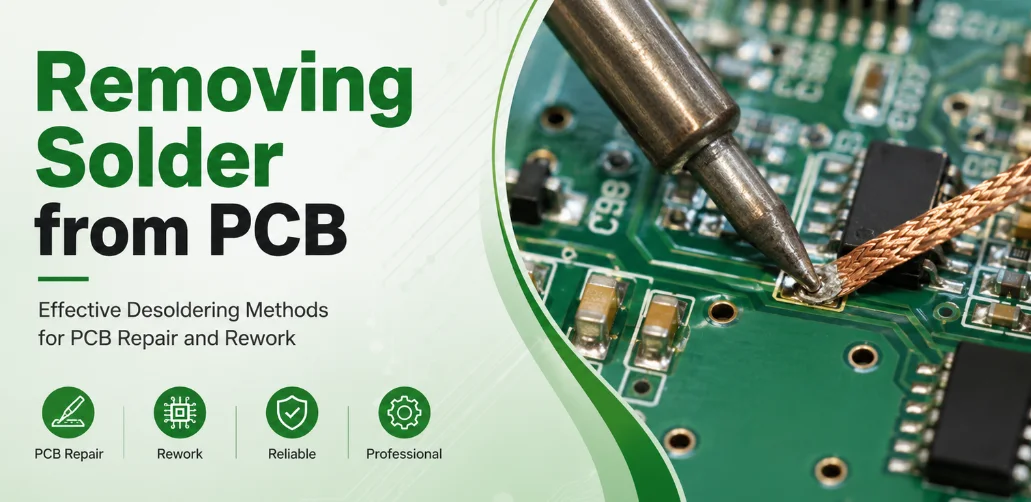
Figure 1. removing solder from PCB
Removing solder, desoldering, is the art of re-melting and clearing a joint without damaging the pad or board beneath it. Removing solder from a PCB is harder than applying it, because you must heat an existing joint, get the solder out, and stop before the copper pad lifts. The right approach depends on the part: through-hole joints, surface-mount chips, fine-pitch ICs, and ball-grid arrays each call for different tools. This guide covers the tools, the golden rules, the technique for each part type, and how to protect pads and clean up afterward.
Key takeaways
- Add fresh solder and flux to an old joint before removing it, so it melts and flows cleanly.
- Solder wick clears flat joints and bridges; a sucker or desoldering station clears through-hole joints.
- Surface-mount and ball-grid parts are removed with hot air, not an iron.
- Low-melt alloy keeps joints molten longer, making chip and connector removal much easier.
- Minimal heat, preheating, and gentle handling are what protect pads from lifting during removal.
Table of Contents
- Why Removing Solder Is Harder Than Applying It
- Desoldering Tools and What They Do
- Which Desoldering Tool to Use
- Desoldering Best Practices
- How to Remove Through-Hole Components
- How to Remove Surface-Mount Chips
- How to Remove ICs, QFNs, and BGAs
- How to Avoid Lifting Pads When Desoldering
- Cleaning and Inspecting After Desoldering
- Frequently Asked Questions
Why Removing Solder Is Harder Than Applying It
Applying solder is a controlled, one-way action. Removing it means reversing a finished joint, which brings two complications.
Heat where you don’t want it
To melt an existing joint you must reheat the pad and any copper attached to it. Large planes and heavy copper wick that heat away, so you end up applying more heat for longer, exactly the condition that lifts pads. Multilayer boards make this worse, since inner planes act as heat sinks.
The board is already built
Unlike soldering a fresh board, desoldering happens on a populated board where neighboring parts, fragile traces, and small pads are all at risk. The goal is therefore not just to remove the solder, but to do it with the least heat and stress possible, so the board survives for a new part or a repair during later assembly.
Desoldering Tools and What They Do
Each desoldering tool suits particular joints; most benches keep several.
| Tool | Best for |
|---|---|
| Solder wick (braid) | Flat joints, surface pads, and clearing bridges |
| Solder sucker / vacuum pump | Through-hole joints, pulling molten solder from holes |
| Desoldering station (heated vacuum) | Frequent through-hole work; melts and removes in one step |
| Hot-air rework station | Surface-mount parts, ICs, QFNs, and BGAs |
| Low-melt alloy | Keeping joints molten longer to remove chips and connectors |
A preheater or hot plate is a valuable companion to all of these: warming the whole board reduces the temperature shock and the time any tool must spend on a joint. For through-hole work, a desoldering station is the most capable single tool; for surface-mount, hot air is essential.
Which Desoldering Tool to Use
With several tools available, a quick mental map saves time and protects the board.
| Situation | Reach for |
|---|---|
| A single through-hole joint | Solder sucker, or wick with an iron |
| A bridge between pins | Solder wick with flux |
| A multi-pin through-hole connector | Desoldering station, or low-melt alloy |
| A surface-mount chip | Hot air, or alternate-heat with an iron |
| A QFN or BGA | Hot-air or infrared rework |
| A heavy-copper or plane joint | Preheat first, then your chosen tool |
The pattern is simple: flat pads and bridges suit wick, holes suit a sucker or station, and anything surface-mount or hidden suits hot air, with preheat added whenever heavy copper is in play. Matching the tool to the joint is half of clean removal; the other half is the heat discipline applied during careful assembly and rework.
Desoldering Best Practices
A few principles apply no matter what you are removing, and following them is what separates clean removal from a damaged board.
- Add fresh solder and flux. Reflowing the old joint with new, flux-cored solder helps it melt and flow, which matters especially for old or lead-free joints.
- Preheat when needed. Multilayer boards, heavy copper, and plane connections benefit from preheating so you are not fighting a heat sink.
- Use minimal heat and time. Get in, remove the solder, and get out; prolonged heat lifts pads.
- Do not pull until molten. Wait until every joint on a part is molten before lifting it, or you tear pads.
The counterintuitive first rule, adding solder to remove solder, is the one beginners skip. Fresh flux-cored solder rejuvenates a tired joint so it releases cleanly, rather than smearing while half-frozen.
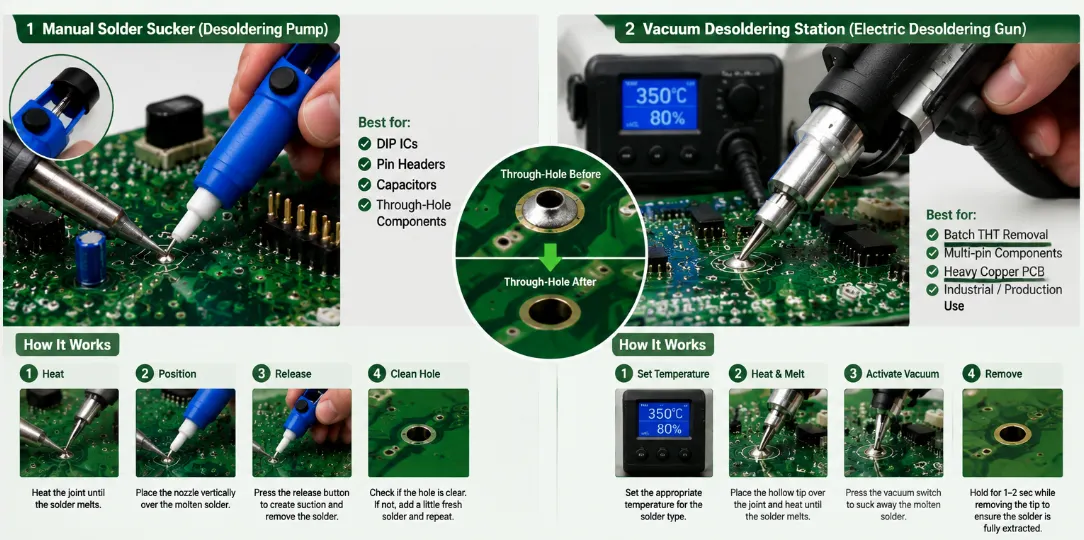
Figure 2. manual vs electric PCB desoldering tools
How to Remove Through-Hole Components
Through-hole joints are the classic desoldering task, and there are two reliable routes.
Wick or sucker
- Add a little fresh solder and flux to the joint.
- Heat the joint until molten, then either lay solder wick on it to draw the solder away, or trigger a solder sucker to pull it from the hole.
- Repeat if needed, then gently free the lead, which should now move in a clear hole.
Desoldering station or low-melt alloy
For multi-pin parts, a heated-vacuum desoldering station clears each hole in one action. Alternatively, applying a low-melt alloy across all the pins keeps them molten together, so a connector or multi-lead part can be lifted at once. Either way, never force a part out of a board whose joints are not fully molten, that is how holes and traces get damaged.
How to Remove Surface-Mount Chips
Two-terminal passives and small surface-mount parts come off quickly with the right method.
- Alternate heating. With an iron, heat one end then the other in quick succession, adding flux, until both joints are molten and the part slides off.
- Low-melt alloy. Bridge both terminals with low-melt alloy so they stay molten together, then nudge the part away.
- Hot air. A focused hot-air stream reflows both joints at once for clean removal.
The risk with small parts is dragging a half-molten component across the pad and tearing it. Patience until both ends are liquid, helped by flux and a little fresh solder, avoids that. Tweezers and magnification make the lift controlled rather than a guess.
How to Remove ICs, QFNs, and BGAs
Multi-lead and hidden-termination parts almost always call for hot air.
| Package | Removal approach |
|---|---|
| SOIC / QFP (leaded) | Hot air over the part, or low-melt alloy along the leads, then lift |
| QFN (bottom-terminated) | Hot air to reflow the hidden joints, then lift with tweezers |
| BGA | Hot-air or IR rework station; reball before reuse |
For a BGA, the part sits on a grid of hidden balls, so it can only be reflowed with hot air or infrared, lifted straight up once molten, and reballed before it is used again. Verifying the new joints needs X-ray, the same equipment a production line uses for ball-grid parts, especially on the dense boards common in high-speed manufacturing. If the old part will be discarded, cutting the leads of a leaded IC first makes removal gentler on the pads.
How to Avoid Lifting Pads When Desoldering
Because reheating is unavoidable, pad protection is the central skill of desoldering, and it ties directly to why pads lift in the first place.
- Minimize dwell. The longer the pad sits hot, the more its bond to the laminate weakens.
- Preheat heat-sinking copper. Plane and heavy-copper connections need a preheater so you are not holding heat on the pad.
- Never pry cold. Lifting or prying a part before its joints are molten tears the pad straight off.
- Be gentle with the sucker. Dragging a vacuum tip across a soft, hot pad can damage it.
These mirror the causes of pad fall-off: heat, time, repeated cycles, and mechanical force. A board built on a laminate with adequate copper peel strength, the kind of material specified during PCB manufacturing, also tolerates rework better, which matters on boards that may be serviced.
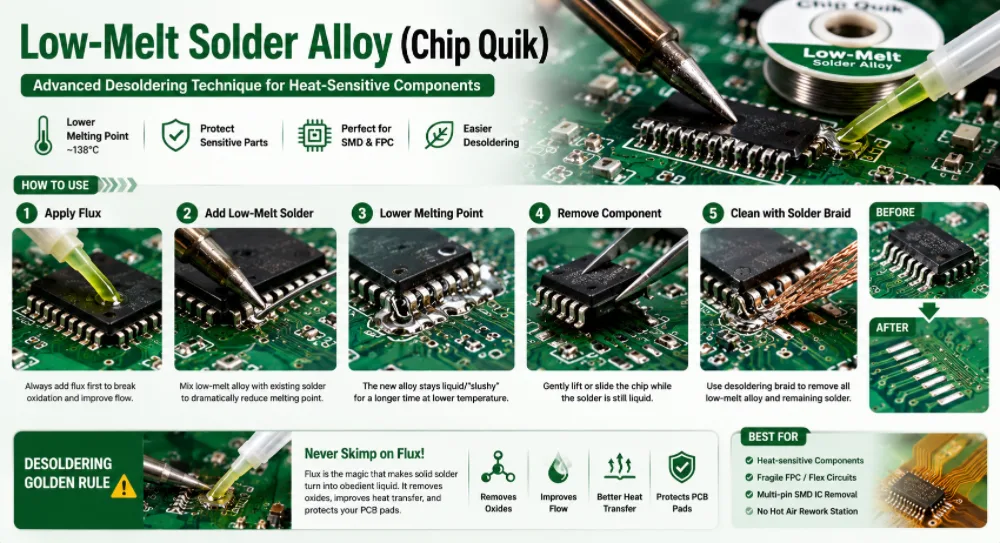
Figure 3. removing solder from PCB low melt alloy method
Cleaning and Inspecting After Desoldering
Removing the part is not the last step; the pad has to be ready for what comes next.
- Clean the residue. Flux and low-melt alloy leave residue that should be removed, especially before resoldering or coating.
- Inspect the pad. Check for lifting, damage, or missing copper before placing a new part.
- Re-tin the pad. A light, fresh coat of solder prepares the pad for the replacement component.
Cleaning matters because residue left after rework can corrode or cause leakage just as it would after original assembly. A clean, intact, freshly tinned pad is the goal, and it is what makes the subsequent soldering reliable. For boards going back into production rather than a one-off repair, the same discipline scales through high-volume assembly, and thermally heavy boards such as metal-core assemblies need extra preheat during any rework.
Need Boards Built Right? Get a Quote
Remove solder by reflowing joints with fresh flux-cored solder, matching the tool to the part, and keeping heat and dwell to a minimum so pads survive. Clean and inspect afterward, and the board is ready for its next part. You can read more about Highleap Electronics and our fabrication and assembly services. A quick design review can also flag features that make rework difficult.
Frequently Asked Questions
What is the easiest way to remove solder from a PCB?
Add fresh flux-cored solder to the joint, then use solder wick for flat pads and bridges or a solder sucker for through-hole joints. The fresh solder helps the old joint melt and flow so it releases cleanly. For surface-mount and ball-grid parts, hot air is the practical tool rather than an iron.
Why add solder when I’m trying to remove it?
Fresh, flux-cored solder rejuvenates an old or oxidized joint so it melts evenly and flows, instead of smearing while half-frozen. The flux it carries also helps the solder release from the pad. It is the most common step beginners skip, and adding it makes removal far cleaner.
How do I avoid lifting pads while desoldering?
Keep heat and dwell to a minimum, preheat boards with planes or heavy copper, and never pry or lift a part before all its joints are fully molten. Be gentle with a vacuum tip on a hot pad. These steps counter the same factors, heat, time, and force, that cause pad lifting.
How do I remove a multi-pin through-hole part?
Use a heated-vacuum desoldering station to clear each hole in one action, or apply a low-melt alloy across all the pins so they stay molten together and the part lifts out at once. Always confirm every joint is molten before removing the part to avoid damaging holes and traces.
Can I remove a BGA by hand?
No. A BGA sits on hidden solder balls that can only be reflowed with a hot-air or infrared rework station, then lifted straight up once molten. To reuse it, it must be reballed, and the new joints are verified by X-ray. An iron cannot reach the joints under the package.
What is low-melt desoldering alloy and when should I use it?
It is a special alloy that melts at a lower temperature and stays molten longer when mixed into existing joints, making it ideal for removing connectors, multi-lead parts, and surface-mount chips that must come off intact. It keeps all the joints liquid at once so the part lifts cleanly without prolonged heating of any single pad.
Do I need to clean the board after desoldering?
Yes. Flux and low-melt alloy leave residue that can corrode or cause leakage if left, just as after original assembly, so remove it before resoldering or coating. Then inspect the pad for damage and re-tin it lightly so it is ready for the replacement part.
Which desoldering tool should I buy first?
For mostly through-hole work, a solder sucker plus solder wick covers the basics cheaply, and a heated-vacuum desoldering station is the upgrade for frequent work. For surface-mount work, a hot-air rework station is the key tool. Many benches keep wick, a sucker, and hot air, since each suits different joints.
Why is a ground-plane joint so hard to desolder?
A large copper plane conducts heat away from the joint, so an iron struggles to bring it to melting and you apply heat for longer, which risks the pad. Preheating the whole board first lets the joint reach temperature quickly without prolonged local heating, a concern a DFM check can reduce by adding thermal relief.
Can I reuse a component after desoldering it?
Often yes for through-hole and many surface-mount parts if they were not overheated, though leads may need cleaning and retinning. BGAs must be reballed before reuse. If a part was difficult to remove or heavily heated, it is usually safer to replace it than risk an unreliable component.

Recommended Posts
TMM4 Filter PCB Manufacturing
TMM4 filter PCB manufacturing is controlled by the...
TMM3 PCB Manufacturing for RF Modules
TMM3 PCB manufacturing is most useful where the RF module...
TMM6 PCB Fabrication
TMM6 fabrication is the process-control page for a mid-Dk...
TMM10 PCB Manufacturing for Compact RF Designs
Table of contentsHow TMM10 Shrinks RF StructuresTMM10 vs...
How to get a quote for PCBs
Let‘s run DFM/DFA analysis for you and get back to you with a report. You can upload your files securely through our website. We require the following information in order to give you a quote:
-
- Gerber, ODB++, or .pcb, spec.
- BOM list if you require assembly
- Quantity
- Turn time
For PCBA services, please provide your BOM (Bill of Materials) and any specific assembly instructions. We also offer DFM/DFA analysis to optimize your designs for manufacturability and assembly, ensuring a smooth production process.