
Why SMT Pads Lift During Soldering
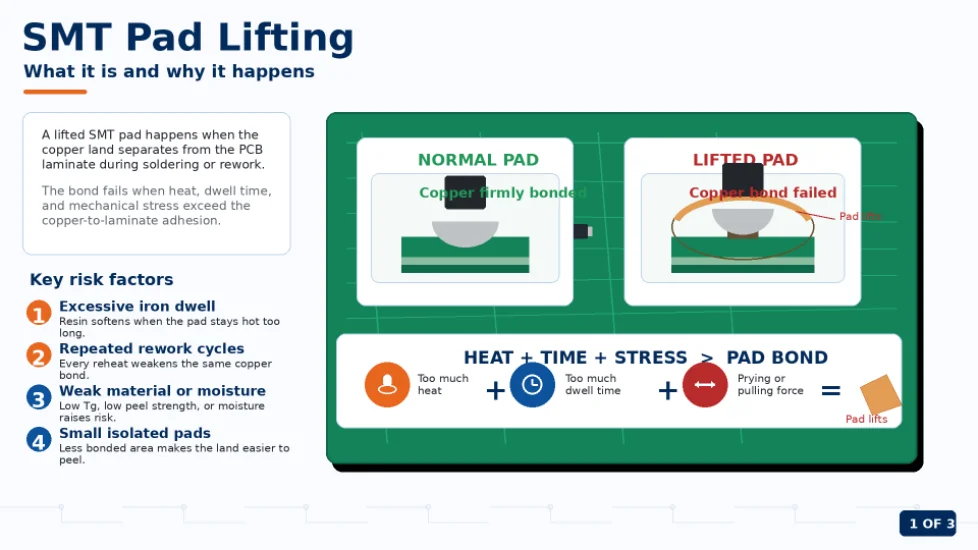
Figure 1. SMT pad lifting what it is and why it happens
When a copper pad peels away from the board during soldering, the cause is almost always heat, time, and stress overcoming the bond that holds the copper to the laminate. SMT pad fall-off, known formally as a lifted land or lifted pad, happens when too much heat or too many rework cycles weaken that bond, often made worse by a small pad, a weak laminate, or mechanical force. This guide explains the real factors behind pad lifting, grouped into material, design, and process causes, and gives practical ways to prevent it.
Key takeaways
- A pad lifts when heat and time degrade the copper-to-laminate bond; excessive iron dwell is the most common trigger.
- Repeated rework or reflow cycles compound the damage, so limiting touch-ups protects pads.
- Weak laminate (low glass-transition temperature or low peel strength) and trapped moisture make lifting far easier.
- Small pads with no anchoring via or trace, and pads tied to large copper without thermal relief, are most at risk.
- Brief, hot contact with plenty of flux, plus preheat and good materials, prevents most pad lifting.
Table of Contents
- What a Lifted (Fallen-Off) SMD Pad Is
- Lifted Pads: Through-Hole vs Surface-Mount
- Why Pads Lift: Heat and Dwell Time
- How Board Material Affects Pad Adhesion
- PCB Design Factors That Cause Pad Lifting
- Soldering Process Factors That Lift Pads
- SMD Pad Lifting Causes Summary
- How to Prevent SMD Pads From Lifting
- How to Repair a Lifted PCB Pad
- Frequently Asked Questions
What a Lifted (Fallen-Off) SMD Pad Is
A pad, or land, is the patch of copper a component solders to. It is bonded to the laminate beneath it by the board’s resin system, and that bond has a finite strength.
Lifted land vs lifted pad
When the copper separates from the laminate, the result is a lifted land, where the pad rises off the surface, or in the worst case a pad that detaches entirely, often taking its connecting trace with it. Either way, the electrical connection is compromised and the board may be unusable without repair. The copper itself rarely fails; it is the bond to the board that gives way.
Why it matters
A lifted pad is treated as a defect or a reportable condition under assembly acceptance criteria, and it can cause intermittent or open connections in the field. Understanding the factors behind it is the first step to building boards that survive both assembly and any later rework.
Lifted Pads: Through-Hole vs Surface-Mount
Lifting affects both kinds of pad, but the geometry differs and so does the risk.
| Feature | Surface-mount land | Through-hole pad |
|---|---|---|
| Bond to board | Surface copper bonded to the laminate | Pad plus a plated barrel through the hole |
| How it lifts | Land peels off the surface | Pad and barrel can tear, often pulling the trace |
| Repair | Jumper from lead to trace or via | Jumper, or rebuild with an eyelet in severe cases |
Surface-mount lands have less anchoring than a plated through-hole, so they can lift with less provocation, which is why anchoring vias and teardrops matter so much in a good footprint review. Through-hole pads are better held by the barrel but, when they do fail, often take the connecting trace with them. Either way the defense is identical: manage heat and time, and build on a laminate with adequate peel strength.
Why Pads Lift: Heat and Dwell Time
Almost every case of pad lifting traces back to one mechanism: the bond between copper and laminate degrades when it gets too hot for too long.
The single most important principle is that a brief, hot contact does less harm than a long, lukewarm one. Resting an iron on a pad for several seconds delivers far more heat into the bond than a quick, decisive joint, even at a lower tip temperature. The longer the copper sits hot, the more the resin softens and the weaker the bond becomes, until the pad lets go.
This is why technique matters as much as equipment. A clean, well-tinned tip and enough flux let solder wet in a second or two, so the pad never gets the prolonged heating that lifts it. Reaching for more heat or more dwell, instead of more flux, is the classic path to a lifted pad.
How Board Material Affects Pad Adhesion
Not all boards resist lifting equally. The laminate’s properties set how much heat the pad bond can take before failing.
| Material factor | Effect on pad adhesion |
|---|---|
| Glass-transition temperature (Tg) | Higher Tg laminate softens less under heat, holding pads better |
| Copper peel strength | Directly measures how firmly copper bonds to the laminate |
| Laminate quality | Poorly cured or low-grade material lifts more readily |
| Absorbed moisture | Trapped moisture can cause delamination and measling when heated |
Copper peel strength is the property that most directly predicts lifting, and it is verified by standardized peel-strength test methods. Choosing a laminate with adequate Tg and peel strength for the application is a fabrication decision made during PCB manufacturing, and it matters most for boards that will see high soldering temperatures or rework. Heavy-copper and thermally demanding designs, such as those on metal-core substrates, deserve particular attention here.
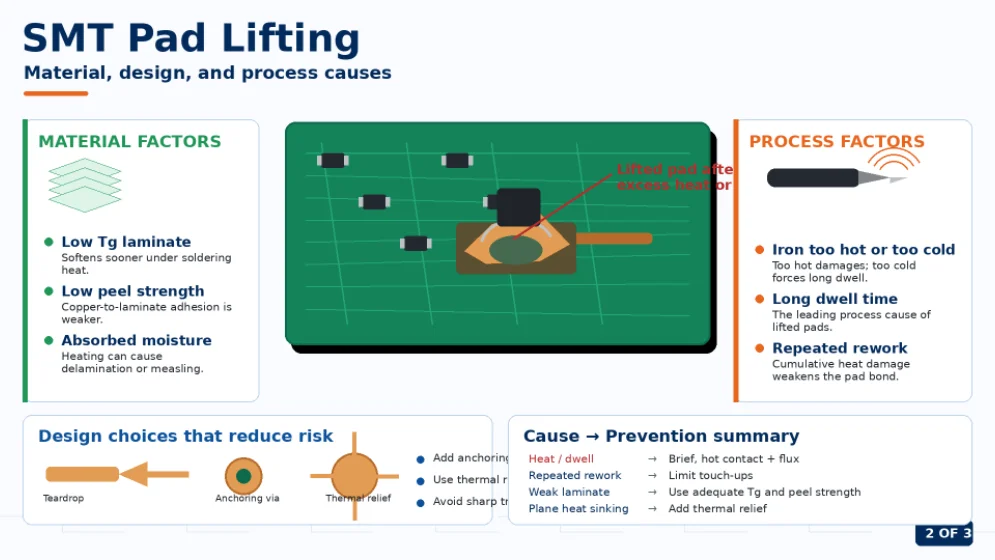
Figure 2. SMT pad lifting material design and process causes
PCB Design Factors That Cause Pad Lifting
How a pad is designed and connected strongly affects whether it survives soldering. Two pads on the same board, one anchored and one isolated, can behave very differently.
Pad size and anchoring
A small, isolated pad with only a thin trace has little bonded area to resist lifting. Adding an anchoring via that ties the pad into an inner layer, or using teardrops where the trace meets the pad, increases the effective bond and resists peeling. Fine-pitch and small-passive designs, the kind seen in high-density layouts, benefit most from these features.
Thermal relief on planes
A pad connected directly to a large copper pour or ground plane is hard to heat, because the copper wicks heat away. The operator then applies more heat for longer, which is exactly what lifts pads. A thermal-relief connection, joining the pad to the plane with a few narrow spokes, lets the joint reach temperature quickly without prolonged heating.
Trace routing
Routing a fragile trace so it is not pulled when a part is handled, and avoiding sharp transitions at the pad, reduces the mechanical component of lifting. Good footprint and routing choices like these are exactly what a design-for-manufacturing review looks for.
Soldering Process Factors That Lift Pads
Even a well-designed board on good material can suffer lifted pads if the soldering process is wrong.
- Iron temperature. Too hot damages the bond directly; too cold forces longer dwell, which also lifts pads. Set it to wet quickly.
- Dwell time. Prolonged contact is the leading process cause. Make the joint and move on.
- Rework cycles. Each reheat stresses the bond. Limit how many times a joint is reworked.
- Preheat. Warming the board first reduces thermal shock and the time the iron must spend on the pad.
- Lead-free temperatures. Lead-free alloys melt hotter, so the margin before damage is smaller and technique matters more.
Desoldering is especially risky, since removing a part can mean heating a pad repeatedly. Using proper desoldering tools, fresh flux, and as little heat as possible protects the pad during removal as well as installation.
SMD Pad Lifting Causes Summary
The factors above can be summarized as a quick diagnostic table.
| Cause | Why it lifts the pad | Prevention |
|---|---|---|
| Excessive dwell / heat | Softens the copper-laminate bond | Brief, hot contact; flux to wet fast |
| Repeated rework | Cumulative heat damage | Limit touch-ups and reflow cycles |
| Weak laminate / moisture | Low Tg or peel strength fails sooner | Adequate Tg and peel strength; bake if needed |
| Small / isolated pad | Little bonded area to resist peeling | Anchoring via, teardrops |
| No thermal relief | Plane wicks heat, forcing long dwell | Thermal-relief spokes to planes |
How to Prevent SMD Pads From Lifting
Pulling the causes together gives a short, practical checklist.
- Solder fast. Use a clean, hot tip and enough flux so each joint forms in a second or two.
- Limit rework. Avoid repeatedly reheating the same pad; plan the joint so it is right the first time.
- Preheat the board. Especially for larger or thicker boards, preheating cuts the iron time needed.
- Specify good material. Choose a laminate with adequate Tg and copper peel strength for the soldering and rework expected.
- Design pads to survive. Add anchoring vias and teardrops to small pads, and thermal relief on plane connections.
- Handle gently. Avoid prying or flexing that adds mechanical stress, and bake moisture-sensitive boards before soldering.
These habits also pay off at scale: a design that resists pad lifting is more robust through automated soldering and any rework during high-volume assembly, where consistency matters most.
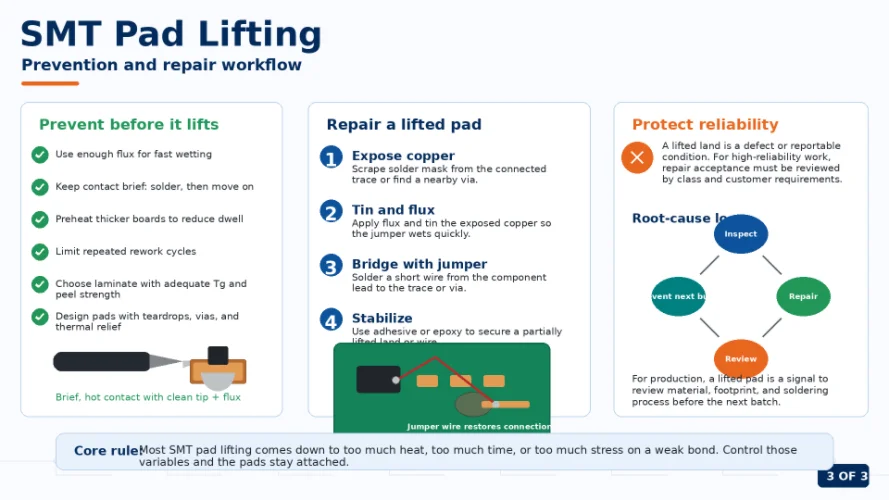
Figure 3. SMT pad lifting prevention and repair workflow
How to Repair a Lifted PCB Pad
If a pad lifts despite precautions, the connection can often be restored, though the repair has limits.
- Re-anchor the connection. A short jumper wire from the component lead to the trace or a nearby via can restore the circuit.
- Stabilize the pad. Adhesive or epoxy can hold a partially lifted land in place to prevent further movement.
- Know the acceptance limits. A lifted land is judged against assembly acceptance criteria by class, so on high-reliability work the board may not be acceptable even after repair.
For a prototype, a clean jumper repair is usually fine. For production or high-reliability boards, a lifted pad is a signal to revisit the material, the footprint, or the soldering process so the next batch does not repeat it.
Pad fall-off is preventable: solder quickly, limit rework, choose a laminate with the right Tg and peel strength, and design small pads with anchoring features. Get those right and lifted pads largely disappear. You can read more about Highleap Electronics and how we fabricate and assemble durable boards.
Frequently Asked Questions
Why do SMT pads lift off when I solder?
Because heat and time degrade the bond holding the copper pad to the laminate. The most common trigger is resting the iron on the pad too long; repeated rework, a weak laminate, a small isolated pad, or trapped moisture all make it worse. Brief, hot contact with flux prevents most of it.
Does iron temperature or dwell time cause more lifting?
Prolonged dwell is usually the bigger culprit, though too high a temperature also harms the bond directly. The aim is to set the iron hot enough to wet the joint in a second or two, so the pad never sits hot long enough to lift. Too cool an iron backfires by forcing longer contact.
How does board material affect pad lifting?
A laminate with a higher glass-transition temperature softens less under heat, and higher copper peel strength means the pad is bonded more firmly. Poorly cured material and absorbed moisture lift far more easily. Specifying adequate Tg and peel strength for the soldering and rework expected reduces the risk.
Can design changes prevent pad lifting?
Yes. Adding an anchoring via and teardrops to small pads increases the bonded area, and thermal-relief connections to planes let joints heat quickly instead of forcing long dwell. These footprint choices are exactly what a design-for-manufacturing review checks before production.
Why are pads connected to ground planes more likely to lift?
A large copper plane wicks heat away from the pad, so the operator applies more heat for longer to melt the solder, which is what lifts pads. A thermal-relief connection, joining the pad to the plane with a few narrow spokes, lets the joint reach temperature quickly and avoids the prolonged heating.
Is pad lifting more common with lead-free solder?
It can be, because lead-free alloys melt at a higher temperature, leaving a smaller margin before the bond is damaged. Good technique, adequate flux, preheat, and a laminate rated for lead-free temperatures from fabrication all help offset the higher heat involved.
Can a board with a lifted pad still be used?
Often yes for a prototype, by adding a jumper wire to restore the connection and stabilizing the pad with adhesive. For production or high-reliability boards, a lifted land is judged against acceptance criteria by class and may not be acceptable, so it is a cue to fix the material, footprint, or process.
Do through-hole pads lift the same way as SMT pads?
Both can lift, but through-hole pads are anchored by the plated barrel through the hole, so they resist lifting better; when they do fail, they often pull the connecting trace with them. Surface-mount lands rely only on surface bonding, so they lift more easily, which is why anchoring vias and teardrops help.
Does preheating the board really help?
Yes. Preheating raises the whole board toward soldering temperature so the iron adds less heat for less time, reducing both thermal shock and the dwell that lifts pads. It is especially useful for thicker boards, heavy copper, and pads connected to large planes.

Recommended Posts
TMM4 Filter PCB Manufacturing
TMM4 filter PCB manufacturing is controlled by the...
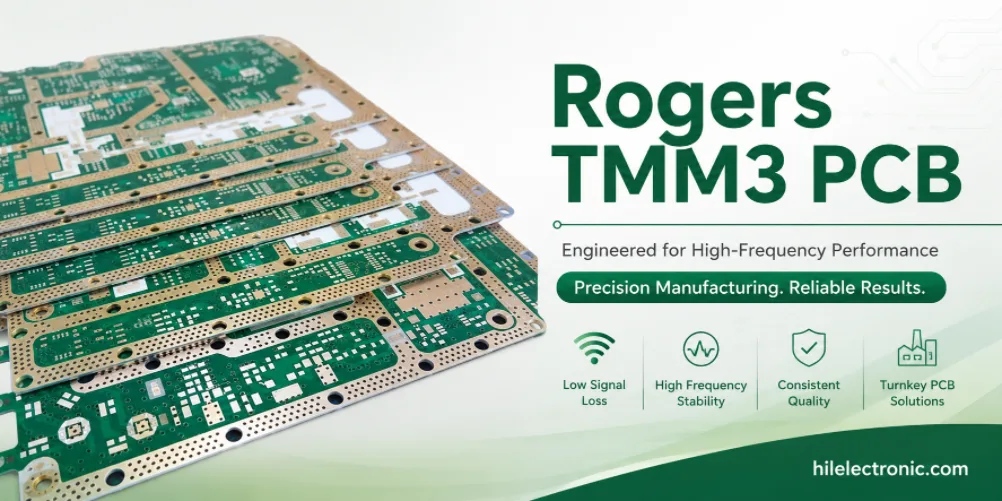
TMM3 PCB Manufacturing for RF Modules
TMM3 PCB manufacturing is most useful where the RF module...
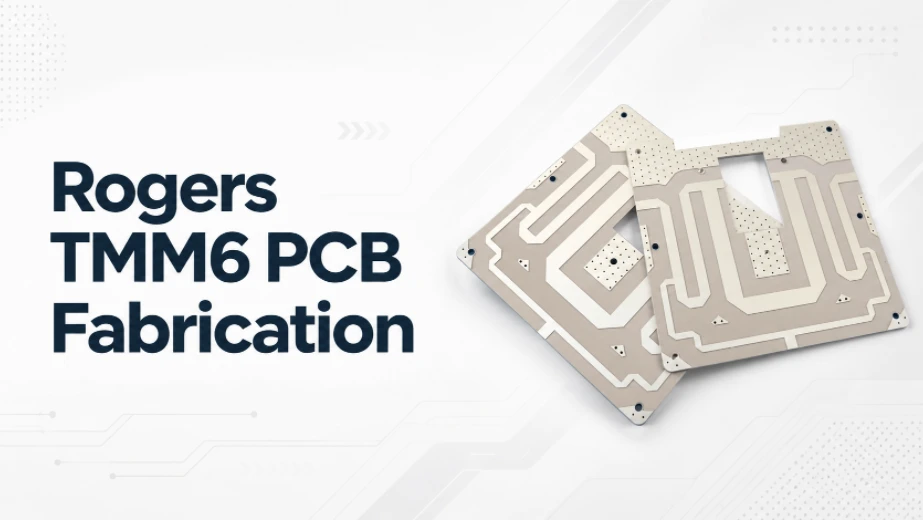
TMM6 PCB Fabrication
TMM6 fabrication is the process-control page for a mid-Dk...

TMM10 PCB Manufacturing for Compact RF Designs
Table of contentsHow TMM10 Shrinks RF StructuresTMM10 vs...
How to get a quote for PCBs
Let‘s run DFM/DFA analysis for you and get back to you with a report. You can upload your files securely through our website. We require the following information in order to give you a quote:
-
- Gerber, ODB++, or .pcb, spec.
- BOM list if you require assembly
- Quantity
- Turn time
For PCBA services, please provide your BOM (Bill of Materials) and any specific assembly instructions. We also offer DFM/DFA analysis to optimize your designs for manufacturability and assembly, ensuring a smooth production process.