
Pilot Production PCB Assembly Before Repeat Manufacturing
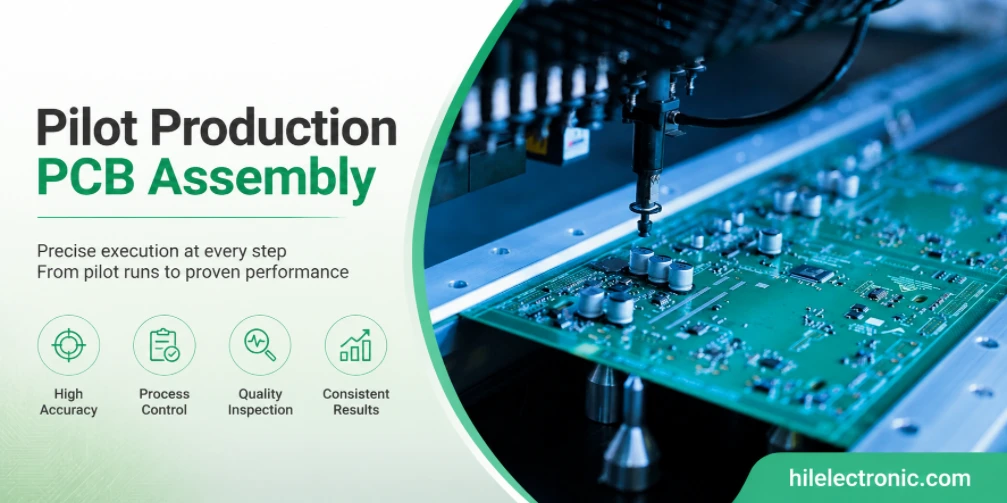
Table of contents
- What Is a Pilot PCB Assembly Build?
- How Many Boards Should Be in a Pilot Run?
- What Should Be Production-Intent in the Pilot?
- How Highleap Runs a Pilot PCB Assembly Lot
- What Quality Data Should a Pilot Provide?
- Common Problems Found Before Mass Production
- Pilot Production Cost and Lead Time
- Request a Pilot PCB Assembly Quote
- Pilot PCB Assembly Questions Before Production Release
Pilot production PCB assembly is the controlled build between NPI or prototype work and routine manufacturing. The customer is no longer asking only whether the board functions. The question is whether the selected materials, process, inspection, test and work instructions can produce the same result across a representative batch.
Highleap Electronics supports pilot run PCB assembly for OEMs that need practical production evidence before committing larger material quantities or customer delivery schedules. The pilot can be planned around the remaining risk: fine-pitch soldering, component substitutions, test throughput, mixed-technology operations, mechanical fit, yield or supply continuity.
To request a pilot quote, send the latest board files, BOM, pilot quantity and the checks the boards must pass. A previous sample, test procedure or list of known issues is helpful but not mandatory for the first review. Highleap will identify only the additional information needed to build and evaluate the lot.
1. What Is a Pilot PCB Assembly Build?
A PCB assembly pilot build uses the intended manufacturing route on a limited but meaningful quantity. It differs from engineering prototype PCBA because temporary parts, manual corrections and open processes are reduced or clearly controlled. It differs from volume production because the lot still includes additional observation, approval gates and issue closure.
Process proof
Confirm the stencil, placement, soldering, inspection and test route.
Supply proof
Use approved sources and expose material risks before larger commitments.
Quality proof
Measure defects, rework and first-pass yield on representative units.
Release proof
Show that the open action list is small enough for repeat production.
The pilot is most valuable when the OEM has a defined decision at the end: release repeat production, approve customer samples, complete a qualification build, validate a new supplier or authorize a material purchase. Highleap can plan the evidence around that decision instead of applying a generic pilot checklist.
2. How Many Boards Should Be in a Pilot Run?
There is no universal pilot quantity. The batch must be large enough to exercise the real process and provide enough units for testing, customer samples, engineering analysis and expected fallout. A five-board lot may be adequate for a simple product with a proven design; a complex assembly may need a larger pre-production PCBA batch to reveal repeatability and test-cycle problems.
| Quantity consideration | Questions to answer |
|---|---|
| Process repetition | Will the lot include enough panels and machine cycles to expose setup or printing variation? |
| Testing allocation | How many units are needed for functional, environmental, regulatory or customer evaluation? |
| Yield learning | Would one or two failures materially change the conclusion? |
| Material economics | Do component pack sizes or PCB panels create a practical quantity break? |
| Launch risk | What quantity can be built before the next design or approval decision? |
Highleap can compare two or three pilot quantities in the quotation. This helps procurement understand the difference between batch-level setup cost and recurring unit cost, while engineering can reserve enough boards for evaluation. The recommended quantity should follow the evidence needed, not a supplier’s arbitrary minimum order.
3. What Should Be Production-Intent in the Pilot?
A production validation PCBA should use the materials and methods planned for future orders wherever they affect quality or repeatability. This normally includes the approved bare PCB construction, the intended solder alloy, production stencil strategy, placement program, reflow or through-hole route, programming method and acceptance test.
- Use the released PCB revision and approved BOM configuration.
- Use production sources or clearly identified temporary parts.
- Build with the intended panel and assembly support method.
- Run the planned inspection route, including hidden-joint inspection where required.
- Use the intended firmware and test limits or document the remaining gap.
- Apply the packaging and traceability needed for customer delivery.
Not every item must be final. A test fixture may still need refinement, or a long-lead component may require an approved temporary alternate. The important point is visibility. Highleap should identify which conditions are production-intent, which are temporary and whether the temporary condition could hide a future manufacturing problem.
Where PCB fabrication is part of the scope, one-stop PCB fabrication and assembly coordination avoids a gap between panel design and the assembly route. Panel rails, support, fiducials and depanelization are then reviewed against the same pilot objective.
4. How Highleap Runs a Pilot PCB Assembly Lot
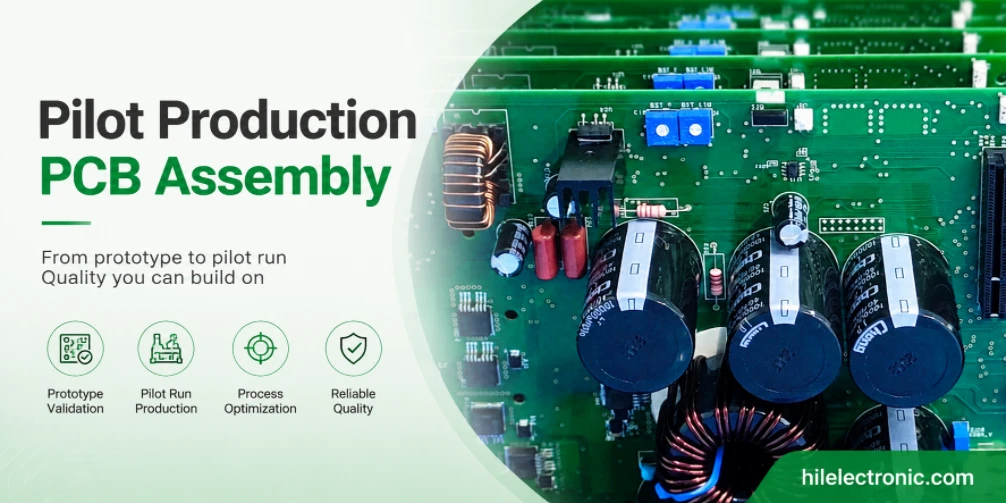
A pilot should follow a planned sequence with controlled stops rather than flow through the factory as an ordinary small order. Highleap can establish the release points according to the risk and customer availability.
- Complete file and BOM review, then confirm the quoted revision.
- Secure materials and report shortages or proposed alternatives before purchase.
- Build the first representative unit or panel and complete agreed checks.
- Release the balance of the lot after first-article approval.
- Collect assembly, inspection and test findings during the batch.
- Hold shipment only for issues that affect acceptance or production release.
- Close the pilot with results, residual risks and the recommended next action.
The first-article step can use PCBA first-article inspection to confirm configuration, orientation, critical packages, programming and labels. For remote customers, Highleap can provide agreed evidence for approval without requiring the buyer to be on site.
A well-run pilot also protects schedule. Questions are consolidated and classified by urgency, so procurement is not copied on every technical detail and engineering is not asked to approve routine manufacturing choices.
5. What Quality Data Should a Pilot Provide?
The pilot output should help the OEM decide whether repeat manufacturing is ready. A shipment count alone is not enough. Depending on the product, the useful evidence may include first-pass yield, defect categories, rework count, AOI or X-ray findings, programming results, functional-test yield and open corrective actions.
| Pilot evidence | What it tells the customer | Possible release decision |
|---|---|---|
| First-pass assembly yield | How many units completed the route without repair. | Accept, contain a known issue or improve the process. |
| Defect Pareto | Which failure modes dominate the batch. | Prioritize design or process action. |
| Test yield and failure codes | Whether acceptance is stable and diagnosable. | Release the test or continue correlation. |
| Rework history | Whether units passed only after repeated intervention. | Set rework limits or change the design/process. |
| Material exceptions | Whether the pilot used temporary or unapproved supply. | Approve the source or repeat with production material. |
Highleap can align the pilot records with the customer’s pilot-build traceability requirements. Not every project needs serial-level data, but the data level should be agreed before the build so it is captured at the correct stage.
6. Common Problems Found Before Mass Production
The value of a small batch pilot PCB assembly is that it exposes issues while material and schedule exposure are still limited. Common findings include inconsistent paste release, weak panel support, difficult manual operations, long test time, ambiguous configuration options, component availability problems and failures that cannot be diagnosed from the current test.
| Pilot finding | Why it matters at higher volume | Typical action |
|---|---|---|
| Frequent touch-up | Manual repair becomes a capacity and reliability risk. | Adjust stencil, design, placement or soldering route. |
| Test bottleneck | Finished assemblies wait for one slow station. | Improve cycle time, duplicate fixtures or change coverage. |
| Mixed revisions or options | The wrong product variant may ship. | Tighten release, labeling and traveler controls. |
| Unstable alternate component | Supply flexibility creates product risk. | Validate or reject the alternate before repeat orders. |
| Panel or depanel damage | Scrap increases with every batch. | Revise support, tabs, routing or handling. |
The pilot should not be declared a failure simply because it finds problems. The important question is whether the issues are understood, contained and assigned. Highleap should separate issues that block repeat production from improvements that can be introduced during the next scheduled release.
7. Pilot Production Cost and Lead Time
Pilot production PCB assembly cost includes the same categories as a production order but with fewer units to absorb setup. PCB fabrication, components, stencil, machine programming, first-article work, special inspection, testing and reporting should be visible in the quote. The PCB assembly lead-time guide is useful for understanding why material and approval time often exceed actual line time.
Released data, available components, existing test assets and quick customer approvals.
New tooling, scarce parts, special inspection, unfinished test and repeated design updates.
Ask for pilot quantity, next production quantity and annual forecast in the same quote.
A supplier should not promise a fixed pilot lead time before reviewing the BOM and board complexity. Highleap can provide a preliminary schedule after the initial files, then confirm it when material and open questions are known. Procurement receives a realistic date; engineering sees the specific dependency rather than a vague delay.
8. Request a Pilot PCB Assembly Quote
For a pilot PCBA manufacturer review, send the latest Gerber or ODB++ files, BOM, pilot quantity and any test or programming needs. If you only have a previous assembled sample or partial file set, send what is available and state the target quantity. Highleap can identify the minimum additional information required.
The quotation should state the build revision, sourcing model, assembly scope, first-article gate, inspection and test coverage, evidence delivered and the conditions for moving into repeat production. This allows the buyer to compare pilot services on risk reduction rather than unit price alone.
Start through the quick PCB assembly quote form. Highleap can provide separate pilot and follow-on production pricing so the customer can see which setup costs are reusable and how the unit price changes after validation.
Highleap can also state which pilot records will be supplied with shipment and which findings will be summarized at closeout. The customer can therefore use the quotation as the basis for both purchasing approval and the later production-release review.
9. Pilot PCB Assembly Questions Before Production Release
Is pilot production the same as low-volume PCB assembly?
Not exactly. Low-volume describes quantity and release pattern, while a pilot build has a validation purpose. A pilot may be low quantity, but it uses production-intent conditions and produces evidence for release. Buyers can compare the service with small-batch PCB assembly options when deciding whether the order is a routine small batch or a formal production-validation lot.
Can we use customer-supplied components in a pilot build?
Yes. Strategic, scarce or already-owned parts can be supplied by the customer. Highleap will define receiving condition, quantity, overage and shortage responsibility. The customer-consigned PCB assembly model can be combined with Highleap-sourced standard parts when a hybrid material plan is more practical.
Do we need a complete functional-test fixture before the pilot?
A complete production fixture is ideal when test throughput is one of the validation goals, but it is not always required for the first pilot. Highleap can use an approved bench procedure or interim fixture if the limitation is documented. The production PCB test-fixture design service can then be developed in parallel for repeat manufacturing.
Can Highleap quote more than one pilot quantity?
Yes. Comparing two or three quantities helps separate setup cost, material pack sizes and the number of units needed for customer evaluation. The early-stage PCB budget quotation method can be used before the final pilot quantity is selected.

Recommended Posts
TMM4 Filter PCB Manufacturing
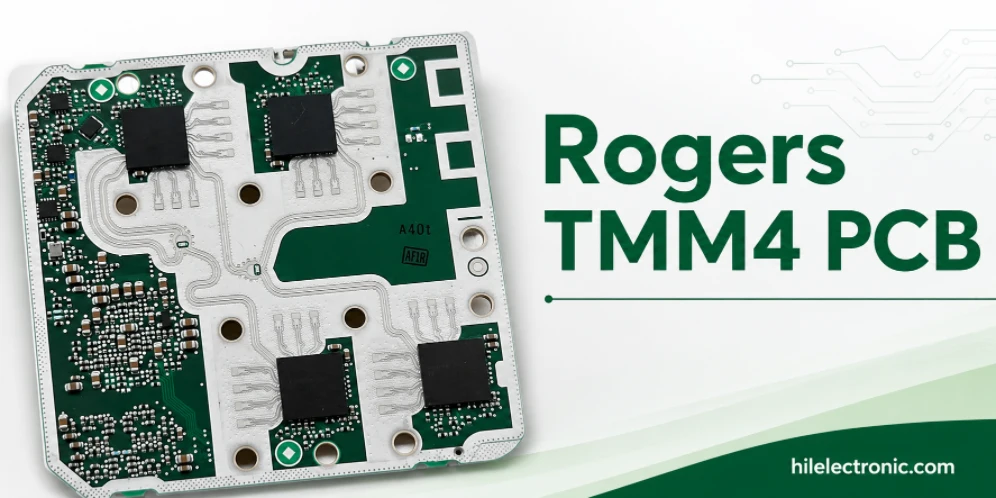
TMM4 filter PCB manufacturing is controlled by the...
TMM3 PCB Manufacturing for RF Modules
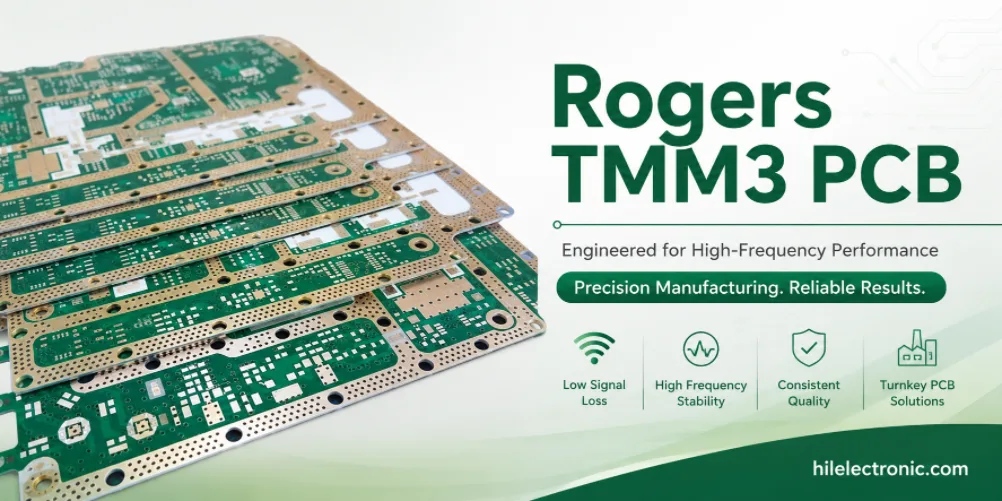
TMM3 PCB manufacturing is most useful where the RF module...
TMM6 PCB Fabrication
TMM6 fabrication is the process-control page for a mid-Dk...

TMM10 PCB Manufacturing for Compact RF Designs
Table of contentsHow TMM10 Shrinks RF StructuresTMM10 vs...
How to get a quote for PCBs
Let’s run DFM/DFA analysis for you and get back to you with a report. You can upload your files securely through our website. We require the following information in order to give you a quote:
-
- Gerber, ODB++, or .pcb, spec.
- BOM list if you require assembly
- Quantity
- Turn time
For PCBA services, please provide your BOM (Bill of Materials) and any specific assembly instructions. We also offer DFM/DFA analysis to optimize your designs for manufacturability and assembly, ensuring a smooth production process.