
Premium Mechanical Keyboard PCB Manufacturer & Turnkey PCBA Factory

When bringing a custom mechanical keyboard to market—whether for a limited community Group Buy (GB), a niche ergonomic split design, or scalable retail mass production—partnering with a specialized mechanical keyboard PCB manufacturer is critical. A generic circuit board factory treats a keyboard like any other rectangular board. We treat it as an acoustic and ergonomic precision instrument.
Highleap Electronics is a premier PCB fabrication and assembly (PCBA) factory based in China, delivering high-quality custom keyboard manufacturing. We intimately understand complex switch matrix routing, anti-ghosting diode placement, strict tolerance requirements for hot-swap socket insertion, and high-yield PCBA for power-heavy RGB configurations. From initial bare board prototyping to full turnkey mass production, we provide end-to-end hardware solutions for designers, studios, and hardware brands worldwide.
Key Takeaways: Highleap’s Keyboard PCB Capabilities
- Advanced Fabrication: 1.2mm / 1.6mm FR-4, Aluminum core, precision CNC per-key flex cuts, edge-plating, and HDI for compact splits.
- Next-Gen Switch Support: Full manufacturing support for standard MX, Hot-Swap, Low-Profile, Electrostatic Capacitive (EC), and the latest Hall Effect (Magnetic) switches.
- Turnkey PCBA: Strict adherence to your exact BOM. We source and solder Kailh/Gateron sockets, exact STM32/RP2040 MCUs, and SK6812 LEDs with zero unauthorized substitutions.
- Firmware & Matrix Expertise: Optimized routing for QMK, VIA, Vial, and ZMK (Bluetooth/wireless) firmware.
- Scalable Production: No strict Minimum Order Quantity (MOQ) for prototypes; fully scalable to 10,000+ units.
Request a Custom Keyboard PCB Quote
Table of Contents
- Why Choose a Specialized Mechanical Keyboard PCB Manufacturer?
- Advanced Keyboard PCB Fabrication Specs
- Turnkey PCBA: SMT, RGB & Exact BOM Sourcing
- Supported Keyboard Types, Layouts & Form Factors
- Comprehensive Switch Footprint Matrix
- Strict DFM and Quality Control Processes
- Frequently Asked Questions (FAQ)
Why Choose a Specialized Mechanical Keyboard PCB Manufacturer?
Not all PCB factories are equipped to handle the nuances of custom keyboards. As a dedicated mechanical keyboard PCB manufacturer, we address the specific pain points that generic fabs miss:
- Acoustic Tuning & Flex: We calculate trace routing around your required flex cuts (per-key or horizontal) to ensure the board retains its intended “bounce” without risking trace fractures over time.
- USB Power Draw & RGB Cascading: A keyboard with 104 per-key RGB LEDs draws significant current. We calculate trace width and copper weight to prevent voltage drop, ensuring the LEDs at the end of your data chain are just as bright as the first.
- Mechanical Stress Points: We reinforce via placement and pad structures specifically around stabilizers, spacebars, and USB-C ports to handle years of typing impact and cable plugging.
These engineering decisions are grounded in the same principles that govern our broader circuit board production process, applied specifically to the acoustic and structural demands of keyboard hardware.
Advanced Keyboard PCB Fabrication Specs
The bare circuit board directly impacts the typing acoustics (thock/clack) and typing feel of the keyboard. We engineer bare boards tailored to the mechanical demands of the modern enthusiast market.
- 1.2mm Thickness & Flex Cuts: While 1.6mm is standard, we excel at manufacturing 1.2mm PCBs for gasket-mounted builds. We CNC rout highly precise per-key flex cuts, relief cuts, and custom outer profiles to give your plateless or half-plate keyboard the exact flex you designed.
- ENIG Surface Finish for Hot-Swap: We highly recommend and regularly process ENIG (Electroless Nickel Immersion Gold). ENIG provides superior pad flatness for SMT components, prevents oxidation, and offers maximum contact durability for repeated mechanical switch insertions.
- Premium Solder Masks & Silkscreen: The PCB is a visual centerpiece in builds with polycarbonate or acrylic cases. We offer high-contrast matte black, pure white, deep purple, and custom-matched solder mask colors, paired with crisp silkscreen printing for designer logos.
Designers evaluating surface finish options for their keyboard builds will find a detailed breakdown of ENIG, HASL, and OSP trade-offs in our guide to board surface treatment selection, which covers pad flatness, oxidation resistance, and insertion cycle durability across all finish types.
Turnkey PCBA: SMT, RGB, and Customer-Specified Sourcing
Keyboard PCB Assembly (PCBA) requires handling high-density mixed-technology boards (Surface Mount Technology alongside Through-Hole). We provide comprehensive turnkey assembly, taking the headache out of supply chain management while giving you 100% control over the component ecosystem.
- Customer-Specified BOM Sourcing: “Turnkey” at Highleap never means generic substitutes. We strictly adhere to your Bill of Materials (BOM). Whether you specify Kailh or Gateron hot-swap sockets, exact SK6812 MINI-E LEDs, or a specific JST connector, we source exactly what you demand. We procure genuine microcontrollers (STM32, ATmega32U4, RP2040, Nordic nRF52840) from trusted distributors. We never substitute brands or part numbers without your explicit engineering approval.
- Hot-Swap Socket SMT Assembly: We utilize specialized reflow oven profiles to securely solder mechanical switch sockets. Our automated Pick and Place machines ensure perfect pad alignment, significantly reducing the risk of sockets popping off the PCB when end-users press switches into the plate.
- High-Density RGB Integration: Per-key addressable RGB and underglow LEDs are thermally sensitive. Our precise solder paste stenciling and strictly controlled thermal profiles guarantee high yield rates, eliminating dead zones in cascaded LED data chains.
The full scope of what our assembly line handles — component sourcing, mixed SMT/through-hole sequencing, AOI, and functional verification — is described in detail on our turnkey electronics assembly service page. Keyboard PCBA follows the same quality framework with additional keyboard-specific testing steps layered on top.

Supported Keyboard Types, Layouts & Form Factors
A specialized mechanical keyboard PCB manufacturer must be versatile. Whether you are designing a mainstream layout or a highly experimental ergonomic device, our manufacturing lines adapt to your geometry.
Form Factors & Types We Manufacture:
- Standard & Compact: Full-size (104/108), 1800-Compact, Tenkeyless (TKL / 80%), 75%, 65%, and 60% standard layouts.
- Ergonomic & Split: Alice/Arisu layouts, Ortholinear (e.g., 40% Planck style), and fully split physical boards (Corne, Lily58, Dactyl) utilizing TRRS or USB-C interconnects.
- Niche & Accessories: Macropads, Numpads, and ultra-low-profile wireless travel keyboards.
Physical Layout Interoperability:
Our PCBs can be routed for single fixed layouts or multi-layout compatibility, including:
- ANSI and ISO physical layouts.
- Tsangan, WKL (Winkeyless), and HHKB bottom rows.
- Stepped vs. Standard Caps Lock configurations.
- Split Spacebar and Split Backspace routing.
Teams working on split ergonomic builds should review how flexible circuit board construction intersects with rigid keyboard PCB design — particularly for tenting arrangements, cable interconnect routing, and cases where the two halves need a degree of physical flex rather than a fully rigid board-to-board connection.
Comprehensive Switch Footprint Matrix
The switch market is evolving rapidly beyond standard mechanical pins. Highleap is equipped to manufacture PCBs for the entire spectrum of modern switch technologies.
| Switch Technology | Mounting & Manufacturing Support Details |
|---|---|
| Cherry MX Style (Mechanical) | 5-pin (PCB mount) and 3-pin (plate mount). Fully supports soldered joints, Kailh/Gateron Hot-Swap sockets, and Mill-Max receptacles. |
| Hall Effect (Magnetic Switches) | (Rapidly growing trend) We support routing for linear Hall Effect sensors (e.g., Gateron/Wooting style) requiring highly precise analog signal routing and specific MCU integrations for Rapid Trigger functionality. |
| Low Profile (Choc / Gateron LP) | Kailh Choc V1 and V2 footprints, Gateron Low Profile. Perfect for ultra-thin wireless builds, requiring precise SMD soldering for Choc hot-swap sockets. |
| Electrostatic Capacitive (EC / Topre) | Highly precise capacitive trace manufacturing. We ensure perfectly flat, exposed ENIG pads and strict dielectric thickness control for conical spring actuation. |
| Optical Switches | Routing and precise IR emitter/receiver placement for optical actuation keyboards. |
| Alps (SKCM/SKCL) | Legacy/vintage custom builds requiring specialized Alps footprint routing and stabilizer hole alignments. |
Hall Effect switch PCBs in particular require controlled-impedance analog routing that differs fundamentally from standard digital matrix wiring. The same precision manufacturing techniques we apply to high-frequency signal board fabrication — including dielectric thickness control, trace geometry consistency, and shielding strategy — directly inform how we route Hall sensor signals to the MCU without introducing noise that corrupts Rapid Trigger resolution.
Strict DFM and Quality Control Processes
We guarantee your keyboards work straight out of the antistatic bag. Our QC pipeline is specifically tailored to mechanical keyboard failure modes:
- Pre-Production DFM Review: Our engineers review your Gerber or KiCad files to catch overlapping switch footprints, PCB-mount stabilizer interference, USB-C keep-out zone violations, and routing bottlenecks before manufacturing starts.
- Automated Optical Inspection (AOI): Post-SMT, all boards undergo AOI to detect missing diodes, misaligned hot-swap sockets, and solder bridges on high-pin-count MCUs.
- Functional Matrix & Flashing: Every assembled board is electrically tested for switch matrix continuity. If you provide compiled
.hexor.binfiles, we can factory-flash QMK, VIA, Vial, or ZMK bootloaders and firmware, validating the USB handshake and LED functionality.
Our DFM review process follows the same structured approach we apply across all product categories, as outlined in our design-for-manufacturing review guidelines. For keyboard PCBs, we extend the standard DFM checklist with switch-specific checks: stabilizer cutout clearances, matrix diode orientation consistency, and hot-swap pad co-planarity with the switch through-hole centers.
For wireless keyboard builds specifically, the QC process includes BLE enumeration testing, battery charge circuit verification, and ZMK pairing validation — process elements that sit within our established wireless IoT device assembly workflow and are applied here to keyboard-specific firmware and power management requirements.
Frequently Asked Questions (FAQ)
What CAD files do I need to submit to get a quote?
We accept standard manufacturing files: Gerber RS-274X/X2, ODB++, or direct KiCad project files. For PCBA, we also need an NC Drill file, a Bill of Materials (BOM) in Excel/CSV format, and Pick & Place (Centroid/XY) files.
What is your Minimum Order Quantity (MOQ) for custom keyboard PCBs?
We offer maximum flexibility. There is no strict MOQ for bare board fabrication. We regularly manufacture low-volume prototypes (5–10 units) for design validation, medium runs for Group Buys (100–500 units), and scale seamlessly to 10,000+ units for retail brands.
Can your factory handle Hall Effect (Magnetic) keyboard PCBs?
Yes. We have the capability to manufacture and assemble PCBs designed for Hall Effect switches. This includes placing the highly sensitive Hall sensors with exact alignment and ensuring clean analog trace routing to the MCU for features like Rapid Trigger.
Do you offer firmware flashing at the factory?
Yes. We can pre-flash your custom QMK, VIA, or ZMK firmware during the final testing phase. This ensures your end-users receive a plug-and-play product, and allows us to test the matrix perfectly via software before shipping.
What are your standard manufacturing lead times?
Bare board prototype fabrication typically takes 3–7 days. Turnkey PCBA prototypes take approximately 2–3 weeks (which includes the time needed to procure your specific components). Mass production timelines are quoted based on volume and current IC market availability.

Recommended Posts
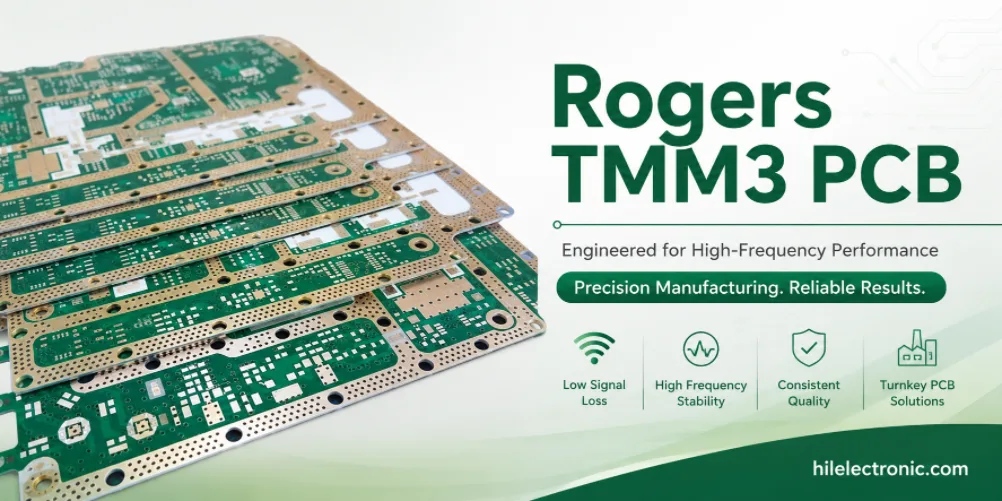
TMM3 PCB Manufacturing for RF Modules
TMM3 PCB manufacturing is most useful where the RF module...
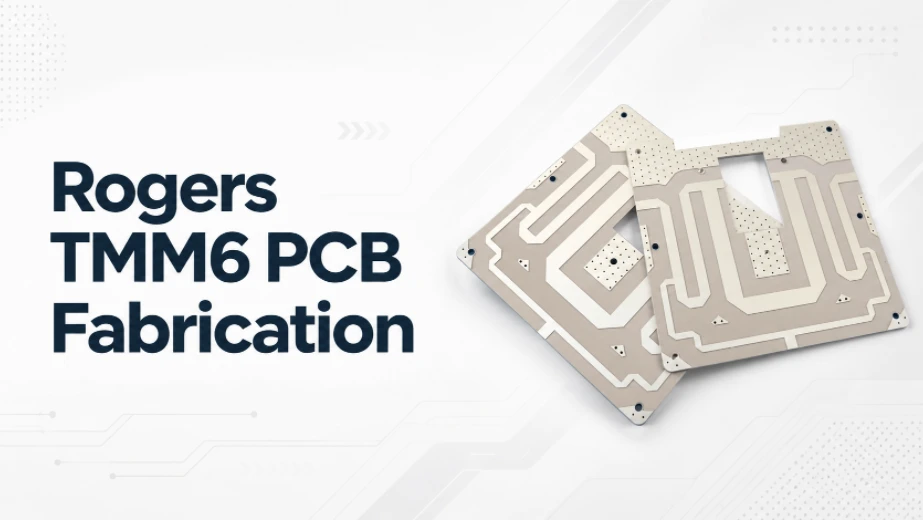
TMM6 PCB Fabrication
TMM6 fabrication is the process-control page for a mid-Dk...
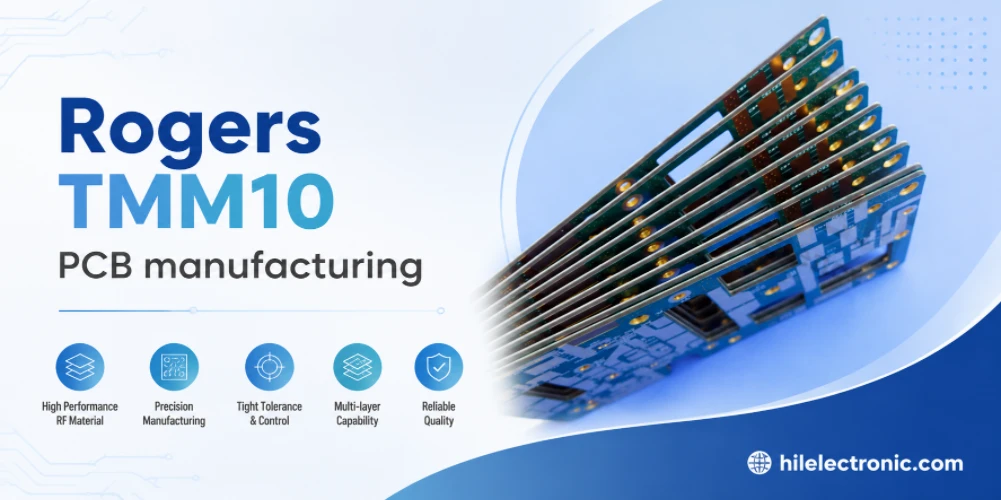
TMM10 PCB Manufacturing for Compact RF Designs
Table of contentsHow TMM10 Shrinks RF StructuresTMM10 vs...

TMM10i PCB Fabrication and DFM
TMM10i PCB fabrication has a stronger DFM emphasis because...
How to get a quote for PCBs
Let us run DFM/DFA analysis for you and get back to you with a report.
You can upload your files securely through our website.
We require the following information in order to give you a quote:
-
- Gerber, ODB++, or .pcb, spec.
- BOM list if you require assembly
- Quantity
- Turn time