
Nelco N9000-13 RF PCB Legacy Manufacturing and Replacement Service
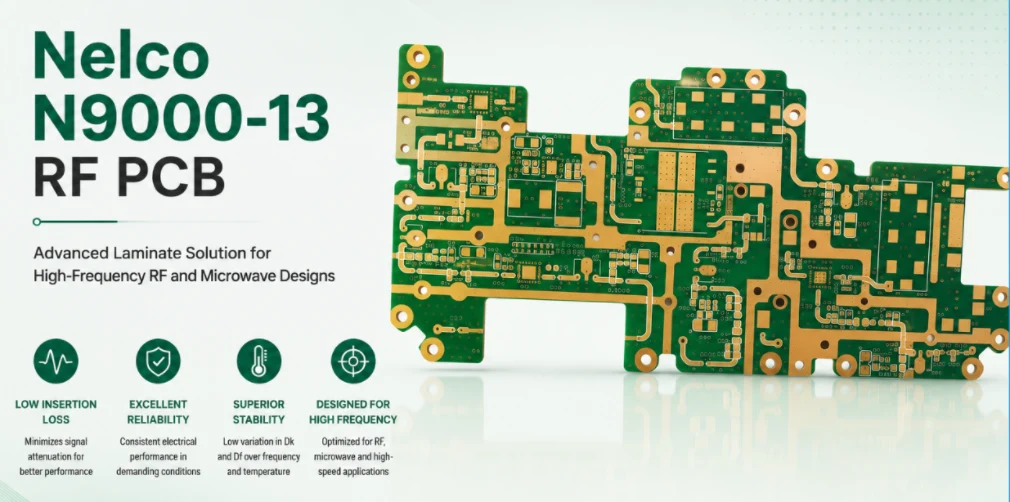
Highleap Electronics supports existing Nelco N9000-13 RF designs where qualification history, installed products, or form-fit-function requirements make continuity important. We verify the exact legacy grade and supply, reconstruct the controlled stackup where necessary, manufacture and assemble supportable builds, and help customers qualify a replacement when the original construction is no longer practical.
N9000-13 RF Board Manufacturing Support
For a supportable N9000-13 construction, Highleap can review RF multilayers, hybrid material combinations, controlled-impedance structures, via fences, plated-through, advanced interconnect, and HDI structures, and customer-defined test coupons. Legacy-material builds with uncommon cores or bonding systems need a focused process review so that material supply, lamination behavior, and repeatability are established before fabrication.
Important: The same review supports RF samples, qualification builds, and production quantities. When a legacy stackup needs special handling, Highleap documents the approved construction instead of treating a one-off prototype result as a production promise.
Best fit
Qualified legacy antennas, LNBs, avionics, military/telematics RF, and hybrid multilayers where material change is expensive.
Main risk
Quoting the family name without confirming the exact grade and supply, then substituting a “similar” laminate without approval.
Highleap scope
Legacy material verification, stackup reconstruction, RF fabrication, hybrid lamination, PCBA, traceability, testing, and replacement samples.
Quote inputs
Original files, exact grade, legacy datasheets/certificates, previous tests, quantities/forecast, approved source or replacement path, and assembly package.
Can Highleap Still Build a Nelco N9000-13 RF PCB?
N9000-13 RF is a PTFE-blended RF laminate family historically used in antennas, LNBs, avionics, military electronics, telematics, and hybrid microwave multilayers. The source article identifies the current AGC page as treating it as a legacy material, with multiple Dk grades in roughly the 3.0 to 3.5 range and a typical Df around 0.004.
Keep the original material when
- the product is already qualified and a material change would trigger expensive revalidation;
- the exact Dk grade, thickness, copper, and source remain available;
- the RF model and acceptance fixtures are tied to the legacy construction;
- the customer requires form-fit-function continuity.
Evaluate a replacement when
- the exact grade, thickness, copper, or certificate cannot be sourced consistently;
- the product needs lower loss, better temperature stability, or another copper profile;
- the design is new and has no qualification history to preserve;
- lead time, MOQ, or regional supply creates unacceptable business risk.
Highleap can review legacy builds, but the first answer may be “the exact construction must be verified” rather than an immediate production promise. That is the correct response when supply status is part of the engineering risk.
Legacy Material Verification Before Quotation
A purchase order that says only “N9000-13” may omit the selected dielectric-constant grade, thickness, copper, and approved source. Those details affect impedance, phase length, antenna dimensions, filter frequency, loss, drilling, bonding, and price.
| Verification item | Required evidence | Risk if missing |
|---|---|---|
| Exact grade and Dk basis | Controlled customer drawing, legacy datasheet, approved-material list, or supplier documentation. | The factory may build electrically different geometry under the same family name. |
| Thickness and copper | Core construction, tolerance, copper type/weight/profile, finished copper, and surface finish. | Impedance, phase, loss, and process compensation change. |
| Supply and traceability | Current stock or procurement source, lot certificate, MOQ, lead time, and substitution rule. | Quotation may be impossible to repeat in production. |
| Bonding system | Approved prepreg or film, press cycle, hybrid compatibility, and finished dielectric target. | Adhesion, thickness, registration, and reliability may differ. |
| Acceptance criteria | Impedance/RF coupon, product fixture, frequency, limits, environmental requirements, and quality class. | A board can be physically correct but commercially unacceptable. |
Highleap will not silently convert an unavailable legacy grade into a modern “equivalent.” Any replacement must be identified and approved in writing.
Highleap Manufacturing Scope for Existing N9000-13 Designs
When the exact construction is supportable, Highleap can review rigid RF boards and hybrid multilayers for prototype replacement, maintenance builds, low-volume production, or controlled repeat manufacture. The scope may include:
- legacy material and lot-document review;
- stackup reconstruction from drawings, prior reports, coupons, or known-good samples;
- controlled-impedance and RF-critical geometry review;
- qualified drilling, hole-wall preparation, copper plating, surface finish, routing, and inspection;
- hybrid lamination with approved adjacent materials;
- component sourcing, SMT/through-hole assembly, connectors, shield cans, cleaning, and coating;
- customer-defined electrical, functional, environmental, or RF testing.
If the original files are incomplete, Highleap may need clarification, a controlled sample, previous stackup records, or customer approval of a reconstructed production definition. Reverse engineering from an assembled board cannot guarantee the original dielectric construction unless supporting evidence exists.
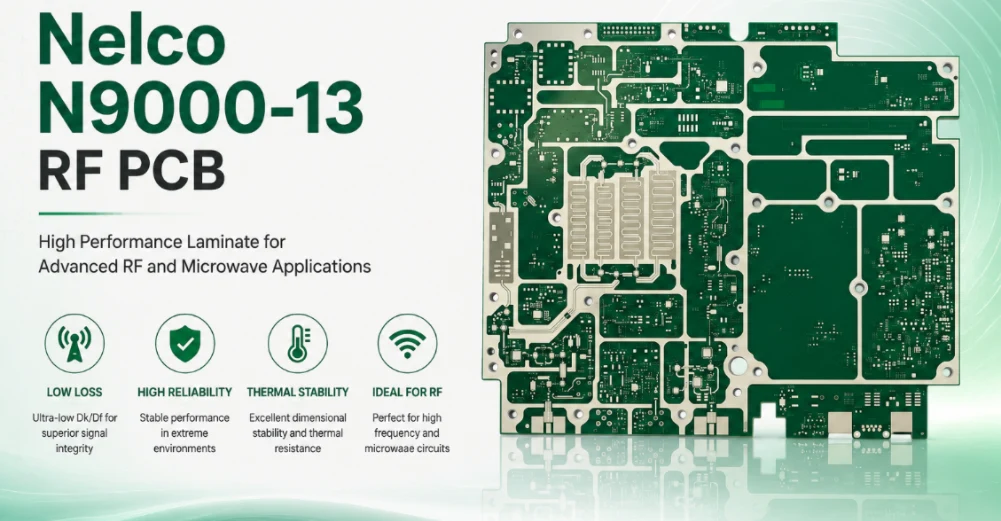
How N9000-13 Differs from Pure PTFE and FR-4 Processing
A PTFE-blended material may offer a useful balance between microwave performance and more conventional mechanical behaviour, but it should not be processed using an unverified FR-4 route or treated exactly like pure PTFE.
- Material preparation: verify storage, surface condition, copper, and the approved construction.
- Imaging and compensation: correlate artwork to actual copper and the RF-critical geometry.
- Drilling and hole-wall preparation: use the approved route for the blended resin system; inspect representative plated holes.
- Hybrid lamination: control bonding material, vacuum, pressure, cure, resin fill, thickness, CTE interaction, and registration.
- Plating and finish: verify hole-wall copper, RF pad dimensions, surface finish, and solderability.
- Final inspection: netlist, critical dimensions, microsection, impedance/RF coupons, traceability, and substitution documentation.
Assembly should be reviewed with fabrication. Connector position, shield attachment, solder volume, cleaning, and fixture reference planes can change the apparent RF performance of a legacy product.
How to Qualify a Replacement Material
A replacement must preserve function and production evidence, not merely match a nominal Dk. Use a controlled approval process:
- Define why replacement is needed: end-of-life, shortage, MOQ, lead time, cost, compliance, performance, or regional supply.
- List non-negotiable requirements: Dk/Df test basis, thickness, copper, TCDk, CTE, thermal conductivity, moisture, flame/UL, environmental declarations, and mechanical constraints.
- Compare process compatibility: bonding, drilling, desmear/activation, plating, dimensional movement, finish, assembly, and test.
- Rebuild the electrical model: update impedance, phase, antenna/filter dimensions, loss, via transitions, and connector launches.
- Create qualification coupons and samples: include representative geometry, holes, bond lines, and thermal exposure.
- Run product-level validation: functional/RF test, environmental stress, mechanical fit, and assembly reliability.
- Approve documentation: revise drawing, AVL, stackup, certificate wording, and change-control records before production.
Highleap can support the manufacturing side of this process. The OEM or design authority must approve the electrical and qualification change.
Cost and Lead-Time Factors for a Legacy RF Build
| Driver | Impact | Buyer action |
|---|---|---|
| Legacy material availability | Spot stock, obsolete constructions, MOQ, and uncertain replenishment can dominate cost and schedule. | Confirm quantity, forecast, and acceptable source before tooling. |
| Small maintenance quantities | Engineering, procurement, tooling, and qualification are spread over few boards. | Consolidate demand where revision control permits. |
| Incomplete original data | Stackup reconstruction, sample analysis, and clarification add engineering time. | Provide old drawings, coupons, reports, certificates, and known-good samples. |
| Hybrid construction | Bonding, CTE, registration, press cycle, and inspection increase process risk. | Submit the complete layer build and approved materials. |
| Replacement qualification | Simulation, prototypes, fixtures, RF/environmental test, and documentation can exceed board cost. | Separate material-change budget from routine production pricing. |
| Assembly and legacy components | Obsolete parts, alternates, connectors, coatings, and test fixtures can control PCBA delivery. | Submit the BOM and approved substitution policy early. |
A firm quotation should state whether it uses original material, existing stock, a proposed replacement, or a pending verification. Mixing those cases produces misleading price comparisons.
RFQ Package for Legacy Production or Replacement
For an existing build, send the latest Gerber/ODB++ data, netlist, fabrication drawing, stackup, exact N9000-13 grade, thickness, copper, bonding material, impedance/RF criteria, previous coupon or test reports, material certificates, revision history, quantities, forecast, delivery target, and approved substitution process.
For assembly, include the BOM with obsolete-part status, approved alternates, centroid, drawings, connector/shield details, cleaning/coating, test fixture, firmware/programming, and acceptance records from prior builds.
For replacement qualification, add the non-negotiable material properties, current problem, candidate restrictions, environmental tests, sample plan, product-level validation, and design-authority approval path.
Related resources: RF material comparison, hybrid PCB lamination, and microwave PCB materials.
Commercial FAQ
Can Highleap manufacture an existing Nelco N9000-13 RF PCB?
Highleap can review existing designs, but production depends on confirming the exact grade, thickness, copper, bonding system, supply, traceability, files, and acceptance criteria.
Is N9000-13 RF still available?
Availability must be checked for the exact construction and region. Treat the family as a legacy supply risk until stock, lead time, MOQ, copper, and certificates are confirmed for the project.
Can Highleap propose a replacement?
Highleap can compare manufacturing and material options, build qualification samples, and support testing. The customer or design authority must approve the electrical model, product validation, and controlled documentation change.
Can an alternate be approved by matching Dk and Df?
No. Also compare test method, thickness, copper, TCDk, CTE, moisture, thermal performance, bonding, drilling, UL/environmental requirements, supply, and product qualification.
What is needed for a firm quotation?
Send the exact legacy material definition, complete PCB/PCBA files, previous reports and certificates, quantities, forecast, delivery, and either the approved supply source or the replacement-approval process.

Recommended Posts
TMM6 Filter PCB Manufacturing
Table of contentsWhy Microwave Filter Designers Use...
TMM4 Filter PCB Manufacturing
TMM4 filter PCB manufacturing is controlled by the...
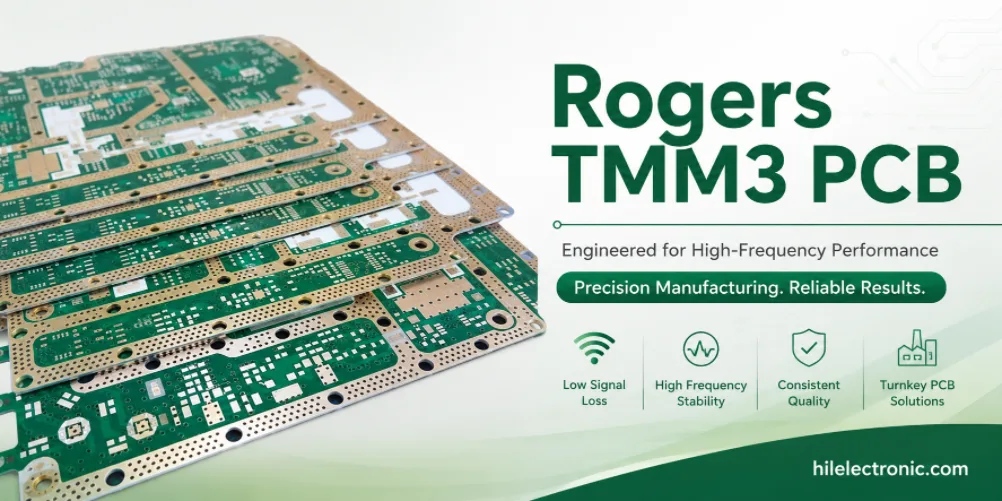
TMM3 PCB Manufacturing for RF Modules
TMM3 PCB manufacturing is most useful where the RF module...
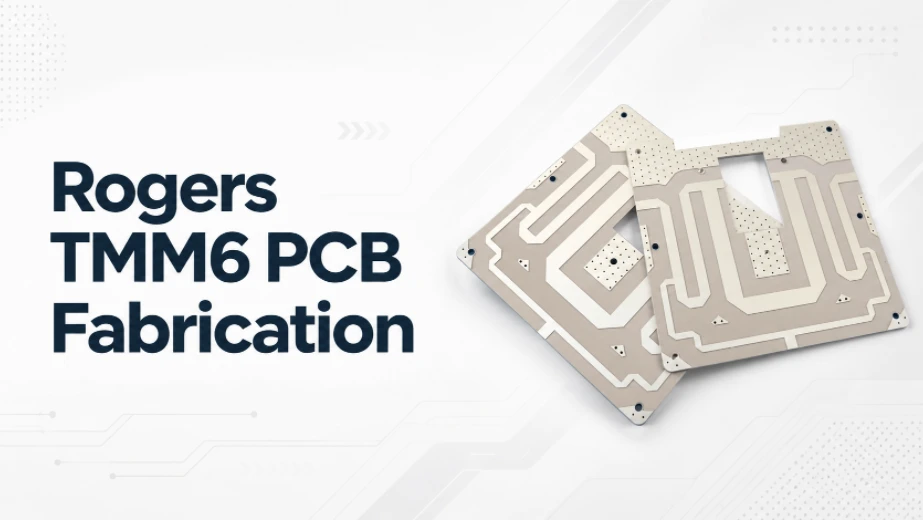
TMM6 PCB Fabrication
TMM6 fabrication is the process-control page for a mid-Dk...
How to get a quote for PCBs
Let’s run DFM/DFA analysis for you and get back to you with a report. You can upload your files securely through our website. We require the following information in order to give you a quote:
-
- Gerber, ODB++, or .pcb, spec.
- BOM list if you require assembly
- Quantity
- Turn time
For PCBA services, please provide your BOM (Bill of Materials) and any specific assembly instructions. We also offer DFM/DFA analysis to optimize your designs for manufacturability and assembly, ensuring a smooth production process.