
Professional Robotics PCB Assembly and Box Build Support

Professional robotics PCB assembly transforms bare circuit boards into sophisticated control systems powering modern automation. At Highleap Electronics, our robotics PCBA turnkey service combines advanced manufacturing technologies with rigorous quality control, delivering assembled boards that meet the exacting demands of industrial automation and autonomous systems.
Table of Contents
- What is Robotics PCB Assembly?
- Turnkey PCBA Solutions
- Assembly Technologies and Processes
- Component Integration for Robotics
- Quality Assurance Systems
- Cost Analysis and Optimization
- Applications and Industries
- Conclusion
What is Robotics PCB Assembly?
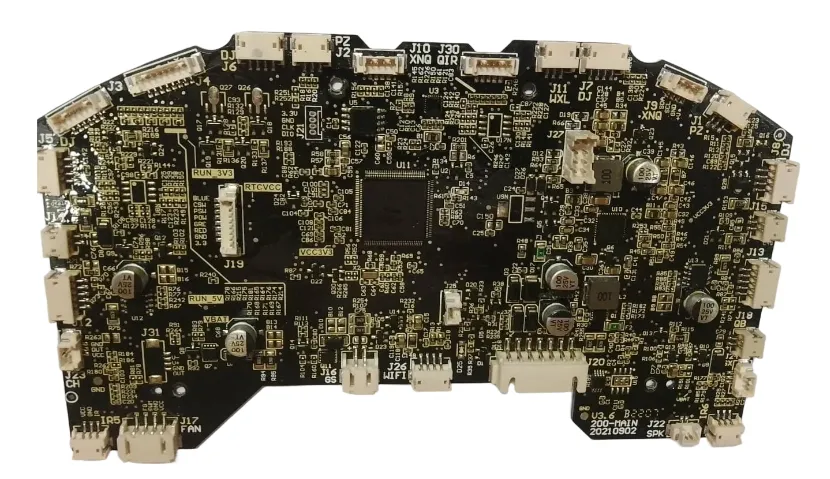
Robotics PCB assembly encompasses the complete transformation of bare circuit boards into fully functional control systems through precise component placement, soldering, and testing. Unlike standard electronic assembly services, robotics PCBA for automation demands exceptional attention to reliability, thermal management, and electromagnetic compatibility ensuring consistent performance in demanding operational environments.
Key Characteristics of Robotics PCBA
Professional robotics pcb assembly solutions deliver distinctive features:
- High-density component placement achieving 01005 chips and 0.3mm pitch BGAs
- Mixed technology integration combining SMT and through-hole components
- Selective soldering processes protecting heat-sensitive sensors and components
- Conformal coating application providing environmental protection
- Precision mechanical assembly integrating heatsinks, connectors, and shielding
The distinction between robotics pcb assembly for prototype and robotics pcb assembly for series production involves scalability considerations, where prototype assembly emphasizes flexibility while volume production prioritizes consistency through automated assembly lines.
Turnkey PCBA Solutions
Implementing turnkey robotics pcb assembly eliminates supply chain complexity while ensuring consistent quality throughout manufacturing. Our comprehensive approach integrates component procurement, assembly, testing, and logistics under single-source responsibility, particularly valuable for robotics pcb assembly contract manufacturing relationships.
At Highleap, our robotics PCBA turnkey service manages everything from initial BOM validation through final system integration, reducing project management overhead while accelerating time-to-market for robotic innovations.
Comprehensive Service Scope
- Component procurement: Strategic sourcing from authorized distributors
- PCB fabrication: Coordinating board manufacturing with assembly schedules
- SMT assembly: High-speed placement of surface mount components
- Through-hole assembly: Wave soldering and selective soldering processes
- Programming services: Firmware installation and configuration
- Box build integration: Complete system assembly including mechanical components
For robotics products that ship as complete units (controller + wiring + enclosure), turnkey delivery can extend beyond PCBA into final integration. Learn more about turnkey box build assembly and how it streamlines robot production readiness.
Supply Chain Excellence
Robotics pcb assembly cost optimization begins with efficient supply chain management. Our procurement team maintains relationships with global suppliers ensuring component availability while negotiating volume pricing that reduces overall project costs without compromising quality or delivery schedules.

Assembly Technologies and Processes
Modern robotics pcb assembly manufacturer facilities employ sophisticated equipment ensuring precision and repeatability. From high-speed pick-and-place machines to selective soldering systems, each technology plays a critical role in creating reliable robotic control systems.
Surface Mount Technology Excellence
- Pick-and-place systems: Achieving 50,000+ components per hour placement rates
- Solder paste printing: 3D SPI inspection ensuring optimal deposition
- Reflow profiling: Multi-zone temperature control for complex assemblies
- Nitrogen atmosphere: Preventing oxidation during reflow soldering
- Vapor phase soldering: Uniform heating for temperature-sensitive components
- Underfill application: Reinforcing BGA connections against vibration
Through-Hole and Mixed Technology
Robotics applications often require through-hole components for mechanical strength and high-current handling. Our through-hole PCB assembly services integrate seamlessly with SMT processes creating robust mixed-technology assemblies essential for industrial robotics.
Component Integration for Robotics
Successful robotics PCBA for automation requires integrating diverse electronic components enabling sensing, processing, communication, and actuation. Each component category presents unique assembly challenges requiring specialized handling and process optimization.
Robot Electronics Architecture: Vision, Sensors, Drive, and Power
Modern robots are typically built from multiple electronic subsystems—most commonly a vision system, sensor system, drive/actuation system, communications, and power & charging. This architecture applies not only to robot arms and AGVs, but also to fast-growing quadruped robot dogs, where joint motor controllers, IMUs, cameras/LiDAR, wireless links, and battery management must work together with low latency.
- Vision system boards: camera/ISP modules, high-speed connectors, and EMI control for reliable image pipelines
- Sensor system boards: IMU, ToF, ultrasonic, force/torque, and encoder interfaces with low-noise layout and stable grounding
- Drive system boards: servo/BLDC motor control, current sensing, and thermal paths; many designs benefit from motor driver PCB best practices
- Power system boards: DC/DC, protection, and pack monitoring using battery management PCB integration
- Docking & accessories: charging docks and contactless power solutions such as wireless charging PCB
Processing and Control Components
- Microprocessors: BGA assembly for high-pin-count processors
- Memory modules: DDR4 assembly with impedance-controlled routing
- FPGA devices: Fine-pitch placement requiring X-ray inspection
- Power management ICs: QFN assembly with thermal pad soldering
- Communication modules: WiFi/Bluetooth integration for connectivity
- Motor drivers: High-current components requiring heavy copper PCBs
For high-current actuation paths (robot joints, wheels, grippers), projects often adopt heavy copper PCB options to improve current carrying and thermal robustness. Compact compute boards may also adopt HDI PCB manufacturing to route dense BGAs and high-speed signals.
Sensor Integration Technologies
Modern robots rely on multiple sensors requiring careful assembly:
- Vision sensors: Camera module assembly with precise optical alignment
- LiDAR modules: High-speed data interfaces for 3D perception
- Inertial measurement units: Vibration-isolated mounting for accuracy
- Pressure sensors: Flexible PCB connections for distributed sensing
- Temperature sensors: Thermal coupling for accurate measurements
- Force/torque sensors: Strain gauge integration for haptic feedback
Robots with moving joints or tight packaging (robot dogs, wearables, compact manipulators) often use flex PCB assembly or rigid-flex PCB to reduce connectors and improve reliability.
Quality Assurance Systems
Achieving consistent quality in robotics pcb assembly solutions requires comprehensive inspection and testing throughout manufacturing. Our quality management system implements multiple verification stages detecting defects before they impact final performance.
In-Process Inspection Technologies
- Pre-assembly verification: Incoming inspection confirming component authenticity
- Solder paste inspection: 3D measurement ensuring optimal volume and placement
- Pre-reflow AOI: Automated optical inspection verifying placement
- Post-reflow inspection: Detecting solder bridges and component shifts
- X-ray inspection: Revealing hidden solder joints in BGAs and QFNs
- In-circuit testing: ICT verification of component values
For high-density robotics boards, additional process coverage such as
X-ray inspection and SPI/AOI/AXI/ICT comprehensive inspection helps protect yield and long-term field reliability.
Functional Testing Protocols
Every assembled board undergoes functional validation ensuring system-level performance. Our functional testing services simulate real-world operating conditions verifying that robotics pcb assembly for series production meets all specifications before shipment. When projects require end-use behavior verification (power-up sequencing, comms links, motor response, sensor readouts), we recommend aligning test plans with PCB functional testing best practices.
Cost Analysis and Optimization
Understanding robotics pcb assembly cost drivers enables strategic decisions balancing performance with economics. Volume significantly impacts pricing through economies of scale in material procurement, setup amortization, and process optimization.
Cost Reduction Strategies
- Design optimization: Minimizing unique components and standardizing footprints
- Panelization efficiency: Maximizing boards per panel reducing handling time
- Component consolidation: Using multi-function ICs reducing part count
- Process streamlining: Eliminating unnecessary steps through lean manufacturing
- Volume leveraging: Combining orders achieving better pricing breakpoints
- Supply chain optimization: Just-in-time delivery minimizing inventory costs
Applications and Industries
Robotics PCBA serves diverse markets from industrial automation to consumer products, each with unique requirements driving specialized assembly approaches and quality standards.
Industrial Automation Applications
- Automotive manufacturing: Automotive PCB assembly for welding robots
- Warehouse automation: AGV control systems with battery management
- Food processing: Washdown-resistant assemblies with conformal coating
- Pharmaceutical production: Medical-grade assembly meeting FDA requirements
- Electronics manufacturing: Pick-and-place machine control boards
- Logistics systems: Sorting robot controllers with RFID integration
Emerging Robotics Markets
New applications driving innovation in robotics pcb assembly include autonomous vehicles with LiDAR PCB assembly, drone delivery systems with lightweight GPS-enabled boards, agricultural robots with ruggedized outdoor assemblies, construction automation requiring vibration-resistant designs, marine robotics using waterproof potting compounds, and space robotics meeting aerospace standards.
Beyond traditional robots, robot dogs (quadruped robots) are becoming a major growth segment in inspection, security patrol, and research platforms.
They typically require multiple sub-assemblies: main compute + vision board, IMU/sensor hub, joint motor drive boards, and robust power and charging electronics that can handle burst loads during dynamic movement.
High-Intent Related Products for Robotics PCBA
To capture more “robot PCB assembly” traffic and generate more inquiries, robotics projects often expand into surrounding electronics that share the same manufacturing requirements:
- Motor driver modules and joint controllers: high-current PCBA with thermal design and reliable solder joints (motor driver PCB, heavy copper PCB)
- Battery packs and BMS boards: protection, monitoring, and charging safety for mobile robots (battery management PCB)
- Charging docks and wireless charging boards: contact charging, pogo-pin docks, and wireless solutions (wireless charging PCB)
- Sensor hub boards: IMU/encoder/ToF integration, low-noise design, and stable grounding
- Vision interface and compute carrier boards: high-speed connectors and dense routing (often using HDI PCB manufacturing)
- Flexible interconnect for joints and compact robots: reduce connectors and improve reliability (flex PCB assembly, rigid-flex PCB)
Conclusion
Robotics PCB assembly is the critical step that turns electronic designs into real-world control systems for robots, automated equipment, and robot dogs. Reliable robotics PCBA requires precise SMT and mixed-technology assembly, disciplined process control, and verification that matches how the robot will operate in the field.
At Highleap Electronics, our turnkey approach covers component sourcing, assembly, inspection, and test—helping you validate prototypes quickly and scale to consistent mass production. If you’re building vision boards, sensor hubs, motor drive modules, battery management electronics, or charging accessories, we can support your program with stable quality and manufacturing readiness.

Recommended Posts
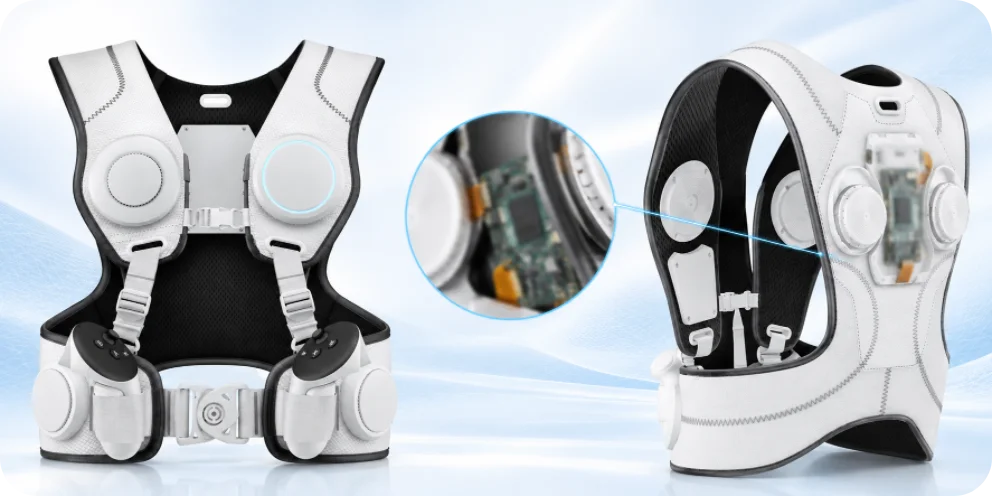
Wearable Haptic Vest PCB Manufacturing & Assembly for Multi-Zone Haptic OEMs
In a wearable haptic vest, the wearer notices the...
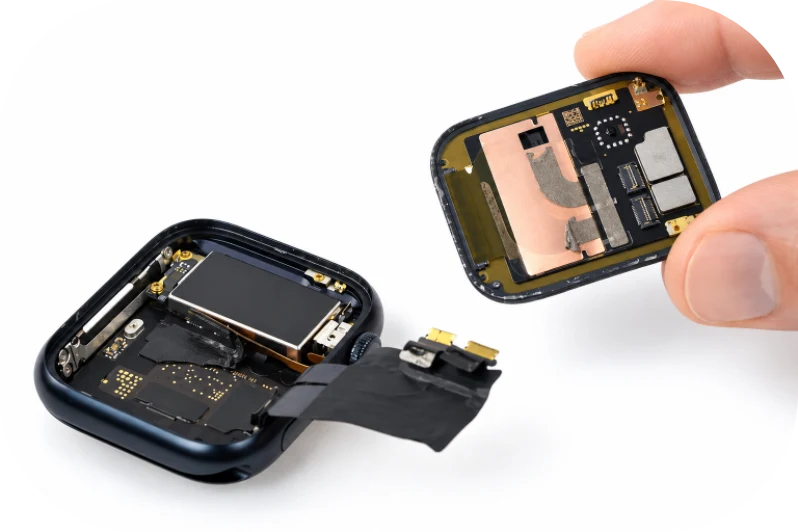
Wearable Temperature Logger PCB Manufacturing & Assembly for BLE Sensor OEMs
A wearable temperature logger PCB is the electronic board...
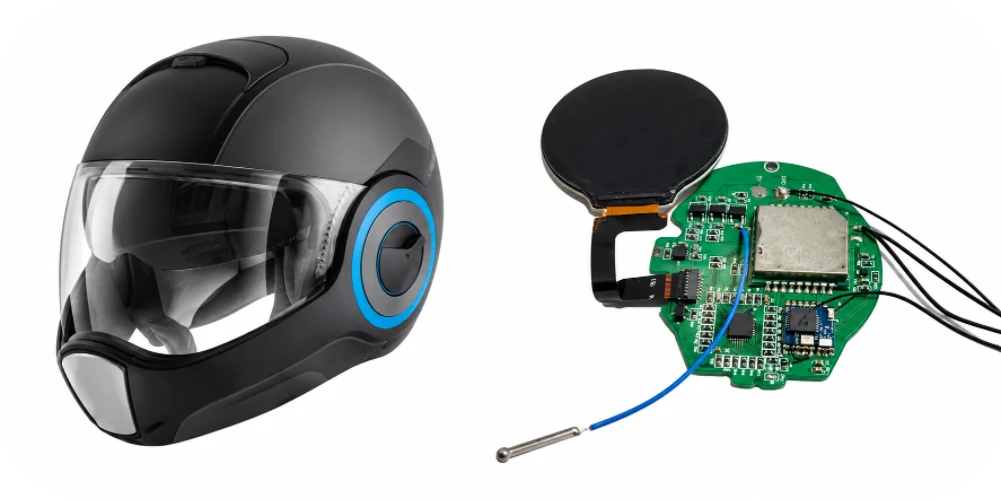
Connected Safety Helmet PCB Manufacturing & Assembly for Industrial IoT OEMs
A Connected Safety Helmet PCB is an industrial IoT...
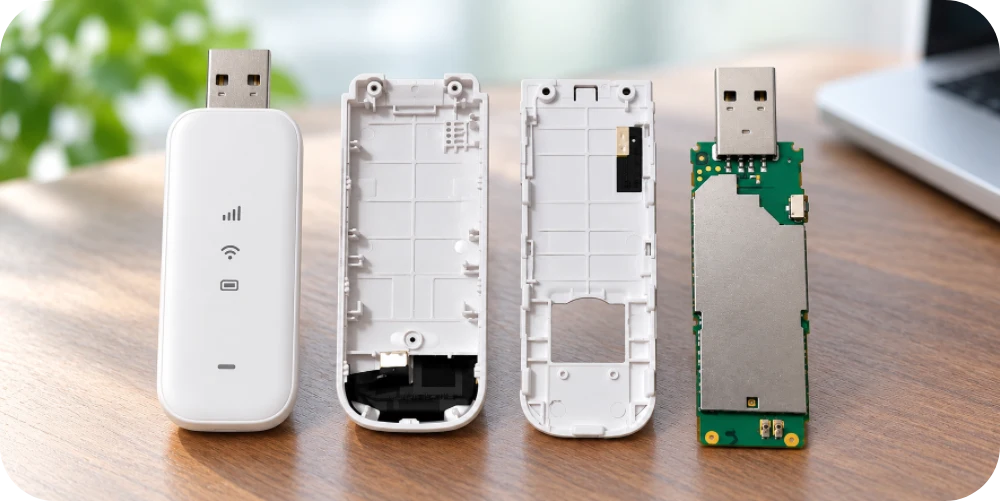
Mobile Wi-Fi Router PCB Manufacturing & Assembly for 4G/5G Hotspot OEMs
A Mobile Wi-Fi Router PCB is the production platform...
How to get a quote for PCBs
Let us run DFM/DFA analysis for you and get back to you with a report.
You can upload your files securely through our website.
We require the following information in order to give you a quote:
-
- Gerber, ODB++, or .pcb, spec.
- BOM list if you require assembly
- Quantity
- Turn time
In addition to PCB manufacturing, we offer a comprehensive range of electronic services, including PCB design, PCBA (Printed Circuit Board Assembly), and turnkey solutions. Whether you need help with prototyping, design verification, component sourcing, or mass production, we provide end-to-end support to ensure your project’s success. For PCBA services, please provide your BOM (Bill of Materials) and any specific assembly instructions. We also offer DFM/DFA analysis to optimize your designs for manufacturability and assembly, ensuring a smooth production process.