
One-Stop Electronic Turnkey Box Build Assembly Solution

Turnkey box build assembly is a comprehensive electronic manufacturing service where a single contract manufacturer handles PCB fabrication, component sourcing, mechanical integration, and final testing to deliver complete electronic systems. This approach reduces project timelines by 40–60% while cutting costs through single-vendor accountability.
What Is Turnkey Box Build Assembly? (Complete Definition)
Turnkey box build assembly refers to the complete integration of PCBs, mechanical enclosures, wire harnesses, and testing into finished electronic products ready for deployment. Unlike traditional PCB assembly services that only populate circuit boards, turnkey box build assembly manufacturers provide end-to-end electronic manufacturing services.
The process includes five critical stages: PCB fabrication and assembly, component sourcing and procurement, mechanical enclosure manufacturing, systems integration with cable assembly, and comprehensive testing with documentation. Electronic manufacturing services (EMS) providers like Highleap Electronics manage every aspect from initial design review through final product packaging.
Key Components of Box Build Assembly Services
Professional box build assembly encompasses several specialized manufacturing processes. PCB assembly services form the foundation, incorporating surface mount technology (SMT) and through-hole assembly with automated optical inspection. Mechanical integration includes custom enclosure fabrication, typically using precision sheet metal or injection molding with EMI shielding considerations.
Wire harness assembly requires expertise in cable routing, connector selection, and strain relief implementation. Testing protocols validate functionality through in-circuit testing, functional verification, and environmental stress screening. Documentation packages provide complete traceability for regulatory compliance and field service support.
Box Build Assembly Process: Step-by-Step Manufacturing Guide
Phase 1: Engineering Review and Design for Manufacturing (Weeks 1–2)
The turnkey box build assembly process begins with comprehensive design analysis. Contract manufacturing partners evaluate PCB layouts, mechanical drawings, and bill of materials (BOM) for manufacturability. Design for manufacturing (DFM) reviews identify potential assembly challenges before production begins.
Component engineering services include lifecycle analysis, alternate part identification, and supply chain risk assessment. Electronic manufacturing services providers leverage established supplier networks to ensure component availability and competitive pricing.
Phase 2: Procurement and PCB Fabrication (Weeks 2–4)
Parallel processing accelerates project timelines. While PCB fabrication proceeds through multi-layer stackup manufacturing and surface finishing, procurement teams source mechanical components, connectors, and specialty hardware using established distributor relationships.
Advanced box build assembly manufacturers maintain strategic inventory levels for common components, reducing lead times for quick-turn projects. Component inspection protocols ensure incoming quality before assembly operations begin.
Phase 3: Systems Integration and Assembly (Weeks 4–6)
Box build assembly requires precise sequence planning to ensure access for testing and future serviceability. The process typically follows this order: PCB testing and validation, mechanical enclosure preparation, wire harness assembly installation, component integration with proper torque specifications, and cable routing with EMI considerations.
Quality checkpoints occur throughout assembly operations. In-circuit testing verifies PCB functionality before mechanical integration, while continuity testing validates all interconnections before final assembly.
Phase 4: Testing and Quality Validation (Weeks 6–8)
Comprehensive testing protocols separate professional electronic manufacturing services from basic assembly operations. Functional testing simulates real-world operating conditions, while environmental stress screening identifies potential reliability issues.
Testing documentation includes detailed reports for regulatory compliance and customer validation. Statistical process control ensures consistent quality across production runs.
Box Build Assembly Cost Factors: Complete Pricing Analysis
Primary Cost Components in Box Build Assembly
Material costs typically represent 60–70% of total project expenses. Electronic components comprise the largest portion, with pricing affected by volume commitments, component specifications, and market availability. Strategic sourcing relationships enable better pricing than individual companies can achieve.
Labor content varies significantly based on assembly complexity. Simple enclosure integration requires 15–20% labor content, while complex systems with extensive cable routing demand 35–45% labor allocation. Skilled technicians capable of both electronic and mechanical assembly command premium rates.
Tooling and setup costs include pick-and-place programming, test fixture development, and assembly tooling. These costs amortize across production volumes, making turnkey box build assembly more cost-effective for volumes exceeding 50–100 units.
Hidden Costs in Multi-Vendor Projects
Traditional approaches using separate vendors for PCB assembly, mechanical fabrication, and integration create substantial hidden costs. Coordination overhead includes engineering time for vendor management, quality issues from integration problems, and timeline delays from vendor dependencies.
Freight multiplication occurs when each vendor ships separately, increasing logistics costs by 40–80%. Quality risk amplifies when multiple vendors contribute to final product reliability.
Cost Optimization Strategies
Volume commitments across multiple projects enable better component pricing and improved vendor relationships. Design optimization during the engineering review phase prevents costly changes during production. Testing investments yield 3:1 returns through reduced warranty costs and field failures.

How to Choose Box Build Assembly Manufacturers: Essential Criteria
Technical Capabilities Assessment
Manufacturing capacity evaluation should examine equipment sophistication, process controls, and quality systems. State-of-the-art SMT lines with advanced placement accuracy, automated optical inspection capabilities, and comprehensive environmental controls indicate serious commitment to quality production.
Certifications provide insight into organizational maturity and process consistency. ISO 9001 registration represents basic quality management, while industry-specific certifications such as AS9100 for aerospace applications or ISO 13485 for medical devices demonstrate specialized expertise.
Engineering Support and Design Collaboration
Design for manufacturing guidance helps identify potential production challenges during development phases rather than after tooling completion. This proactive approach prevents costly design revisions and accelerates project timelines.
Component engineering services including alternate part identification, lifecycle management, and obsolescence monitoring become increasingly valuable for long-term production programs. Suppliers with comprehensive component databases can navigate supply chain disruptions more effectively.
Supply Chain Management Capabilities
Vendor relationships with authorized distributors ensure component authenticity and competitive pricing. Inventory management systems should provide real-time visibility into component availability and lead times.
Quality vendor networks for mechanical components, enclosures, and specialty hardware enable complete turnkey solutions without compromising quality or delivery schedules.
Box Build Assembly Quality Standards and Testing Requirements
Industry-Specific Quality Requirements
Medical device manufacturing requires compliance with FDA regulations and ISO 13485 quality standards. Documentation requirements include device history records, traceability protocols, and validation procedures throughout the product lifecycle.
Aerospace and defense applications demand compliance with military specifications, extensive documentation packages, and often require specialized security clearances for production personnel.
Industrial automation systems typically require IPC standards compliance, environmental testing protocols, and long-term reliability validation.
Testing Protocols for Electronic Systems Integration
In-process quality controls include automated optical inspection of solder joints, in-circuit testing of populated PCBAs, and dimensional verification of mechanical assemblies. These checkpoints identify defects early in the process, minimizing rework costs while maintaining consistent quality standards.
Environmental testing validates performance under temperature cycling, humidity exposure, vibration stress, and electromagnetic interference conditions. Burn-in procedures for critical applications identify early failures before product shipment.
Statistical process control implementation enables continuous improvement through data-driven decision making. Control charts tracking key quality metrics identify process variations before they impact product quality.
Key Considerations Before Starting a Turnkey Box Build Project
When you’re evaluating whether to move forward with a turnkey box build assembly service, it’s not just about capabilities—it’s about understanding how the model fits your timeline, budget, and regulatory landscape. Below are the five most essential things to consider before launching your next product build.
1. Start Small, Scale Smart
You don’t need to commit to massive volumes from day one. Many turnkey EMS providers, including Highleap Electronics, support low-volume orders starting from 10 to 25 units, making it viable for engineering validation and pilot runs. However, once you reach 50–100 units, the true value of a turnkey model becomes evident—unit economics improve, setup costs flatten, and procurement benefits scale. It’s the best of both worlds: flexibility for early-stage builds and efficiency for growth.
2. Time Is a Variable—But a Predictable One
The total lead time for a turnkey box build project typically falls within 6 to 12 weeks. Why the range? A simple PCBA and enclosure job may finish in six, while a fully integrated product involving custom machined parts and multi-step testing needs closer to twelve. Material availability, especially for semiconductors or custom components, can also affect the schedule. Working with a vendor that offers DFM review and BOM optimization upfront often shaves off unnecessary delays.
3. Documentation Is the Real Accelerator
Turnkey doesn’t mean plug-and-play unless the files are complete. At a minimum, you’ll need:
- Gerber files for PCB fabrication
- A clear BOM with manufacturer part numbers
- Mechanical drawings and 3D models
- Defined test instructions and specs
- Packaging and labeling guidelines
This documentation acts as your product blueprint. Missing data increases quoting time, risks incorrect sourcing, and slows test fixture development. On the other hand, a complete package can reduce your project lead time by up to 30%.
4. Turnkey Is Often Cheaper Than You Think
One common misconception is that turnkey services are more expensive. In reality, once you cross into higher production volumes, you often save 15–30% compared to managing multiple suppliers. Why? One vendor handles logistics, procurement, production, and QC—meaning less back-and-forth, fewer handoffs, and bulk pricing on parts. You’re not just paying for assembly—you’re removing friction from the entire supply chain.
5. Know If Your Industry Is a Fit
Not every project needs a turnkey box build—but many benefit from it more than expected. If you’re in medical electronics, industrial control, aerospace, or IoT, the requirements for integration, traceability, and compliance are high—and a one-stop partner helps you maintain control. Companies in these sectors often turn to ISO 13485 or IPC-certified providers to ensure regulatory readiness from prototype to full production.
Why Highleap Electronics Is the Right Partner for Turnkey Box Build Assembly
At Highleap Electronics, we deliver more than just manufacturing — we provide a complete, integrated path from PCB to finished product. Whether you’re prototyping or scaling to volume, our ISO 9001-certified facility and expert team ensure speed, quality, and consistency every step of the way.
What Sets Us Apart:
- Advanced Capabilities: High-speed SMT lines, multi-board integration, and in-house functional testing enable us to handle complex, high-reliability systems.
- Reliable Supply Chain: We partner with authorized distributors and trusted fabricators to secure components, reduce lead times, and control costs.
- Engineering Support: From DFM feedback to full compliance documentation, our engineers support you throughout the build cycle.
- Consistent Quality: Every unit is backed by rigorous testing protocols and statistical process control across all production volumes.

Recommended Posts

Wearable Haptic Vest PCB Manufacturing & Assembly for Multi-Zone Haptic OEMs
In a wearable haptic vest, the wearer notices the...
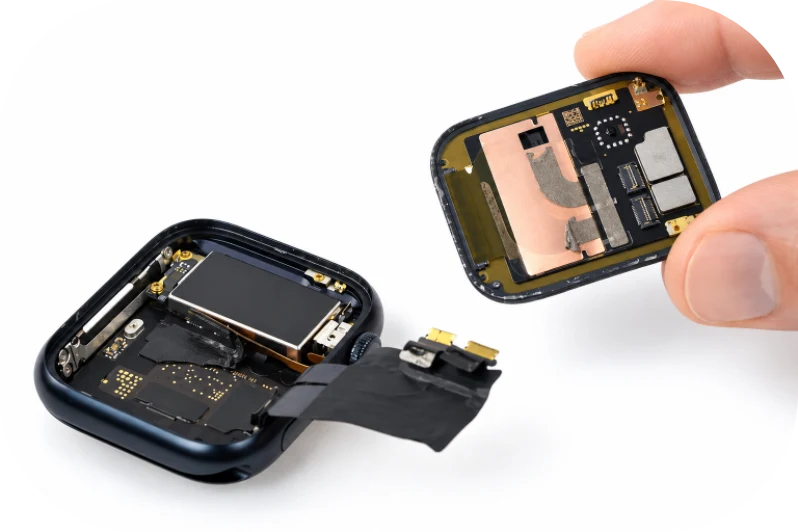
Wearable Temperature Logger PCB Manufacturing & Assembly for BLE Sensor OEMs
A wearable temperature logger PCB is the electronic board...
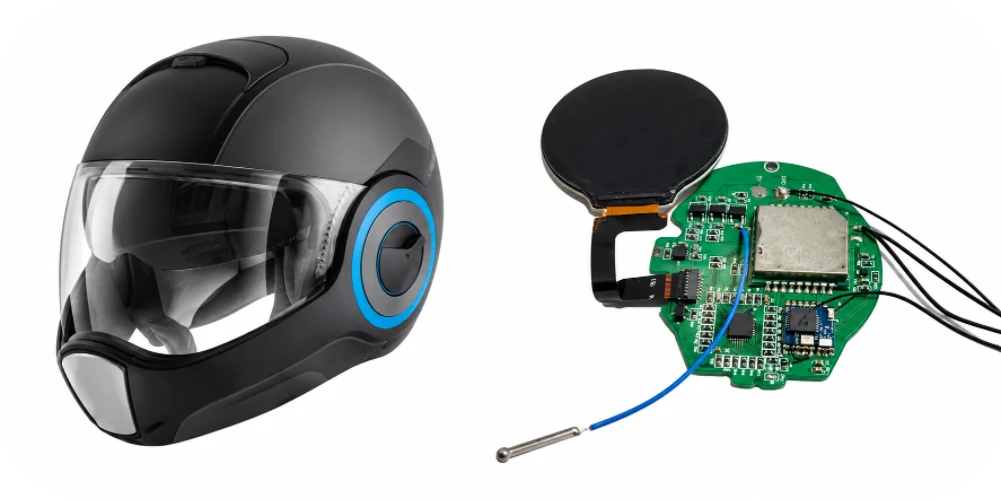
Connected Safety Helmet PCB Manufacturing & Assembly for Industrial IoT OEMs
A Connected Safety Helmet PCB is an industrial IoT...
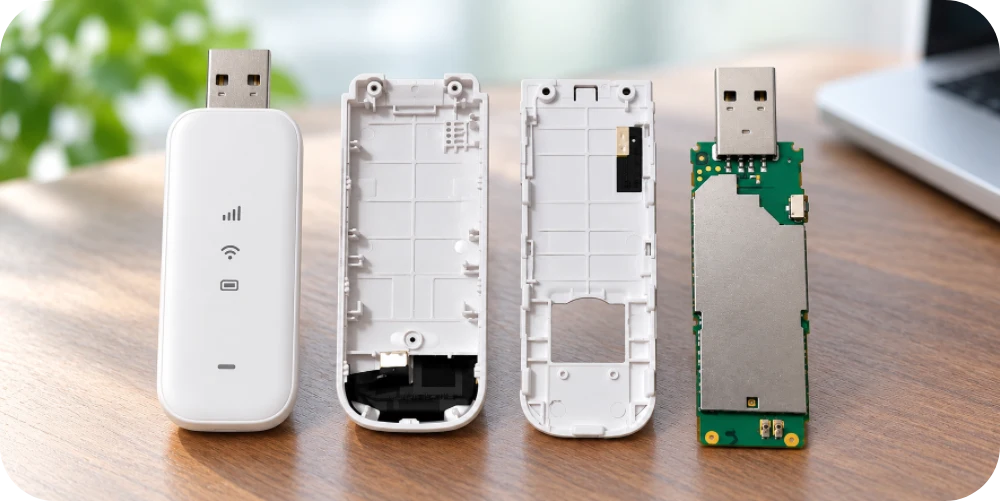
Mobile Wi-Fi Router PCB Manufacturing & Assembly for 4G/5G Hotspot OEMs
A Mobile Wi-Fi Router PCB is the production platform...
How to get a quote for PCBs
Let‘s run DFM/DFA analysis for you and get back to you with a report. You can upload your files securely through our website. We require the following information in order to give you a quote:
-
- Gerber, ODB++, or .pcb, spec.
- BOM list if you require assembly
- Quantity
- Turn time
In addition to PCB manufacturing, we offer a comprehensive range of electronic services, including PCB design, PCBA, and turnkey solutions. Whether you need help with prototyping, design verification, component sourcing, or mass production, we provide end-to-end support to ensure your project’s success.
For PCBA services, please provide your BOM (Bill of Materials) and any specific assembly instructions. We also offer DFM/DFA analysis to optimize your designs for manufacturability and assembly, ensuring a smooth production process.