
PCB Copper Plating: Process, Thickness, Quality Control

Figure 1. PCB copper plating process for hole-wall and outer-layer copper control.
Copper plating is the electrochemical process that deposits copper onto a printed circuit board to form conductive traces, fill the walls of drilled holes, and build up copper thickness for current capacity. It is one of the most critical steps in PCB fabrication because it creates the electrical connection between layers and sets how much current the finished board can safely carry.
Key takeaways
- PCB copper plating happens in two stages: thin electroless copper first, then thicker electrolytic copper.
- Plating the walls of drilled holes is what electrically connects different copper layers.
- Final copper weight, usually quoted in ounces per square foot, determines current-carrying ability.
- Plating uniformity is a primary driver of reliability — thin or voided plating is a common failure point.
Table of Contents
- What Is Copper Plating in PCB Manufacturing?
- Electroless vs Electrolytic Copper Plating
- The Copper Plating Process Step by Step
- Plating Through-Holes and Vias
- Copper Weight, Thickness, and Heavy Copper Plating
- Plating Defects and Quality Control
- How Plating Affects Cost and Reliability
- Frequently Asked Questions
What Is Copper Plating in PCB Manufacturing?
A printed circuit board starts as a copper-clad laminate — an insulating core with a thin sheet of copper foil bonded to each side. That foil alone cannot connect one layer to another, and it is often too thin to carry the required current. Copper plating solves both problems by chemically and electrically growing additional copper exactly where it is needed.
The process serves three purposes at once. It metallizes the inside of every drilled hole so signals and power can pass between layers, it reinforces the surface copper to reach the specified weight, and it builds the structures that later become traces and pads after etching. Because every layer-to-layer connection in a multilayer board depends on it, plating quality is inseparable from board reliability.
Electroless vs Electrolytic Copper Plating
PCB copper plating relies on two different chemistries that work in sequence. The first is electroless plating, which deposits an ultra-thin layer of copper using a chemical reaction alone — no external current. Its job is to make the non-conductive hole walls conductive so that the next stage can work. The second is electrolytic plating, which uses an electric current to deposit the bulk of the copper quickly and to the required thickness.
Neither stage can be skipped. Without the electroless seed layer, the drilled epoxy and glass walls would not accept electrolytic copper. Without the electrolytic stage, the plating would be far too thin to carry current or survive thermal cycling.
| Property | Electroless copper | Electrolytic copper |
|---|---|---|
| Driven by | Chemical reaction only | Applied electric current |
| Layer thickness | Very thin (seed layer) | Bulk thickness to spec |
| Main purpose | Make hole walls conductive | Build current-carrying copper |
| Speed | Slow | Faster, scalable |
| Sequence | First | Second |
The Copper Plating Process Step by Step
Although equipment varies between fabricators, the core sequence for plating a drilled board is consistent. Each step prepares the surface for the next, and skipping or rushing any of them shows up later as voids, thin walls, or poor adhesion.
Fabricators choose between panel plating (plating the whole panel, then etching) and pattern plating (plating only the circuit pattern). The choice affects copper distribution and fine-line capability, and it is one of many process decisions a capable multilayer board manufacturer matches to the design.
The process runs in a clear sequence. After drilling, the hole walls are non-conductive, so a thin layer of electroless copper is chemically deposited to seed them. The panel then moves to electrolytic plating, where current builds the copper up to full thickness across the surface and through the holes. Depending on the design, the shop uses panel plating to coat everything evenly or pattern plating to add copper only where the circuit needs it. Tight control of bath chemistry, current density, and time keeps the copper uniform from the surface down into the smallest holes.
Plating Through-Holes and Vias
The single most important function of copper plating is forming the plated through-holes (PTHs) and vias that connect layers. After drilling, the hole is just a bare channel through insulating material. Plating coats the wall with copper so that a trace on the top layer can connect electrically to a trace on the bottom or any inner layer.
The challenge is achieving even coverage deep inside a narrow hole. The ratio of board thickness to hole diameter — the aspect ratio — makes some holes much harder to plate uniformly than others. High-aspect-ratio holes can suffer thin spots or voids in the middle if the chemistry and current are not well controlled.
Types of Plated Connections
- Plated through-hole (PTH): a hole plated to connect outer and inner layers, also used for through-hole component leads.
- Blind via: connects an outer layer to one or more inner layers without passing through the whole board.
- Buried via: connects inner layers only, sealed inside the stackup.
- Filled and capped vias: plated and filled flat, often needed for via-in-pad under fine-pitch parts on an HDI flex construction.
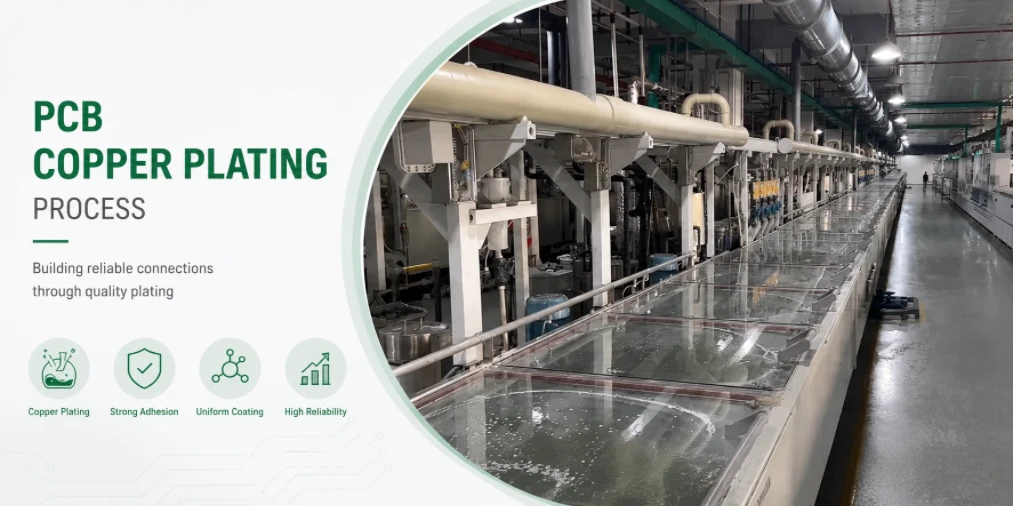
Figure 2. PCB copper plating process example for thickness and quality inspection.
Copper Weight, Thickness, and Heavy Copper Plating
Copper thickness on a PCB is traditionally expressed as a weight: the weight of copper spread over one square foot. One ounce of copper equals roughly 35 micrometres of thickness. Most signal boards use one or two ounce copper, while power and high-current designs use much more.
| Copper weight | Approx. thickness | Typical use |
|---|---|---|
| 0.5 oz | ≈ 17 µm | Fine-line and HDI inner layers |
| 1 oz | ≈ 35 µm | Standard signal boards |
| 2 oz | ≈ 70 µm | Higher current, power sections |
| 3–6 oz | ≈ 105–210 µm | Heavy copper, power electronics |
| Up to 10 oz | ≈ 350 µm | High-current bus bars, industrial loads |
Heavier copper carries more current and spreads more heat, which is why it is common in power electronics builds. It also requires wider spacing and adjusted etching, because thick copper undercuts more during etch — another reason copper weight should be locked early in the design.
Plating Defects and Quality Control
Because plating is electrochemical, small process drifts can create defects that are invisible from the surface but fatal in service. Quality control therefore focuses on measuring what cannot be seen by eye, typically through microsection analysis of a test coupon plated alongside the production panel.
Common Plating Defects
- Voids: gaps in the plated hole wall that break the interlayer connection.
- Thin plating: insufficient wall thickness that fails under thermal cycling.
- Nodules and roughness: excess deposits that affect fit and solderability.
- Poor adhesion: plating that separates from the base copper or hole wall.
Catching these issues is exactly what coupon testing and inspection are designed for, and it is part of why a careful pre-production manufacturability review pays off: features such as tiny holes in thick boards are flagged before they become plating failures. Reliable plating is foundational to everything that follows in downstream PCB assembly, because a board with weak vias may pass initial test and fail in the field.
How Plating Affects Cost and Reliability
Plating choices ripple through both price and lifespan. Thicker copper, filled vias, high aspect ratios, and tighter thickness tolerances all add process time and cost, but they also buy current capacity, thermal performance, and durability. The right balance depends entirely on the product.
For a simple consumer board, standard one-ounce plating is plenty. For an industrial controller that must survive years of thermal cycling, robust via plating and possibly heavier copper are worth the cost — the same reasoning that drives material choices in industrial control board fabrication. High-frequency designs on materials like those used in a specialty low-loss laminate boards add their own plating and surface considerations, and flexible designs require plating chemistries tuned for the thin copper used in the flex PCB fabrication process.
Getting Plating Right the First Time
- Specify copper weight for inner and outer layers explicitly in your fabrication notes.
- Watch aspect ratio — very small holes in thick boards are the hardest to plate well.
- Define via treatment (plated, filled, capped) where fine-pitch parts demand it.
- Ask for coupon data when reliability is critical, so plating thickness is documented.
Coordinating these details with one supplier that handles both fabrication and assembly — the model of a single electronics manufacturing partner — keeps copper requirements consistent from the design files through the finished, tested board.
Frequently Asked Questions
Why are there two copper plating steps in PCB fabrication?
The first, electroless step deposits a thin conductive seed so that the non-conductive hole walls can accept copper. The second, electrolytic step uses current to build the bulk copper to the required thickness. Both are needed: the seed enables plating, and the electrolytic deposit provides current capacity and via strength.
What does copper weight mean on a PCB?
Copper weight is the thickness of copper expressed as ounces per square foot. One ounce is about 35 micrometres. A two-ounce board therefore has roughly twice the copper thickness of a one-ounce board and can carry more current.
What is a plated through-hole?
A plated through-hole is a drilled hole whose walls are coated with copper, electrically connecting traces on different layers. It is the basic structure that makes multilayer boards and through-hole component mounting possible.
What causes plating voids and why are they a problem?
Voids are gaps in the plated copper inside a hole, usually caused by incomplete desmear, poor cleaning, or unstable plating chemistry. They are dangerous because they break or weaken the interlayer connection and can fail under the thermal stress of soldering or field use.
How thick should the copper in a via be?
Industry practice and IPC guidelines specify minimum average wall thickness depending on the board class, with stricter requirements for high-reliability work. The exact figure should be agreed with your fabricator and verified on a test coupon for critical boards.
Is heavy copper plating worth the extra cost?
For high-current, power, or thermally demanding designs, yes — heavier copper carries more current and spreads heat better, improving reliability. For low-power signal boards, standard copper is usually sufficient and more economical.
Can the same factory plate the board and assemble it?
Yes. A full-service manufacturer fabricates and plates the bare board, then assembles and tests it. Keeping both stages under one roof makes it easier to control copper quality and resolve any issues that appear during assembly.
What is the difference between electroless and electrolytic copper plating?
Electroless plating is a chemical process that deposits a thin, conductive copper seed layer on non-conductive hole walls without electric current. Electrolytic plating then uses current to build that copper to full thickness. A board needs both: electroless to start, electrolytic to finish.
How thick is the copper plating in a finished PCB?
Surface copper is usually specified in ounces, with 1 oz (about 35 µm) the most common and heavier weights used for power boards. Plated through-holes typically carry around 20–25 µm of copper on the wall for a reliable connection.
Why is copper plating important for PCB reliability?
Plating forms the conductive barrels inside drilled holes that connect layers, so its thickness and uniformity directly affect whether those connections survive thermal cycling and assembly. Thin or uneven plating is a common cause of open or intermittent vias.

Recommended Posts
TMM4 Filter PCB Manufacturing
TMM4 filter PCB manufacturing is controlled by the...
TMM3 PCB Manufacturing for RF Modules
TMM3 PCB manufacturing is most useful where the RF module...
TMM6 PCB Fabrication
TMM6 fabrication is the process-control page for a mid-Dk...

TMM10 PCB Manufacturing for Compact RF Designs
Table of contentsHow TMM10 Shrinks RF StructuresTMM10 vs...
How to get a quote for PCBs
Let‘s run DFM/DFA analysis for you and get back to you with a report. You can upload your files securely through our website. We require the following information in order to give you a quote:
-
- Gerber, ODB++, or .pcb, spec.
- BOM list if you require assembly
- Quantity
- Turn time
For PCBA services, please provide your BOM (Bill of Materials) and any specific assembly instructions. We also offer DFM/DFA analysis to optimize your designs for manufacturability and assembly, ensuring a smooth production process.