
Through-Hole Soldering: Best Practices and Defect Control
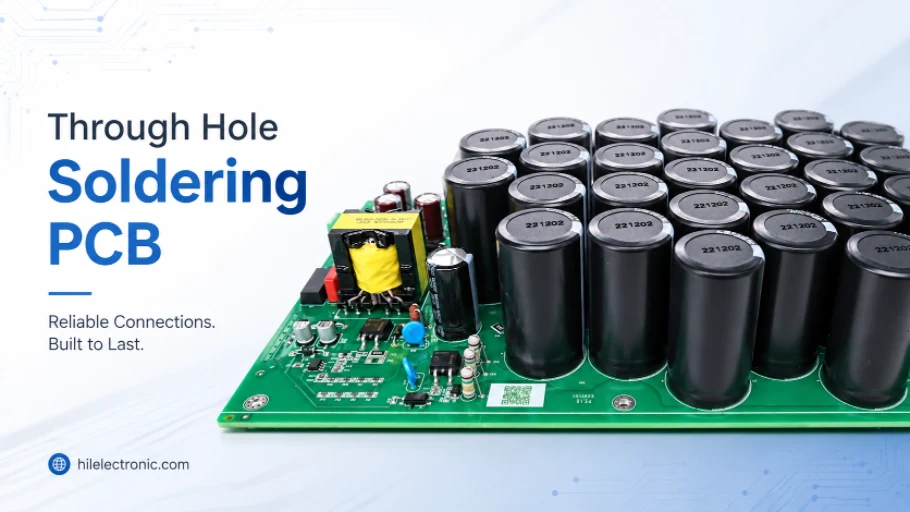
Figure 1. Through-hole soldering is used for connectors, terminals, switches, and other components that need mechanical strength.
Through-hole soldering is the process of fixing components with wire leads into plated holes on a PCB and soldering them on the opposite side. It produces strong, mechanically robust joints, which is why it remains the standard for connectors, large parts, and components that take physical stress.
- Through-hole (THT) soldering joins leaded parts through plated holes for strong, durable joints.
- It is preferred for connectors, transformers, and parts that take mechanical or thermal stress.
- Hand, wave, and selective soldering each suit different volumes and board layouts.
- Tight or shadowed holes, such as those near a large IC, need extra heat and technique.
Table of Contents
- What Is Through-Hole Soldering?
- Through-Hole vs Surface-Mount Soldering
- Hand-Soldering Through-Hole Components Step by Step
- Soldering Small or Tightly Spaced Holes
- Wave vs Selective Soldering
- Common Through-Hole Soldering Defects and Fixes
- Through-Hole Assembly at a Manufacturer
- Tools and Materials for Through-Hole Soldering
- Frequently Asked Questions
What Is Through-Hole Soldering?
In through-hole technology, a component’s leads pass through plated holes that connect the board’s layers. Solder is applied so it flows through the hole and wets both the lead and the plating, forming a joint that is mechanically and electrically sound. Because the lead is anchored through the board, the joint resists pulling and vibration far better than a surface-mount pad.
Key features of through-hole soldering
- Mechanical strength: leads anchored through the board resist stress and vibration.
- Plated-through holes: the barrel plating carries solder and connects layers.
- Solder fillet: a good joint forms a smooth, concave fillet on the solder side.
- Rework friendly: larger joints are easier to inspect and repair by hand.
- High-stress parts: ideal for connectors, jacks, and power components.
This durability is why through-hole persists even in a surface-mount world. Many boards combine both, and our mixed-technology assembly service handles the through-hole portion alongside SMT in one flow.
Through-Hole vs Surface-Mount Soldering
Through-hole and surface-mount are complementary, not competing. Knowing where each fits explains why most modern boards use both.
Key differences
- Mounting: THT leads pass through holes; SMT parts sit on surface pads.
- Strength: THT joints are stronger; SMT joints are smaller and lighter.
- Density: SMT allows far higher component density.
- Automation: SMT is fully automated; THT often needs more manual or selective steps.
- Best use: THT for stress-bearing parts, SMT for compact, high-volume circuitry.
| Aspect | Through-Hole | Surface-Mount |
|---|---|---|
| Joint strength | Very high | Moderate |
| Density | Lower | High |
| Automation | Wave/selective/hand | Fully automated |
| Typical parts | Connectors, power | ICs, passives |
A well-planned board uses each technology where it is strongest, which keeps both cost and reliability in balance.
Hand-Soldering Through-Hole Components Step by Step
Hand soldering is the most accessible method and the foundation for understanding the rest. The technique is simple but precise.
Key steps to a clean joint
- Insert and seat: place the lead fully through the hole and seat the part flat.
- Heat both surfaces: touch the iron to the pad and the lead together.
- Feed solder to the joint: apply solder to the heated junction, not the iron tip.
- Let it flow: allow solder to wick through the hole and form a fillet.
- Remove and cool: withdraw solder, then the iron, and keep the joint still while it sets.
- Trim the lead: clip the excess close above the joint.
A good joint is shiny, smooth, and concave. Dull, blobby, or peaked joints signal a problem to fix. These fundamentals scale up to production methods, but they start with controlling heat and timing on a single joint.
Soldering Small or Tightly Spaced Holes
Some of the hardest joints are small holes in shadowed locations, such as those behind a large microcontroller or under a connector body. They demand more deliberate technique.
Key tactics for difficult holes
- Use a fine tip: a small, clean conical or bent tip reaches confined pads.
- Add flux: liquid or gel flux helps solder flow into tight barrels.
- Increase heat briefly: a thermally heavy area near a big IC needs more energy, applied quickly.
- Approach from the accessible side: heat and feed from whichever side is open.
- Use thinner solder: a smaller diameter is easier to control in cramped spots.
- Pre-tin if needed: tinning the lead first can help when access is poor.
The risk in these spots is either a cold joint from too little heat or collateral damage from lingering too long on a sensitive neighbor. Balancing the two is a skill, and on production boards it is one reason selective soldering exists. A board crowded with awkward through-hole locations is also a good candidate for a design-for-manufacturing review that improves access before build.
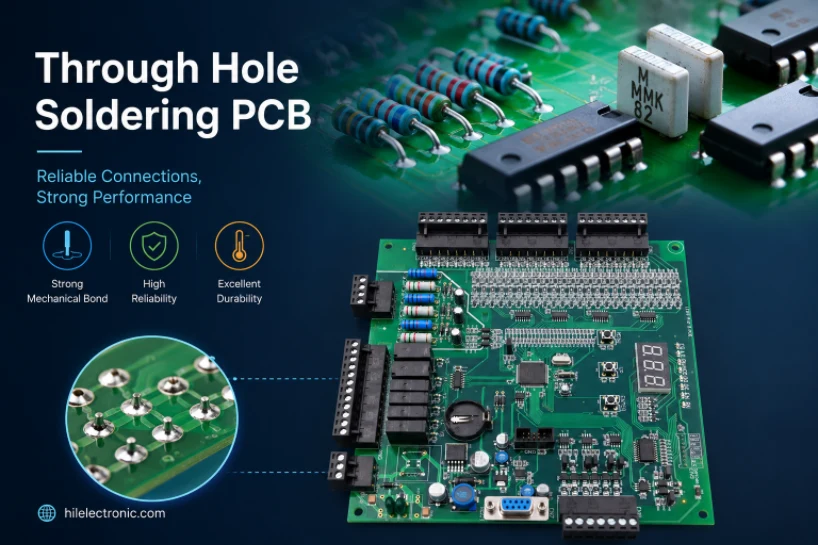
Figure 2. Through-hole solder joints should be checked for wetting, barrel fill, bridging, excess solder, and heat-related damage.
Wave vs Selective Soldering
For volume, hand soldering is impractical. Wave and selective soldering automate through-hole joints in different ways.
Key differences between the methods
- Wave soldering: the whole board passes over a wave of molten solder.
- Selective soldering: a nozzle solders only specific joints, sparing nearby SMT.
- Throughput: wave is faster for boards dense with through-hole parts.
- Precision: selective protects sensitive or close-by components.
- Masking: wave often needs masking; selective targets joints directly.
| Method | Best For | Trade-off |
|---|---|---|
| Hand soldering | Prototypes, rework | Slow, operator-dependent |
| Wave soldering | High THT density, volume | Needs masking, less selective |
| Selective soldering | Mixed boards, sensitive parts | Slower than wave per board |
Plan Your Through-Hole Assembly With Us
Choosing wave or selective depends on the mix of through-hole and surface-mount parts and the layout around them. Our production assembly line selects the method that fits each board.
Common Through-Hole Soldering Defects and Fixes
Through-hole joints fail in recognizable ways. Knowing the signs makes inspection and rework faster.
Key defects and remedies
- Cold joint: dull and grainy from too little heat; reflow with proper temperature.
- Insufficient fill: solder did not wick through the barrel; add heat and flux, refill.
- Solder bridge: excess solder shorts adjacent pads; remove with wick or iron.
- Lifted pad: overheating tore the pad; repair the trace and resolder carefully.
- Voids: trapped gas in the joint; control flux and heating profile.
Most defects trace back to heat that was too low, too high, or applied for the wrong time. Consistent technique and good flux prevent the majority. For high-reliability industrial work, defects are judged against a defined IPC class, which we support on boards such as our industrial control boards.
Through-Hole Assembly at a Manufacturer
When a board moves to production, through-hole assembly becomes a controlled process with documented steps and inspection.
Key elements of production THT
- Process selection: hand, wave, or selective chosen to match the board.
- Fixtures and pallets: tooling holds boards and masks sensitive areas.
- Profile control: solder temperature and dwell are set and monitored.
- Inspection: visual and AOI checks confirm fillet quality and fill.
- Documentation: results recorded for traceability and consistency.
This rigor is what makes volume through-hole reliable rather than operator-dependent. For demanding builds such as power electronics or robotics boards, controlled through-hole soldering is essential. The team at our facility can recommend the right approach, and our complete manufacturing services cover both fabrication and assembly.
Tools and Materials for Through-Hole Soldering
Good through-hole soldering starts with the right kit. A temperature-controlled iron, the correct solder and flux, and a few cleanup tools make the difference between bright, lasting joints and frustrating rework.
Key tools and materials
- Soldering iron: a temperature-controlled iron with a clean, tinned tip.
- Solder: leaded or lead-free wire sized to the joint.
- Flux: improves wetting and helps solder flow into the hole.
- Desoldering tools: braid and a pump for removing or fixing joints.
- Holding aids: helping hands or a vise to steady the board.
- Tip care: a brass cleaner and tinner extend tip life.
| Tool | Purpose | Tip |
|---|---|---|
| Temperature iron | Melts solder cleanly | Set to suit the alloy |
| Flux | Aids wetting | Clean residue afterward |
| Solder wick | Removes excess solder | Use with added flux |
| Helping hands | Holds the work | Keeps joints from moving |
For multilayer boards with plated through-holes, joint quality also depends on the board itself, which is built to handle thermal demand within our multilayer rigid construction.
Frequently Asked Questions
Why use through-hole instead of surface-mount?
Through-hole gives much stronger mechanical joints, so it is preferred for connectors, transformers, and any part that takes physical or thermal stress. Surface-mount is better for density and automation, which is why many boards use both.
How do I solder a hole that is hard to reach behind a large chip?
Use a fine tip, add flux, and apply slightly more heat for a short time because the area sinks heat quickly. Approach from whichever side is accessible, use thinner solder, and avoid lingering near the sensitive neighboring part.
What does a good through-hole joint look like?
Shiny, smooth, and concave, with solder having flowed through the barrel to form a clean fillet on the solder side. Dull, blobby, or peaked joints indicate cold joints or insufficient wetting that should be reflowed.
What is the difference between wave and selective soldering?
Wave soldering passes the whole board over molten solder and is fast for boards dense with through-hole parts. Selective soldering targets only specific joints with a nozzle, protecting nearby surface-mount components on mixed boards.
What causes a cold solder joint?
Too little heat, so the solder did not fully melt and wet the surfaces. The fix is to reflow the joint at the correct temperature, often with added flux, until it forms a smooth, shiny fillet.
Can through-hole and surface-mount be on the same board?
Yes, and it is very common. Such boards are assembled with SMT first, then the through-hole parts are added by hand, wave, or selective soldering depending on the layout and volume.
Is through-hole soldering still used in modern electronics?
Very much so. While surface-mount dominates by part count, through-hole remains the standard for connectors, power components, and any part needing a strong, stress-resistant joint, so most products still include it.

Recommended Posts
TMM4 Filter PCB Manufacturing
TMM4 filter PCB manufacturing is controlled by the...
TMM3 PCB Manufacturing for RF Modules
TMM3 PCB manufacturing is most useful where the RF module...
TMM6 PCB Fabrication
TMM6 fabrication is the process-control page for a mid-Dk...

TMM10i PCB Fabrication and DFM
TMM10i PCB fabrication has a stronger DFM emphasis because...
How to get a quote for PCBs
Let‘s run DFM/DFA analysis for you and get back to you with a report. You can upload your files securely through our website. We require the following information in order to give you a quote:
-
- Gerber, ODB++, or .pcb, spec.
- BOM list if you require assembly
- Quantity
- Turn time
For PCBA services, please provide your BOM (Bill of Materials) and any specific assembly instructions. We also offer DFM/DFA analysis to optimize your designs for manufacturability and assembly, ensuring a smooth production process.