
Shengyi S1000-2 PCB Manufacturing for High-Layer-Count Lead-Free Boards
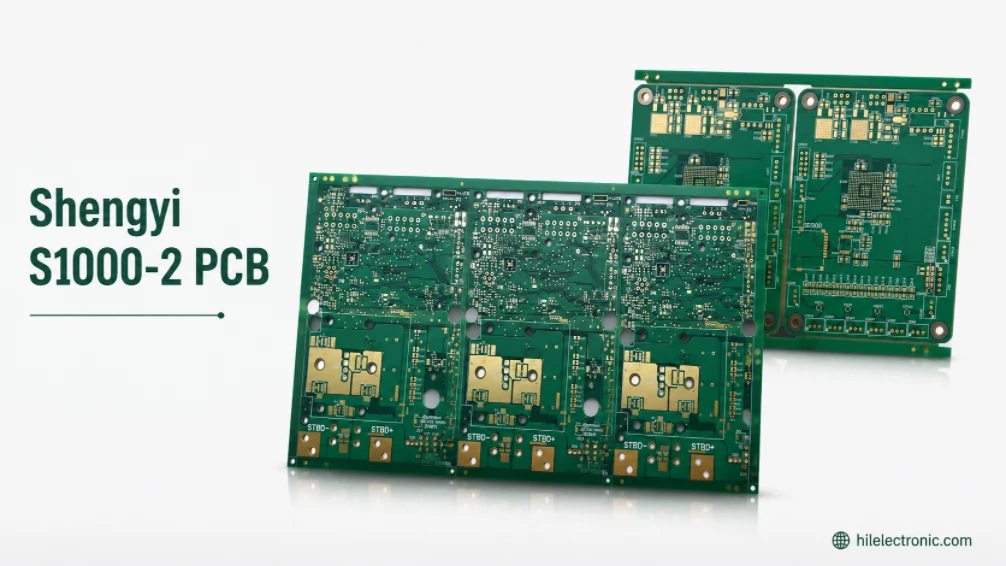
Shengyi S1000-2 is a high-Tg, low-CTE FR-4.0 system used when a multilayer board needs stronger thermal and plated-hole reliability than general-purpose FR-4. Highleap Electronics manufactures S1000-2 PCBs for computing, communication, instrumentation and other products where layer count, board thickness and assembly cycles justify the upgrade.
The material should not be sold as a cure for every via problem. Its low expansion improves margin, but drill quality, desmear, plating thickness, aspect ratio and rework history still determine finished-board reliability.
When S1000-2 Is Justified
S1000-2 is useful when the reliability risk comes from Z-axis expansion and thermal exposure. It can support high-layer-count and dense multilayer products, but the final construction still must remain manufacturable.
| Project feature | S1000-2 value | Required engineering check |
|---|---|---|
| High layer count | High-Tg, low-CTE platform with through-hole reliability | Registration, press cycles, thickness and copper balance |
| Thick board and small holes | Reduced expansion strain compared with mainstream FR-4 | Aspect ratio, drilling, desmear and hole copper |
| Multiple lead-free cycles | Published T260/T288 thermal margin | Actual reflow/rework profile and moisture condition |
| Long high-speed channel | Thermal strength, not a published low-loss advantage | Compare a lower-Df material if loss is limiting |
Highleap’s high-layer-count PCB materials guide explains why material, layer registration, via structure and copper distribution must be evaluated together.
Published Properties and Design Meaning
Shengyi publishes typical S1000-2 values of Tg 180°C by DSC, 185°C by DMA, Td 345°C, total Z-axis expansion of 2.8% from 50–260°C, T260 of 60 minutes, T288 of 20 minutes and T300 of 5 minutes. The material is positioned for lead-free compatibility, high heat resistance, low Z-axis CTE, through-hole reliability, anti-CAF performance and low water absorption.
Typical data are not fabrication limits
Shengyi notes that the values are typical and for reference. The customer should not convert them into guaranteed board-level acceptance criteria without agreement. Finished-board evidence comes from the released stackup, coupons, microsections and product validation.
S1000-2 and S1000-2M are not identical
S1000-2M has a different published property set and stronger high-layer-count positioning. If the drawing calls for S1000-2, the factory should not substitute S1000-2M—or the reverse—without approval, even when the materials appear related.
Send the layer count, thickness, hole sizes, copper and assembly cycles. Highleap can compare the construction against mainstream and higher-reliability options.
High-Layer-Count Stackup and Via Design
Freeze the stackup before routing is complete
High-layer-count products often require controlled impedance, thin dielectrics and multiple power planes. Highleap develops a manufacturable stackup around available cores/prepregs, copper balance, target thickness, impedance and press capability. A layout built around an unavailable dielectric can require major rerouting.
Aspect ratio and drill-to-copper spacing
A high-Tg laminate does not eliminate the geometry limit. Small holes through a thick board increase tool wear, smear-removal difficulty and plating variation. Highleap may recommend larger vias, reduced board thickness, staggered blind vias or sequential lamination depending on density and reliability needs.
Sequential lamination needs a separate review
If the design includes blind/buried vias or multiple press cycles, the build should be evaluated as an HDI/sequential-lamination construction. See the sequential lamination guide for the cost and reliability implications.
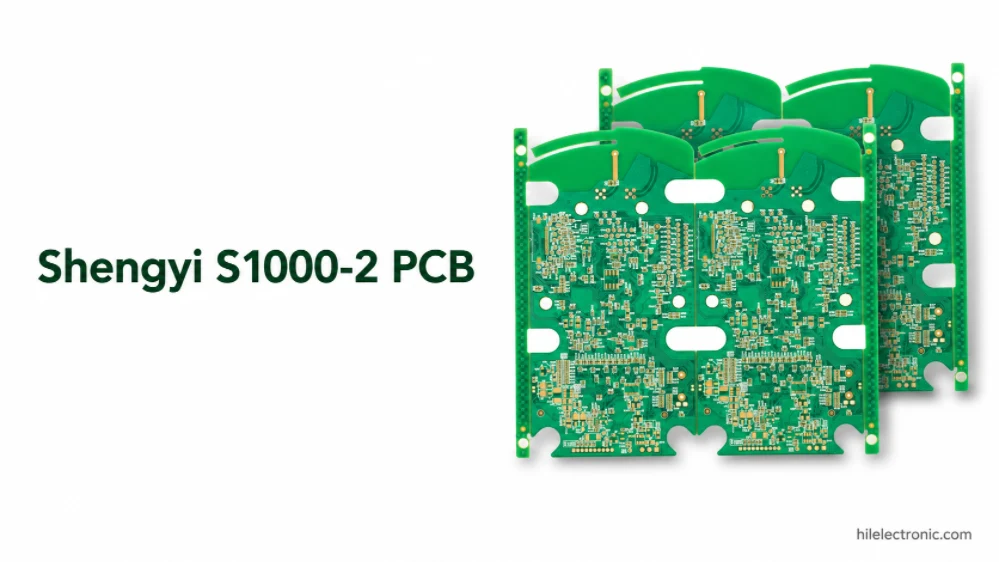
Fabrication and Plated-Hole Controls
Highleap’s S1000-2 fabrication route may include material identity, stackup release, inner-layer AOI, registration scaling, controlled lamination, drill monitoring, desmear, electroless copper, pattern plating, microsection, surface finish, routing and electrical test.
Microsection should target the real risk
Representative coupons should include the smallest finished holes, thickest copper regions or critical via structures. A microsection can verify copper thickness, resin condition, smear removal and layer registration, but it does not prove full field life by itself.
CAF resistance still depends on design and process
Published anti-CAF performance supports the material selection. Final resistance depends on conductor spacing, moisture, bias, cleanliness, hole damage and qualification conditions. A formal CAF test should state voltage, humidity, temperature, duration, samples and failure criterion.
Assembly, Testing and Release Evidence
S1000-2’s thermal margin is valuable for lead-free assembly, but the complete thermal history should be controlled. Large BGAs, press-fit connectors, selective soldering and rework can create local stress. The profile must be developed for the actual copper mass and component set.
| Release evidence | Use |
|---|---|
| Material/lot record | Confirms the approved S1000-2 source |
| Stackup and impedance report | Links finished geometry to the approved design |
| Microsection | Checks plated holes and lamination quality |
| 100% electrical test | Detects bare-board opens and shorts |
| First-article PCBA | Approves assembly workmanship before volume |
| Functional test | Verifies product behavior using defined limits |
For high-reliability assemblies, Highleap can quote AOI, X-ray where appropriate, programming, fixture development and functional testing. The exact scope must be defined in the RFQ.
High-layer-count cost is driven by process count
Additional layers increase more than laminate consumption. They add imaging, AOI, registration work, lamination complexity, drilling depth, testing and potential yield loss. Sequential lamination adds repeated press and drill cycles. A quote that only multiplies board area by a layer factor will not be reliable for a demanding S1000-2 construction.
Example: 16-layer server-control board
A 16-layer, 2.4 mm board with 0.25 mm finished vias presents a different risk from a 16-layer, 1.6 mm board with 0.35 mm holes. The first has a higher aspect ratio and may need stronger drill, desmear and plating controls. S1000-2 improves thermal margin, but Highleap still needs to evaluate whether the via geometry should change or whether a blind-via structure is more appropriate.
Prototype and volume transfer
Prototype lots often use smaller panels and more manual inspection, while volume production uses optimized panelization and stable tooling. The transfer plan should preserve material source, stackup, impedance geometry, hole requirements and inspection criteria. A pilot build can confirm that the volume panel does not introduce new registration or plating variation.
What Highleap can return with the quote
The engineering response can include a preliminary stackup, via aspect-ratio assessment, material comparison, inspection proposal, assembly-risk notes and a list of information needed for final pricing. Buyers can then decide whether to change the design, accept the proposed evidence or compare another material.
Cost-reduction opportunities that do not remove reliability
- Standardize drill sizes and reduce unnecessary microvias.
- Improve panel utilization by adjusting rails or break-off method.
- Use impedance measurement only on critical geometries.
- Separate mandatory documentation from optional reports.
- Review whether every layer needs the same copper weight.
- Approve a technically equivalent material through change control when supply risk justifies it.
Alternatives, Cost and RFQ Preparation
S1000-2 costs more than mainstream FR-4 and may require specific sourcing or minimum material utilization. The economic case is strongest when it prevents reliability risk or enables a construction that ordinary material cannot support.
Alternative decisions
- Use S1141 or another mainstream grade for simpler boards with moderate thermal exposure.
- Use S1000-2M or another high-layer-count platform when the released design requires its specific property set.
- Use a low-loss material when channel attenuation is the main constraint.
- Use an automotive-approved family when customer specification and mission profile require it.
Quotation inputs
- Board size and quantity
- Layer count and thickness
- Copper by layer
- Smallest finished hole
- Blind/buried via structure
- Impedance requirements
- Assembly thermal history
- IPC/customer class
- Validation evidence
- PCBA scope
Design review priorities before tooling
Before Highleap releases tooling, the highest-value checks are usually via aspect ratio, annular ring, drill-to-copper spacing, copper balance, dielectric availability, impedance geometry and the assembly thermal sequence. Correcting those items before fabrication is less expensive than relying on a premium laminate to absorb avoidable process risk.
For high-layer-count boards, the quotation should also state whether the first article includes impedance data, microsections and a dimensional report. These deliverables create a measurable approval gate before the customer commits to volume.
S1000-2 Buyer FAQ
Is S1000-2 intended for high-layer-count boards?
It is a high-Tg, low-CTE material often evaluated for demanding multilayers. Suitability still depends on the exact thickness, holes, copper and press construction.
Does S1000-2 prevent via cracking?
No material prevents failure alone. Low CTE improves margin, while drill quality, plating and thermal history remain critical.
Is S1000-2 a low-loss material?
Shengyi positions it around thermal reliability rather than a low-Df high-speed category. Use a loss-budget analysis for high-speed channels.
Can Highleap provide a quote from partial files?
Yes. Basic geometry, layers, thickness, holes, copper, quantity and service scope are enough for an initial review.
Primary material reference: Shengyi S1000-2 product data. Manufacturer figures are typical reference values; use the current datasheet and approved construction for production specifications.
Highleap can quote S1000-2 fabrication, stackup engineering, PCBA and project-specific release evidence.

Recommended Posts
TMM4 Filter PCB Manufacturing
TMM4 filter PCB manufacturing is controlled by the...
TMM3 PCB Manufacturing for RF Modules
TMM3 PCB manufacturing is most useful where the RF module...
TMM6 PCB Fabrication
TMM6 fabrication is the process-control page for a mid-Dk...

TMM10 PCB Manufacturing for Compact RF Designs
Table of contentsHow TMM10 Shrinks RF StructuresTMM10 vs...
How to get a quote for PCBs
Let’s run DFM/DFA analysis for you and get back to you with a report. You can upload your files securely through our website. We require the following information in order to give you a quote:
-
- Gerber, ODB++, or .pcb, spec.
- BOM list if you require assembly
- Quantity
- Turn time
For PCBA services, please provide your BOM (Bill of Materials) and any specific assembly instructions. We also offer DFM/DFA analysis to optimize your designs for manufacturability and assembly, ensuring a smooth production process.