
CAF Resistant PCB Material for High-Reliability PCB Manufacturing
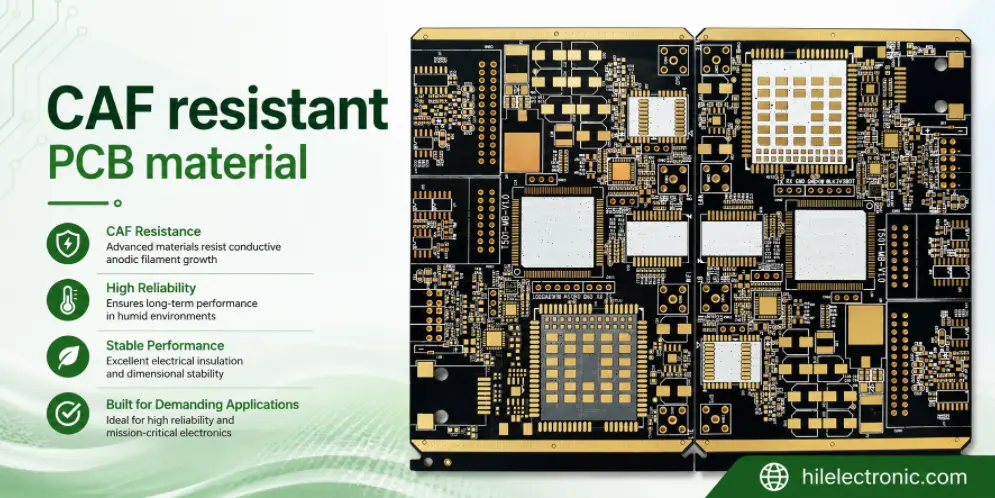
CAF resistant PCB material is not only a laminate keyword. It is a reliability manufacturing topic for boards exposed to humidity, voltage bias, dense spacing, contamination risk, and long service life. Highleap focuses on the design and process controls that reduce CAF risk before the board is fabricated and assembled.
This guide connects CAF-resistant material choice with PCB reliability, PCB insulation, high-voltage layout review, cleanliness, coating, and traceability. The goal is to help buyers prepare a quote package that supports reliable manufacturing rather than only naming a material.
CAF Resistant PCB Manufacturing for High-Voltage and Humid Environments
CAF risk comes from material, design, process, and environment together
CAF can occur when moisture, voltage bias, contamination, spacing stress, and glass-fiber paths combine to create conductive anodic filament growth. A CAF-resistant laminate helps, but it does not replace spacing rules, drilling quality, cleanliness, or assembly protection.
Highleap reviews the environment first: voltage, humidity, condensation risk, operating temperature, enclosure design, board spacing, and expected life. That information changes how the material and process should be selected.
- High-voltage control boards
- Industrial and automotive electronics
- Outdoor or humid-environment electronics
- Dense multilayer boards with biased conductors
For a production CAF-sensitive PCB build RFQ, requirement should be converted into drawing notes and supplier checks rather than left as background explanation. Highleap uses it to decide whether the project needs material confirmation, stackup adjustment, DFM feedback, special inspection, or assembly process review before the quote is finalized.
The same requirement also affects cost and lead time because voltage bias, humidity, conductor spacing, cleanliness, and coating coverage can change tooling effort, process control, test coverage, or material purchasing. Providing operating voltage, environment, spacing rules, material requirement, cleaning process, and coating instructions before quotation reduces back-and-forth and makes the first engineering response more useful.
In practical builds such as high-voltage controllers, outdoor electronics, automotive modules, humid-environment systems, and dense BGA boards, this requirement normally appears during the first DFM or sourcing discussion. The reason is simple: spacing, moisture exposure, ionic cleanliness, resin coverage, and coating process can change the recommended stackup, inspection plan, or assembly sequence before a purchase order is placed.
For repeat production, Highleap also checks whether the requirement can be held from pilot build to batch production. That means the production package should give Highleap complete manufacturing inputs, not only a material name or a partial drawing set.
CAF-Resistant FR4 Material Selection for Industrial and Automotive PCB
The material has to match the reliability requirement
A customer drawing may call out CAF-resistant FR4, a specific laminate family, or a supplier-approved material list. Highleap checks whether the selected material is available, whether substitutions are allowed, and whether the board construction is compatible with the reliability requirement.
The article should make clear that material selection is only one line of defense. If the board uses tight via spacing under voltage bias, poor cleaning, or inadequate coating, CAF risk may remain even with a better laminate.
- Approved CAF-resistant laminate or prepreg
- Glass style and resin system considerations
- Material substitution approval
- Availability and lead-time review
For a production CAF-sensitive PCB build RFQ, requirement should be converted into drawing notes and supplier checks rather than left as background explanation. Highleap uses it to decide whether the project needs material confirmation, stackup adjustment, DFM feedback, special inspection, or assembly process review before the quote is finalized.
The same requirement also affects cost and lead time because voltage bias, humidity, conductor spacing, cleanliness, and coating coverage can change tooling effort, process control, test coverage, or material purchasing. Providing operating voltage, environment, spacing rules, material requirement, cleaning process, and coating instructions before quotation reduces back-and-forth and makes the first engineering response more useful.
In practical builds such as high-voltage controllers, outdoor electronics, automotive modules, humid-environment systems, and dense BGA boards, this requirement normally appears during the first DFM or sourcing discussion. The reason is simple: spacing, moisture exposure, ionic cleanliness, resin coverage, and coating process can change the recommended stackup, inspection plan, or assembly sequence before a purchase order is placed.
For repeat production, Highleap also checks whether the requirement can be held from pilot build to batch production. That means the production package should give Highleap complete manufacturing inputs, not only a material name or a partial drawing set.
Voltage Bias, Humidity, and Spacing Requirements Before Fabrication
The RFQ should include the operating environment
For CAF-sensitive boards, the fabricator should know voltage bias, humidity exposure, spacing requirements, and any customer reliability test expectations. This is especially important for high-voltage PCB and industrial control products where spacing is part of safety and reliability.
If the design only requests “CAF resistant material” without voltage or spacing information, the manufacturer cannot properly judge the risk. The better RFQ defines conductor spacing, via spacing, creepage, clearance, and coating expectations.
- Operating voltage and humidity exposure
- Via-to-via and trace-to-trace spacing
- Creepage and clearance expectations
- Customer reliability or test standard if applicable
For a production CAF-sensitive PCB build RFQ, requirement should be converted into drawing notes and supplier checks rather than left as background explanation. Highleap uses it to decide whether the project needs material confirmation, stackup adjustment, DFM feedback, special inspection, or assembly process review before the quote is finalized.
The same requirement also affects cost and lead time because voltage bias, humidity, conductor spacing, cleanliness, and coating coverage can change tooling effort, process control, test coverage, or material purchasing. Providing operating voltage, environment, spacing rules, material requirement, cleaning process, and coating instructions before quotation reduces back-and-forth and makes the first engineering response more useful.
In practical builds such as high-voltage controllers, outdoor electronics, automotive modules, humid-environment systems, and dense BGA boards, this requirement normally appears during the first DFM or sourcing discussion. The reason is simple: spacing, moisture exposure, ionic cleanliness, resin coverage, and coating process can change the recommended stackup, inspection plan, or assembly sequence before a purchase order is placed.
For repeat production, Highleap also checks whether the requirement can be held from pilot build to batch production. That means the production package should give Highleap complete manufacturing inputs, not only a material name or a partial drawing set.
Via-to-Via, Trace-to-Trace, and BGA Area CAF Risk Review
Dense areas deserve special attention
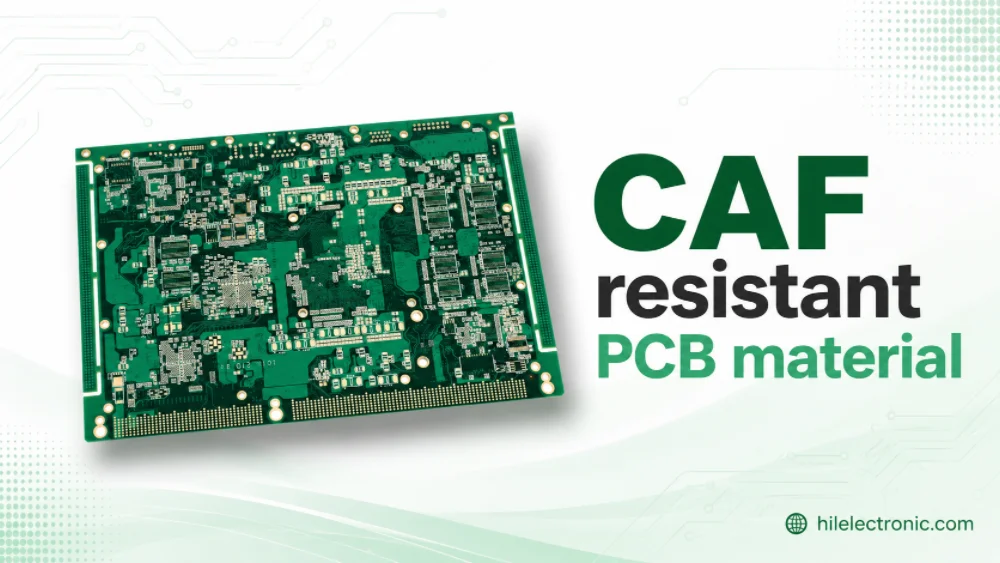
CAF risk often concentrates in dense via fields, BGA breakout regions, fine-pitch connector areas, and long biased conductor runs. The layout review should check whether spacing is realistic for the voltage and environment.
Highleap reviews whether via structures, solder mask registration, and conductor spacing are compatible with the reliability target. If a BGA escape region has unusually tight spacing, the customer should flag it before fabrication.
- Dense BGA via fields
- Biased nets with small spacing
- Connector and edge areas
- Layer-to-layer insulation review
For a production CAF-sensitive PCB build RFQ, requirement should be converted into drawing notes and supplier checks rather than left as background explanation. Highleap uses it to decide whether the project needs material confirmation, stackup adjustment, DFM feedback, special inspection, or assembly process review before the quote is finalized.
The same requirement also affects cost and lead time because voltage bias, humidity, conductor spacing, cleanliness, and coating coverage can change tooling effort, process control, test coverage, or material purchasing. Providing operating voltage, environment, spacing rules, material requirement, cleaning process, and coating instructions before quotation reduces back-and-forth and makes the first engineering response more useful.
In practical builds such as high-voltage controllers, outdoor electronics, automotive modules, humid-environment systems, and dense BGA boards, this requirement normally appears during the first DFM or sourcing discussion. The reason is simple: spacing, moisture exposure, ionic cleanliness, resin coverage, and coating process can change the recommended stackup, inspection plan, or assembly sequence before a purchase order is placed.
For repeat production, Highleap also checks whether the requirement can be held from pilot build to batch production. That means the production package should give Highleap complete manufacturing inputs, not only a material name or a partial drawing set.
Drilling, Desmear, Lamination, and Plating Controls for CAF Prevention
Manufacturing quality influences the failure path
Drilling smear, poor desmear, voids, resin recession, plating defects, and moisture handling can all affect CAF risk. A clean material callout will not save a board if the process leaves contamination or weak hole-wall quality.
Highleap connects CAF work with PCB quality assurance controls, including drilling review, lamination quality, plating inspection, and electrical testing.
- Hole-wall cleanliness and smear control
- Lamination void and resin coverage review
- Plating reliability and microsection if required
- Moisture handling before assembly
For a production CAF-sensitive PCB build RFQ, requirement should be converted into drawing notes and supplier checks rather than left as background explanation. Highleap uses it to decide whether the project needs material confirmation, stackup adjustment, DFM feedback, special inspection, or assembly process review before the quote is finalized.
The same requirement also affects cost and lead time because voltage bias, humidity, conductor spacing, cleanliness, and coating coverage can change tooling effort, process control, test coverage, or material purchasing. Providing operating voltage, environment, spacing rules, material requirement, cleaning process, and coating instructions before quotation reduces back-and-forth and makes the first engineering response more useful.
In practical builds such as high-voltage controllers, outdoor electronics, automotive modules, humid-environment systems, and dense BGA boards, this requirement normally appears during the first DFM or sourcing discussion. The reason is simple: spacing, moisture exposure, ionic cleanliness, resin coverage, and coating process can change the recommended stackup, inspection plan, or assembly sequence before a purchase order is placed.
For repeat production, Highleap also checks whether the requirement can be held from pilot build to batch production. That means the production package should give Highleap complete manufacturing inputs, not only a material name or a partial drawing set.
PCB Assembly Cleanliness, Flux Residue, and Ionic Contamination Control
Assembly residues can defeat a CAF-resistant design
Flux residue, ionic contamination, fingerprints, poor washing, and incompatible coating processes can increase leakage and reliability risk. The assembly plan should state whether the process is no-clean, aqueous-cleaned, or selectively cleaned.
For boards used in humid or high-voltage environments, Highleap reviews cleaning, handling, packaging, and inspection requirements before PCBA release.
- Flux chemistry and residue risk
- No-clean versus cleaning process
- Ionic contamination expectations if specified
- Handling and packaging controls
Assembly planning for a CAF-sensitive PCB build should be considered before bare-board release. Pad design, surface finish, solder mask, component thermal mass, fixture access, and inspection requirements can change the fabrication notes even when the schematic is already complete.
For purchasing teams, assembly scope changes the quote substantially. A bare PCB price does not cover BOM sourcing, stencil, programming, AOI, X-ray, functional testing, packaging, or documentation unless those requirements are stated clearly.
In practical builds such as high-voltage controllers, outdoor electronics, automotive modules, humid-environment systems, and dense BGA boards, this requirement normally appears during the first DFM or sourcing discussion. The reason is simple: spacing, moisture exposure, ionic cleanliness, resin coverage, and coating process can change the recommended stackup, inspection plan, or assembly sequence before a purchase order is placed.
For repeat production, Highleap also checks whether the requirement can be held from pilot build to batch production. That means the production package should give Highleap complete manufacturing inputs, not only a material name or a partial drawing set.

Recommended Posts

TMM6 Filter PCB Manufacturing
Table of contentsWhy Microwave Filter Designers Use...
TMM4 Filter PCB Manufacturing
TMM4 filter PCB manufacturing is controlled by the...
TMM3 PCB Manufacturing for RF Modules
TMM3 PCB manufacturing is most useful where the RF module...
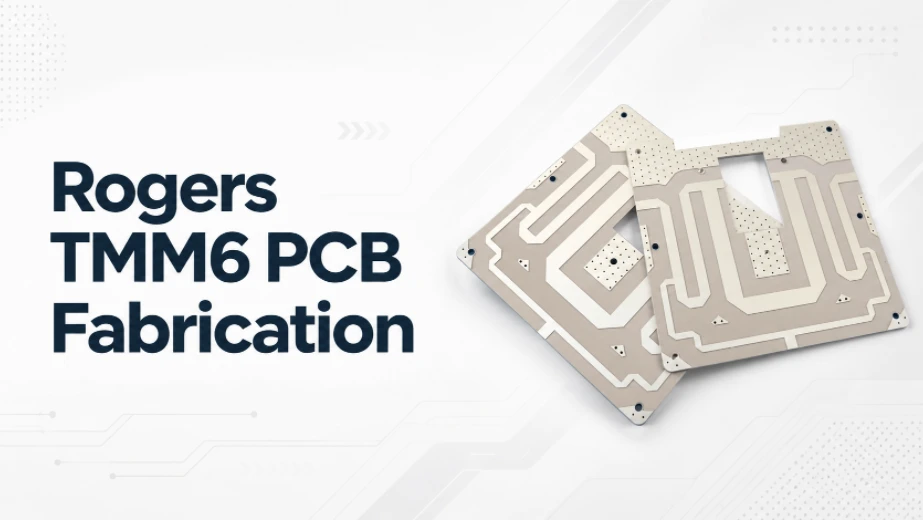
TMM6 PCB Fabrication
TMM6 fabrication is the process-control page for a mid-Dk...
How to get a quote for PCBs
Let’s run DFM/DFA analysis for you and get back to you with a report. You can upload your files securely through our website. We require the following information in order to give you a quote:
-
- Gerber, ODB++, or .pcb, spec.
- BOM list if you require assembly
- Quantity
- Turn time
For PCBA services, please provide your BOM (Bill of Materials) and any specific assembly instructions. We also offer DFM/DFA analysis to optimize your designs for manufacturability and assembly, ensuring a smooth production process.