
Custom Ceramic PCBs Manufacturer And Fabrication Service

Ceramic PCBs use inorganic ceramic substrates — alumina, aluminum nitride, silicon nitride — instead of the organic fiberglass-epoxy found in standard FR4 boards. The ceramic substrate bonds directly to copper circuitry without a separate dielectric insulation layer, creating a thermal path from component to heat sink that is 50–500× more efficient than FR4. That structural advantage is why ceramic PCBs are specified for power modules, high-brightness LEDs, RF front-ends, laser diode sub-mounts, and any application where heat flux, operating temperature, or thermal cycling life exceeds what organic laminates can survive.
Highleap Electronics manufactures ceramic PCBs on alumina (Al₂O₃), aluminum nitride (AlN), and silicon nitride (Si₃N₄) substrates using DBC, DPC, thick-film, thin-film, LTCC, and HTCC processes. We also assemble components onto ceramic substrates — SMT, wire bonding, die attach, and electrical testing — under one roof.
Ceramic PCB Manufacturing Capabilities at a Glance
- Substrate materials: Al₂O₃ (96%, 99.6%), AlN, Si₃N₄ — incoming inspection and lot traceability on every substrate
- Metallization processes: DBC (Cu 0.15–0.6 mm), DPC (Cu 5–140 µm), AMB, thick film (Ag, Ag-Pd, Au), thin film (sputtered Cu/Au)
- Copper thickness range: 1 µm (thin film) to 600 µm (DBC) — specified per design requirement
- Surface finishes: ENIG, hard gold (wire-bondable), immersion silver, OSP, ENEPIG
- Layer count: 1–2 layers (DBC/AMB), 2–4 layers (DPC), up to 12+ layers (LTCC/HTCC)
- Dimensional tolerance: ±0.05 mm across production lots
- Certifications: ISO 9001, IATF 16949, ISO 13485
Table of Contents
Four Ceramic Substrate Materials and Where Each Fits
Every ceramic PCB starts with the substrate. The material chosen determines the thermal conductivity, mechanical strength, CTE match to semiconductor die, and cost of the finished board. Highleap stocks and processes all four production-grade ceramic substrates.
Alumina — the production workhorse
Alumina ceramic PCBs account for the majority of ceramic PCB production worldwide. Available in 96% and 99.6% purity grades, alumina provides practical thermal conductivity (50–100× better than FR4), excellent electrical insulation, and a cost level that makes it viable for moderate-volume production runs. We use 96% alumina for most LED, sensor, and power electronics applications, and 99.6% alumina when tighter surface roughness or dielectric tolerances are required — typically for thin-film RF circuits.
Aluminum nitride — the thermal performance leader
AlN delivers 7× the thermal conductivity of alumina and the closest CTE match to silicon among ceramic substrates (4.5 vs. 3.0 ppm/°C). That CTE match is why AlN is specified wherever semiconductor die are directly bonded to the substrate — power modules, laser diode packages, and 5G RF modules. The trade-off is cost and more demanding metallization requirements. Our thermal management engineering support helps determine whether your design genuinely requires AlN or whether alumina with better thermal interface design would achieve the same junction temperature target at lower cost.
Silicon nitride — the toughest ceramic for extreme cycling
Si₃N₄ provides 2–3× the fracture toughness of alumina or AlN, enabling it to survive thermal cycling regimes (–55 to +250 °C, 30,000+ cycles) that crack other ceramic substrates. It has become the substrate of choice for next-generation SiC and GaN power electronics modules in EV traction inverters and industrial motor drives. Si₃N₄ is processed almost exclusively with AMB (active metal brazing) metallization.
Beryllium oxide — legacy high performance, restricted use
BeO offers the highest thermal conductivity of any ceramic PCB material, but its raw-material toxicity (beryllium dust is a severe inhalation hazard) restricts it to applications where no substitute exists — primarily legacy aerospace and defense programs with established handling protocols. New designs increasingly specify AlN or Si₃N₄ instead.

Seven Manufacturing Processes: How Copper Gets onto Ceramic
The substrate material defines the thermal properties of a ceramic PCB. The metallization process defines the electrical capability — trace resolution, copper thickness, layer count, and the strength of the copper-ceramic bond. Highleap supports all seven production-grade metallization processes.
DBC — Direct Bonded Copper
DBC bonds thick copper foil (0.15–0.6 mm) to ceramic through a controlled oxidation reaction at approximately 1,065 °C. The resulting copper-ceramic interface has extremely low thermal resistance and supports high-current bus bars for IGBT and MOSFET power modules. DBC is the established standard for power module ceramic substrates on both alumina and AlN. Limitation: minimum trace width is typically 0.3–0.5 mm due to the thick copper, and edge definition is coarser than DPC.
DPC — Direct Plated Copper
DPC sputters a thin titanium/copper seed layer onto the ceramic surface under vacuum, then plates copper to the target thickness (typically 5–140 µm) using standard photolithography and electroplating. The process achieves fine-line resolution (trace/space down to 50/50 µm) and supports plated through-holes and vias — making it the most versatile metallization for complex circuit designs. DPC is the standard process for high-density LED packages, RF circuits on alumina, and any ceramic PCB design requiring impedance-controlled traces.
AMB — Active Metal Brazing
AMB joins copper to ceramic using an active braze alloy (typically Ag-Cu-Ti) at 800–900 °C under vacuum. The active titanium element wets the ceramic surface, creating a metallurgical bond stronger than DBC — particularly important for Si₃N₄ substrates where the standard DBC oxidation process does not form a reliable bond. AMB supports copper thicknesses up to 800 µm and is the dominant technology for next-generation SiC/GaN power semiconductor modules.
Thick film
Thick-film ceramic PCBs use screen-printed conductive pastes (silver, gold, silver-palladium) sintered at 850–900 °C. The process enables printed resistors and capacitors directly on the substrate — eliminating discrete passives in hybrid circuits. Thick film is the most cost-effective ceramic PCB process for moderate-current applications with larger feature sizes (minimum line width typically 100–150 µm). Standard for automotive sensors, industrial controls, and hybrid microelectronics.
Thin film
Thin-film ceramic PCBs deposit metal by sputtering or evaporation, then pattern with photolithography — achieving the finest resolution of any ceramic PCB process (line/space down to 10/10 µm). Thin film is specified for precision RF filters, microwave circuits, and high-frequency applications where trace geometry directly controls impedance and insertion loss. Copper thickness is limited (typically under 5 µm); designs requiring higher current combine thin-film patterning with subsequent plating (the DPC approach).
LTCC — Low-Temperature Co-fired Ceramic
LTCC fires ceramic tape layers with embedded silver or gold conductors at 850–900 °C, producing multilayer ceramic PCBs (10+ layers) with integrated vias, cavities, and embedded passive components. LTCC is the standard for compact RF modules, mmWave front-ends (automotive radar, 5G antennas), and any design requiring three-dimensional interconnect density in a hermetic ceramic package. Our LTCC and HTCC capabilities cover both prototype and production volumes.
HTCC — High-Temperature Co-fired Ceramic
HTCC fires at 1,500–1,800 °C using tungsten or molybdenum conductors (gold and silver cannot survive these temperatures). HTCC produces substrates with the highest structural strength and chemical resistance — specified for hermetic packages, downhole instruments, and extreme-environment electronics. The trade-off is lower conductor conductivity (W and Mo have 3–5× higher resistivity than Cu or Ag) and more expensive tooling.

Selecting the Right Ceramic PCB for Your Application
Most projects land on one of five material-process combinations. The selection is driven by the binding constraint in the design — current, thermal cycling, trace resolution, frequency, or cost.
Highleap Manufacturing Capability Table

How to Specify and Order Ceramic PCBs
Incomplete specifications are the primary cause of quoting delays and first-article surprises in ceramic PCB projects. Unlike FR4 orders where defaults cover most cases, ceramic PCBs require explicit specification on every parameter because no industry-standard defaults exist.
Your ceramic PCB quoting package should include:
If you are unsure about material or process selection, send what you have. Our engineering team provides DFM review and material recommendations based on your thermal, electrical, and mechanical requirements — before you commit to a specific construction.
Highleap Electronics — Ceramic PCB Manufacturing and Assembly
We fabricate ceramic PCBs on alumina, AlN, and Si₃N₄ substrates using DBC, DPC, AMB, thick-film, thin-film, LTCC, and HTCC processes. Integrated assembly services — SMT, wire bonding, die attach, and testing — mean your project stays under one roof from bare substrate to tested PCBA. ISO 9001, IATF 16949, and ISO 13485 certified. Prototype to volume production, no MOQ.
Frequently Asked Questions
What substrate materials are available for ceramic PCBs?
The four production-grade ceramic PCB substrates are alumina (Al₂O₃) with thermal conductivity of 24–28 W/m·K, aluminum nitride (AlN) at 170–200 W/m·K, silicon nitride (Si₃N₄) at 80–90 W/m·K with the highest fracture toughness, and beryllium oxide (BeO) at 250–300 W/m·K for legacy high-power applications. Alumina handles most applications at the lowest cost; AlN serves high-power modules where thermal conductivity is the binding constraint; Si₃N₄ is specified where thermal cycling endurance and mechanical robustness matter most — SiC/GaN EV inverters, for example.
What is the difference between DBC, DPC, and AMB ceramic PCBs?
DBC bonds thick copper (0.15–0.6 mm) to ceramic at approximately 1,065 °C through a controlled oxidation process — best for high-current power modules on alumina and AlN. DPC deposits a thin copper seed layer by sputtering then plates to target thickness — best for fine-line circuits, LEDs, and RF designs. AMB brazes copper at 800–900 °C using an active metal filler — best for Si₃N₄ substrates and any application requiring the strongest possible copper-ceramic bond and extreme thermal cycling endurance. See our DBC process details for a deeper technical comparison.
How much do ceramic PCBs cost compared to FR4?
Ceramic PCBs typically run 5–50× the cost of equivalent FR4 boards depending on substrate material, metallization process, board size, and order quantity. Alumina thick-film is the most affordable ceramic option. AlN and Si₃N₄ AMB carry the highest premium. Exact pricing depends entirely on your specific design — a 10 mm × 10 mm alumina DPC LED sub-mount costs very differently from a 50 mm × 80 mm AlN DBC power module substrate. Submit your Gerber files for an accurate quote based on your actual design. For more detail on what drives ceramic PCB pricing, see our ceramic PCB cost analysis.
Can ceramic PCBs be multilayer?
Yes. LTCC and HTCC co-firing processes support 10+ layers with embedded resistors, capacitors, inductors, and vertical interconnects. DBC and AMB substrates are typically 1–2 conductive layers. DPC supports 2–4 layers with plated through-holes on alumina or AlN substrates. For complex multilayer designs, see our multilayer ceramic PCB capabilities.
What files do I need to get a ceramic PCB quote?
Complete Gerber files for all layers, a fabrication drawing specifying ceramic material and purity grade, substrate thickness and tolerance, metallization method, copper thickness, surface finish, dimensional tolerances, electrical test criteria, quantity, and target delivery date. For turnkey assembly, add BOM and pick-and-place files. With that package, we issue a quote with line-item cost breakdown — the price depends on your actual design, and we will not guess a number for a Gerber set we have not reviewed.

Recommended Posts
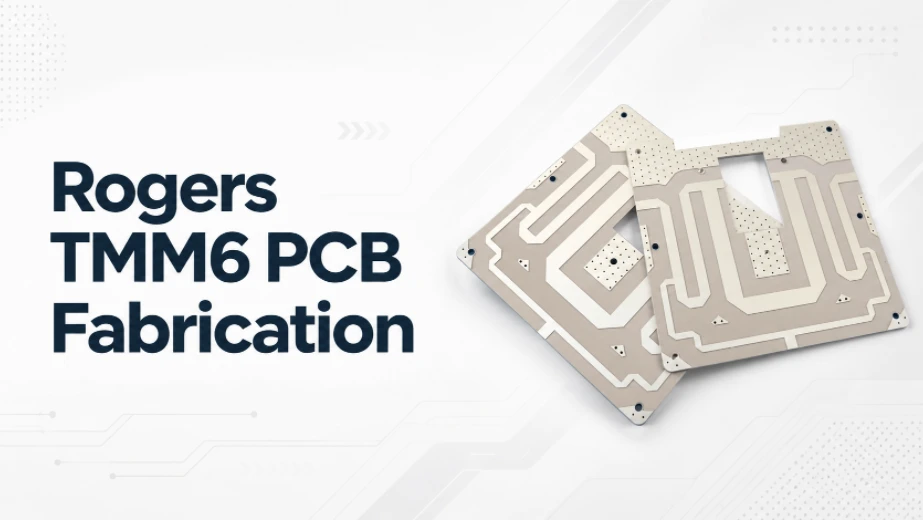
TMM6 PCB Fabrication
TMM6 fabrication is the process-control page for a mid-Dk...
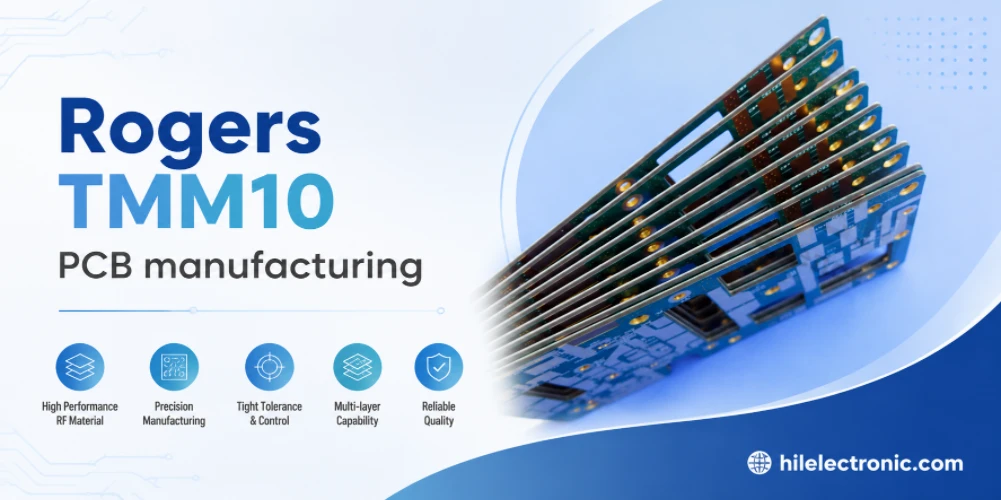
TMM10 PCB Manufacturing for Compact RF Designs
Table of contentsHow TMM10 Shrinks RF StructuresTMM10 vs...

TMM10i PCB Fabrication and DFM
TMM10i PCB fabrication has a stronger DFM emphasis because...
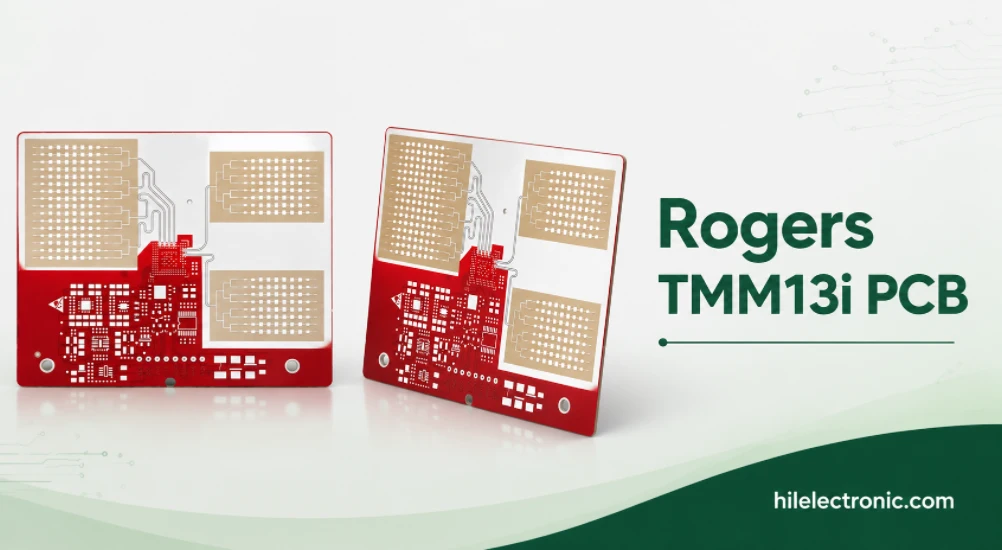
TMM13i PCB Manufacturing
TMM13i PCB manufacturing is aimed at ultra-compact RF...
How to get a quote for PCBs
Let us run DFM/DFA analysis for you and get back to you with a report.
You can upload your files securely through our website.
We require the following information in order to give you a quote:
-
- Gerber, ODB++, or .pcb, spec.
- BOM list if you require assembly
- Quantity
- Turn time