
PCB Shape: A Comprehensive Guide to Board Geometry Selection

1. Introduction: PCB Shape Definition and Strategic Importance
PCB shape refers to the physical outline or geometric form of a printed circuit board. This fundamental design parameter extends beyond aesthetics—it directly influences component placement efficiency, signal routing paths, mechanical fit within enclosures, and overall manufacturing complexity. The board outline determines how effectively space is utilized, how thermal energy dissipates, and how stress distributes across the substrate during operation and handling.
Selecting the appropriate PCB shape requires balancing multiple engineering constraints: electrical performance, mechanical integration, thermal management, and production economics. A well-chosen board geometry optimizes signal integrity while minimizing material waste and fabrication costs. This guide examines standard and custom PCB shapes, their respective advantages, and the critical design considerations that inform optimal shape selection.
2. PCB Shape Classification Overview
PCB shapes fall into three broad categories based on geometric complexity and manufacturing requirements. Standard shapes include rectangular, circular, and triangular configurations—these leverage established fabrication processes and offer predictable cost structures. Non-standard shapes encompass irregular polygons and complex outlines tailored to specific enclosure geometries. Specialized forms include flexible circuits, rigid-flex combinations, and modular interconnect designs that address unique application requirements.
3. Standard PCB Shapes: Core Geometries
3.1 Rectangular PCB Shape

The rectangular PCB shape dominates electronics manufacturing, representing the vast majority of production boards. Its orthogonal geometry aligns naturally with component packages, simplifies routing strategies, and maximizes panelization efficiency during fabrication. Standard panel sizes accommodate rectangular boards with minimal material waste, translating directly to lower unit costs.
Rectangular boards offer straightforward mounting through corner holes or edge-mounted connectors, facilitating enclosure design and assembly automation. Signal traces follow intuitive horizontal and vertical paths, supporting clean layer stackups and predictable impedance control. This shape suits applications from consumer electronics and computer motherboards to industrial control systems where standardization and cost efficiency take priority.
3.2 Circular PCB Shape

Circular PCB shapes eliminate corner stress concentrations, distributing mechanical loads uniformly across the board perimeter. This geometry provides inherent rotational symmetry, making it ideal for applications requiring radial component arrangement or integration with cylindrical housings. The absence of sharp angles reduces the risk of crack initiation under thermal cycling or mechanical vibration.
Round board shapes appear frequently in wearable devices, circular sensor modules, LED lighting fixtures, and medical implants where form factor constraints dictate geometry. Designers must account for non-orthogonal trace routing, which can complicate signal path planning and reduce routing density compared to rectangular alternatives. Panelization requires careful nesting strategies to minimize substrate waste during fabrication.
3.3 Triangular PCB Shape

Triangular PCB shapes address specific spatial constraints where rectangular or circular forms cannot efficiently fill available volume. This geometry enables higher area utilization within triangular enclosure sections or corner-mounted applications. Multiple triangular boards can tessellate into larger arrays, supporting modular lighting systems, distributed sensor networks, or tiled display backplanes.
Engineering considerations for triangular shapes include thermal management at acute vertices, where heat can accumulate due to reduced copper spreading area. Trace routing requires careful planning to avoid congestion near corner regions. Custom fixturing may be necessary for assembly and testing processes not designed around standard rectangular formats.
4. Non-Standard and Custom PCB Shapes
4.1 Irregular PCB Shape Designs
Irregular PCB shapes conform precisely to product enclosure contours, maximizing circuit board area within constrained housings. These custom outlines often incorporate cutouts, notches, and castellated edges that accommodate mechanical features, heat sinks, or through-assembly components. Automotive electronics, handheld devices, and aerospace systems frequently require irregular board geometries to fit within aerodynamically or ergonomically optimized shells.
Manufacturing irregular shapes demands tighter dimensional tolerances and more sophisticated routing operations. CNC milling or laser cutting replaces standard V-scoring for board separation, increasing fabrication time and cost. Design for manufacturability reviews become essential to ensure edge features remain within process capabilities and that panel utilization remains economically viable.
4.2 Polygonal and Curved PCB Shapes
Hexagonal and other polygonal PCB shapes enable optimized array configurations for applications such as phased antenna arrays, where element spacing and angular relationships directly affect electromagnetic performance. These geometries allow efficient tiling without gaps, supporting scalable system architectures. Curved or arc-shaped boards serve specialized mounting requirements on cylindrical surfaces or within curved enclosures.

Complex PCB shape implementations require close collaboration between mechanical and electrical engineering teams. Maintaining controlled impedance across non-linear trace paths presents additional challenges. Advanced CAD tools with integrated mechanical verification capabilities help ensure that geometric and electrical requirements align throughout the design process.
5. PCB Shape Design Considerations and Engineering Trade-offs
5.1 Mechanical and Assembly Constraints
PCB shape selection must account for enclosure geometry, mounting provisions, and assembly process requirements. Board outlines should provide adequate clearance for screw bosses, snap-fit features, and cable routing channels within the housing. Mounting hole placement affects both mechanical stability and ground continuity. Non-rectangular shapes may require custom pick-and-place fixtures, potentially impacting assembly throughput and equipment compatibility.
5.2 Signal Integrity and Electrical Performance
Board geometry influences signal integrity through its effect on return current paths and reference plane continuity. Irregular shapes or internal cutouts can interrupt ground planes, forcing return currents into longer paths that increase loop inductance and degrade high-speed signal quality. Edge geometry near high-frequency traces requires attention to prevent impedance discontinuities that cause reflections and electromagnetic emissions.
Simulation tools help predict how specific PCB shapes affect electrical performance before fabrication. Critical signals should route through regions with uninterrupted reference planes, regardless of overall board outline. Power delivery networks require similar consideration, ensuring that shape-driven constraints do not compromise decoupling effectiveness or voltage regulation stability.
5.3 Thermal and Stress Distribution
PCB shape affects how thermal energy spreads from heat-generating components to board edges and eventually to the surrounding environment. Sharp internal corners or narrow board sections can create thermal bottlenecks, concentrating heat in localized areas. Rounded corners and filleted internal features distribute thermal stress more uniformly, reducing the risk of solder joint fatigue or substrate delamination during temperature cycling.
5.4 Manufacturing and Cost Considerations
Complex PCB shapes increase fabrication costs through longer machining times, lower panel utilization, and additional quality control requirements. Curved edges and tight-tolerance features require precision routing operations that consume more production capacity than straight-cut V-scored panels. Early engagement with manufacturing partners helps identify cost drivers and optimize board outlines for production efficiency without compromising functional requirements.
6. Conclusion
PCB shape selection represents a foundational design decision with far-reaching implications for electrical performance, mechanical integration, thermal behavior, and manufacturing economics. Standard rectangular shapes offer proven benefits in cost and routing simplicity, while circular, triangular, and custom geometries address specific spatial or functional requirements that justify their additional complexity.
Effective shape decisions emerge from systematic evaluation of application constraints, including enclosure geometry, signal integrity requirements, thermal management needs, and production volume economics. Engineers should resist selecting unconventional shapes for aesthetic novelty alone—each geometric choice should demonstrably serve the product’s functional objectives. By treating board geometry as an integral part of the overall system design, engineers can optimize PCB shape to enhance rather than compromise final product performance.

Recommended Posts
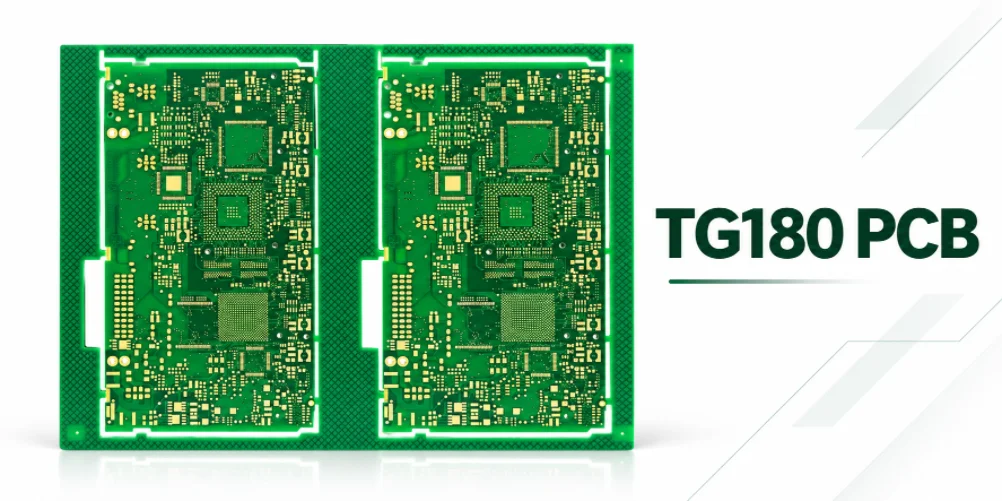
How to Select Tg180 PCB Materials for Custom Boards
Choosing a Tg180 PCB involves more than selecting a...
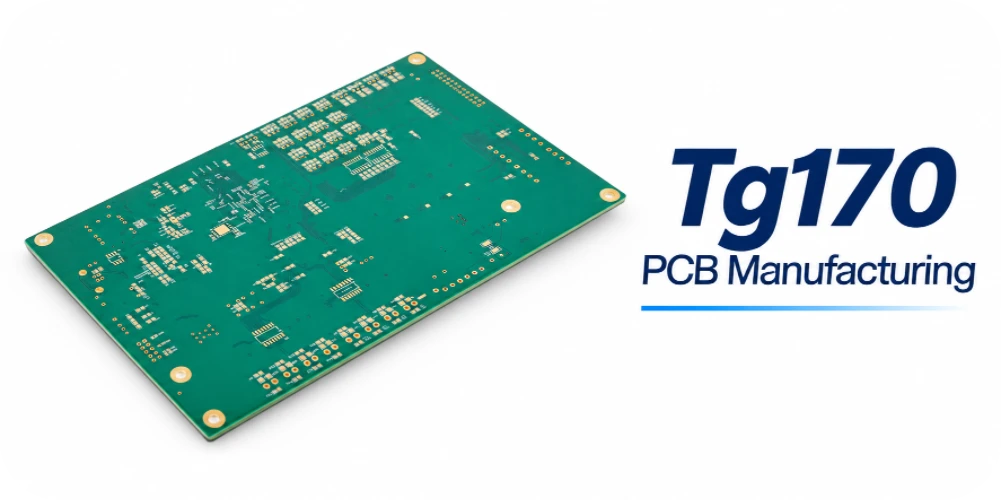
Tg170 PCB Manufacturing and Assembly for Industrial Electronics
A Tg170 PCB may be specified for industrial electronics,...
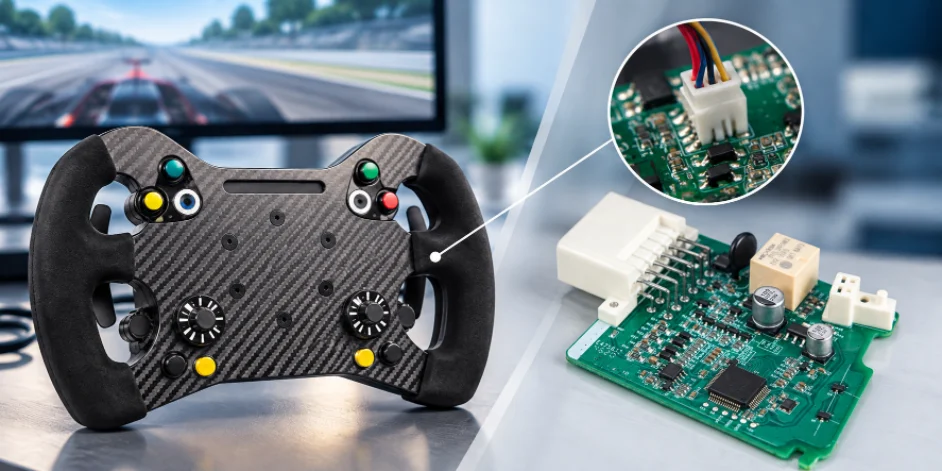
Racing Wheel Controller PCB Manufacturing & Assembly for Force-Feedback and Direct-Drive Gaming Systems
Highleap Electronics provides PCB fabrication and PCBA for...
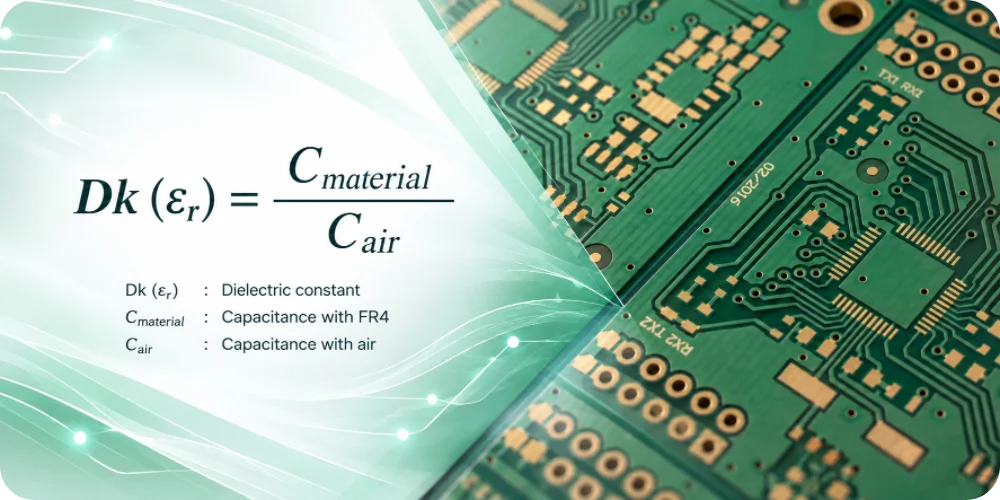
FR4 Dielectric Constant Calculator and PCB Design Guide
How to get a quote for PCBs Let's run DFM/DFA analysis for...
How to get a quote for PCBs
Let‘s run DFM/DFA analysis for you and get back to you with a report. You can upload your files securely through our website. We require the following information in order to give you a quote:
-
- Gerber, ODB++, or .pcb, spec.
- BOM list if you require assembly
- Quantity
- Turn time
In addition to PCB manufacturing, we offer a comprehensive range of electronic services, including PCB design, PCBA, and turnkey solutions. Whether you need help with prototyping, design verification, component sourcing, or mass production, we provide end-to-end support to ensure your project’s success.
For PCBA services, please provide your BOM (Bill of Materials) and any specific assembly instructions. We also offer DFM/DFA analysis to optimize your designs for manufacturability and assembly, ensuring a smooth production process.