
Burn-In Board PCB Design for Reliability Testing

Introduction
Burn-in Board PCB is a critical testing platform used in semiconductor reliability evaluation, designed to withstand prolonged high-temperature and high-load conditions during burn-in testing. These specialized circuit boards enable manufacturers to identify early-life failures in integrated circuits by subjecting them to accelerated stress conditions that simulate years of normal operation.
During burn-in testing, chips operate continuously at elevated temperatures while under full electrical load, revealing potential defects before devices reach end customers. This article examines the essential design considerations, material requirements, and manufacturing standards that ensure Burn-in Board PCBs deliver accurate and repeatable test results.
What is a Burn-in Board PCB?
A Burn-in Board PCB serves as a dedicated test fixture engineered specifically for burn-in reliability testing in semiconductor manufacturing. Unlike conventional test boards, these platforms must maintain electrical and mechanical stability while operating continuously in extreme thermal environments.
Typical burn-in testing conditions range from 125°C to 150°C for periods extending from 72 to 168 hours. The primary function of these boards is to detect infant mortality failures by applying sustained electrical stress at elevated temperatures, allowing manufacturers to screen defective devices before shipment.
Burn-in Board PCBs differ fundamentally from load boards and probe cards. While load boards focus on functional testing at ambient temperatures and probe cards prioritize high-frequency signal integrity during wafer-level testing, Burn-in Boards emphasize thermal endurance and long-term dimensional stability under continuous thermal stress.
Burn-in Testing Environment and PCB Requirements
High-Temperature Oven Compatibility
Burn-in Board PCBs operate inside specialized oven chambers designed to maintain precise temperature control across large test volumes. These boards must fit standardized oven racks while accommodating thermal expansion during temperature cycling. Chamber compatibility requires careful attention to board dimensions, mounting hole locations, and clearance for airflow around populated devices.
Thermal Cycling and Mechanical Stress
The repeated thermal cycling inherent in burn-in testing generates significant mechanical stress through coefficient of thermal expansion mismatches. Boards experience dozens of heating and cooling cycles throughout their service life, with each cycle potentially inducing micro-cracks in solder joints or trace delamination. Design must account for these cumulative stresses through symmetrical layer stack-ups and strategic via placement.
Material Selection for Burn-in Board PCBs
Material selection represents the most critical decision in Burn-in Board PCB design, directly determining thermal performance and operational lifespan. The laminate must maintain mechanical integrity and electrical properties throughout hundreds of hours at extreme temperatures.
This page focuses on the PCB and fixture hardware used during reliability stress testing. For the broader test method and process flow, review the burn-in testing overview; for assembled board validation, connect the fixture plan with functional testing support.
Polyimide Laminates
Polyimide-based materials provide superior thermal stability with glass transition temperatures exceeding 250°C, making them ideal for the most demanding burn-in applications. These materials exhibit excellent dimensional stability and low coefficient of thermal expansion at 30-50 ppm/°C, minimizing board warpage during extended thermal exposure.
FR-408HR and High-Tg Alternatives
FR-408HR from Isola offers an alternative solution with glass transition temperature of 180°C and lower moisture absorption compared to standard FR-4 materials. This laminate maintains reliable electrical properties at temperatures up to 150°C while providing cost advantages over polyimide constructions for less demanding applications.
Metal Core Solutions
For applications requiring extreme power dissipation, metal core or thermally reinforced constructions integrate aluminum or copper substrates that enhance heat spreading. These materials provide thermal conductivity of 1-5 W/mK compared to 0.3 W/mK for standard laminates, ensuring temperature uniformity across the Burn-in Board surface.
Engineers should request thermal aging reports from PCB suppliers documenting laminate performance after 500 to 1000 hours of continuous exposure at intended operating temperatures.

Burn-in Board PCB
High-Power Trace and Pad Design for Burn-in Boards
Trace Width and Copper Weight
Burn-in Board PCBs must deliver substantial current to multiple devices operating simultaneously at maximum power levels. Power distribution design considerations include:
- Heavy copper construction – 2-ounce or 3-ounce copper weights minimize resistive losses and temperature rise during continuous operation.
- Wider trace calculations – Ambient temperatures near 150°C require significantly wider conductors than equivalent room-temperature designs.
- Thermal via arrays – Strategic placement beneath power traces facilitates heat transfer into internal copper planes.
- Heat-spreading layers – Internal copper planes create low thermal resistance paths preventing localized hot spots.
Surface Finish Selection
Pad surface finishes must withstand oxidation and maintain solderability through multiple thermal cycles. Electroless nickel immersion gold provides excellent durability with typical nickel thickness of 3-6 microns and gold flash of 0.05-0.1 microns. Hard gold plating on connector pads ensures reliable contact resistance through hundreds of insertion cycles in high-temperature environments.
Organic solderability preservatives offer cost advantages but require evaluation of thermal stability characteristics, as most OSP formulations begin degrading above 130°C during extended exposure.
Connector and Socket Design for Burn-in Board PCBs
High-temperature connector systems represent critical reliability elements in Burn-in Board construction. Connector housings must employ high-performance thermoplastics such as polyphenylene sulfide or liquid crystal polymer that maintain mechanical strength above 150°C.
Contact metallurgy requires gold plating over nickel or phosphor bronze base materials to ensure stable contact resistance throughout thermal cycling. Standard tin-plated contacts oxidize rapidly at burn-in temperatures, leading to intermittent connections and false test results.
Mechanical retention systems secure Burn-in Boards within oven fixtures using stainless steel hardware rated for continuous use at 200°C. Board-to-socket alignment requires precision to prevent contact damage during thermal expansion, often employing floating connector designs that accommodate differential movement.
Design for Thermal Reliability in Burn-in Board PCBs
Thermal Simulation and Analysis
Thermal simulation during the design phase identifies potential hot spots and validates thermal management strategies before prototype fabrication. Finite element analysis models predict temperature distributions across the Burn-in Board PCB under full power loading, enabling designers to optimize copper distribution and component spacing.
Managing CTE Mismatch
Coefficient of thermal expansion mismatch between PCB materials and device packages generates shear stress in solder joints during temperature cycling. Symmetrical stack-up constructions minimize board warpage by balancing copper distribution across the layer structure, with typical copper balance maintained within 10% between layers.
Design rules should limit copper concentration variations to prevent differential expansion that induces board twist. Use symmetrical stack-up to minimize board warpage during long-term thermal exposure, placing power and ground planes symmetrically about the board centerline.
Manufacturing and Quality Control for Burn-in Board PCBs
Specialized Process Controls
Burn-in Board PCB manufacturing requires process controls that exceed standard production requirements:
- Extended lamination cycles – Thermal exposure profiles ensure complete resin cure and minimize residual stress in the finished board.
- Moisture removal – Post-assembly baking at 120°C for 4-8 hours reduces moisture content below 0.2% to prevent delamination.
- Controlled impedance verification – Testing confirms specifications are met across the operational temperature range.
- High-potential testing – Validation of insulation resistance at elevated temperatures ensures dielectric integrity.
Post-Manufacturing Inspection
Electrical testing verifies controlled impedance traces and contact resistance measurements confirm reliable connections before boards enter service. Post-burn-in inspection examines boards for discoloration, delamination, or dimensional changes indicating material degradation requiring board replacement.
Applications of Burn-in Board PCBs
Memory and Logic Devices
Memory integrated circuits including DRAM and Flash devices undergo extensive burn-in testing to ensure data retention reliability. Burn-in Board PCBs for memory testing often accommodate 64 to 256 devices simultaneously, requiring sophisticated power distribution networks to maintain uniform temperatures across densely populated boards.
Power Semiconductors
Power semiconductor devices such as MOSFETs and IGBTs require burn-in testing at elevated junction temperatures while conducting rated currents. These applications demand Burn-in Boards with substantial copper weights handling power dissipation from 5W to 50W per device position.
Automotive and Aerospace Electronics
Automotive and aerospace electronics mandate extended burn-in testing to meet AEC-Q100 and MIL-STD-883 reliability requirements for safety-critical applications. These industries employ Burn-in Board PCBs designed for thousands of thermal cycles, supporting qualification testing across extended operational lifetimes.
High-Reliability Industrial ICs
High-reliability industrial control integrated circuits undergo burn-in screening to achieve failure rates below 10 FIT (failures in time per billion device-hours). The Burn-in Board PCBs used in these applications must provide exceptional long-term stability across production lots spanning months or years.
Conclusion
Successful Burn-in Board PCB design integrates thermal management, material selection, and electrical design principles optimized for extended high-temperature operation. Selecting appropriate laminate materials with proven thermal aging characteristics establishes the foundation for reliable performance, while robust power distribution networks and connector systems ensure consistent electrical integrity throughout continuous operation.
Highleap Electronics Burn-in Board PCB Capabilities
At Highleap Electronics, we provide specialized manufacturing solutions for demanding burn-in testing applications:
- High-temperature materials expertise – Polyimide and high-Tg FR-408HR laminate processing with validated thermal aging performance.
- Heavy copper construction – 2-ounce to 6-ounce copper weights with precision trace width control for power distribution.
- Advanced surface finishes – ENIG and hard gold plating processes optimized for high-temperature reliability.
- Thermal simulation support – Pre-manufacturing design validation to optimize thermal performance and identify potential issues.
- Quality documentation – Complete material traceability and thermal aging test reports for critical applications.
Contact our engineering team to discuss your burn-in testing requirements and learn how our specialized manufacturing processes can support your semiconductor reliability programs.

Recommended Posts
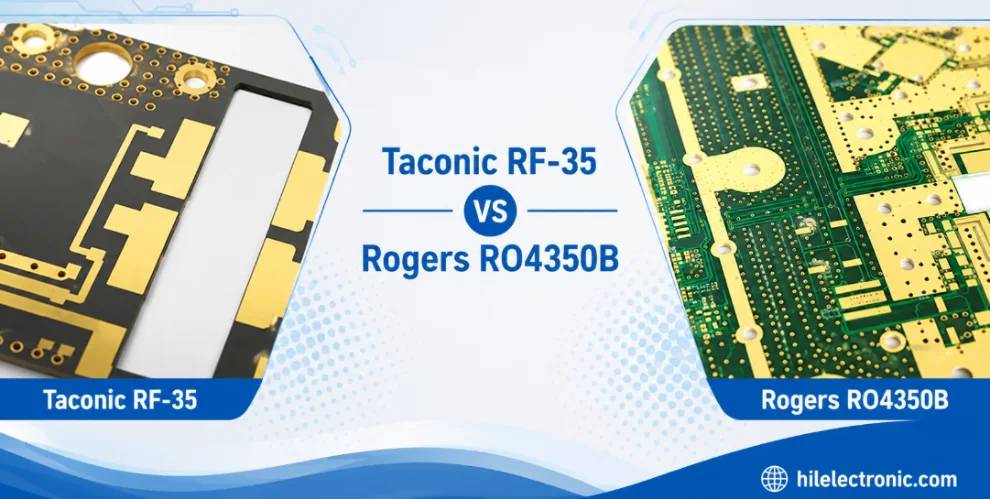
Taconic RF 35 vs RO4350B PCB
Table of contentsRF-35 vs RO4350B Procurement and...
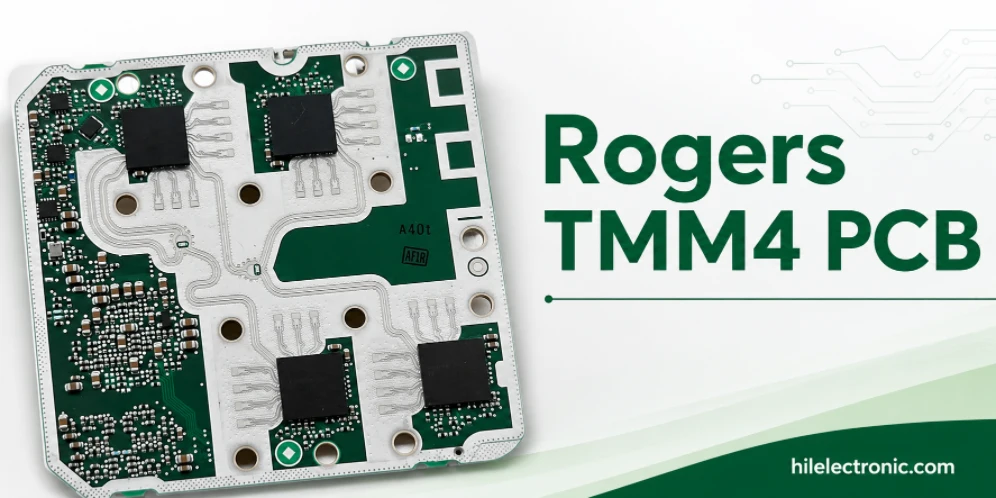
TMM4 Filter PCB Manufacturing
TMM4 filter PCB manufacturing is controlled by the...
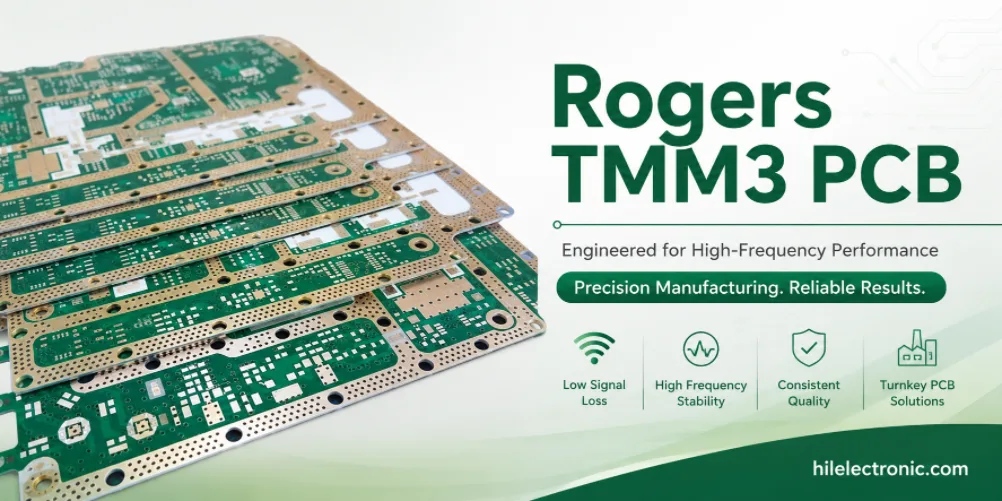
TMM3 PCB Manufacturing for RF Modules
TMM3 PCB manufacturing is most useful where the RF module...
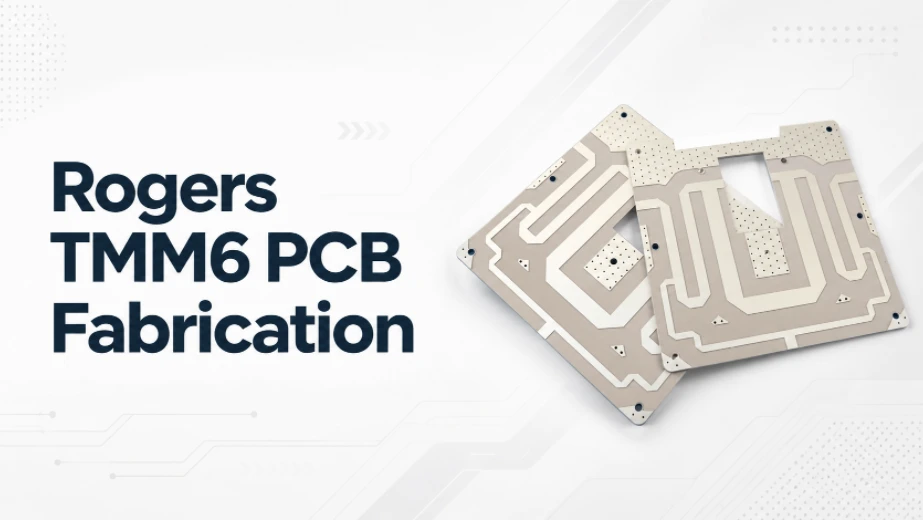
TMM6 PCB Fabrication
TMM6 fabrication is the process-control page for a mid-Dk...
How to get a quote for PCBs
Let‘s run DFM/DFA analysis for you and get back to you with a report. You can upload your files securely through our website. We require the following information in order to give you a quote:
-
- Gerber, ODB++, or .pcb, spec.
- BOM list if you require assembly
- Quantity
- Turn time
In addition to PCB manufacturing, we offer a comprehensive range of electronic services, including PCB design, PCBA, and turnkey solutions. Whether you need help with prototyping, design verification, component sourcing, or mass production, we provide end-to-end support to ensure your project’s success.
For PCBA services, please provide your BOM (Bill of Materials) and any specific assembly instructions. We also offer DFM/DFA analysis to optimize your designs for manufacturability and assembly, ensuring a smooth production process.