
Flex PCB in Smart Glasses: Engineering Excellence for Next-Generation Wearable Vision

The Critical Role of Flex PCB in Smart Glasses Development
Smart glasses represent the convergence of display innovation, miniaturized computing, and ergonomic design. At the core of this evolution is flexible PCB technology, which enables compact, lightweight integration of complex electronic components within slim, wearable frames.
In smart glasses, flex PCBs are essential for routing signals around curved surfaces, connecting micro-displays close to the eye, and withstanding repeated mechanical adjustments without performance loss. Their design must achieve a precise balance—combining flexibility, electrical reliability, thermal stability, and cost efficiency—to transform smart glasses from experimental concepts into viable consumer products.
Understanding Flex PCB Architecture for Smart Glasses
Core Technology Requirements for Smart Glasses Flex PCB
Flex PCB design for smart glasses presents challenges that go beyond conventional wearable electronics. Optical and ergonomic demands require ultra-thin stack-ups—typically below 0.10 mm—while maintaining 1 oz copper for sufficient current capacity and signal integrity. These circuits must handle ultra-high-density interconnects for displays reaching 3840×2160 resolution per eye, all within the curved, space-limited geometry of the glasses frame.
Beyond signal routing, flex PCBs in smart glasses also function as structural elements supporting micro-displays, maintaining precise optical alignment, and dissipating heat from processors operating up to 2.5 GHz.
Performance Standards for Smart Glasses Flex PCB
High-performance flex PCBs for smart glasses undergo stringent reliability and performance validation. Dynamic bending endurance must exceed 50,000 cycles at a 5 mm radius, with top-tier models achieving over 100,000 cycles to ensure long-term durability.
To maintain high-speed data transmission for 8 Gbps+ display interfaces, controlled impedance of 50 Ω ± 10% (single-ended) and 100 Ω ± 10% (differential) is essential. Thermal management requirements include keeping component junction temperatures below 85 °C and skin-contact surfaces under 43 °C. Additionally, materials must meet IPX4 moisture protection and UV resistance standards exceeding 500 hours without discoloration or performance degradation.
Advanced Materials Selection for Flex PCB in Smart Glasses
Substrate Technology for Optimal Performance
Polyimide remains the preferred substrate for flex PCBs in smart glasses, offering high thermal stability (Tg ≈ 285 °C) and reliable dielectric properties (Dk ≈ 3.5 @ 1 MHz). It delivers consistent manufacturability and flexibility required for compact wearable designs.
Thermoplastic polyimide (TPI) variants add reworkability—allowing component replacement without damaging the substrate—making them ideal for prototype and iterative development phases. Meanwhile, liquid crystal polymer (LCP) substrates offer ultra-low moisture absorption (< 0.02%) and excellent dimensional stability. With a dielectric constant of 2.9 @ 10 GHz, LCP is well suited for smart glasses integrating millimeter-wave wireless communication modules.
Conductor Innovations
Rolled annealed (RA) copper remains the standard conductor for smart glasses flex PCBs due to its superior fatigue resistance. A 18 μm copper layer balances conductivity and flexibility, while 12 μm copper supports tighter bends for slim frame integration.
Surface finishes enhance both performance and reliability. OSP (Organic Solderability Preservative) provides economical oxidation protection during short assembly windows, whereas ENIG (Electroless Nickel Immersion Gold) extends shelf life and ensures wire-bonding compatibility—critical for high-resolution display driver interconnects.
Emerging alternatives include silver-filled polymer thick films for stretchable interconnects in adjustable components, and carbon nanotube conductors, which may reduce overall circuit weight by up to 50% in next-generation designs.
Protective Layers for Smart Glasses Flex PCBs
Coverlay materials play a vital role in long-term reliability. Polyimide coverlays with modified acrylic adhesives achieve elongation above 100% and maintain adhesion through temperature ranges from −40 °C to 150 °C.
For high-density designs, photo-imageable solder masks enable fine openings down to 75 μm, ideal for BGA-mounted processors and compact display modules. They also eliminate alignment challenges associated with traditional coverlay methods.
To mitigate electromagnetic interference, integrated EMI shielding films are incorporated into the flex PCB stack-up. Silver-coated fabric shields provide up to 60 dB attenuation at 2.4 GHz while adding negligible thickness—ensuring both electrical integrity and sleek wearable form factors.
Precision Design Rules for Flex PCB in Smart Glasses
Mechanical Design Parameters
Flex PCB design in smart glasses follows IPC-2223C guidelines. Static bends require a minimum radius of 6× total thickness, and dynamic bends 12× for long-term reliability. Trace routing should minimize mechanical stress—using smooth curves instead of sharp corners and keeping conductors perpendicular to the bend axis.
Stiffeners (FR-4 or polyimide) are strategically placed under components while preserving flexibility in bending zones. Tapered edges at rigid-flex transitions further reduce stress concentration.
Electrical Design Considerations
High-speed MIPI DSI interfaces (1.5 Gbps/lane) require impedance control within ±5% and trace length matching within 0.1 mm. Power distribution must support multiple voltage domains (0.9 V–12 V) with dedicated planes and distributed decoupling for transient stability.
To balance shielding and flexibility, hatched ground planes with ~60% copper retention maintain signal integrity while reducing stiffness compared to solid copper layers.
Thermal Management
Efficient heat dissipation combines copper flooding and thermal vias beneath processors to route heat toward frame-mounted sinks. Component layout spreads thermal loads to prevent hot spots, with power ICs near temple areas leveraging the frame for passive cooling.
Thermal interface materials (TIMs) or phase-change layers ensure consistent heat transfer and mechanical compliance across the device’s operating temperature range.
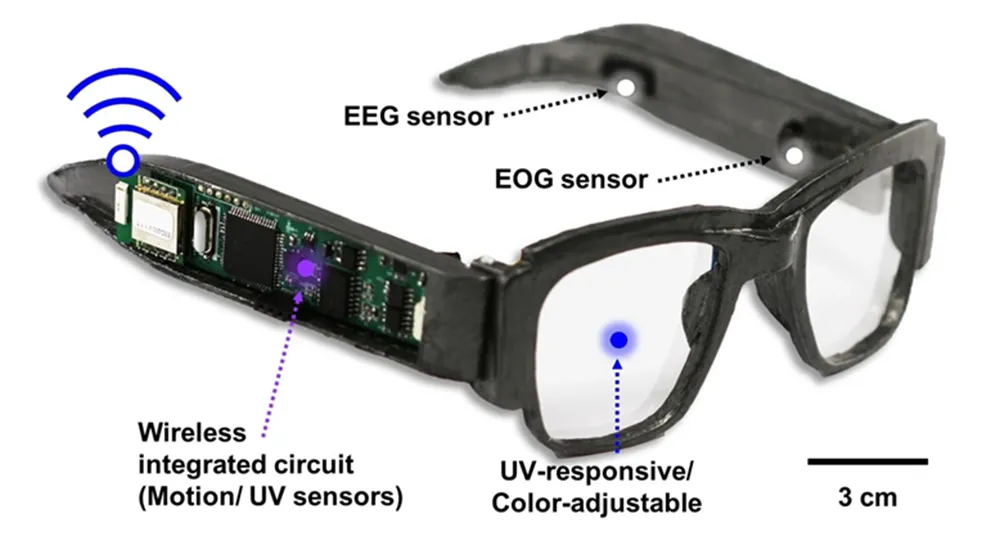
Smart Glasses
Manufacturing Excellence for Flex PCB in Smart Glasses
Advanced Production Processes
Laser Direct Imaging (LDI) enables 35 μm line/space resolution, ensuring precise high-density interconnects without photomask alignment issues. Modified semi-additive processing (mSAP) further refines trace definition to 25 μm width with excellent adhesion—ideal for compact smart glasses circuitry. For mass production, roll-to-roll manufacturing maintains ±0.05 mm registration accuracy and achieves throughput above 10 m²/hour, reducing costs while ensuring consistency.
Assembly Optimization
Surface-mount assembly on polyimide requires careful control—peak reflow below 245 °C and gradual heating prevent delamination and warpage. Wire bonding supports fine-pitch die connections (25 μm), while flip-chip assembly maximizes interconnect density for advanced processors. A 10 μm Parylene conformal coating provides uniform environmental protection without compromising flexibility or bending performance.
Quality Assurance
Automated optical inspection (AOI) detects defects down to 10 μm, ensuring circuit integrity before assembly. Flying probe testing verifies continuity and component placement, ideal for flexible prototypes without costly fixtures. Comprehensive reliability testing—including temperature cycling, humidity, and mechanical flexing—validates long-term durability under real-use conditions.
Application-Specific Strategies for Flex PCB in Smart Glasses
Augmented Reality (AR) Glasses
AR glasses demand high-density flex PCBs capable of supporting high-resolution displays, multiple sensors, and wireless connectivity within limited space. Waveguide displays require precise alignment maintained by rigid zones within the flexible assembly.
Eye-tracking modules route sensitive analog and high-speed digital signals in parallel—requiring proper shielding and ground isolation to prevent crosstalk. Integrated 5G antennas built into flex circuitry deliver −10 dB return loss at 28 GHz, eliminating the need for external antenna modules.
Virtual Reality (VR) Integration
VR-enabled smart glasses use flex PCBs to support dual 4K displays at 90 Hz, requiring matched-length MIPI routing across flexible interconnects. Power circuits handle up to 10 W total system load, using parallel traces and distributed regulation for thermal balance. Motion sensors are mounted on rigid islands to reduce vibration-induced noise, ensuring stable performance during head movement.
Mixed Reality (MR) Platforms
MR systems combine AR and VR capabilities, requiring adaptive flex PCB architectures that maintain signal integrity while switching between operating modes.
Depth-sensing camera arrays depend on precisely matched trace lengths for synchronized image capture, enabling accurate 3D reconstruction. For hand-tracking applications, flex circuits support USB 3.2 data rates above 10 Gbps while accommodating minor mechanical adjustments to fit diverse user profiles.
Future Innovation in Flex PCB for Smart Glasses
Emerging Technologies and Materials
Stretchable circuit designs using serpentine traces allow up to 20% elongation without losing conductivity, enabling adjustable and more comfortable smart glasses frames. Transparent metal mesh conductors with sub-100 nm spacing support in-lens electronics for touch sensing and heating, without affecting optical clarity. Biocompatible polyurethane substrates extend use to medical and long-duration wear applications, combining skin safety with lasting flexibility.
Next-Generation Manufacturing
Additive manufacturing, including inkjet printing of conductive traces, enables customized flex PCBs optimized for individual designs. Artificial intelligence enhances layout optimization by analyzing multiple design iterations to achieve efficient trace routing and component placement. Eco-friendly production methods adopt water-based chemicals and recyclable substrates, supporting sustainability while maintaining electrical and mechanical performance.
Conclusion: Advancing Smart Glasses Through Flex PCB Innovation
Flex PCB technology lies at the core of the smart glasses revolution—transforming advanced concepts into functional, lightweight, and connected wearable devices. Achieving success in this field demands precise coordination of electrical design, mechanical reliability, and scalable manufacturing.
As smart glasses move toward mainstream adoption, continuous advancements in flexible materials, fine-line processing, and system integration will define the next generation of products. Collaboration with experienced PCB manufacturers is key to turning complex engineering requirements into dependable, production-ready solutions.
Why Choose Highleap Electronics for Smart Glasses Flex PCB
- Comprehensive Flex PCB Manufacturing – Expertise in ultra-thin, high-density, and multi-layer flexible circuits tailored for wearable applications.
- Advanced Process Control – Precision laser imaging, mSAP technology, and automated inspection ensuring consistent quality and reliability.
- Material and Design Optimization – Support for polyimide, LCP, and hybrid stack-ups with controlled impedance and tight bend-radius capability.
- Prototype to Mass Production – Rapid prototyping, roll-to-roll scalability, and customized assembly solutions for new product launches.
- Certified Quality Assurance – ISO9001, ISO13485, ISO14001, and IATF16949 systems guaranteeing traceability and compliance with global standards.
Highleap Electronics partners with innovators shaping the future of wearable technology. Contact our engineering team to discuss your smart glasses project and discover how our precision flex PCB solutions can accelerate your product development.

Recommended Posts
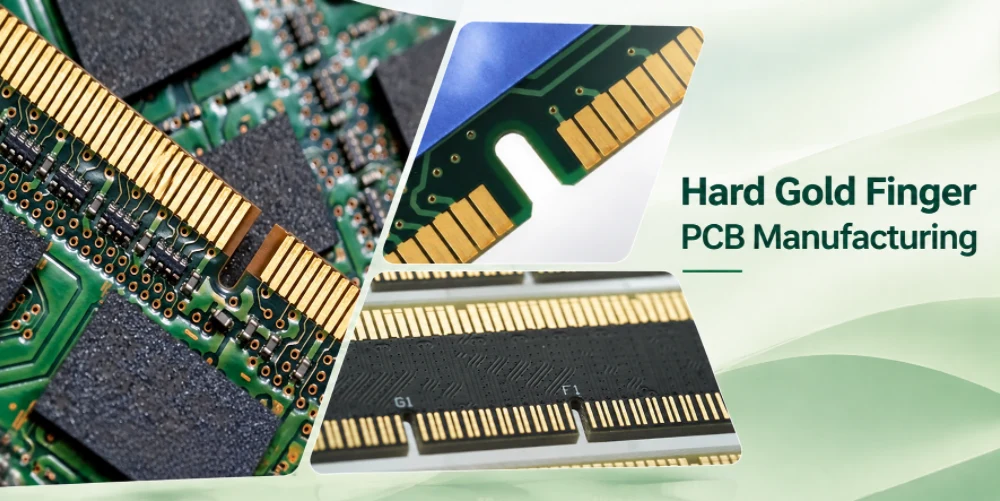
Hard Gold Finger PCB Manufacturing: Plating and Beveling
Hard gold finger PCB manufacturing is used when a circuit...
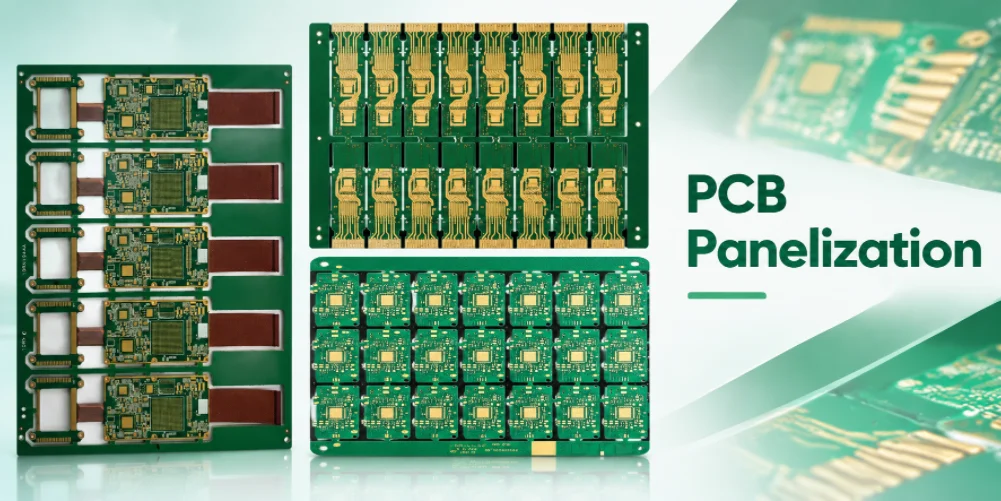
Small PCB Panelization: Array Design and Depaneling
Imagine a 26 × 18 mm circuit that must pass through...
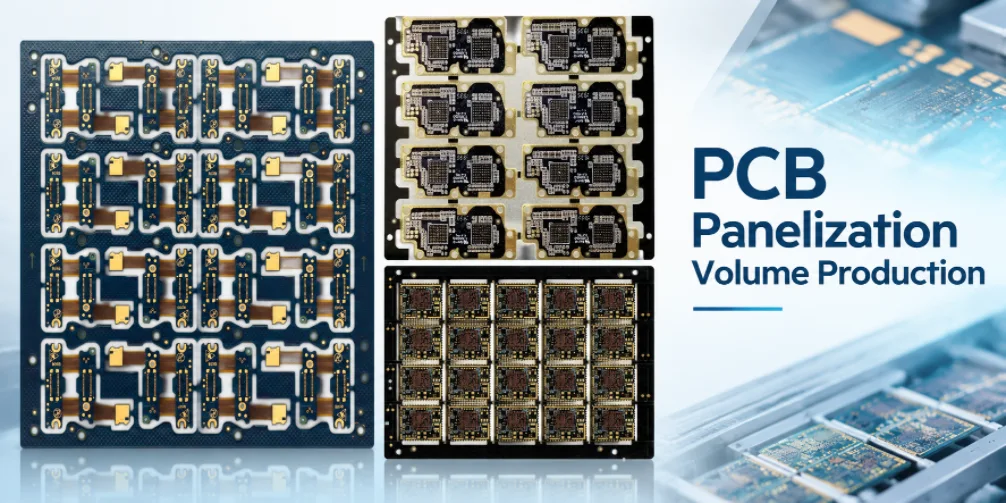
PCB Panelization for Volume Production: Cost and Yield
A fabrication panel that holds more boards is not...
PCB SET Delivery and Panelization: Quantities and Acceptance
A purchase order for “500 SET” looks straightforward until...
How to get a quote for PCBs
Let‘s run DFM/DFA analysis for you and get back to you with a report. You can upload your files securely through our website. We require the following information in order to give you a quote:
-
- Gerber, ODB++, or .pcb, spec.
- BOM list if you require assembly
- Quantity
- Turn time
In addition to PCB manufacturing, we offer a comprehensive range of electronic services, including PCB design, PCBA, and turnkey solutions. Whether you need help with prototyping, design verification, component sourcing, or mass production, we provide end-to-end support to ensure your project’s success.
For PCBA services, please provide your BOM (Bill of Materials) and any specific assembly instructions. We also offer DFM/DFA analysis to optimize your designs for manufacturability and assembly, ensuring a smooth production process.