
Borosilicate Glass PCB Fabrication Services

Borosilicate glass PCBs are precision-engineered circuit boards built on borosilicate glass substrates, valued for their dimensional stability, optical transparency, low dielectric loss, and reliable thermal performance. These boards are widely applied in RF circuits, automotive radar, transparent electronics, and glass core IC packages. Successful projects require careful application review, material selection, DFM evaluation, and structure confirmation to ensure manufacturability and performance. Early engineering alignment is critical because glass substrates behave differently from FR-4, with stricter tolerances for flatness, via placement, and thermal expansion.
Get a Borosilicate Glass PCB Quote
Before Requesting a Quote
- Prepare layout files, board outline, and stackup details, including layer thicknesses and trace/space requirements
- Specify the intended application: RF, transparent, thermal, or package-style, to evaluate material and processing constraints
- Indicate if vertical interconnects or through-glass features are required, referencing through-glass via capabilities
- Clarify whether fabrication only or fabrication plus assembly is needed, as assembly requirements influence pad design, surface finish, and handling strategy
Table of Contents
Overview and Advantages of Borosilicate Glass PCBs
Borosilicate glass consists of ~70–80% SiO₂ and 10–15% B₂O₃, which gives it low thermal expansion, high thermal shock resistance, and low dielectric loss. PCB-grade borosilicate is manufactured to tight tolerances (thickness ±0.01 mm, flatness Ra <0.5 µm) and minimal defect density. Standard thicknesses range from 0.3 mm to 3 mm, with ultra-thin options down to 0.1–0.2 mm using carrier support, and thicker panels (4–6 mm) for LED or structural applications.
- CTE closely matches silicon (~3.3 ppm/°C vs 2.6 ppm/°C), reducing solder stress and improving reliability in glass core IC packages.
- Low dielectric loss (Df ~0.004–0.010 across 1–77 GHz), suitable for high-frequency controlled impedance designs, phased arrays, and mmWave applications.
- Dimensional stability and flatness allow precise routing and package-style structures, critical for multilayer glass circuits and high-density interposer layouts.
- Zero moisture absorption enhances long-term reliability in aerospace, automotive, and industrial environments.
- Optical transparency (91–93% visible light) enables integration in transparent electronics, sensors, and LED arrays.
Compared with FR-4 boards, borosilicate glass PCBs require specialized manufacturing steps: laser-based via formation for vertical interconnects, PVD metallization for conformal copper deposition, and photolithographic patterning for ultra-fine trace geometries. These processes ensure precise electrical and mechanical performance while enabling advanced circuit architectures.
Electrical and Thermal Characteristics
Borosilicate glass maintains stable electrical properties over wide frequency ranges. Dielectric constant (Dk) ranges from 4.55 at 1 GHz to 4.47 at 77 GHz, with a low dissipation factor (Df) of ~0.004–0.010, making it ideal for RF, 5G mmWave, and high-speed digital circuits. The minimal Dk variation simplifies controlled impedance design and reduces signal distortion.
Thermal properties include:
- CTE matching: Reduces thermal stress for flip-chip and package-style circuits, supporting bump pitches of 50–100 μm. Ensures long-term solder joint reliability in automotive radar and high-frequency IC packages.
- Thermal shock resistance: Stable from −40°C to +500°C, suitable for automotive, aerospace, industrial, and marine applications where rapid temperature cycling occurs.
- Thermal conductivity: ~1.2 W/m·K, sufficient for moderate heat dissipation in LEDs, RF modules, and compact package assemblies. Thermal simulations and power density evaluations can optimize layout for sustained performance.
Electrical design must consider trace width, layer thickness, via capacitance, and vertical interconnect strategy to maintain impedance, signal integrity, and thermal management. DFM review ensures these parameters are verified early, referencing glass PCB manufacturing capabilities.

Mechanical, Optical, and Chemical Properties
Borosilicate glass PCBs provide a combination of rigidity, optical transparency, and chemical resistance:
- Mechanical stability: Rigid, flat, and dimensionally consistent; edge and corner handling precautions are necessary to prevent chipping or cracking. Laser scribing or full-depth cutting is typically used for singulation.
- Optical performance: 91–93% visible transmittance, 91–95% near-IR, suitable for transparent electronics, optical sensors, and LED panels. This allows integration of optical zones without compromising electrical routing.
- Chemical resistance: Hydrolytic Class 1 (ISO 719), resistant to acids, bases, solvents, and standard cleaning agents. Supports conformal coatings, encapsulants, and adhesives for outdoor and harsh-environment applications.
- Surface energy: High surface energy enhances adhesion of PVD metal films, photoresists, and conformal coatings. Plasma treatment can further improve surface activation.
These mechanical, optical, and chemical properties allow high-density conductor routing, precise pad placement, and integration of thermal or optical features, while maintaining long-term reliability in harsh environments.
Design, Manufacturability, and DFM Considerations
DFM review is critical to ensure borosilicate PCB designs are manufacturable. Glass behaves differently from FR-4: it is brittle, dimensionally stable, and sensitive to edge stresses. Key considerations include:
- Via placement, diameter, and vertical interconnect planning, referencing through-glass via requirements
- Trace width, spacing, and controlled impedance targets, critical for high-frequency and RF designs
- Pad geometry, layer symmetry, and copper distribution to minimize warpage and mechanical stress
- Edge clearance, cutouts, and substrate handling for laser singulation or optical edge quality
- Optical zones, transparency, and assembly constraints to avoid misalignment and maintain planarity
Early DFM review ensures prototypes or small-batch production meet electrical, mechanical, and thermal requirements. Feedback from this review guides layout adjustments, pad design, and process selection for consistent yield.
Applications and Production Planning
Borosilicate glass PCBs are selected for projects requiring electrical performance, thermal stability, or transparency:
- 5G mmWave RF modules, phased array antennas, and AiP systems requiring precise impedance control
- Automotive radar circuits (77 GHz) and compact sensor modules
- Glass core IC packages for fine-pitch flip-chip integration
- Transparent LED panels and optically sensitive electronics
- Harsh environment electronics: aerospace, marine, oil & gas, high-temperature industrial systems
- Optical biosensors and lab-on-chip devices requiring chemical stability and sterilization compatibility
Production planning integrates prototype evaluation, assembly readiness, and repeat production. Surface finish, pad placement, via fill, and edge protection are optimized during early engineering review. Designers can submit files through the quote page for detailed manufacturability feedback, ensuring the project aligns with both material and process constraints.

Recommended Posts
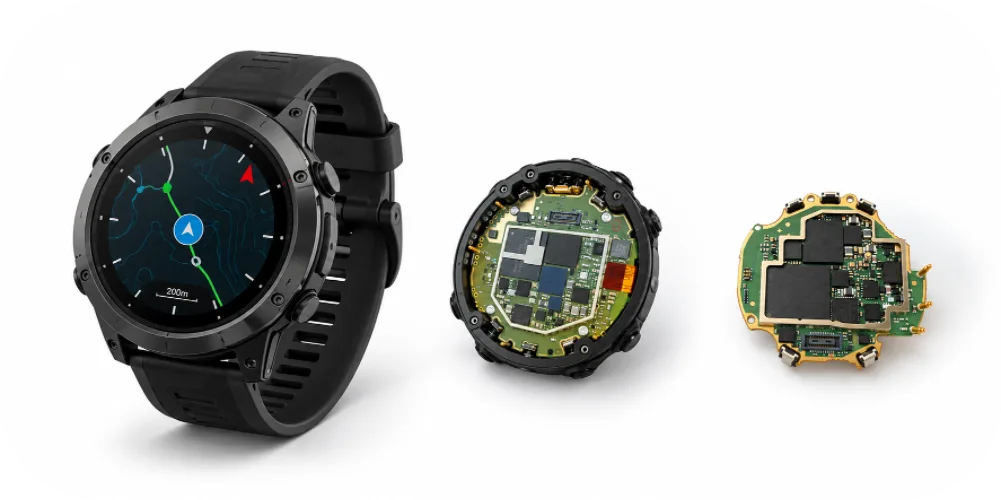
GPS Sports Watch PCB Design: GNSS, RF, Sensors and PCBA Manufacturing
Turning a compact GPS sports watch controller from an...
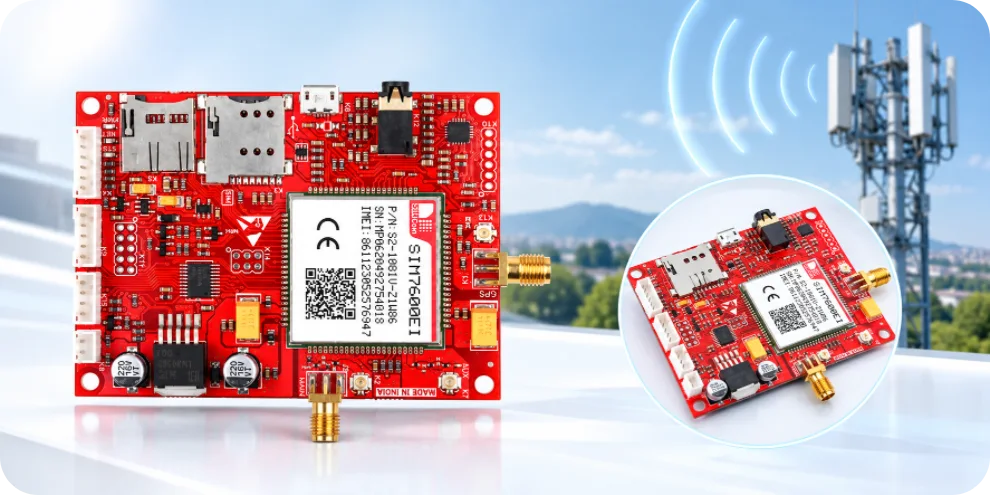
Cellular Modem PCB: From Module Carriers to PCBA
Need a manufacturer for a cellular modem PCB or a fully...
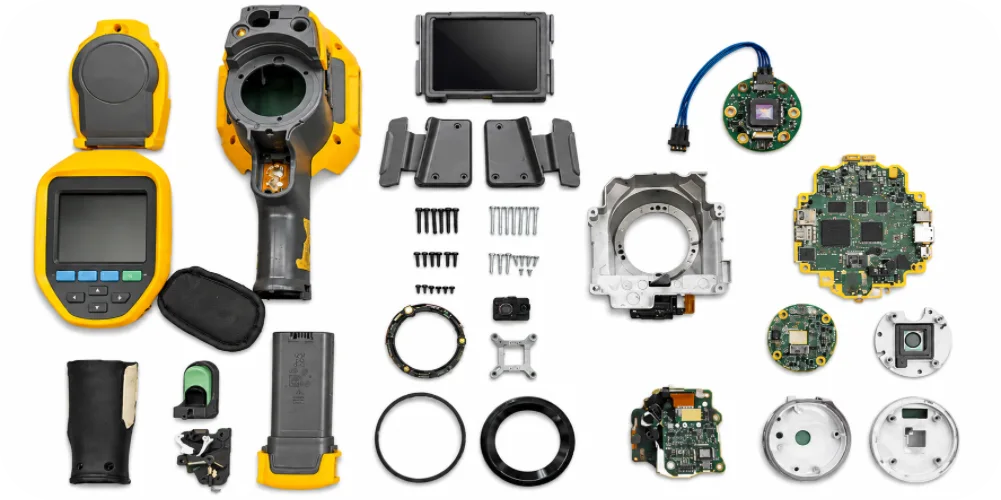
Portable Thermal Camera PCB Design and PCBA Manufacturing Guide
The thermal imaging module is often the part of a handheld...
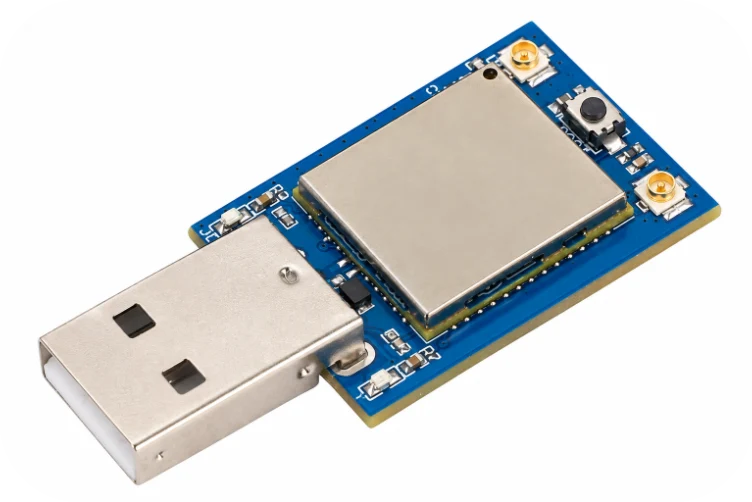
USB Modem PCB Manufacturing & PCBA for LTE/5G Dongles and Data Adapters
USB Modem PCB fabrication and assembly involves a compact...
How to get a quote for PCBs
Let us run DFM/DFA analysis for you and get back to you with a report.
You can upload your files securely through our website.
We require the following information in order to give you a quote:
-
- Gerber, ODB++, or .pcb, spec.
- BOM list if you require assembly
- Quantity
- Turn time
In addition to PCB manufacturing, we offer a comprehensive range of electronic services, including PCB design, PCBA (Printed Circuit Board Assembly), and turnkey solutions. Whether you need help with prototyping, design verification, component sourcing, or mass production, we provide end-to-end support to ensure your project’s success. For PCBA services, please provide your BOM (Bill of Materials) and any specific assembly instructions. We also offer DFM/DFA analysis to optimize your designs for manufacturability and assembly, ensuring a smooth production process.