
Copper Thickness in Flex PCB Design: A Comprehensive Technical Guide

Introduction of Copper Thickness in Flex PCB Design
Copper thickness fundamentally determines the electrical performance, mechanical reliability, and cost-effectiveness of flexible printed circuit boards. This critical parameter influences current carrying capacity, signal integrity, and manufacturing yield in flex PCB design. Engineers must balance these competing requirements against production capabilities to achieve optimal results.
Standard copper thickness in flex PCB applications ranges from 9 to 105 microns (¼ oz to 3 oz), with each thickness serving specific design requirements. The selection process requires evaluating current capacity needs, flexibility requirements, and signal integrity constraints. This comprehensive guide provides the technical framework for making informed copper thickness decisions in flexible circuit design.
Fundamental Concepts of Flex PCB Copper Thickness
Understanding Copper Thickness Measurements
Copper Thickness in Flex PCB is measured in three main units: ounces per square foot (oz/ft²), microns (μm), and mils. The standard conversion—1 oz copper equals 35 microns or 1.4 mils—is fundamental for design specifications. Manufacturing tolerances usually allow ±10% variation, which designers must consider in precision applications.
Measurement conventions vary by region: North American manufacturers typically use ounces, while Asian and European suppliers prefer microns. Understanding these regional standards ensures accurate communication and avoids specification errors during procurement.
Physical Properties of Copper in Flexible Circuits
Copper Thickness in Flex PCB directly affects electrical conductivity and current-carrying capacity. Doubling the copper thickness halves resistance, supporting higher currents or reducing voltage drop. Because resistance changes about 0.393% per °C, thermal performance must be factored into design.
For high-frequency flex PCB applications, the skin effect limits current flow to the conductor surface above 1 MHz. At 10 MHz, the skin depth is about 21 microns, so copper thicker than 42 microns contributes little to signal transmission. However, thicker copper still enhances mechanical strength and thermal management in flexible circuits.
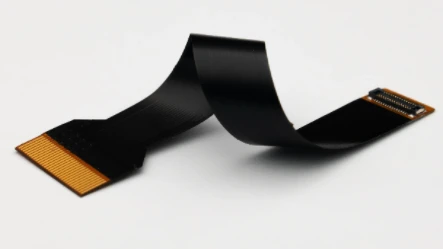
Black Flex PCB
Design Parameters for Copper Thickness in Flex PCB
Current Carrying Capacity in Flexible Circuits
IPC-2221 provides nomographs to determine trace width based on Copper Thickness in Flex PCB design. For example, a 35-micron (1 oz) copper trace requires 0.25 mm width to carry 1 A with a 10 °C temperature rise, while 70-micron (2 oz) copper reduces the width to 0.13 mm for the same current.
Via current capacity in flex PCB design depends on plating thickness and heat dissipation. A standard 25-micron via plating in a 0.3 mm hole supports about 0.5 A continuous current. Adding thermal vias connected to copper planes can boost capacity by 40–50% through improved heat transfer.
Signal Integrity Considerations for Flex PCB Copper Thickness
Controlled-impedance designs require precise Copper Thickness in Flex PCB to ensure consistent performance. In 50-ohm microstrip structures on polyimide, increasing copper from 18 μm to 35 μm typically changes impedance by 2–3 ohms, requiring trace width adjustment from 0.20 mm to 0.18 mm to maintain design targets.
Thinner copper also increases insertion loss due to higher DC resistance. At 5 GHz, 18-micron copper shows around 0.5 dB/inch loss compared to 0.3 dB/inch for 35 micron. High-speed flex PCB designs must balance copper thickness between loss control and mechanical flexibility.
Mechanical Flexibility and Copper Thickness
Copper Thickness in Flex PCB significantly affects bending reliability. IPC-2223 Class 2 recommends a minimum bend radius of six times total thickness for single-sided flex circuits. With 18-micron copper on 25-micron polyimide, this equals 0.26 mm, compared to 0.37 mm for 35-micron copper.
Thicker copper reduces fatigue life under repeated bending. Tests show 18-micron copper can endure over one million flex cycles, while 35-micron copper may fail after about 100,000. Selecting suitable copper thickness and incorporating stress-relief features can extend durability in dynamic applications.
Application Guidelines for Flex PCB Copper Thickness
High-Reliability Flex PCB Applications
Aerospace flex PCB designs typically specify 35-70 micron copper with IPC Class 3 requirements for critical systems. MIL-PRF-31032 mandates minimum 20-micron plating in vias and specific thickness tolerances of ±10%. Environmental testing validates performance from -55°C to +125°C with 1000 thermal cycles minimum.
Medical device flex PCBs balance biocompatibility with electrical performance using 18-35 micron copper thickness. ISO 10993 compliance requires careful material selection while maintaining signal integrity for sensitive measurements. Gamma sterilization compatibility limits some surface finish options but doesn’t affect base copper thickness selection.
Consumer Electronics Flex PCB Design
Wearable device flex PCBs utilize 9-18 micron copper to achieve maximum flexibility and comfort for users. These ultra-thin copper layers in flex PCB design require specialized handling and modified design rules. Minimum via sizes increase to 0.15mm finished diameter to ensure reliable plating coverage.
Smartphone flex PCB designs integrate multiple copper thicknesses, using 12-18 microns for high-density interconnects and 35 microns for power distribution. Battery charging circuits require 35-70 micron copper thickness for thermal management while maintaining overall assembly thickness below 0.3mm.
Industrial Flex PCB Applications
Power electronics flex PCBs utilize 70-105 micron heavy copper for current paths exceeding 10 amps. These thick copper flex PCB designs require extended etching times and specialized processing, increasing lead times by 2-3 days. Minimum trace spacing increases to 0.3mm due to increased lateral etching.
Automotive flex PCB applications specify 35-50 micron copper to balance current capacity with thermal cycling resistance. IATF 16949 requirements mandate process control documentation for copper thickness verification. Vibration testing per ISO 16750 validates long-term reliability across temperature extremes.

Polyimide Circuit Board
Materials Integration in Flex PCB Copper Thickness Design
Substrate Compatibility with Copper Thickness
Polyimide-based flex PCBs accommodate the full range of copper thicknesses from 9 to 105 microns effectively. Adhesiveless constructions provide superior peel strength exceeding 1.4 N/mm for optimal copper adhesion in flex PCB design. Different polyimide types offer glass transition temperatures from 360°C to 400°C, affecting processing options.
LCP substrates for high-frequency flex PCB applications require modified processing for thick copper layers. The lower z-axis CTE of LCP (17 ppm/°C versus 20 ppm/°C for polyimide) creates different stress patterns. This mismatch necessitates additional stress relief patterns in copper thickness transitions.
Surface Finishes Impact on Effective Copper Thickness
ENIG finishing adds 3-6 microns nickel plus 0.05-0.15 microns gold to the copper thickness in flex PCB pads. This additional thickness affects impedance by approximately 1-2 ohms in 50-ohm designs. Designers must account for this variation when specifying controlled impedance requirements.
Selective plating enables localized copper thickness enhancement without affecting overall flex PCB flexibility. Gold finger contacts receive additional 20-30 micron copper plating for wear resistance and conductivity. This technique optimizes thickness distribution for both electrical and mechanical requirements.
Manufacturing Considerations for Flex PCB Copper Thickness
Fabrication Process Effects on Copper Thickness
Subtractive etching creates undercut proportional to copper thickness in flex PCB manufacturing. For 35-micron copper, typical undercut measures 25-35 microns per edge, requiring artwork compensation. Thicker 70-micron copper exhibits 50-70 micron undercut, limiting minimum feature sizes to 0.15mm traces.
Panel plating uniformity affects copper thickness consistency across flex PCB production panels. Edge-to-center variations typically measure 15-20% for 35-micron nominal thickness. Advanced pulse plating reduces variation to 10-12% but increases processing costs by approximately 15%.
Quality Control for Copper Thickness in Flex PCB
Cross-sectioning provides definitive copper thickness measurement with ±2 micron accuracy in flex PCB verification. IPC-A-600 Class 2 requires minimum 20% coverage for plated through holes based on nominal copper thickness. Statistical sampling follows C=0 plans with AQL 0.65 for critical characteristics.
Non-destructive testing using X-ray fluorescence offers rapid screening with ±5% accuracy for copper thickness verification. Beta backscatter gauges provide continuous monitoring during production with 2-3 micron resolution. These methods enable 100% inspection for high-reliability flex PCB applications when required.

Flexible PCB Manufacturing
Optimization Strategies for Flex PCB Copper Thickness
Hybrid Copper Thickness Approaches
Variable copper thickness within single flex PCB designs optimizes local performance requirements effectively. Sequential build-up enables 18-micron signal layers with 70-micron power planes in multilayer constructions. This approach reduces overall thickness by 30% compared to uniform heavy copper designs.
Selective plating adds copper thickness only where needed for current capacity or connection reliability. Typical applications include 50-micron local reinforcement on 18-micron base copper for flex PCB connectors. Cost increases approximately 20% but provides superior flexibility compared to uniform thick copper.
Simulation Tools for Copper Thickness Optimization
Thermal analysis software predicts temperature rise based on copper thickness and current density in flex PCB traces. Finite element modeling shows 35-micron copper reduces hot spot temperatures by 15°C compared to 18-micron designs. These simulations enable optimization before prototype fabrication, reducing development cycles.
Mechanical stress analysis validates copper thickness selection for dynamic flex PCB applications. Simulation predicts fatigue life within 20% accuracy when calibrated with empirical data. Virtual prototyping reduces physical testing requirements by 50% while improving first-pass design success.
Testing Protocols for Flex PCB Copper Thickness Validation
Mechanical Testing Standards
IPC-TM-650 Method 2.4.3 defines flex endurance testing procedures for copper thickness validation. Standard test parameters include 60 cycles per minute at specified bend radius until failure. Pass criteria require surviving minimum cycle counts based on IPC flexibility class requirements.
Mandrel bend testing per Method 2.4.2.1 verifies copper thickness compatibility with installation requirements. Samples wrap 360 degrees around mandrels sized per calculated minimum bend radius. Visual inspection at 10X magnification confirms absence of cracks or delamination.
Electrical Performance Verification
Time domain reflectometry measures impedance variations caused by copper thickness inconsistencies in flex PCB designs. Acceptable tolerance ranges from ±5% for digital signals to ±2% for RF applications. TDR testing identifies thickness-related impedance discontinuities for corrective action.
Current capacity validation uses thermal imaging to verify temperature rise predictions for specific copper thickness. IPC-2152 derating factors apply based on ambient temperature and mounting configuration. Testing confirms designs maintain temperatures below material glass transition specifications.

Cost considerations in flexible PCB design
Cost Optimization for Copper Thickness in Flex PCB Design
Total Cost Analysis Framework
Material costs for copper thickness in flex PCB production scale approximately $0.15 per square foot per ounce. However, yield impacts create non-linear relationships where 70-micron copper reduces yields by 10-15%. Processing complexity for heavy copper adds 2-3 days lead time with 20-25% cost premium.
Field failure costs from inadequate copper thickness selection average 100-500 times initial savings. Warranty claims for thermal failures in under-specified designs create long-term reliability concerns. Proper thickness selection reduces field returns by 60-70% based on industry studies.
Value Engineering for Flex PCB Copper Thickness
Systematic optimization balances copper thickness requirements against manufacturing capabilities and costs. Standard thickness options (18, 35, 70 microns) provide 15-20% cost advantages over custom specifications. Early supplier engagement identifies sweet spots between performance requirements and production efficiency.
Design standardization on preferred copper thickness in flex PCB manufacturing reduces inventory costs by 30%. Volume aggregation across products leverages economies of scale for material procurement. These strategies reduce total costs by 10-15% while maintaining technical performance.
Emerging Technologies in Flex PCB Copper Thickness
Advanced Conductive Materials
Graphene-enhanced copper composites promise 40% conductivity improvement at equivalent thickness in future flex PCB designs. Carbon nanotube integration could enable 5-micron equivalent performance of current 18-micron copper. These materials remain in development with commercial availability expected within 3-5 years.
Printed electronics technologies enable additive copper deposition with 1-micron thickness control for flex PCB applications. Inkjet printing of nano-copper particles achieves 30% bulk conductivity after sintering. These processes reduce waste by 90% compared to subtractive etching methods.
Manufacturing Innovation for Copper Thickness Control
Laser ablation enables selective copper thickness reduction with 5-micron depth control in flex PCB production. This technology creates variable thickness within single traces for optimized current distribution. Processing speeds reach 100mm/second for production-scale implementation.
Machine learning algorithms optimize copper thickness selection based on design requirements and historical performance. AI-driven tools predict optimal thickness with 95% accuracy compared to expert decisions. Implementation reduces design time by 40% while improving reliability predictions.

Custom Rigid-Flex PCB Manufacturing
Implementation Guidelines for Flex PCB Copper Thickness
Design Review Checklist
Pre-layout copper thickness decisions require systematic evaluation of electrical, mechanical, and cost factors. Current capacity calculations must include 20% derating for long-term reliability in flex PCB designs. Impedance requirements drive thickness selection for high-speed signals with appropriate stack-up planning.
Manufacturing capability assessment confirms supplier equipment can achieve required copper thickness tolerances. Minimum feature sizes scale with thickness, requiring 0.1mm traces for 18-micron versus 0.15mm for 35-micron copper. Documentation must clearly specify thickness requirements by layer with measurement locations identified.
Documentation Standards for Copper Thickness
Fabrication drawings must explicitly state copper thickness in flex PCB design using both weight and metric units. Tolerance specifications should reference IPC-4562 for metal foil requirements and acceptance criteria. Critical areas requiring tight thickness control need separate callouts with inspection requirements.
Design notes should include copper thickness assumptions for electrical calculations and mechanical stress analysis. Change control procedures must evaluate thickness modifications impact on form, fit, and function. Revision tracking ensures all stakeholders understand thickness specifications throughout product lifecycle.
Case Studies in Flex PCB Copper Thickness Selection
Successful wearable medical device implementation achieved 2 million flex cycles using optimized 12-micron copper thickness. Strategic placement of 35-micron reinforcement at high-stress zones prevented failures while maintaining flexibility. This hybrid approach reduced product thickness by 40% compared to uniform copper designs.
Automotive sensor applications demonstrated 15-year reliability using 35-micron copper with matched CTE materials. Careful thickness selection prevented thermal cycling failures across -40°C to +125°C operating range. Field data validated less than 0.1% failure rate compared to 2% for previous 18-micron designs.
Cost reduction initiatives achieved 35% material savings through systematic copper thickness optimization in flex PCB manufacturing. Analysis identified over-specified areas where thickness reduction maintained performance requirements. Implementation across product lines saved $2.3 million annually while improving yields by 12%.
Conclusion
Optimizing copper thickness in flex PCB design requires comprehensive understanding of electrical, mechanical, and manufacturing trade-offs. Success depends on systematic evaluation of application requirements against production capabilities and cost constraints. The technical framework presented enables informed decisions that balance competing demands for optimal outcomes.
Future developments in materials and manufacturing will expand design possibilities for copper thickness in flexible circuits. Engineers who master these principles today position themselves to leverage emerging technologies effectively. Continuous learning and adaptation remain essential as flex PCB applications evolve toward more demanding requirements.
Ready to optimize copper thickness in your flex PCB design? Highleap Electronics provides expert engineering support for flexible circuit projects requiring precise thickness specifications. Our experienced team ensures your designs achieve the perfect balance of performance, reliability, and cost-effectiveness through proven copper thickness optimization strategies.

Recommended Posts
Hard Gold Finger PCB Manufacturing: Plating and Beveling
Hard gold finger PCB manufacturing is used when a circuit...
Small PCB Panelization: Array Design and Depaneling
Imagine a 26 × 18 mm circuit that must pass through...
PCB Panelization for Volume Production: Cost and Yield
A fabrication panel that holds more boards is not...
PCB SET Delivery and Panelization: Quantities and Acceptance
A purchase order for “500 SET” looks straightforward until...
How to get a quote for PCBs
Let‘s run DFM/DFA analysis for you and get back to you with a report. You can upload your files securely through our website. We require the following information in order to give you a quote:
-
- Gerber, ODB++, or .pcb, spec.
- BOM list if you require assembly
- Quantity
- Turn time
In addition to PCB manufacturing, we offer a comprehensive range of electronic services, including PCB design, PCBA, and turnkey solutions. Whether you need help with prototyping, design verification, component sourcing, or mass production, we provide end-to-end support to ensure your project’s success.
For PCBA services, please provide your BOM (Bill of Materials) and any specific assembly instructions. We also offer DFM/DFA analysis to optimize your designs for manufacturability and assembly, ensuring a smooth production process.