
ITEQ IT-180A: High-Tg PCB Laminate Technical Guide

ITEQ IT-180A is a high-Tg, phenolic-cured multifunctional epoxy laminate engineered for thermally demanding PCB applications. With a glass transition temperature of 175°C (DSC), low Z-axis CTE, proven CAF resistance, and lead-free assembly compatibility, IT-180A serves as a reliable substrate for high-layer-count boards, BGA assemblies, heavy copper designs, and sequential lamination processes in automotive, telecom, and server applications.
ITEQ IT-180A Technical Specifications
The following table summarizes the key parameters from the official ITEQ IT-180A datasheet. These values are essential for stackup design, signal integrity analysis, and reliability qualification.
| Parameter | Value | Test Method |
|---|---|---|
| Glass Transition Temperature (Tg) | 175°C (DSC) | IPC-TM-650 2.4.25 |
| Decomposition Temperature (Td) | 345°C (5% wt loss) | TGA / IPC-TM-650 2.4.24.6 |
| Dielectric Constant (Dk) @1MHz | 4.4 typical | IPC-TM-650 2.5.5.9 |
| Dielectric Constant (Dk) @10GHz | 4.1 typical | Resonator Cavity / IPC-TM-650 2.5.5.13 |
| Dissipation Factor (Df) @1MHz | 0.014 typical | IPC-TM-650 2.5.5.9 |
| Dissipation Factor (Df) @10GHz | 0.016 typical | IPC 2.5.5.13 |
| Z-axis CTE (α1, below Tg) | 45 ppm/°C | TMA / IPC-TM-650 2.4.24 |
| Z-axis CTE (α2, above Tg) | 210 ppm/°C | TMA / IPC-TM-650 2.4.24 |
| Z-axis Expansion (50–260°C) | 2.7% | IPC-TM-650 2.4.24 |
| T260 (Time to Delamination) | >60 minutes | IPC-TM-650 2.4.24.1 |
| T288 (Time to Delamination) | >30 minutes | IPC-TM-650 2.4.24.1 |
| CAF Resistance | Pass | IPC-TM-650 2.6.25 |
| Flammability | V-0 | UL 94 |
| IPC Specification | IPC-4101C/126 | — |
Why Choose ITEQ IT-180A for Your PCB Design
Target Applications
IT-180A suits designs requiring thermal robustness and dimensional stability: multilayer PCBs (8+ layers), BGA and fine-pitch HDI structures, heavy copper boards (3oz+), automotive ECUs (engine compartment rated), telecom backplanes, and data center server/storage systems. Its UV-blocking property also ensures compatibility with AOI and optical positioning systems.
Thermal Performance Value
The 175°C Tg and low Z-CTE reduce interlayer stress during lead-free reflow (peak 260°C) and rework cycles. With T260 exceeding 60 minutes, IT-180A withstands multiple thermal excursions without delamination—critical for sequential lamination builds where inner layers experience repeated heat exposure.
Electrical Reliability
A Dk of ~4.1 at 10GHz and Df of ~0.016 position IT-180A as a mid-frequency capable material. While not intended for millimeter-wave RF front-ends, it outperforms standard FR-4 in applications up to several GHz, making it suitable for mid-speed digital, automotive radar support circuitry, and general-purpose high-speed interconnects.
Through-Hole and Via Integrity
Low Z-axis expansion minimizes barrel cracking and pad lifting in plated through-holes. CAF resistance further protects against electrochemical migration in high-density via fields, extending service life in humid or thermally cycling environments.

ITEQ IT-180A PCB
Design Considerations for ITEQ IT-180A
Lamination and Pre-Bake
After oxide treatment (black or brown), bake inner layers at 120°C for a minimum of 40 minutes to drive off absorbed moisture. Residual water causes steam-induced delamination during pressing. Store prepregs in a controlled environment (<20°C, <50% RH) and allow 12 hours acclimation before layup.
Drilling and Desmear
IT-180A drills cleanly with standard carbide bits. For high-layer and heavy-copper stacks, reduce stack height (1 panel for ≥8 layers) and consult your drill vendor on feed/speed optimization. Desmear parameters differ from standard FR-4—typical settings may undercut resin. Coordinate with your chemistry supplier to adjust permanganate cycles or consider double desmear passes.
Lead-Free Reflow Compatibility
The material passes 260°C lead-free reflow per IPC J-STD-020 requirements. T260 >60 min and T288 >20 min confirm resilience against aggressive thermal profiles. Document peak temperature, time-above-liquidus, and ramp rates for process qualification records.
High-Frequency Signal Routing
IT-180A’s Dk/Df values support mid-range high-speed digital and automotive radar baseband routing. For strict RF/microwave front-ends (above 10GHz with tight insertion loss budgets), evaluate specialized low-loss laminates such as a specialty low-loss laminate or Isola Astra series. Hybrid stackups—IT-180A for power/ground layers and low-loss material for signal layers—can balance cost and performance.
Manufacturing and Process Guidelines
Stackup Recommendations
For 6- to 8-layer designs, use 0.1–0.2mm cores with 106/1080/2116 prepreg styles depending on target impedance and final thickness. Maintain symmetrical construction to prevent bow and twist. ITEQ provides prepreg flow and gel-time data; consult these for press cycle optimization.
Vacuum Lamination
Vacuum degas stacks for 30 minutes before heating to remove entrapped air. Recommended press pressure: 350–400 psi (hydraulic) or 300–400 psi (vacuum-hydraulic). Heating rate from 80°C to 140°C: 1.3–3.0°C/min. Hold at 180°C for at least 60 minutes to ensure full cure. Cool at ≤3°C/min to minimize residual stress.
Surface Finish Compatibility
IT-180A is compatible with ENIG, HASL (lead-free), OSP, and immersion tin/silver finishes. For ENIG, verify phosphorus content and plating thickness to avoid nickel corrosion issues. Lead-free HASL cycles (265°C solder pot) are well within the material’s thermal capability.
Reliability Testing Checklist
Request the following from your laminate supplier or run in-house: TMA for Tg confirmation, thermal cycling (–40 to +125°C, 500+ cycles), thermal shock (liquid-to-liquid), salt spray (per IPC-TM-650 2.6.14 for automotive), and CAF testing (85°C/85% RH under bias). Document results for customer qualification packages.
ITEQ IT-180A vs. Competing High-Tg Materials
The table below compares IT-180A with Isola 370HR—a widely specified alternative in the high-Tg FR-4 category.
| Property | ITEQ IT-180A | Isola 370HR |
|---|---|---|
| Tg (DSC) | ≥175°C | ~180°C |
| Td (5% wt loss) | >340°C | ~340°C |
| Z-CTE (50–260°C) | 2.7% | ~2.7% |
| Dk @1MHz | 4.4 | ~4.6 |
| Df @1MHz | 0.014 | ~0.015 |
| CAF Resistance | Pass | Pass |
| Availability (Asia) | High, shorter lead time | Moderate, import lead time |
| Relative Cost | Competitive | Premium |
Both materials meet demanding thermal and CAF requirements. IT-180A offers a cost-effective solution with strong regional availability in Asia-based manufacturing. 370HR may be preferred where existing qualifications or US-based supply chains are priorities. For extreme low-loss RF applications, neither replaces dedicated PTFE or hydrocarbon-ceramic substrates.
Conclusion
ITEQ IT-180A delivers a balanced combination of high Tg, low Z-axis expansion, CAF resistance, and lead-free compatibility—making it a practical choice for multilayer, high-reliability PCB applications. It bridges the gap between standard FR-4 and premium low-loss substrates, offering engineers a cost-effective path to thermal robustness without sacrificing manufacturability.
Frequently Asked Questions
1. What is the Tg of ITEQ IT-180A?
The glass transition temperature (Tg) is ≥175°C when measured by DSC per IPC-TM-650 2.4.25.
2. Can IT-180A pass 260°C lead-free reflow?
Yes. The datasheet confirms T260 >60 minutes and T288 >20 minutes, demonstrating robust lead-free assembly tolerance.
3. What applications is IT-180A best suited for?
Multilayer BGA designs, heavy copper boards, automotive ECUs, telecom backplanes, and server/storage systems requiring high thermal reliability and CAF resistance.
4. Is IT-180A suitable for high-frequency RF designs?
IT-180A supports mid-frequency applications (up to several GHz) with acceptable loss. For millimeter-wave or stringent RF front-end requirements, specialized low-loss materials are recommended.
5. Does IT-180A support sequential lamination?
Yes. Its thermal stability and low Z-CTE make it well-suited for sequential lamination processes in complex HDI and buildup structures.

Recommended Posts
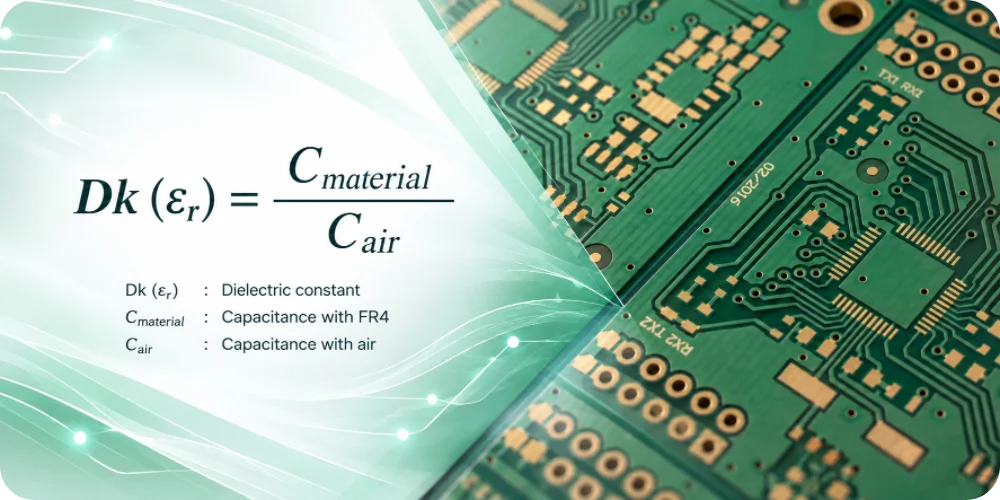
FR4 Dielectric Constant Calculator and PCB Design Guide
How to get a quote for PCBs Let's run DFM/DFA analysis for...
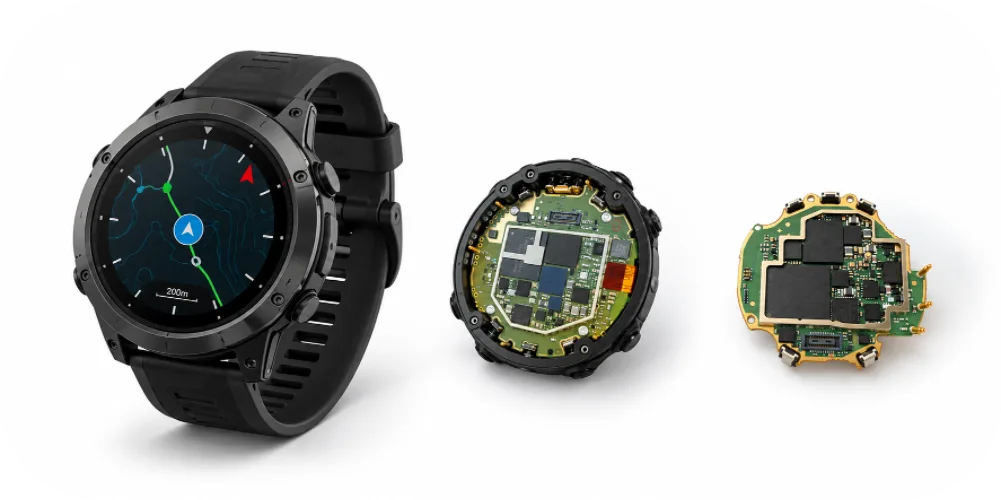
GPS Sports Watch PCB Design: GNSS, RF, Sensors and PCBA Manufacturing
Turning a compact GPS sports watch controller from an...
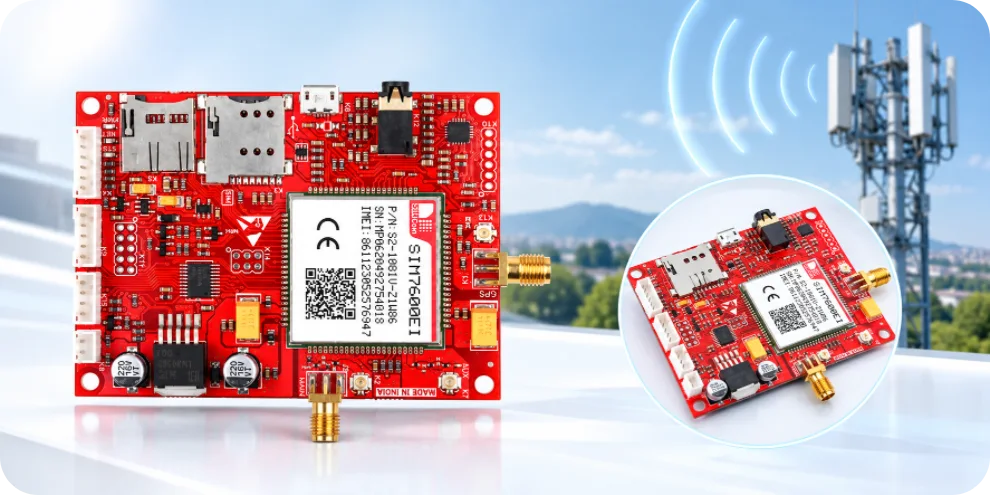
Cellular Modem PCB: From Module Carriers to PCBA
Need a manufacturer for a cellular modem PCB or a fully...
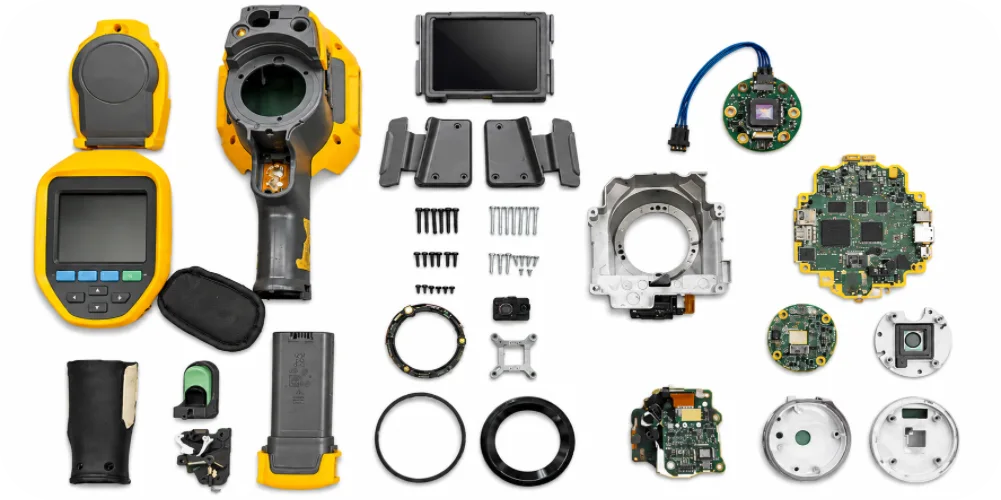
Portable Thermal Camera PCB Design and PCBA Manufacturing Guide
The thermal imaging module is often the part of a handheld...
How to get a quote for PCBs
Let‘s run DFM/DFA analysis for you and get back to you with a report. You can upload your files securely through our website. We require the following information in order to give you a quote:
-
- Gerber, ODB++, or .pcb, spec.
- BOM list if you require assembly
- Quantity
- Turn time
In addition to PCB manufacturing, we offer a comprehensive range of electronic services, including PCB design, PCBA, and turnkey solutions. Whether you need help with prototyping, design verification, component sourcing, or mass production, we provide end-to-end support to ensure your project’s success.
For PCBA services, please provide your BOM (Bill of Materials) and any specific assembly instructions. We also offer DFM/DFA analysis to optimize your designs for manufacturability and assembly, ensuring a smooth production process.