
MCPCB in Consumer Electronics | Thermal Solutions for Compact Device Design

Introduction: Heat Management Challenges in MCPCB for Consumer Electronics
The consumer electronics industry continues its relentless push toward smaller, more powerful devices. Smartphones, wearables, LED lighting modules, and power adapters pack increasing functionality into shrinking form factors. This miniaturization trend creates a fundamental thermal challenge: higher power densities generate more heat within limited space, while compact designs restrict traditional cooling pathways.
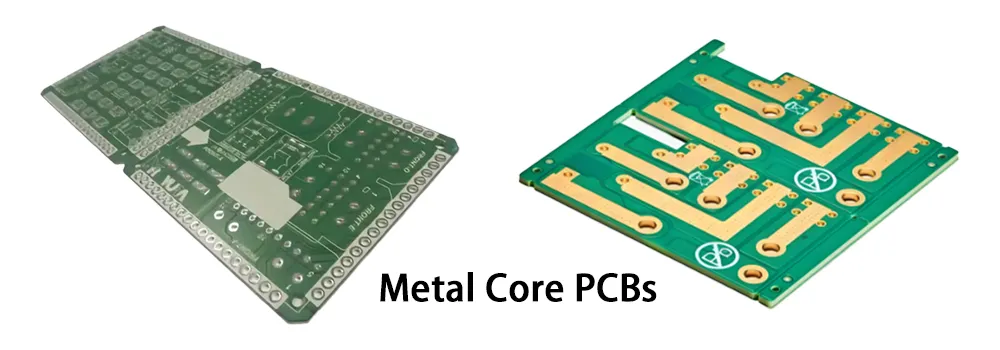
MCPCB in consumer electronics offers a proven solution to this challenge. Unlike conventional FR-4 printed circuit boards, metal core PCBs provide superior thermal conductivity and structural rigidity. These characteristics make MCPCB technology essential for modern compact device designs where heat dissipation directly impacts performance and reliability.
Design Challenges in Compact Consumer Devices
Thermal Concentration and Space Constraints
Consumer electronics manufacturers face multiple technical constraints when designing compact devices. High-power components such as LED arrays, integrated circuits, and sensor modules concentrate heat in small areas, creating localized hot spots that can degrade performance or shorten component lifespan.
Limited internal volume restricts the use of heat sinks, fans, or other conventional cooling mechanisms. The structural requirements add another layer of complexity. Devices must withstand repeated handling, temperature cycling, and mechanical stress while maintaining electrical integrity.
Limitations of Traditional PCB Materials
Traditional multilayer FR-4 boards or flexible circuits often struggle with thermal management in consumer electronics applications. Their low thermal conductivity of approximately 0.3 W/m·K creates bottlenecks in heat transfer paths. Assembly reliability becomes critical when working with tight tolerances and high component densities.
Surface mount components require stable thermal conditions during reflow soldering. Any warpage or thermal expansion mismatch can lead to manufacturing defects or field failures in compact consumer devices.
Why MCPCB Technology Fits Compact Consumer Electronics
Superior Thermal Performance
Metal core printed circuit boards address the thermal limitations of conventional substrates through their fundamental construction. An aluminum or copper base layer provides a high-conductivity pathway that rapidly spreads and transfers heat away from power components:
- Shortest thermal path – Direct heat flow from components to the metal base minimizes junction temperatures.
- Enhanced thermal conductivity – MCPCB achieves 1.0 to 8.0 W/m·K compared to FR-4’s typical 0.3 W/m·K.
- Uniform heat distribution – Metal base spreads heat across the entire board area, eliminating hot spots.
- Reduced thermal resistance – Lower junction-to-ambient thermal resistance extends component lifespan.
MCPCB for Sensors and Temperature-Sensitive Applications
The thermal advantage becomes particularly valuable in sensor-based consumer electronics. Temperature-sensitive components such as optical sensors, accelerometers, and pressure transducers require stable operating temperatures to maintain accuracy.
MCPCB for sensors helps maintain temperature stability in wearable and IoT devices, ensuring consistent measurement precision across varying ambient conditions. This thermal stability directly translates to improved sensor accuracy and device reliability.
Structural and Manufacturing Advantages
Beyond thermal performance, consumer electronics PCB designs using metal cores provide mechanical advantages. The rigid metal substrate resists flexing and warping during assembly and use, supporting precise component placement and reliable solder joints.
This structural stability proves essential for thin-profile devices where board deflection could compromise connections or damage sensitive components. The metal base also simplifies thermal interface design, allowing engineers to mount the board directly to device housings or heat spreaders.
Application Examples of MCPCB in Consumer Electronics
LED Lighting and Display Modules
MCPCB technology is widely adopted in LED-based consumer products where efficient thermal control determines light stability and service life. From television backlights to keyboard illumination, metal core substrates ensure consistent luminous performance under continuous operation.
- Shortest thermal path – Direct heat flow from LEDs to the metal base minimizes junction temperatures.
- Uniform heat spreading – Prevents localized overheating across dense LED arrays.
- Stable color and brightness – Maintains consistent output even under high-brightness operation.
As a result, MCPCB in consumer electronics enables LED modules to achieve longer lifespan and improved optical efficiency without thermal droop.
Wearable Devices and Health Monitors
Miniaturized wearables such as smartwatches and health bands integrate multiple sensors and wireless modules in extremely limited space. Effective heat transfer is essential to maintain sensor accuracy and comfort during use.
- Efficient heat transfer – Conducts heat to the device casing for dissipation through air or skin contact.
- Compact thermal design – Supports integration of optical, motion, and RF modules in thin enclosures.
- Stable sensor performance – Reduces temperature-induced drift in biometric measurements.
The thermal reliability of MCPCB for sensors ensures precise readings and durable performance in continuous or high-activity operation.
Power Conversion and Charging Systems
Compact chargers and adapters operate at high power densities where MOSFETs and rectifiers produce concentrated heat. MCPCB construction helps maintain safe thermal margins and electrical efficiency.
- High thermal conductivity – Rapidly transfers heat away from power components.
- Compact power layout – Enables thinner, smaller chargers without overheating risk.
- Improved reliability – Minimizes component stress under sustained current loads.
Consumer electronics power modules built with metal core boards deliver faster charging and longer service life within minimal form factors.
Audio and Imaging Systems
Audio amplifiers, camera flash units, and laser drivers demand precise heat control to prevent distortion or malfunction. MCPCB effectively stabilizes temperature in these high-power signal circuits.
- Thermal stability – Maintains consistent amplifier gain and signal integrity.
- Enhanced heat dissipation – Manages thermal loads from LED flash and laser modules.
- Miniaturized integration – Supports compact designs for portable and mobile devices.
Through efficient heat conduction and structural rigidity, MCPCB technology enables compact audio and imaging systems to perform at high output levels without thermal degradation.
Design and Manufacturing Considerations for MCPCB in Consumer Electronics
Material Selection and Substrate Specifications
Substrate choice defines the thermal and mechanical performance of MCPCB in consumer electronics. Aluminum cores (0.8–1.5 mm) offer a practical balance of heat dissipation, weight, and cost for most products, while copper bases provide higher conductivity for extreme power applications.
- Dielectric performance – Thermal conductivity of 1.0–3.0 W/m·K is typical for compact consumer devices.
- Thickness trade-off – Thinner dielectric layers enhance heat transfer but reduce voltage isolation.
- Design alignment – Material selection must match operating voltage, power density, and thermal cycling demands.
Thermal Simulation and Layout Optimization
Accurate thermal modeling during layout is key to compact consumer electronics PCB design. Finite-element simulation helps predict temperature gradients and guide component placement.
- Component placement – Keep high-power parts spaced for even heat distribution across the metal base.
- Thermal vias – Add vias near heat sources to improve localized dissipation through the dielectric layer.
- Copper weight – Use heavier copper where higher current or lateral heat spreading is needed.
- Ground plane design – Solid planes bonded to the substrate enhance thermal conduction.
Surface Finish and Assembly Requirements
Surface finish directly affects solder quality and long-term reliability. ENIG provides superior solderability and bonding for high-density consumer devices, while HASL-LF remains a cost-effective choice for standard SMT assemblies.
- Finish selection – Balance soldering performance, cost, and product shelf-life requirements.
- Process validation – Prototype builds should confirm reflow temperature profiles for metal-core heat behavior.
Optimizing these design and manufacturing parameters ensures reliable thermal control and mechanical integrity across compact consumer electronics applications.
Conclusion: Advancing Consumer Electronics Through MCPCB Technology
Metal core PCB technology provides an essential solution for managing thermal challenges in miniaturized consumer electronics. As devices continue shrinking while power requirements increase, MCPCB in consumer electronics delivers the thermal performance necessary to maintain reliability, efficiency, and user experience. The combination of efficient heat spreading, structural rigidity, and straightforward thermal interface integration makes metal core boards the practical choice for modern consumer devices.
Successful implementation requires attention to material selection, thermal design optimization, and manufacturing process validation. Engineers who understand these considerations can leverage MCPCB technology to create compact, reliable products that meet demanding performance specifications in competitive consumer markets.
Highleap Electronics: Your MCPCB Partner for Consumer Electronics
At Highleap Electronics, we deliver comprehensive MCPCB solutions tailored for consumer electronics applications:
- Thermal design engineering – Our team provides thermal analysis and simulation services to optimize your MCPCB layout for maximum heat dissipation efficiency.
- Material expertise – We help select appropriate metal substrates, dielectric layers, and surface finishes based on your specific thermal and electrical requirements.
- Prototype to production – We support your project from initial concept validation through high-volume manufacturing with consistent quality control.
- Assembly integration – Our PCB assembly capabilities ensure proper thermal management integration with your complete device architecture.
- Quality assurance – Rigorous thermal testing and reliability validation confirm your MCPCB designs meet performance targets across operating conditions.
Ready to optimize your consumer electronics design with advanced MCPCB technology? Contact Highleap Electronics today to discuss your thermal management requirements and discover how our engineering expertise can enhance your product performance.

Recommended Posts
Hard Gold Finger PCB Manufacturing: Plating and Beveling
Hard gold finger PCB manufacturing is used when a circuit...
Small PCB Panelization: Array Design and Depaneling
Imagine a 26 × 18 mm circuit that must pass through...
PCB Panelization for Volume Production: Cost and Yield
A fabrication panel that holds more boards is not...
PCB SET Delivery and Panelization: Quantities and Acceptance
A purchase order for “500 SET” looks straightforward until...
How to get a quote for PCBs
Let‘s run DFM/DFA analysis for you and get back to you with a report. You can upload your files securely through our website. We require the following information in order to give you a quote:
-
- Gerber, ODB++, or .pcb, spec.
- BOM list if you require assembly
- Quantity
- Turn time
In addition to PCB manufacturing, we offer a comprehensive range of electronic services, including PCB design, PCBA, and turnkey solutions. Whether you need help with prototyping, design verification, component sourcing, or mass production, we provide end-to-end support to ensure your project’s success.
For PCBA services, please provide your BOM (Bill of Materials) and any specific assembly instructions. We also offer DFM/DFA analysis to optimize your designs for manufacturability and assembly, ensuring a smooth production process.