
PCB Glue: The Complete Guide to Adhesive Selection and Application in Electronic Assembly

Figure 1. PCB Glue
1. Introduction to PCB Glue
PCB glue refers to specialized adhesives used in electronic assembly to bond, secure, and protect components on printed circuit boards. While soldering remains the primary interconnection method, PCB adhesives serve critical functions including component stabilization during reflow, electrical insulation, thermal management, and mechanical reinforcement. In modern manufacturing, the right PCB glue selection directly impacts assembly yield, product reliability, and long-term performance.
2. Key Factors in Selecting PCB Glue
Mechanical Requirements
Bond strength determines how well the PCB glue holds components under stress. Modulus affects flexibility—high-modulus adhesives provide rigidity while low-modulus options accommodate thermal expansion. Vibration resistance is essential for automotive and aerospace applications where cyclic stresses can cause joint fatigue.
Thermal Characteristics
Operating temperature range must match the application environment. Standard adhesives handle -40°C to 125°C, while high-temperature formulations extend to 200°C or beyond. Thermal conductivity matters for heat-generating components—filled adhesives can achieve 1-5 W/m·K for effective heat dissipation.
Electrical Properties
Most PCB glue applications require insulating adhesives with high volume resistivity (>10¹² Ω·cm). Conductive adhesives use silver or other fillers for electrical connection. Isotropic conductive adhesives (ICA) conduct in all directions, while anisotropic conductive adhesives (ACA) conduct only through-thickness under pressure.
Curing Method
Heat-cure adhesives offer high strength but require oven processing. UV-cure adhesives enable rapid fixation for high-speed lines. Room-temperature cure suits heat-sensitive assemblies. Two-part systems provide flexibility but demand precise mixing ratios and pot-life management.
Environmental Resistance
Moisture resistance prevents degradation in humid environments. Chemical resistance protects against flux residues, cleaning agents, and operational exposures. Aging performance ensures adhesive integrity over the product’s expected service life, particularly under thermal cycling conditions.
Process Compatibility
Dispensing method compatibility—whether syringe, jet, or stencil—affects line integration. Reflow compatibility ensures PCB glue survives solder reflow temperatures without degradation. Cycle time requirements influence adhesive selection based on cure speed and throughput demands.
Repair and Rework Considerations
Reworkability varies significantly among adhesive types. Some formulations soften with heat for easy removal, while others require mechanical or solvent-based methods. High-reliability assemblies may prioritize permanent bonds, accepting limited rework capability.
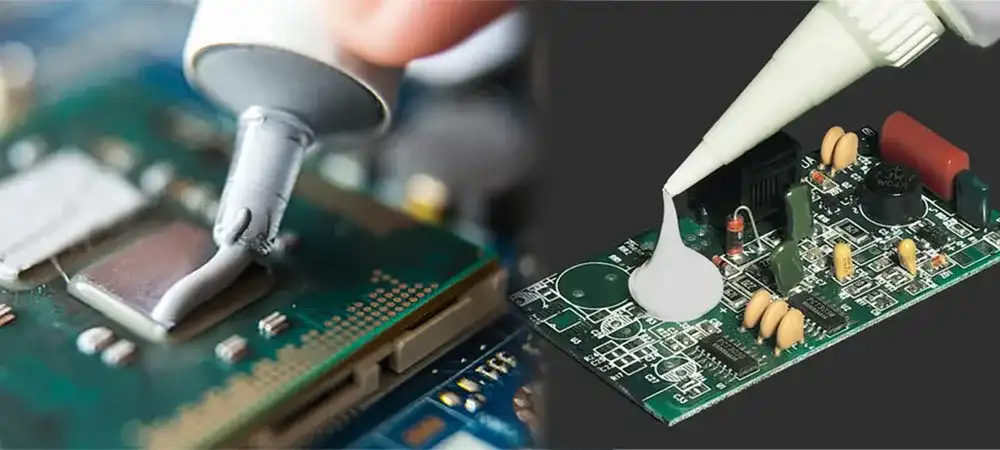
Figure 2. PCB Adhesive
3. Types of PCB Glue and Adhesives
Epoxy Adhesives
Epoxy-based PCB glue delivers high bond strength and excellent temperature resistance, making it the standard choice for structural bonding applications. These adhesives cure through heat or chemical reaction, forming rigid, durable joints suitable for demanding environments.
Acrylic Adhesives
Acrylic adhesives offer fast curing and good toughness for general-purpose PCB bonding. Their balance of performance and processability makes them suitable for a wide range of component attachment applications where extreme conditions are not expected.
Silicone Adhesives
Silicone PCB glue provides exceptional flexibility and thermal cycling performance. The low modulus accommodates coefficient of thermal expansion (CTE) mismatches between components and substrates, reducing stress-induced failures in applications with wide temperature variations.
UV-Curable Adhesives
UV-cure adhesives enable rapid fixation within seconds of light exposure, ideal for high-speed SMT processes. They provide immediate handling strength, though shadowed areas may require secondary heat cure to ensure complete polymerization.
Cyanoacrylates
Cyanoacrylate adhesives (instant adhesives) set rapidly through moisture-initiated polymerization. They serve well for temporary fixturing or light-duty bonding but offer limited gap-filling capability and may become brittle under thermal stress.
Thermally Conductive Adhesives
Thermally conductive PCB glue uses ceramic or metallic fillers to transfer heat from components to heat sinks or substrates. These adhesives are essential for LEDs, power devices, and drivers where effective thermal management prevents performance degradation and premature failure.
Conductive Adhesives (ICA and ACA)
Isotropic conductive adhesives (ICA) and anisotropic conductive adhesives (ACA) provide electrical connection without solder. ICAs conduct uniformly in all directions, while ACAs conduct only under compression—ideal for fine-pitch flex circuit attachments where solder bridging is a concern.
High-Temperature Specialty Adhesives
Polyimide-based and ceramic-filled adhesives withstand continuous operation above 200°C. These specialty formulations serve aerospace, automotive under-hood, and industrial applications where standard PCB glue cannot survive the operating environment.
4. PCB Glue Applications in Manufacturing
Component Securing During Reflow
PCB glue prevents component movement and tombstoning during wave or reflow soldering. Adhesive dots applied before component placement hold parts in position until solder joints form, ensuring accurate alignment on double-sided assemblies processed through wave solder.
Strain Relief and Reinforcement
Connectors, wires, and large components benefit from adhesive strain relief that distributes mechanical loads away from solder joints. This reinforcement extends product life in applications subject to cable flexing, vibration, or repeated mating cycles.
Flexible and Rigid-Flex Circuit Bonding
Flexible circuits require adhesives that maintain bond integrity through repeated bending. PCB glue for flex applications must balance adhesion strength with flexibility to prevent delamination or cracking at bend zones and stiffener attachment areas.
Encapsulation and Potting
Encapsulation with PCB glue protects sensitive circuitry from moisture, dust, and mechanical damage. Potting compounds—typically silicone or epoxy-based—fill enclosures to provide environmental sealing and vibration damping for harsh-environment electronics.
Thermal Interface Bonding
LEDs, power modules, and motor drivers require thermally conductive adhesives to transfer heat efficiently. Proper thermal interface bonding reduces junction temperatures, improving device reliability and enabling higher power densities in compact designs.
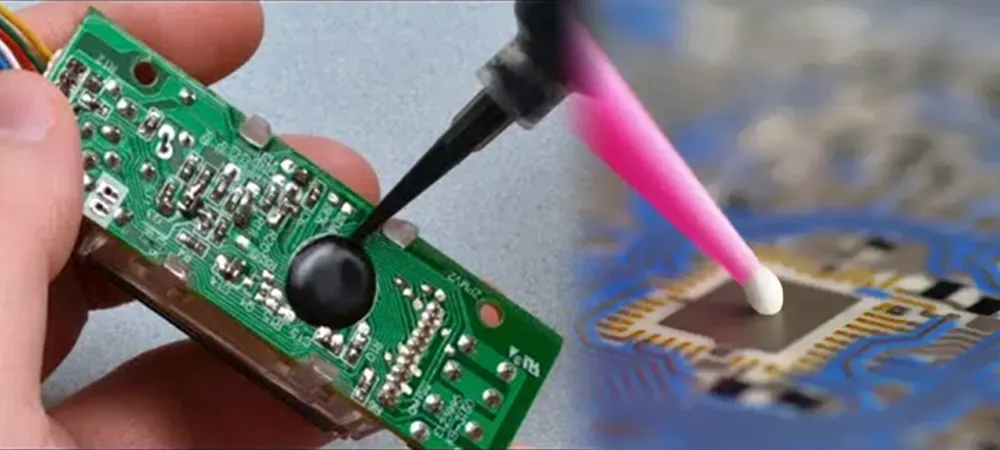
Figure 3. PCB Glue for Electronics
5. PCB Glue Application Methods and Process Control
Dispensing Techniques
Syringe dispensing suits low-volume or prototype work. Automated jet and needle dispensing provide precision placement for production volumes. Screen and stencil coating enable high-throughput application of uniform adhesive layers across multiple locations simultaneously.
Cure Management
Heat-cure adhesives require controlled temperature profiles to achieve full cross-linking. UV systems need adequate exposure intensity and duration, with attention to shadowed areas that may require secondary thermal cure. Process monitoring ensures consistent cure quality.
Substrate Preparation
Surface cleanliness directly impacts PCB glue adhesion. Contaminants including oils, flux residues, and oxidation reduce bond strength. Surface roughness may enhance mechanical adhesion. Solder mask design must account for adhesive placement zones and wetting characteristics.
Manufacturing Integration
Adhesive dispensing must integrate with overall assembly sequence planning. Placement accuracy affects both adhesive coverage and subsequent component positioning. Process repeatability requires controlled material properties, environmental conditions, and equipment calibration.
6. PCB Glue Inspection and Reliability Testing
Visual and Automated Inspection
Visual inspection identifies obvious placement errors, overflow onto pads, or insufficient coverage. Automated optical inspection (AOI) provides consistent, quantitative assessment of adhesive dot size, position accuracy, and voiding in production environments.
Mechanical Testing
Peel strength tests measure adhesion under peeling loads. Shear tests evaluate resistance to lateral forces. Pull tests assess bond strength under tensile loading. Test method selection should reflect actual stress modes expected in service conditions.
Environmental Testing
Thermal cycling (-40°C to +125°C typical) reveals CTE-induced failures. Humidity exposure (85°C/85% RH) tests moisture resistance. Vibration testing validates mechanical durability under cyclic loading conditions representative of the end-use environment.
Electrical Resistance Testing
Conductive PCB glue applications require electrical resistance measurement to verify adequate conductivity. Four-point probe methods provide accurate bulk resistance values. Contact resistance at interfaces must remain stable through environmental stress testing.
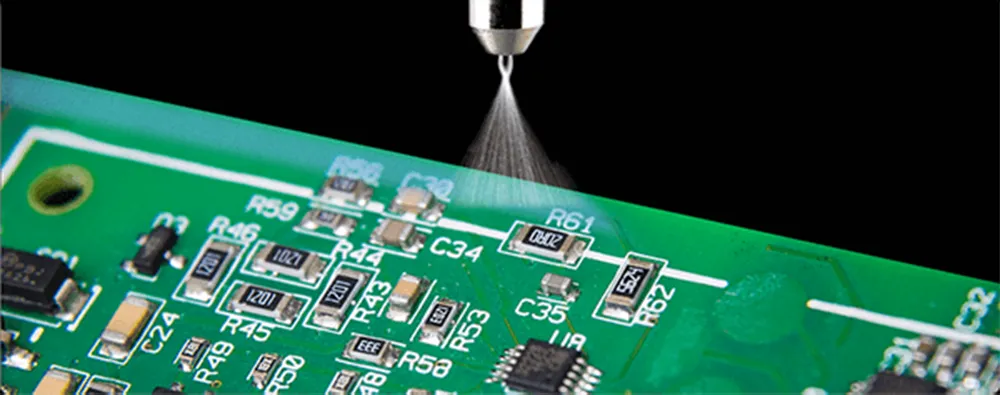
Figure 4. PCB Glue Beat Practice
8. PCB Glue Removal and Rework
Mechanical Removal
Controlled scraping or peeling removes adhesive without substrate damage when performed carefully. Plastic tools minimize the risk of pad lifting or trace damage. This method suits adhesives with moderate bond strength and adequate thickness for tool engagement.
Thermal Softening
Heat-responsive PCB glue softens at elevated temperatures, enabling easier removal. Localized heating with hot air or soldering equipment allows targeted rework without affecting adjacent components. Temperature control prevents substrate or component damage.
Solvent-Based Removal
Manufacturer-recommended solvents dissolve or swell specific adhesive chemistries for removal. Solvent compatibility with other board materials must be verified. Adequate ventilation and safety precautions are required during solvent-based rework procedures.
Damage Prevention Precautions
Aggressive removal techniques risk pad lifting, trace damage, or laminate delamination. Chemical residues from solvents may affect subsequent adhesive applications or cause long-term reliability issues. Thorough cleaning and inspection follow all rework operations.
9. Conclusion
Selecting the right PCB glue requires careful consideration of mechanical, thermal, electrical, and process requirements specific to each application. No single adhesive suits all purposes—each assembly presents unique challenges that demand appropriate material selection.
Proper dispensing techniques, cure control, and reliability testing ensure that adhesive joints perform as intended throughout product life. Manufacturing process integration—from substrate preparation through final inspection—determines whether PCB glue delivers its intended benefits.
Adhesive choice must align with design intent and operating environment. At Highleap Electronics, our PCB manufacturing and assembly expertise ensures optimal adhesive selection and application for reliable, high-performance electronic products.

Recommended Posts
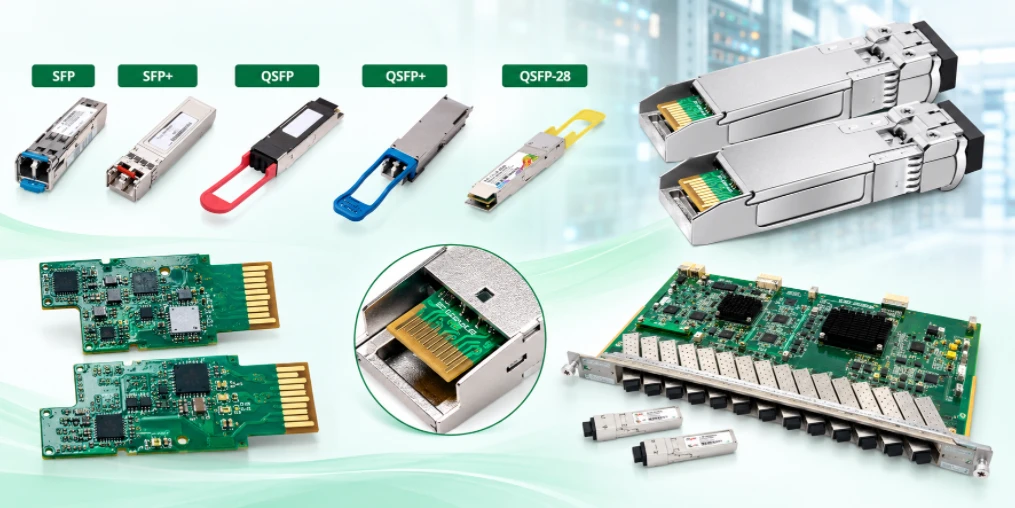
Optical Transceiver PCB Assembly Services in China
Highleap Electronics provides optical transceiver PCB...
Precision Press Fit PCB Manufacturing with Tight Tolerances
Press-fit PCB manufacturing requires close coordination...
8 Layer HDI PCB Manufacturer in China
Highleap Electronics provides 8 layer HDI PCB...
8 Layer Rigid-Flex PCB Manufacturing and Cost Guide
An 8 layer rigid-flex PCB combines multilayer rigid...
How to get a quote for PCBs
Let‘s run DFM/DFA analysis for you and get back to you with a report. You can upload your files securely through our website. We require the following information in order to give you a quote:
-
- Gerber, ODB++, or .pcb, spec.
- BOM list if you require assembly
- Quantity
- Turn time
In addition to PCB manufacturing, we offer a comprehensive range of electronic services, including PCB design, PCBA, and turnkey solutions. Whether you need help with prototyping, design verification, component sourcing, or mass production, we provide end-to-end support to ensure your project’s success.
For PCBA services, please provide your BOM (Bill of Materials) and any specific assembly instructions. We also offer DFM/DFA analysis to optimize your designs for manufacturability and assembly, ensuring a smooth production process.