
Glass and Flexible Transparent PCB Manufacturing

Transparent PCB manufacturing is the process of producing circuit boards that transmit visible light while still meeting electrical, mechanical, and assembly requirements. Unlike standard FR-4 fabrication, it requires the manufacturer to control substrate selection, conductor patterning, assembly temperature, feature resolution, and optical appearance in the same build. These boards are commonly used in display-facing electronics, transparent LED panels, smart glass, touch interfaces, and optical sensing devices where a conventional opaque PCB would block light or interfere with system function. For a broader introduction to transparent circuit structures and use cases, see our transparent PCB guide.
Table of Contents
- What Transparent PCB Manufacturing Includes
- Manufacturing Flow for Glass Transparent PCBs
- Manufacturing Flow for Film-Based Transparent PCBs
- Conductor Formation Methods
- Assembly and Interconnection Methods
- DFM Rules for Transparent PCB Production
- Main Cost and Yield Drivers
- What to Send a Manufacturer for Quotation
- How to Choose a Transparent PCB Manufacturer
- Transparent PCB Manufacturing FAQ
What Transparent PCB Manufacturing Includes
Transparent PCB manufacturing includes more than transparent material selection. It is a coordinated fabrication and assembly process involving five major stages: substrate preparation, transparent conductor formation, circuit patterning, component attachment, and final optical/electrical inspection. Each of these stages affects both circuit performance and visible transmittance.
The manufacturing route starts with the substrate. For rigid transparent boards, this is usually glass. For flexible transparent circuits, it is usually PET or PEN film. Once the substrate is selected, the conductive layer is formed using either a transparent conductive film or a fine metal mesh. The circuit is then patterned using lithographic or equivalent precision processes, after which connection pads, interconnect regions, and component mounting areas are prepared. Final assembly depends on the thermal tolerance of the substrate and conductor system. If your project is based on glass rather than polymer film, our glass PCB overview provides a broader look at glass-based circuit platforms.
In transparent PCB production, the manufacturer must also control visual defects that are usually irrelevant in standard PCB fabrication. Haze, micro-scratches, edge chipping, conductor visibility, adhesive overflow, flux residue, and uneven copper density can all reduce the perceived quality of a transparent board even when the circuit is electrically functional.
Manufacturing Flow for Glass Transparent PCBs
Glass-based transparent PCB manufacturing is used when the design requires rigidity, dimensional stability, high optical clarity, or compatibility with demanding environmental conditions. Typical applications include transparent LED modules, smart glass electronics, optical sensing platforms, and specialty industrial displays. For designs centered on rigid glass circuits, you can also review our glass PCB manufacturing guide.
A typical manufacturing sequence for a glass transparent PCB is:
- Glass cutting and edge processing: Sheets are cut to panel size, and edges are ground or polished to reduce chipping risk during later processing and handling.
- Surface cleaning: The glass must be thoroughly cleaned to remove particles, organics, and ionic contamination before conductor deposition.
- Conductor deposition: A conductive layer is formed on the glass surface. Depending on the design, this may be a transparent conductive oxide or a fine metal seed layer for subsequent patterning.
- Photolithographic patterning: Fine traces, meshes, electrodes, and pad regions are defined using high-resolution imaging and etching processes.
- Metallization build-up or pad reinforcement: If the design requires solderable areas or higher-current paths, selected regions are thickened or converted into more robust metal structures.
- Protective coating or lamination: The circuit may be protected using transparent dielectric layers, cover coatings, or laminated structures, depending on environmental exposure and assembly needs.
- Component assembly: LEDs, sensors, driver ICs, connectors, or discrete parts are mounted using soldering, conductive adhesive, ACF bonding, or hybrid attachment methods.
- Inspection and test: Electrical continuity, resistance uniformity, adhesion, optical transmission, cosmetic defects, and dimensional accuracy are checked before shipment.
The advantage of glass manufacturing is dimensional precision and optical stability. The challenge is fragility. Glass substrates require tighter handling control than FR-4, and panel yield can be affected by edge damage, local stress concentration, and thermal mismatch during assembly. Material choice also matters here, especially when comparing borosilicate and other glass systems, which we discuss in our glass PCB substrate guide.
Manufacturing Flow for Film-Based Transparent PCBs
Film-based transparent PCB manufacturing is used when the design must bend, wrap around a curved surface, or remain lightweight. These builds are more common in wearable electronics, flexible touch interfaces, disposable sensing devices, and low-temperature transparent circuits.
The production flow is similar in principle to glass, but the process window is narrower because polymer films are much more temperature-sensitive and dimensionally less stable during fabrication. A typical process includes substrate unwinding or sheet handling, surface treatment to improve conductor adhesion, conductor coating or mesh formation, fine-line patterning, lamination, low-temperature component attachment, and final singulation.
Compared with glass, transparent film circuits are easier to flex but harder to process with traditional SMT conditions. Reflow temperature, adhesive selection, and registration stability become major manufacturing constraints. This means film-based transparent PCB designs must usually be co-developed with the manufacturer early in the project, especially when the design also includes fine conductive patterns similar to those used in transparent PCB structures.
Conductor Formation Methods
In transparent PCB manufacturing, conductor formation is one of the most important process decisions because it defines both electrical performance and visible transmittance. Manufacturers generally work with two broad conductor approaches: transparent conductive films and fine metallic conductor networks.
Transparent conductive film manufacturing is primarily used when the circuit carries sensing or low-level signal current. In this route, a transparent conductive coating is deposited onto the substrate and then patterned into the required electrode geometry. This method is well suited to touch interfaces, transparent electrodes, and sensor structures where the current demand is low and uniform transparency is important. This conductor type is also a core part of many designs discussed in our transparent PCB article.
Fine metal mesh manufacturing is used when the circuit must deliver meaningful current across the transparent area. Here, the conductor is not optically transparent in itself, but it occupies such a small fraction of the surface that the panel remains visually transmissive. This method is more appropriate for transparent lighting, heating, and power distribution applications because it provides much lower resistance than transparent conductive films. In practical production, this is especially relevant for LED glass PCB applications where the transparent area still needs stable current delivery.
The manufacturing choice between these two approaches is not mainly aesthetic. It is an electrical and assembly decision. If the design requires solderable pads, distributed power, or standard component mounting, the manufacturing flow usually favors a metallic network approach. If the design is electrode-dominant and current is minimal, a transparent conductive film is often the better production route.

Assembly and Interconnection Methods
Transparent PCB manufacturing does not stop at conductor patterning. Assembly is often the stage where many prototypes fail, because the substrate and conductor system may not tolerate the same attachment methods used in ordinary PCB production.
For rigid glass transparent PCBs with robust metallized pad structures, standard SMT soldering can be used in selected designs. However, the thermal profile must still be controlled carefully to avoid substrate stress, pad delamination, or local fracture. Thermal ramp rate, support tooling, and panel flatness matter more than they do on FR-4. This is one reason many glass-based projects benefit from a process review similar to that used in glass PCB manufacturing.
For transparent film circuits, low-temperature assembly is more common. Conductive adhesives, anisotropic conductive film bonding, or specialized low-temperature solder systems are often used instead of standard lead-free reflow. In these builds, the assembly engineer must also control adhesive bleed and placement spread, because overflow in the visible area reduces optical quality.
Interconnection design is equally important. In many transparent products, the active transparent area connects to opaque electronics at the border of the panel. This means the manufacturer must create a transition strategy from transparent conductors in the viewing area to reinforced connection pads, flex tails, or perimeter bus bars at the edge.
DFM Rules for Transparent PCB Production
A transparent PCB design that looks simple in CAD may be difficult to manufacture at good yield. For this reason, transparent PCB manufacturing should always be reviewed through a DFM lens before prototype release.
Important DFM rules include:
- Keep opaque functional areas out of the primary viewing zone: Connectors, driver ICs, large passives, and reinforced bus regions should be pushed to the perimeter whenever possible.
- Control conductor density in the active area: Optical performance depends strongly on how much surface is occupied by traces or mesh. The viewing zone should use only the conductor density needed for reliable operation.
- Respect minimum manufacturable line width and spacing: Transparent circuits often rely on very fine features. The design should match the manufacturer’s actual imaging and etching capability, not theoretical minimums.
- Allow robust transition regions: Fine transparent conductors should not terminate abruptly into heavy connection pads without proper current spreading and mechanical support.
- Limit thermal stress concentration: Large metal islands, asymmetrical heating, and unsupported assembly zones can reduce yield, especially on thin glass.
- Design for cleaning and residue control: Flux residue or adhesive haze is far more visible on a transparent board than on standard solder mask surfaces.
- Define cosmetic acceptance criteria early: A board may pass electrical testing but still be rejected if conductor visibility, local haze, or surface marks exceed the end-product standard.
One of the most common mistakes in early transparent PCB projects is treating transparency as a material property only. In manufacturing reality, transparency is also the result of pattern density, component coverage, coating selection, edge masking, and assembly cleanliness. This becomes even more critical in glass-based builds where both substrate behavior and conductor visibility must be balanced, as explained in our glass PCB overview.
Main Cost and Yield Drivers
The cost of transparent PCB manufacturing is influenced by more variables than standard PCB production. Material price is only one part of the total. Yield loss in precision processing and careful assembly often contributes more than raw substrate cost.
The main cost drivers are:
- Substrate type and thickness: Thinner or specialty optical glass usually costs more to process and handle.
- Feature resolution: Finer conductor patterns require more advanced lithography and tighter process control.
- Panel size: Large transparent panels are harder to maintain flat, clean, and defect-free through fabrication and assembly.
- Conductor architecture: Transparent conductive film and fine metal mesh production routes have different equipment and yield implications.
- Assembly method: Specialized bonding or low-temperature assembly can add process steps and inspection requirements.
- Cosmetic standard: Optical-grade products require more stringent visual inspection, which increases both labor and rejection sensitivity.
- Prototype versus volume: Transparent PCB projects often have a high setup cost in early stages, while mature production benefits from process stabilization and panel optimization.
Yield is usually affected by edge breakage, line defects, local opens, contamination, lamination bubbles, pad adhesion failure, and visible residues. The best way to reduce cost is not simply to ask for cheaper material, but to simplify the optical zone, relax unnecessary feature constraints, and align the layout with the manufacturer’s proven process window. In high-current transparent products such as LED glass PCB assemblies, conductor architecture is often one of the biggest cost-performance tradeoffs.
What to Send a Manufacturer for Quotation
If you want a meaningful transparent PCB manufacturing quotation, a simple Gerber set is often not enough. The manufacturer needs both electrical and optical intent in order to judge feasibility correctly.
A good RFQ package should include:
- Board dimensions and substrate preference
- Rigid or flexible requirement
- Target transparency or visible area requirement
- Expected current level in transparent conductors
- Minimum line width and spacing in the design
- Component list and assembly method preference
- Operating environment such as outdoor use, humidity, cleaning exposure, or thermal cycling
- Drawings identifying the active viewing area
- Cosmetic acceptance expectations for scratches, haze, conductor visibility, and edge appearance
- Prototype quantity and forecast production volume
Without this information, suppliers may quote only on partial assumptions, which leads to redesigns later. Transparent PCB manufacturing works best when quotation and DFM review happen together rather than as separate steps. If you are ready to start, you can submit your requirements through our quick quote page.
How to Choose a Transparent PCB Manufacturer
Not every PCB factory can manufacture transparent boards well, even if it claims to “support glass PCB” or “support transparent materials.” The right supplier should be evaluated on process fit, not on general PCB experience alone.
When choosing a transparent PCB manufacturer, look for the following:
- Experience with glass or transparent film handling
- Fine-line conductor patterning capability
- Ability to create both transparent active areas and reinforced interconnect regions
- Assembly options compatible with your substrate temperature limit
- DFM support for optical and cosmetic requirements
- Inspection capability for both electrical and visual quality
- Clear communication about process limits, not just optimistic quoting
A capable manufacturer should be able to explain where the transparent area can be routed, what feature size is realistic, how assembly will be performed, what defects are considered controllable, and which parts of the design present the greatest yield risk. If the supplier cannot discuss those topics in detail, it is usually a sign that the project is outside its mature manufacturing range. Manufacturers with real experience in glass PCB manufacturing and transparent PCB design are generally better equipped to support these projects from DFM through assembly.
Request a Transparent PCB Manufacturing Quote
Transparent PCB Manufacturing FAQ
Is transparent PCB manufacturing the same as standard PCB fabrication?
No. Transparent PCB manufacturing uses different substrates, different conductor strategies, and more restrictive assembly conditions. Optical quality and visible-area design are part of the production requirement, which is not the case for ordinary FR-4 boards.
Can transparent PCBs be assembled with normal SMT components?
Yes, but only when the conductor and substrate system supports the assembly temperature and pad structure required. Some transparent boards can use soldered SMT assembly, while others require conductive adhesive or film bonding methods.
What is the biggest manufacturing challenge for transparent PCBs?
The biggest challenge is balancing transparency with conductivity and manufacturability at the same time. Fine conductors improve appearance but may reduce yield or current capacity. Stronger metallization improves assembly reliability but may reduce transmittance in the visible area.
Are transparent PCBs suitable for high-current applications?
They can be, but only when the conductor architecture is designed for current delivery. Transparent PCB manufacturing for power applications usually relies on fine metallic conductor networks rather than purely transparent conductive coatings. A common example is the LED glass PCB, where transparency and current delivery must be balanced together.
What determines transparent PCB lead time?
Lead time depends on substrate availability, conductor process complexity, feature resolution, assembly method, inspection standard, and whether the project is a first-time prototype or a repeat production job.
How can I improve the chance of first-pass success?
The most effective approach is to involve the manufacturer before finalizing the layout. Early DFM review helps align the design with real process capability and reduces both prototype failure and unnecessary optical compromise. You can also start with a capability review through our quick quote form.

Recommended Posts
FR4 Dielectric Constant Calculator and PCB Design Guide
How to get a quote for PCBs Let's run DFM/DFA analysis for...
GPS Sports Watch PCB Design: GNSS, RF, Sensors and PCBA Manufacturing
Turning a compact GPS sports watch controller from an...
Cellular Modem PCB: From Module Carriers to PCBA
Need a manufacturer for a cellular modem PCB or a fully...
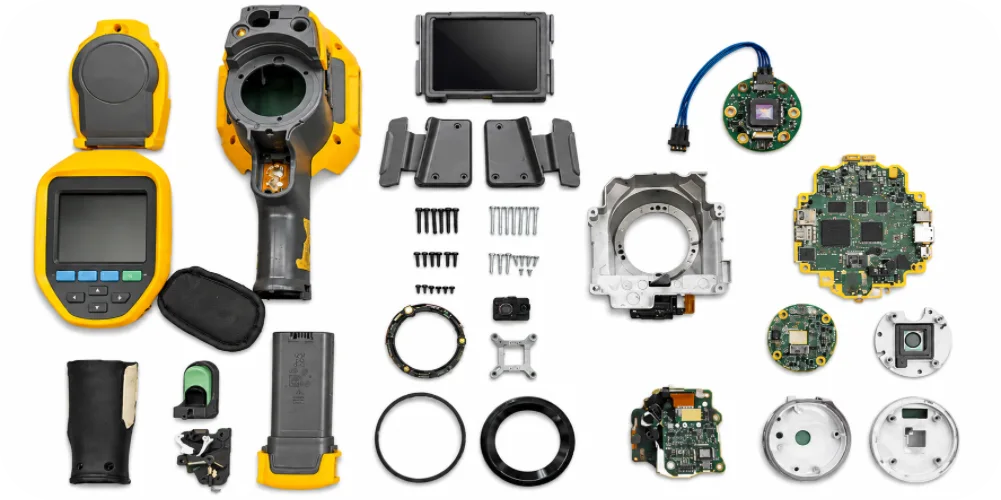
Portable Thermal Camera PCB Design and PCBA Manufacturing Guide
The thermal imaging module is often the part of a handheld...
How to get a quote for PCBs
Let us run DFM/DFA analysis for you and get back to you with a report.
You can upload your files securely through our website.
We require the following information in order to give you a quote:
-
- Gerber, ODB++, or .pcb, spec.
- BOM list if you require assembly
- Quantity
- Turn time
In addition to PCB manufacturing, we offer a comprehensive range of electronic services, including PCB design, PCBA (Printed Circuit Board Assembly), and turnkey solutions. Whether you need help with prototyping, design verification, component sourcing, or mass production, we provide end-to-end support to ensure your project’s success. For PCBA services, please provide your BOM (Bill of Materials) and any specific assembly instructions. We also offer DFM/DFA analysis to optimize your designs for manufacturability and assembly, ensuring a smooth production process.