
Metal Core PCB Assembly | Engineering Solutions for High-Power Applications

Introduction
High-power electronics demand efficient thermal management to maintain performance and reliability. While Metal Core PCB (MCPCB) substrates provide excellent heat dissipation properties, assembly and packaging processes ultimately determine whether these thermal advantages translate into real-world performance.
Poor assembly practices can compromise thermal pathways, create mechanical stress points, and lead to premature field failures. Metal Core PCB Assembly requires specialized knowledge beyond standard FR-4 board handling.
The metal substrate introduces unique challenges in soldering, fixturing, and stress management that conventional PCB assembly techniques cannot adequately address. This article examines practical solutions focusing on soldering reliability, thermal pathway optimization, and mechanical stress control.
Metal Core PCB Assembly Challenges
1. Thermal Management in Metal Core PCB Assembly
Effective Metal Core PCB Assembly requires maintaining a continuous thermal path from components through solder joints to the metal substrate. High-power components generate significant heat, so proper thermal interface materials (TIMs) and solder integrity are critical.
The copper or aluminum base layer expands differently from the dielectric and copper layers, creating stress at interfaces during temperature cycling. Any point of high thermal resistance can elevate component junction temperatures and reduce reliability.
2. Soldering Reliability in MCPCB Production
Both surface mount technology (SMT) and through-hole plating (THP) present unique challenges. Metal substrates require modified reflow profiles with extended preheat zones and carefully controlled peak temperatures to avoid solder joint defects or dielectric delamination. Wave soldering and selective soldering must account for the substrate’s heat-sinking effect to ensure proper solder wetting on through-hole components.
3. Mechanical Stress in MCPCB Assembly
Differences in the coefficient of thermal expansion (CTE) between the metal substrate and copper/dielectric layers create inherent mechanical stress during assembly and operation. Large-format MCPCBs or rigid-flex designs are especially prone to warping during reflow, which can lead to component misalignment, tombstoning, or solder bridging. Proper fixturing and handling techniques are essential to distribute forces evenly and prevent substrate distortion.
Best Practices for Metal Core PCB Assembly
1. Thermal Pathway Optimization
Maintaining thermal continuity from components to the metal substrate is essential. Apply thermal interface materials (TIMs) at 50–100 µm to balance thermal resistance and su rface conformity. Use 2–3 oz. copper layers on high-current traces to improve heat spreading.
Key considerations:
- Shortest thermal path – direct heat flow to the metal base.
- Solid metal placement – position high-power components over continuous metal areas.
- Controlled TIM thickness – 50–100 µm for optimal heat transfer.
- Heavy copper traces – enhance heat spreading and current capacity.
2. Soldering Process Control
Reflow profile optimization is critical. Gradually preheat the MCPCB (90–120 s) to minimize thermal shock. Keep peak temperatures within dielectric limits (typically 260–280 °C) and time above liquidus 60–90 s for lead-free solder.
For wave soldering, preheat assemblies to ensure even heat transfer. Selective soldering allows precise heating of mixed-technology boards while limiting substrate exposure to high temperatures. Preheat typically 100–120 °C.
3. Mechanical Stress Mitigation
Proper fixturing reduces warpage. Use support pins or mesh grids, avoiding edge-only clamping. For vacuum fixtures, maintain 0.3–0.5 bar pressure to protect the dielectric.
Component placement strategy matters: distribute heavy components evenly to prevent localized bending. In rigid-flex MCPCBs, leave flex zones unconstrained during reflow with ≥3 mm clearance at rigid-flex transitions.
4. Testing and Verification
Electrical and visual inspection is essential. Flying probe tests verify electrical continuity, and AOI detects solder defects and component misalignment. Apply MCPCB-specific inspection parameters.
Thermal performance validation includes thermal cycling (-40 °C to +125 °C, 500–1000 cycles) to ensure reliability. Thermal imaging identifies hotspots and ensures temperature differentials remain within 10 °C.
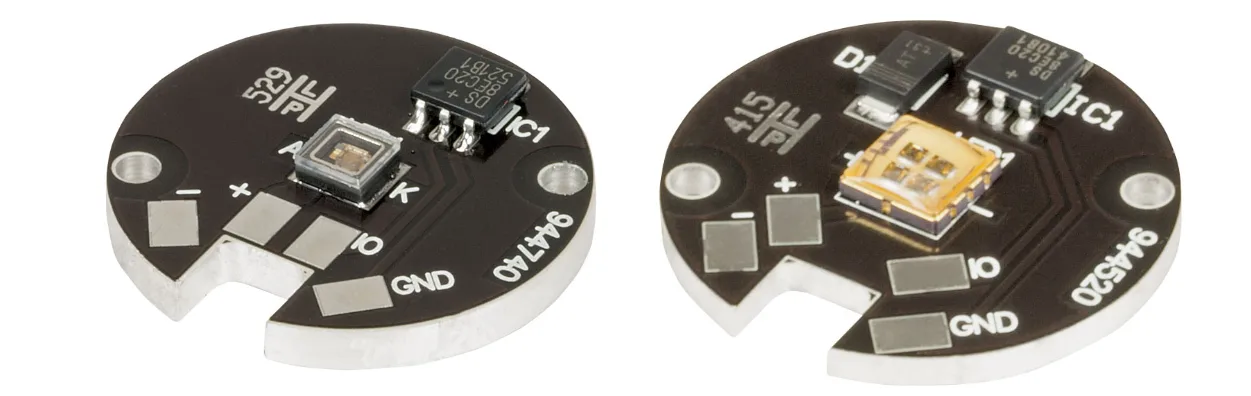
Advanced Metal Core PCB Assembly Solutions
1. High-Power Module Assembly Techniques
- Multi-layer MCPCB construction – Reduces assembly footprint while maintaining thermal performance for high-power applications such as automotive, LED, and power electronics.
- Copper coin embedding – Provides localized thermal enhancement beneath high-power devices; typical thickness 0.8–2.0 mm depending on power dissipation requirements.
- Conformal coating – Protects against moisture, contamination, and mechanical abrasion while preserving thermal interface areas; common materials include acrylic, silicone, and urethane with 25–75 µm thickness.
2. Rigid-Flex MCPCB Integration
- Hybrid construction – Combines rigid sections with flexible interconnects to optimize space in confined enclosures.
- Stress mitigation – Selective stiffener application and controlled bend radii prevent conductor cracking; minimum bend radius 10× flex thickness for static applications.
- Thermal-mechanical balance – Heat-generating components mounted on rigid sections, flexible portions route signals; assembly accommodates differing handling to maintain both thermal and mechanical performance.
- Transition zone design – Requires careful attention to thermal expansion and flexural stress to avoid warping or strain.
3. Thermal Interface Integration
- Precision TIM application – Automated dispensing ensures consistent thermal resistance across production runs; optional graphite pads or phase-change materials achieve >5 W/mK conductivity, ±5% volume consistency.
- Heat sink integration – Precision-machined heat sinks with flatness <0.05 mm ensure intimate contact; controlled fastener torque (0.3–0.8 N⋅m) prevents substrate warping and protects solder joints.
Metal Core PCB Assembly Capabilities of Highleap Electronics
Highleap Electronics provides comprehensive Metal Core PCB Assembly services combining precision manufacturing with thermal management expertise. Our automated SMT lines handle components from 01005 passives to large power modules, with placement accuracy ±0.025mm ensuring proper thermal pad alignment.
High-thermal-mass reflow ovens with 12-zone control optimize profiles specifically for MCPCB substrates. Our facility integrates thermal testing capabilities, including infrared thermal imaging and thermal resistance measurement, validating performance before shipment.
Metal Core PCB Assembly Capabilities Overview
Capability
Specification
Application
Capability
Specification
Application
Capability
Specification
Application
Capability
Specification
Application
Capability
Specification
Application
Capability
Specification
Application
Capability
Specification
Application
Capability
Specification
Application
Engineering Support Services
In-house engineering support provides comprehensive design-for-assembly reviews to identify potential thermal or mechanical issues before production. Services include evaluating thermal pathways from components to the substrate, assessing mechanical stress to prevent warpage or delamination, reviewing process capabilities to ensure design aligns with manufacturing limits, and recommending optimal materials and TIMs for specific applications.
Highleap’s quality systems certified to ISO 9001 and IATF 16949 ensure consistent Metal Core PCB Assembly processes across all production runs. Automated process control monitors critical parameters such as reflow temperatures, solder paste volume, and component placement force. Statistical process control identifies trends before defects occur, maintaining Cpk values above 1.67 for critical parameters.
Conclusion
Metal Core PCB Assembly quality directly impacts the performance and reliability of high-power electronic designs. Proper thermal pathway management, soldering optimization, and mechanical stress control reduce failure rates and extend product life. As power densities increase, assembly expertise becomes critical, distinguishing professional MCPCB providers from conventional PCB manufacturers.
Why Choose Highleap Electronics for MCPCB Assembly
- Specialized equipment – 12-zone reflow ovens and automated SMT lines optimized for metal-core substrates.
- Thermal management expertise – In-house testing and validation ensure performance targets are met.
- Flexible volume capacity – Support from 5-unit prototypes to 10,000+ production runs monthly.
- Quality certifications – ISO 9001 and IATF 16949 certified processes deliver consistent results.
- Engineering support – Design-for-assembly reviews identify potential issues before production.
Partnering with experienced MCPCB providers gives access to specialized equipment, process knowledge, and quality systems required for consistent results. Whether developing new high-power designs or scaling existing products, assembly capability is a key factor in supplier selection.
Ready to optimize your high-power electronics assembly? Contact Highleap Electronics to discuss your MCPCB Assembly needs. Our engineering team provides design consultation, prototype assembly, and full-scale production solutions tailored to your thermal management requirements.

Recommended Posts
Prototype PCB Assembly: From Design Files to Tested Boards
Highleap Electronics builds prototype PCB assemblies for...
Hard Gold Finger PCB Manufacturing: Plating and Beveling
Hard gold finger PCB manufacturing is used when a circuit...
Small PCB Panelization: Array Design and Depaneling
Imagine a 26 × 18 mm circuit that must pass through...
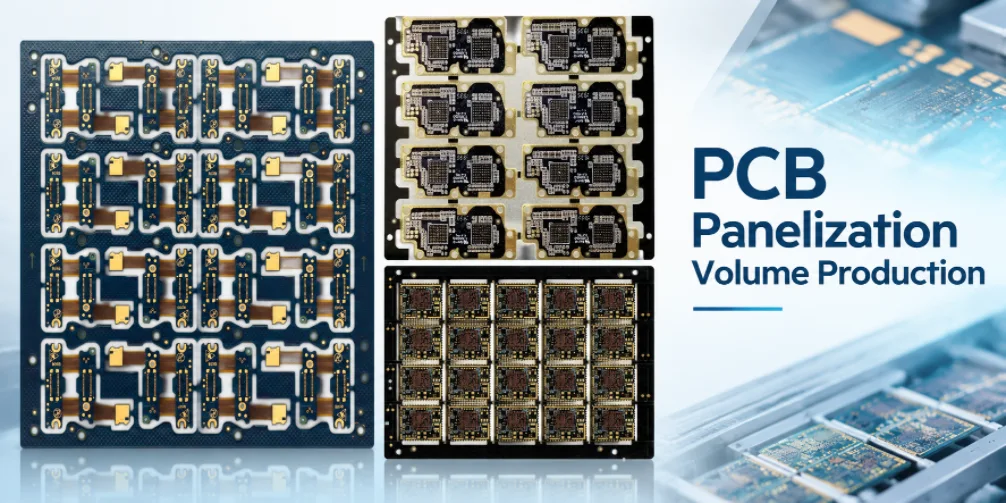
PCB Panelization for Volume Production: Cost and Yield
A fabrication panel that holds more boards is not...
How to get a quote for PCBs
Let‘s run DFM/DFA analysis for you and get back to you with a report. You can upload your files securely through our website. We require the following information in order to give you a quote:
-
- Gerber, ODB++, or .pcb, spec.
- BOM list if you require assembly
- Quantity
- Turn time
In addition to PCB manufacturing, we offer a comprehensive range of electronic services, including PCB design, PCBA, and turnkey solutions. Whether you need help with prototyping, design verification, component sourcing, or mass production, we provide end-to-end support to ensure your project’s success.
For PCBA services, please provide your BOM (Bill of Materials) and any specific assembly instructions. We also offer DFM/DFA analysis to optimize your designs for manufacturability and assembly, ensuring a smooth production process.