
Top 10 Computer Manufacturing Companies in 2025 | Market Leaders

Introduction
Computer manufacturing companies in 2025 operate at a critical inflection point. The convergence of AI PC integration, enterprise Windows 11 migration cycles, and post-pandemic supply chain stabilization has reshaped competitive dynamics across the global market.
According to Gartner, worldwide PC shipments grew 4.8% in Q1 2025, reaching 59 million units. This article examines the leading computer manufacturers, explores key market trends, compares vendor strengths, and provides guidance for procurement decisions.
2025 Top 10 Computer Manufacturing Companies
1. Lenovo

Lenovo maintains its position as the global PC market leader with approximately 24.5% market share. The company demonstrates strength across both consumer and enterprise segments, with ThinkPad remaining the benchmark for business laptops. Lenovo reported record Q3 2025 revenue of $18.79 billion, driven by AI-ready device adoption. Best suited for enterprise bulk procurement and users seeking reliable, scalable computing solutions.
2. HP Inc.

HP holds approximately 19.9% global market share, leading in the US market with 25.1% share in Q1 2025. The company excels in enterprise and education sectors with its EliteBook and ProBook lines, recently expanded with NPU-equipped models. HP’s Device-as-a-Service model provides flexible procurement options for organizations managing large-scale deployments.
3. Dell Technologies

Dell commands 14.4% of the global PC market, with particular dominance in workstations and enterprise-grade systems. The company leads in direct-sales logistics and configurable workstations. Dell’s Pro Max Plus series, launched in May 2025 with Qualcomm AI 100 inference capability, targets enterprise AI workflows. Strong position in data center integration makes Dell ideal for organizations requiring end-to-end infrastructure solutions.
4. Apple

Apple leads the premium PC segment with exceptional revenue per unit, capturing 47.8% of laptop revenue share despite lower unit volume. The M-series silicon delivers industry-leading performance-per-watt, with Apple controlling 45% of the AI PC segment. Ideal for creative professionals, developers, and organizations prioritizing ecosystem integration and long-term device longevity.
5. ASUSTeK (ASUS)

ASUS maintains strong competitive positioning in gaming (ROG/TUF series) and mainstream consumer markets with approximately 6-7% global share. The company actively markets AI PC capabilities with 10+ TOPS NPU integration across product lines. ASUS serves gaming enthusiasts, content creators, and value-conscious consumers seeking performance without premium pricing.
6. Acer

Acer focuses on value-oriented computing with strong presence in education and gaming segments. The company participates in Microsoft’s Copilot+ PC initiative with AI-ready Swift X models. Regional strength in Asia-Pacific and competitive pricing make Acer suitable for budget-conscious enterprises and educational institutions managing device fleets.
7. Samsung

Samsung leverages display technology expertise across its Galaxy Book series, offering premium OLED panels and component vertical integration advantages. The Galaxy Book3 AI edition meets Microsoft’s Copilot+ specifications. Samsung appeals to users prioritizing display quality and those already invested in the Samsung mobile ecosystem.
8. Microsoft (Surface)

Microsoft’s Surface line occupies a premium position in the 2-in-1 and hybrid device segment. Surface devices serve as reference platforms for Windows optimization and AI integration. The hardware-software synergy appeals to enterprises standardizing on Microsoft 365 and creative professionals requiring versatile form factors.
9. Xiaomi

Xiaomi continues aggressive expansion in China and emerging markets through value-focused laptop offerings. The company’s smartphone ecosystem strategy drives notebook adoption among existing Xiaomi users. Emerging market enterprises and cost-sensitive organizations benefit from Xiaomi’s competitive pricing structure.
10. MSI / Gigabyte


MSI and Gigabyte specialize in gaming notebooks and professional workstations, leveraging NVIDIA GPU integration for AI-enhanced graphics processing (DLSS, broadcasting features). These manufacturers serve gaming professionals, 3D artists, and engineers requiring maximum GPU performance for specialized workloads.
Industry Trends Shaping Computer Manufacturing Companies
AI PC and NPU Integration
The AI PC market is projected to reach $91.23 billion in 2025, growing at 19.1% CAGR through 2031. Gartner forecasts AI PCs will represent 43% of all PC shipments in 2025, up from 17% in 2024. NPU integration is becoming standard, with Intel Meteor Lake, AMD Ryzen AI, and Qualcomm Snapdragon X Elite processors embedding dedicated neural processing units. These capabilities enable on-device AI processing for enhanced privacy, reduced latency, and offline functionality—critical factors for enterprise security requirements.
Enterprise Refresh and Windows 11 Migration
Windows 10 end-of-support in October 2025 drives significant enterprise hardware refresh cycles. IDC reports that organizations are accelerating procurement to meet compliance deadlines and security requirements. This creates substantial demand for AI-ready systems that meet Windows 11 specifications while providing future-proofing capabilities. Commercial PC refresh represents a primary demand driver beyond AI adoption itself.
Gaming and Creator Device Growth
The gaming PC segment with AI capabilities continues expansion as advanced GPUs enable real-time ray tracing, procedural content generation, and enhanced NPC behavior. Content creation workflows increasingly require local AI processing for video editing, 3D rendering, and generative AI tools. This drives demand for high-performance systems from manufacturers like MSI, ASUS ROG, and premium workstation lines from Dell and HP.
Computer Manufacturing Companies: Detailed Comparison
The following table provides a comparative analysis of leading computer manufacturing companies across key evaluation dimensions:
| Vendor | Position | Key Strengths | Primary Series | Best For |
|---|---|---|---|---|
| Lenovo | Enterprise/Consumer | Global scale, AI-ready ThinkPad, channel coverage | ThinkPad, Legion, IdeaPad | Enterprise bulk |
| HP Inc. | Enterprise/Education | US market lead, DaaS model, NPU integration | EliteBook, ProBook, Omen | Education, SMB |
| Dell | Enterprise/Workstation | Direct sales, configurable systems, AI workflows | XPS, Latitude, Precision | Workstations |
| Apple | Premium/Creative | M-series silicon, ecosystem, AI leadership | MacBook Pro/Air, iMac | Creatives, devs |
| ASUS | Gaming/Consumer | Gaming leadership, value positioning | ROG, TUF, ZenBook | Gaming, creators |
| Acer | Value/Education | Competitive pricing, APAC strength | Swift, Aspire, Predator | Education, budget |
Buyer’s Guide: Selecting Computer Manufacturing Partners
Procurement decisions for computing hardware require evaluation across multiple dimensions tailored to organizational requirements and use-case priorities.
Key Decision Factors
Critical evaluation criteria include: budget constraints and total cost of ownership, warranty and after-sales support infrastructure, enterprise management features (Intel vPro, Apple MDM compatibility), AI compute requirements (NPU TOPS ratings), ecosystem compatibility and peripheral support, and regional availability with delivery timelines. Security certifications and compliance requirements should also factor into vendor selection for regulated industries.
Scenario-Based Recommendations
For enterprise bulk procurement requiring standardization and centralized management, Lenovo, HP, and Dell provide comprehensive enterprise programs with volume pricing and global support networks. Creative and mobile workstation requirements favor Apple M-series or Dell Precision for optimized professional application performance. Value-oriented deployments in emerging markets benefit from Xiaomi and Acer’s competitive pricing structures without sacrificing essential functionality.
Conclusion and 2026 Outlook
The computer manufacturing landscape in 2025 reflects a market in transition. Established leaders—Lenovo, HP, and Dell—maintain dominance through enterprise relationships and operational scale, while Apple demonstrates that premium positioning and vertical integration command disproportionate revenue share.
The NPU standardization across all major vendors signals that by 2026, AI capability will be table stakes rather than differentiation. Organizations should anticipate continued consolidation among tier-two manufacturers and potential market share shifts as ARM-based architectures mature for Windows platforms.
Partner with Highleap Electronics
As computer manufacturing companies scale AI-enabled product lines, demand for high-quality PCB manufacturing and PCB assembly intensifies. Highleap Electronics provides precision electronics manufacturing services supporting the exacting requirements of the computing industry. Contact us to discuss your PCB fabrication and assembly needs for next-generation computing devices

Recommended Posts
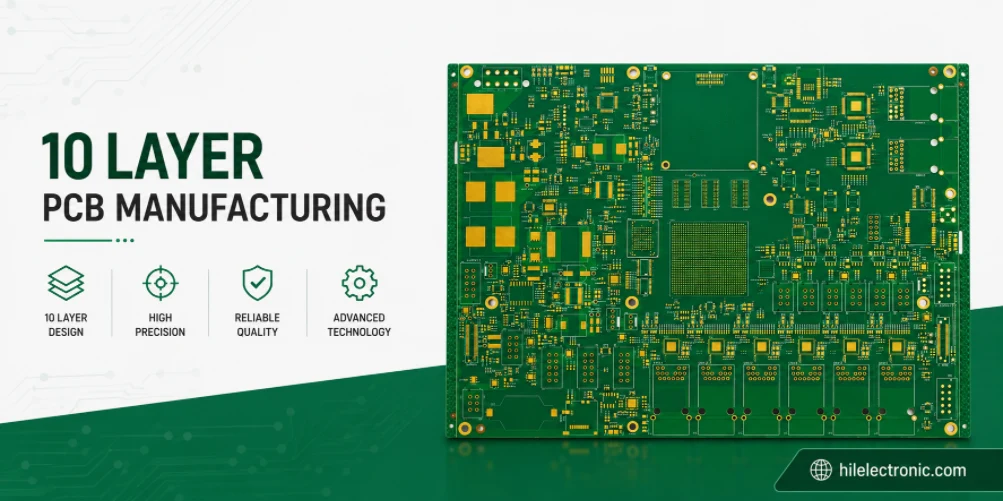
10 Layer PCB Manufacturer for Rigid, Flex and Rigid-Flex
Figure 1. 10 layer PCB manufacturer production capability....
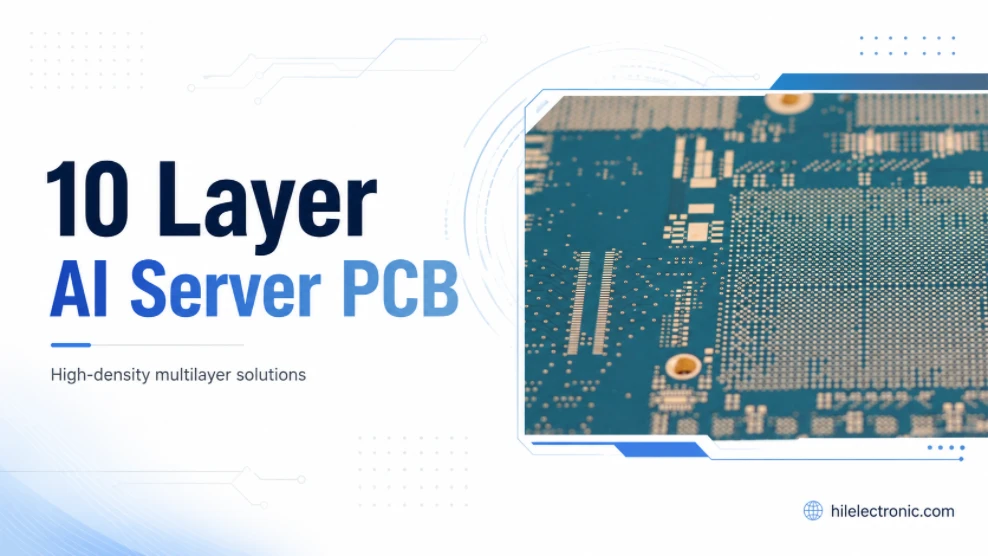
10 Layer AI Server PCB Engineering for Accelerator Hardware
Figure 1. 10 layer AI server PCB for accelerator hardware....
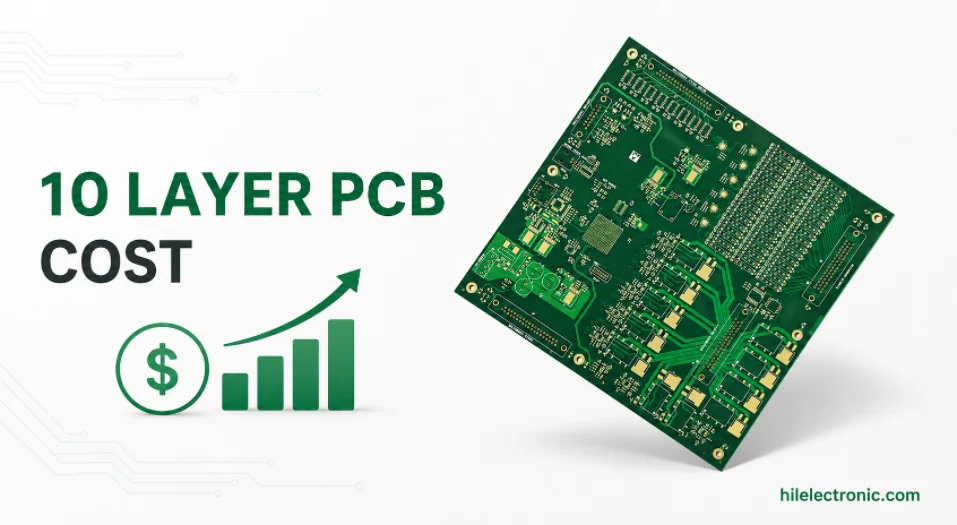
10 Layer PCB Cost Drivers for Materials, HDI and Testing
Figure 1. 10 layer PCB cost drivers for materials HDI and...
10 Layer PCB Manufacturing Process from DFM to Inspection
Figure 1. 10 layer PCB manufacturing process from DFM to...
How to get a quote for PCBs
Let‘s run DFM/DFA analysis for you and get back to you with a report. You can upload your files securely through our website. We require the following information in order to give you a quote:
-
- Gerber, ODB++, or .pcb, spec.
- BOM list if you require assembly
- Quantity
- Turn time
In addition to PCB manufacturing, we offer a comprehensive range of electronic services, including PCB design, PCBA, and turnkey solutions. Whether you need help with prototyping, design verification, component sourcing, or mass production, we provide end-to-end support to ensure your project’s success.
For PCBA services, please provide your BOM (Bill of Materials) and any specific assembly instructions. We also offer DFM/DFA analysis to optimize your designs for manufacturability and assembly, ensuring a smooth production process.